

Antique Sterling Candlesticks
Antique sterling candlesticks bring functional illumination and classical proportion to a room, spanning Victorian, Edwardian and Georgian periods.
Antique Sterling Candlesticks
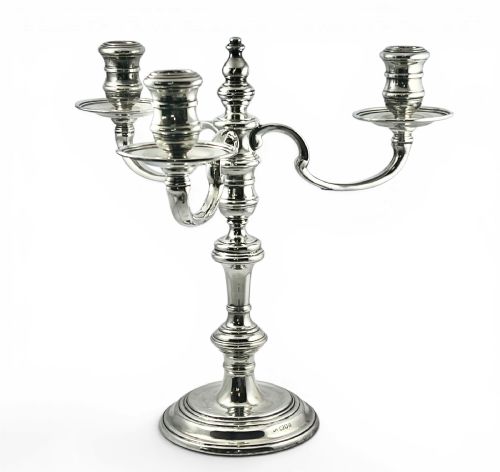
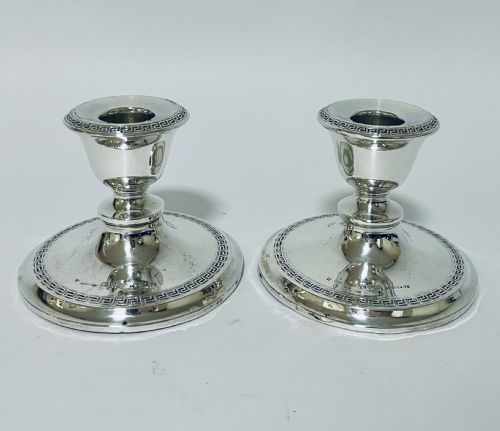
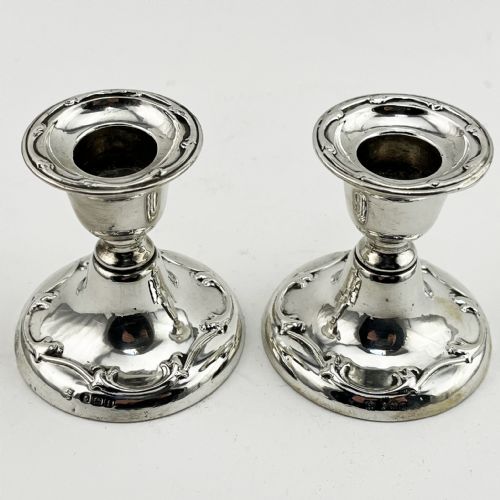
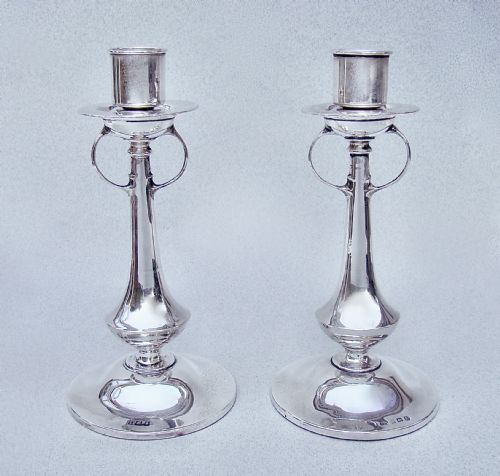
When searching for antique sterling candlesticks, buyers encounter items designed for dining tables, sideboards, desks, and pianos. The selection includes standard height pairs, dwarf versions, chambersticks for bedside use, and multi-branch candelabra.
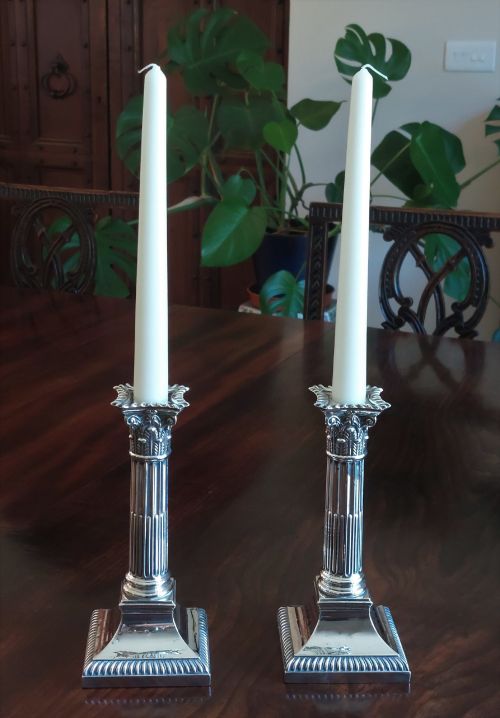
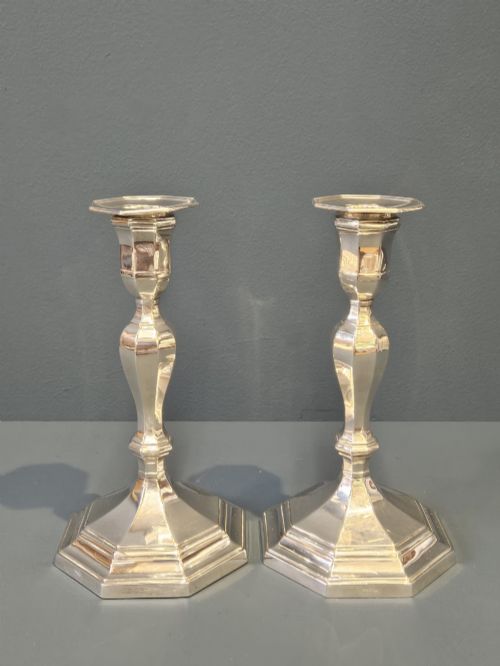
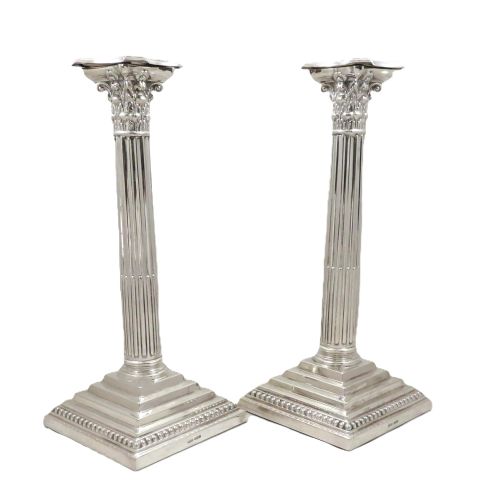
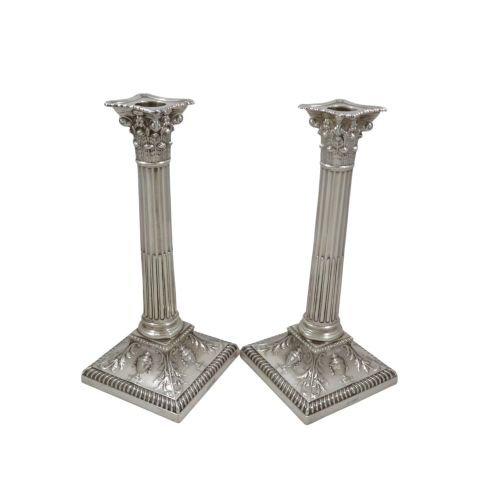
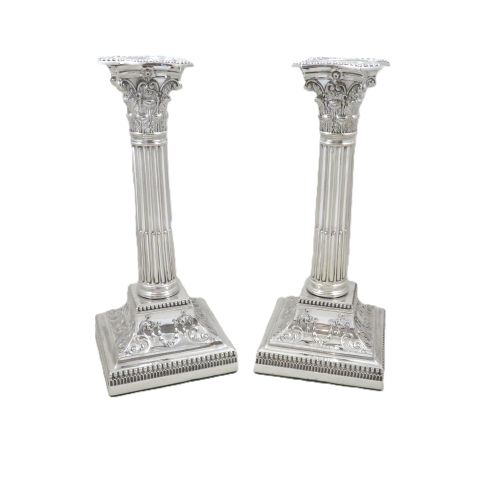
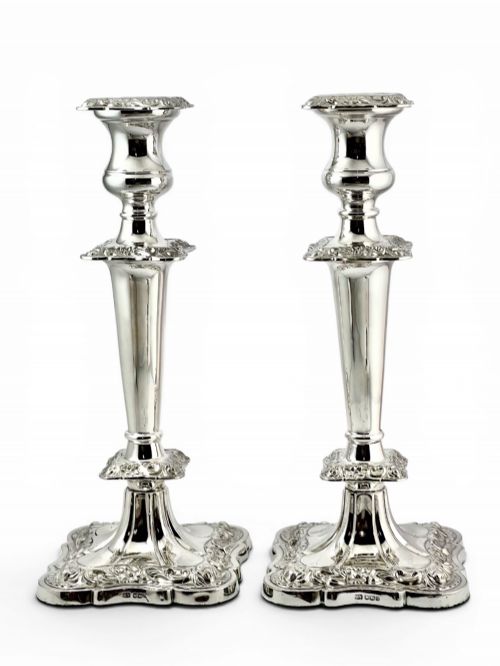
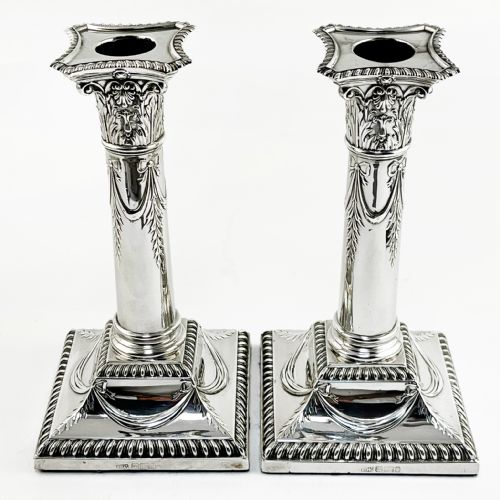
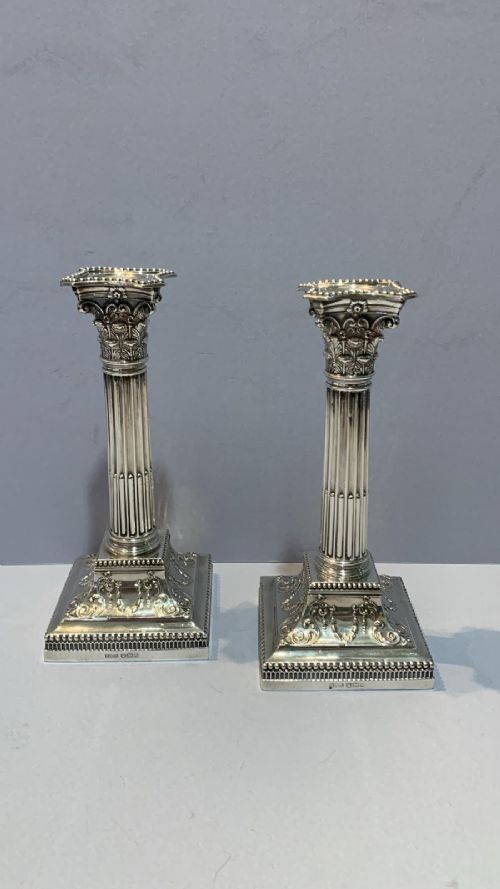
Most examples found in current and archived stock date from the Victorian and Edwardian eras, alongside George V productions and occasional Georgian pieces. Forms range from plain columnar designs to Corinthian columns, figural supports, and items featuring classical motifs like rams heads.
Makers often produced these items in matched pairs, though sets of four and individual chambersticks appear regularly. Alongside standard candle holders, the broader category encompasses related items such as desk accessories, table lamps, and larger candelabra.
Materials and construction
Silversmiths utilised sterling silver and silver gilt, frequently shaping components through casting and hammering techniques. Many candlesticks incorporate weighted bases to provide stability, often lined with felt or baize to protect furniture surfaces.
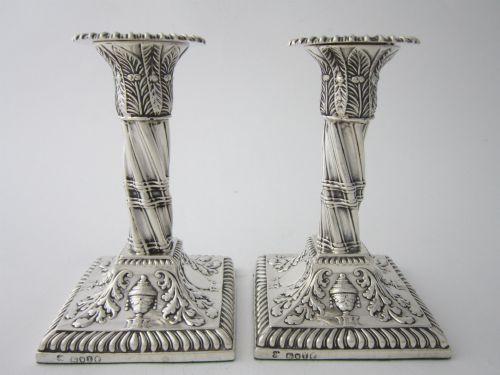
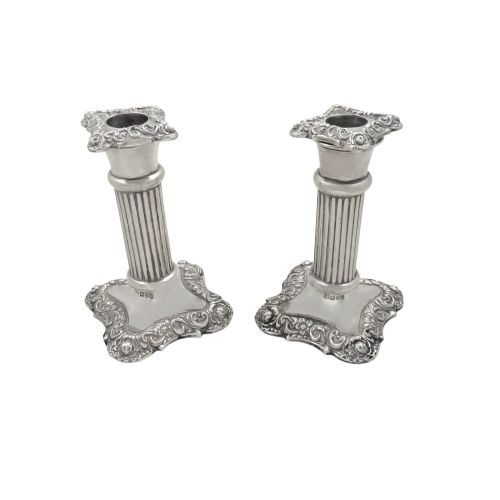
Details such as fluting, beaded borders, and cast capitals require precise tooling and hand-chasing by skilled artisans. Hallmarks stamped into the metal record the assay office, date letter, and maker's mark, confirming the standard of the silver.
Several candlesticks incorporate decorative rams heads and lion masks, guarding the candlelight with miniature Victorian menagerie charm.
Assessing craftsmanship and execution
The crispness of cast ornamentation distinguishes superior examples from simpler production pieces. Crisp detailing in Corinthian capitals, acanthus leaves, and lion masks indicates high-calibre silversmithing.
Substantial gauge metal and well-balanced proportions contribute to the structural integrity of the piece. Maker attribution also plays a role, with works from recognised silversmiths demonstrating finer finishing and more rigorous attention to assembly.
Garrard & Co·James Fenton·John Cafe·Walter Latham & Son·Thomas Bradbury & Sons Ltd·William Hutton & Sons·Goldsmiths & Silversmiths Co·Hawkesworth Eyre & Co
The Antique Sterling Candlesticks Glossary
- Chamberstick
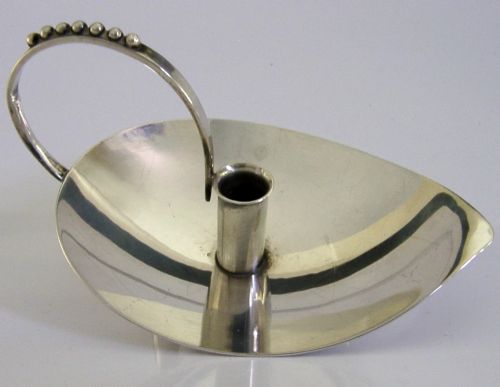
- A low candlestick fitted with a pan to catch dripping wax and a loop handle for carrying from room to room.
- Candelabra
- A branched lighting fixture holding multiple candles on a single base.
- Corinthian column
- A classical column form featuring an ornate capital decorated with acanthus leaves, frequently utilised for tall candlesticks and table lamps.
- Hallmark
- A series of official marks stamped onto precious metals to indicate purity, origin city, and year of manufacture.
- Silver gilt
- Sterling silver that has been coated with a thin layer of gold on the surface.
Antique Sterling Candlesticks: Frequently Asked Questions
How do I clean antique silver candlesticks?
Use a soft microfibre cloth and a gentle, non-abrasive silver polish formulated for antiques. Avoid scrubbing raised details or applied ornamentation.
Take care around weighted bases and felt pads, ensuring moisture does not seep inside the hollow interior during the cleaning process.
What is the difference between a candlestick and a chamberstick?
Candlesticks stand upright on tables, mantelpieces, and desks to provide stationary room illumination. They rely on weighted bases for steady placement.
Chambersticks feature a shallow dish base and a side handle, designed originally for carrying through dark hallways and bedrooms.
Are antique candlesticks always sold in pairs?
While many surviving examples exist as matched pairs or sets of four for dining table symmetry, single items and chambersticks appear frequently. Sets of four command particular interest for formal table settings.
Pairs often show matching hallmarks and identical heights, though individual pieces can sometimes be acquired separately.