

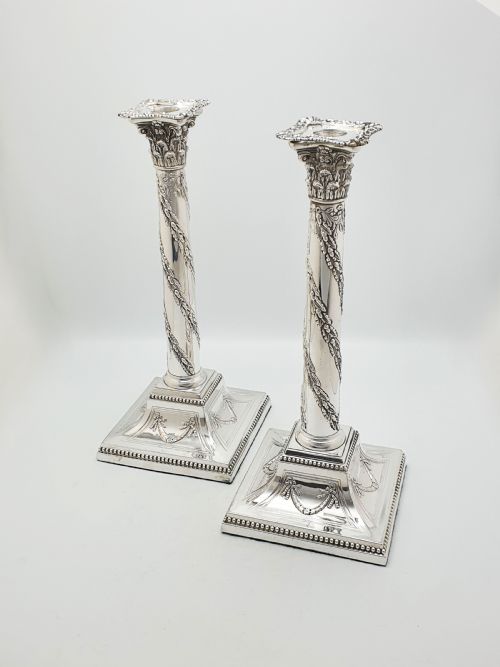


Corinthian Column Candlesticks
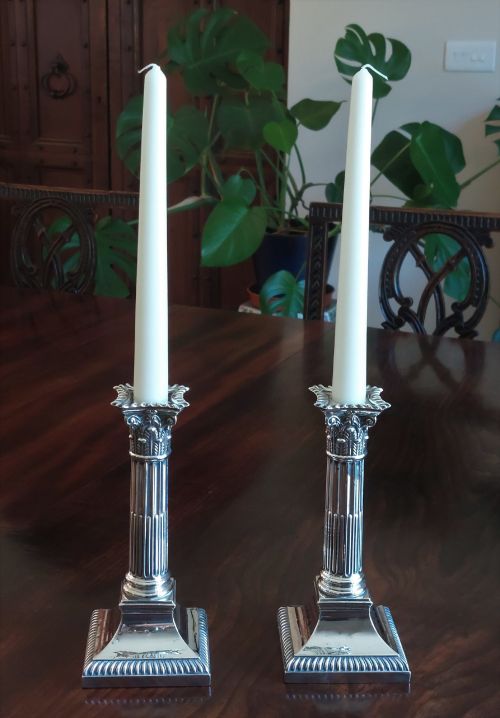
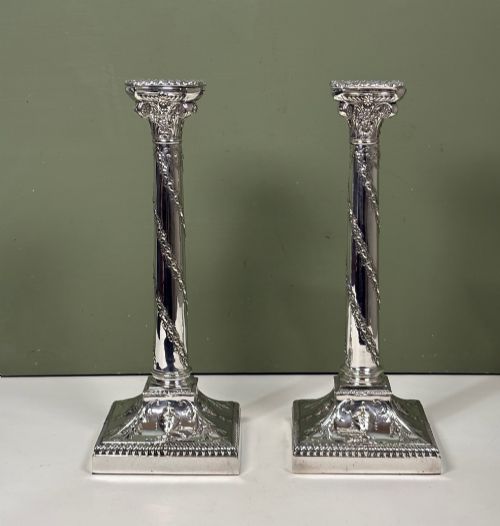
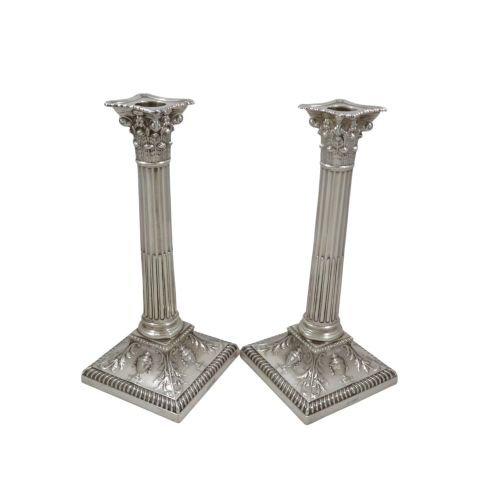
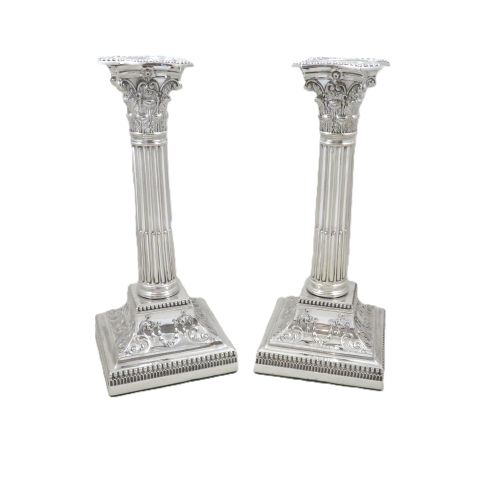
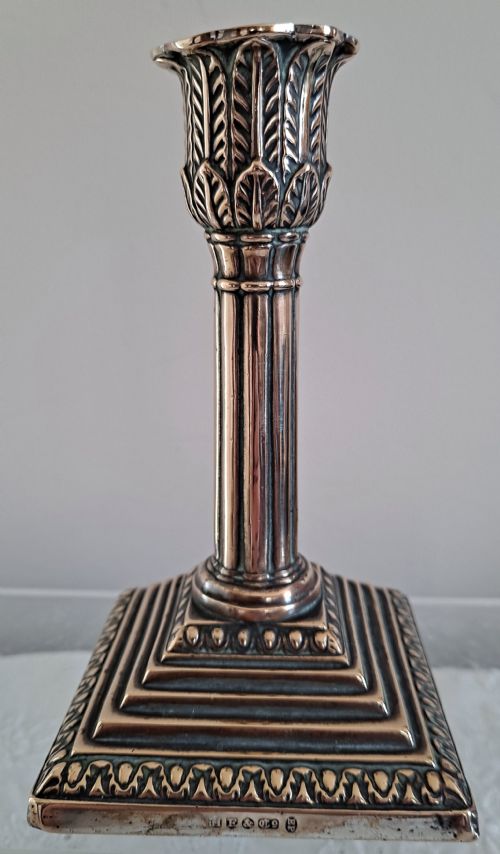
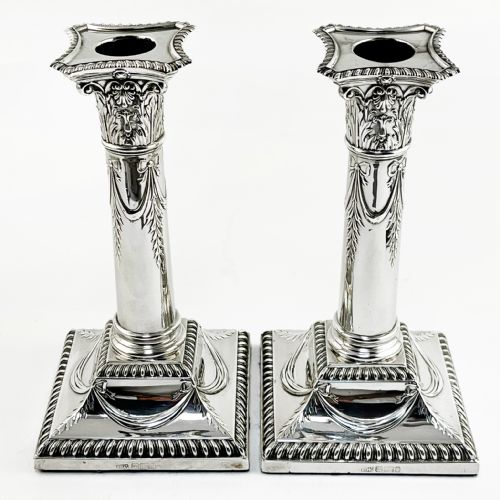
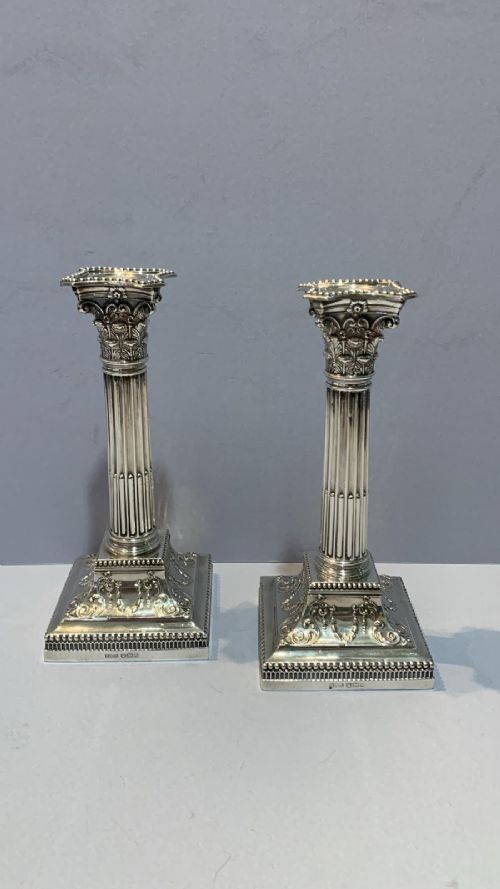
Corinthian column candlesticks bring classical architecture to the dining table, combining fluted shafts with ornate acanthus-leaf capitals.
Corinthian Column Candlesticks
Corinthian column candlesticks draw directly on classical architectural vocabulary, translating stone porticos into domestic lighting objects during the nineteenth and early twentieth centuries. Surviving examples span the Victorian and Edwardian eras, stretching from the late 1800s through to the interwar decades of the 1900s.
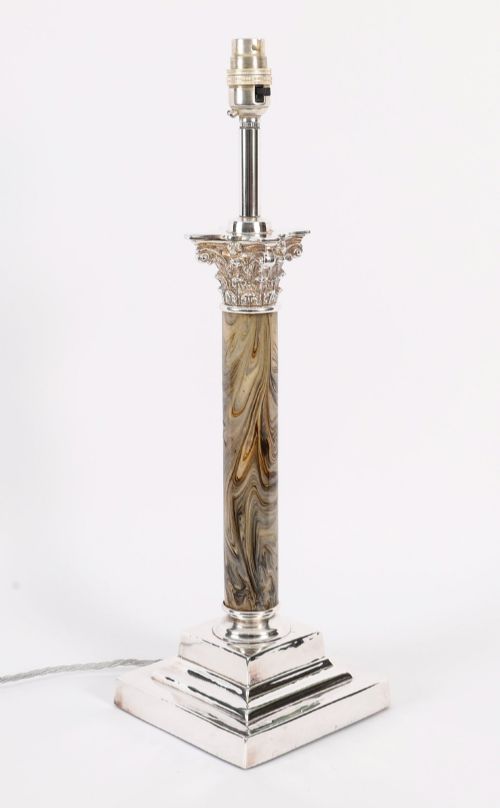
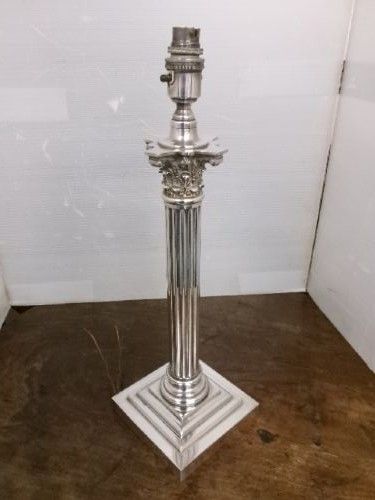
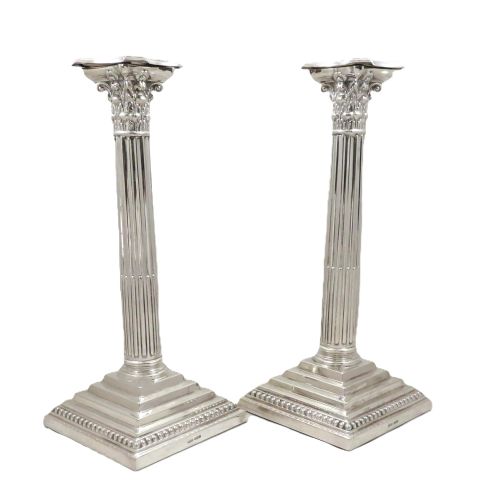
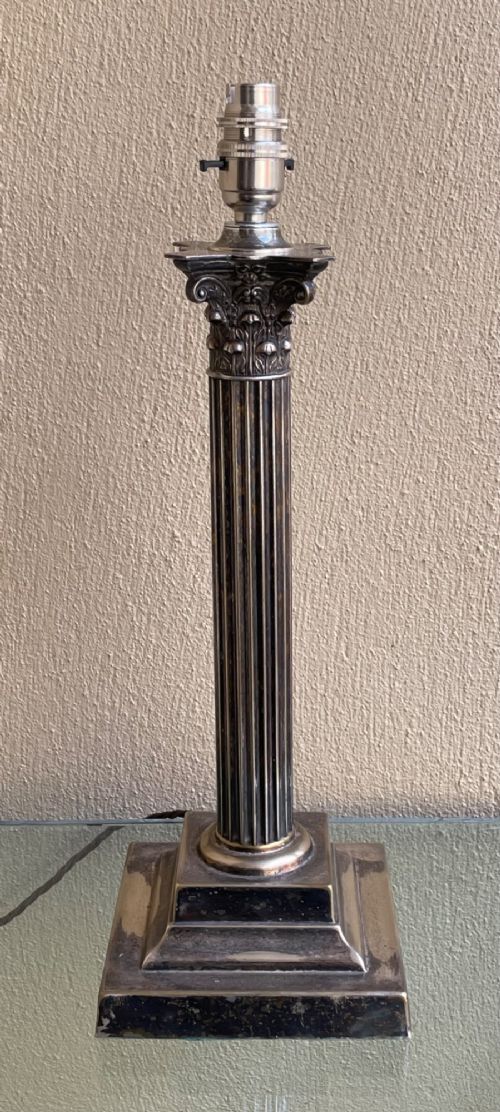
The standard form comprises a stepped or square base, a fluted cylindrical shaft, and a detailed capital beneath a removable drip pan. Many of these pieces were subsequently converted into table lamps or fitted for electrical wiring during later periods.
Materials and construction
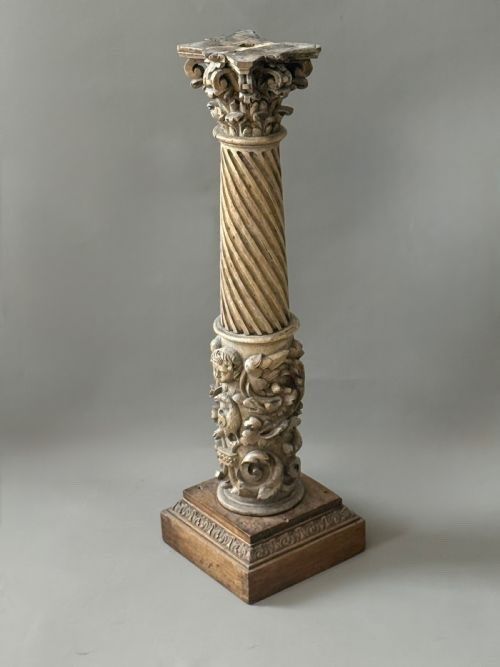
Makers utilised sterling silver, silver plate over copper or base metals, and solid brass, occasionally incorporating elements like onyx, glass, or carved wood. Silver pieces typically feature weighted bases filled with resin or plaster to provide stability to the tall, slender shaft.
Capitals were cast in detailed sections, often displaying intricate acanthus leaves and corner volutes, then soldered or fitted to the fluted columns and weighted plinths.
Corinthian Column Candlesticks Retail Price Guide 2026
Typical asking prices for corinthian column candlesticks among the pieces listed under this phrase on Sellingantiques today, from the lower quarter to the upper quarter. They describe what is for sale here now, not the wider market.
Some tall nineteenth-century brass columns served secret Masonic duties, standing guard in lodges rather than lighting dining tables.
Distinctions in craftsmanship
Quality rests heavily on the crispness of the cast metalwork in the capital and the proportions of the column. Superior pieces retain sharp, deep detailing in the acanthus leaves without softening from worn moulds or over-polishing.
Weight and construction integrity also divide the range, as heavier gauge silver and robustly cast brass bases offer better balance and durability than lighter, thinner alternatives.
Garrard & Co·John Pound & Co·Walter Latham & Son·Thomas Bradbury & Sons Ltd·James Dixon & Sons·Richard Hodd & Son
The Corinthian Column Candlesticks Glossary
- Capital
- The uppermost decorative member of a column, featuring carved or cast acanthus leaves and volutes in the Corinthian order. It supports the nozzle and drip pan.
- Drip pan
- A small, removable metal plate fitted just below the candle nozzle to catch melting wax. It is often missing or replaced on older examples.
- Fluting
- The series of shallow, vertical parallel grooves running up the shaft of the column. This technique creates visual texture and echoes ancient Greek and Roman architecture.
- Step base
- A plinth that descends in distinct square tiers toward the surface it rests upon. This design adds visual weight and stability to the base of the candlestick.
- Old Sheffield Plate
- An early method of fusing a thin sheet of sterling silver to a thicker copper core by heat and pressure. It is typically identified by visible seams or lines where the base metal shows through wear.
Corinthian Column Candlesticks: Frequently Asked Questions
How do I date these candlesticks?
Dating relies primarily on hallmarks stamped on sterling silver examples, which indicate the assay office and year of production. Silver-plated and brass versions are dated through stylistic clues, construction methods, and registration marks.
Design shifts between Victorian and Edwardian periods, such as base profiling and capital depth, also help narrow down the decade of manufacture.
Are original drip pans important?
Original drip pans significantly enhance completeness and value, as these small components were easily misplaced or damaged over decades of use. Matching metal type and wear patterns to the main body confirms whether the pan is original.
Many surviving pieces lack these pans entirely, having been converted to lamps or used without them.
Why are the bases weighted?
Tall, slender columns carry significant height above a relatively narrow foot, creating an unstable centre of gravity. Manufacturers filled the hollow bases with resin, pitch, or plaster to anchor the piece securely.
This internal weighting prevents the candlesticks from tipping easily during use.
Can converted lamps be restored?
Converting a lamp back to a candlestick depends on whether the original wiring channel altered or drilled through core structural components. Many conversions thread the cord through the existing central rod without causing permanent damage to the metalwork.
Consulting a specialist helps determine if the original nozzle assembly remains intact beneath the lamp fittings.