

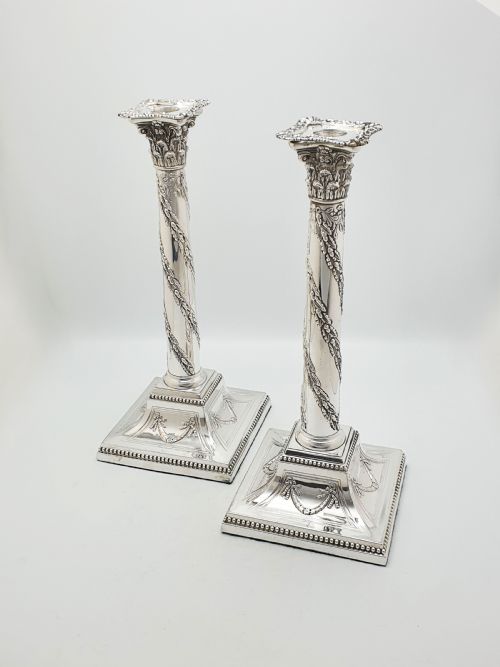


Silver Corinthian Candlesticks
Silver corinthian candlesticks bring classical architectural columns to the dining table, offering formal symmetry and lasting weight.
Silver corinthian candlesticks
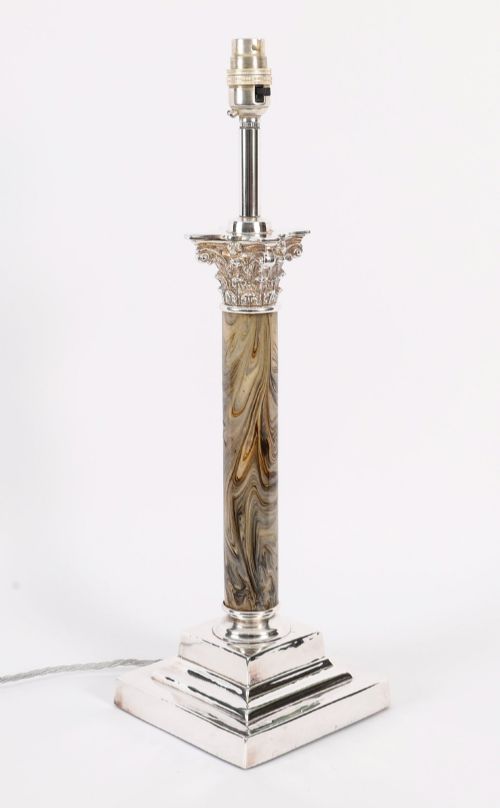
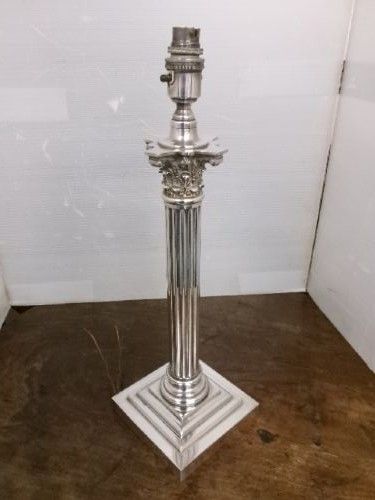
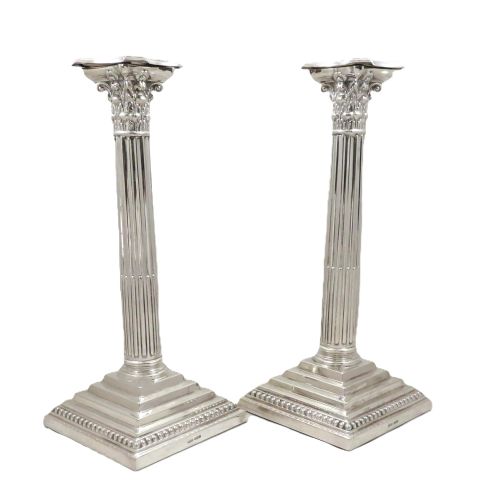
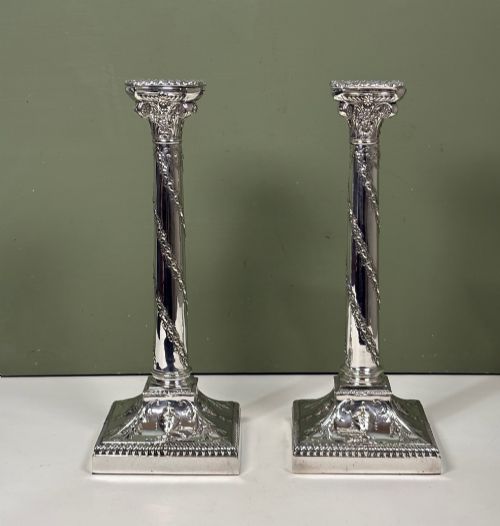
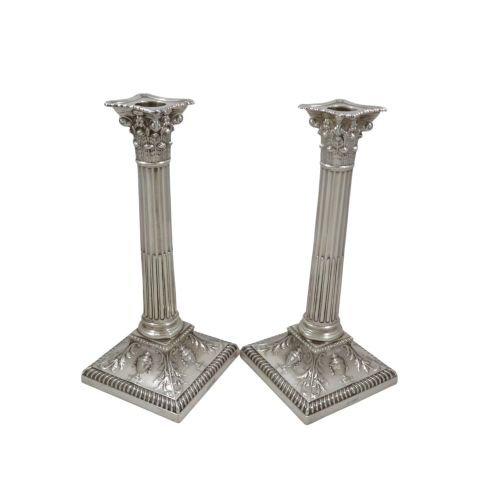
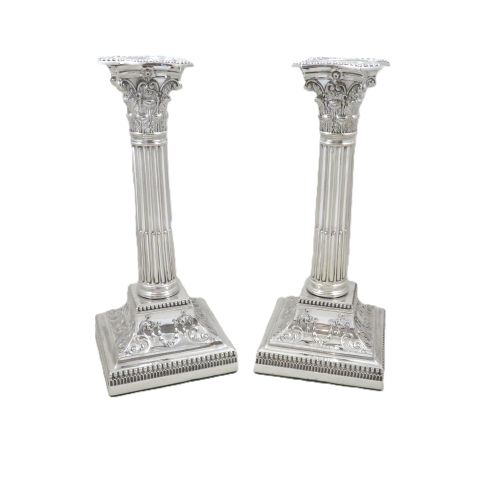
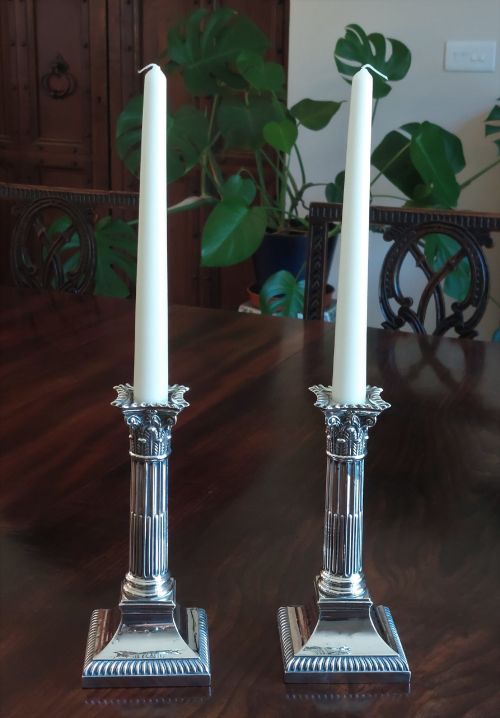
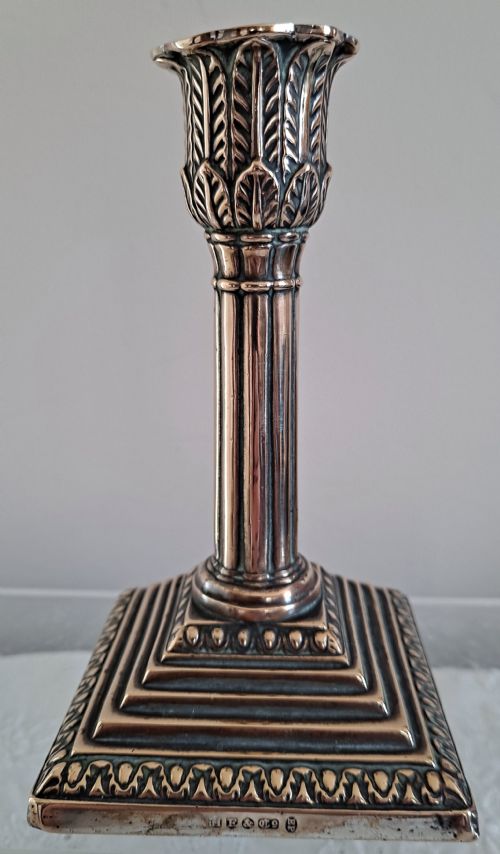
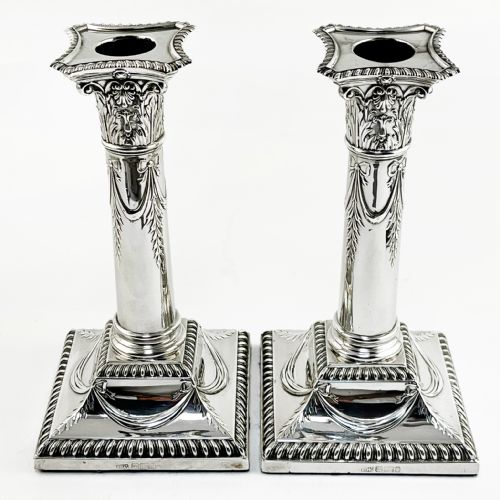
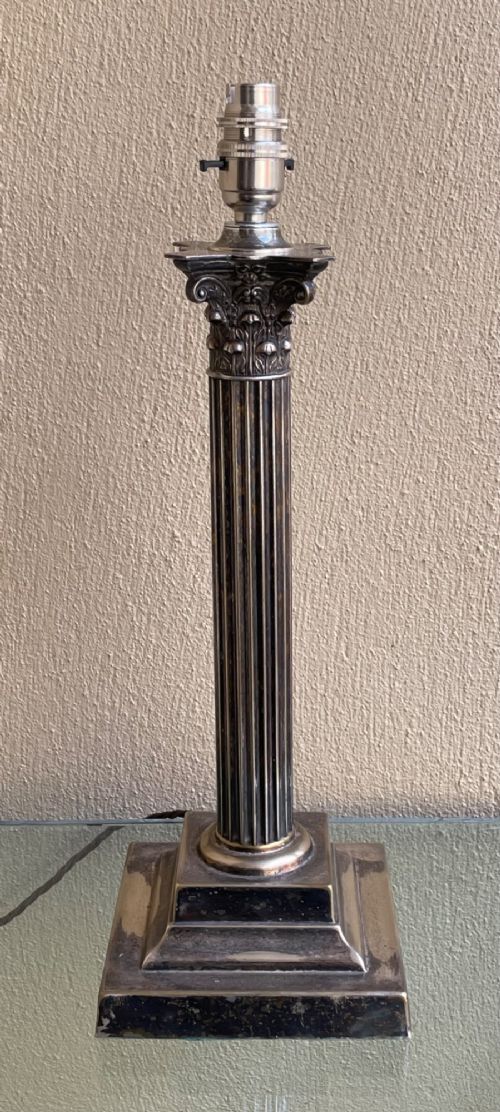
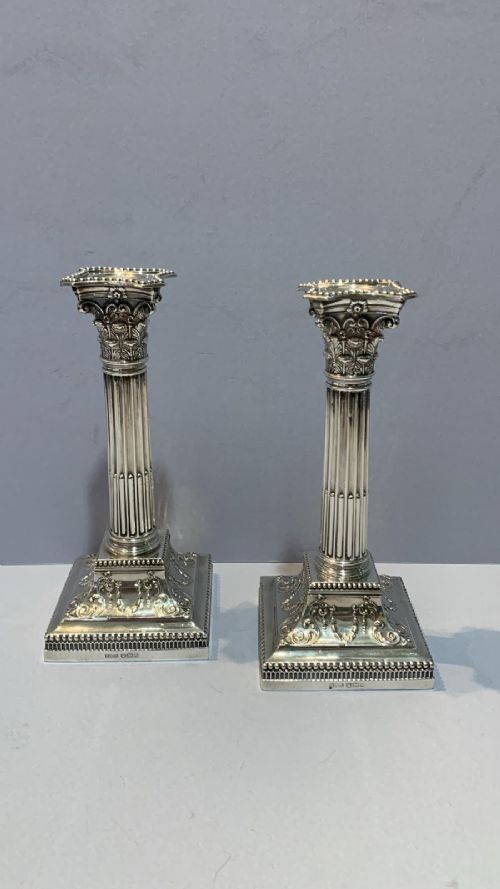
Silver corinthian candlesticks take the form of classical columns topped with ornamented capitals, drawing on ancient architectural motifs translated into domestic lighting. These pieces appear most frequently as matched pairs, standing upright to support candles in domestic settings.
Makers produced these items across the Victorian, Edwardian and later twentieth-century periods. The selection spans solid sterling silver and silver plate, alongside combinations incorporating glass or tortoise shell mounts.
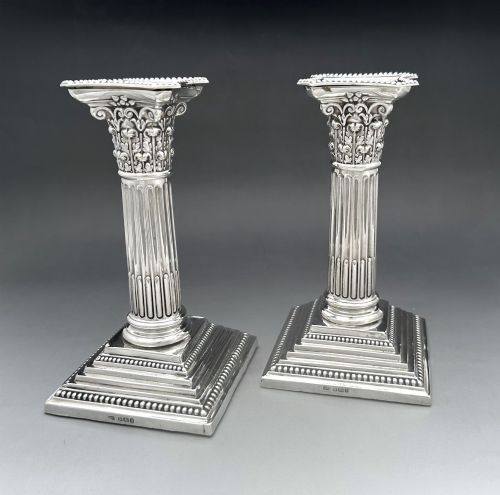
Styles range from straightforward fluted columns to twisted shaft variants and pieces featuring specific decorative details such as lion masks on the capital or stepped square bases.
How they were made
Silversmiths formed the main column shafts and square stepped bases from sheet silver or plated metals, often reinforcing the interior with resin or weighted materials to ensure stability. Capitals with acanthus leaf decoration were cast separately and soldered or mounted to the top of the shaft.
Makers utilised electroplated nickel silver and silver plate on copper alongside solid sterling silver. Pieces made in Sheffield, Birmingham and London carried hallmarks or maker marks stamped directly onto the metal surface.
Retail Price Guide 2026
Typical UK retail prices for silver corinthian candlesticks, calculated from the Sellingantiques database of over a million retail prices indexed since 2003. This retail price guide relies exclusively on Sellingantiques data; no external sources or auction records are used, so the figures do not describe the wider market.
Some columns hide tiny lion masks peeking out from the corners of their capitals.
What varies in quality
Quality rests in the crispness of the cast acanthus leaves on the capital and the structural integrity of the column. Sharply defined detailing and substantial gauge metal distinguish finer examples from softer, worn versions.
The harmony of the proportions between the stepped base, the fluted shaft and the capital determines the visual balance of the piece. Makers who attended to every junction created objects with greater physical presence.
Thomas Bradbury and Sons·William Hutton and Sons·Richard Hodd and Son·Nathan and Hayes·James Dixon and Sons·Elkington
The Silver Corinthian Candlesticks Glossary
- Capital
- The uppermost member of a column, decorated with carved or cast acanthus leaves in the Corinthian order. This part sits directly beneath the removable drip pan and nozzle.
- Column
- The vertical cylindrical shaft of the candlestick, which may be plain, fluted or twisted. It connects the stepped base to the capital.
- Hallmark
- A series of official stamps applied to British silver indicating the maker, assay office, standard of purity and year of assay. These marks provide precise dating for solid silver pieces.
- Electroplated nickel silver
- A base metal alloy of copper, nickel and zinc coated with a layer of pure silver through an electrolytic process. This technique became common for larger decorative items in the nineteenth century.
- Stepped base
- The square or weighted foot at the bottom of the candlestick, often rising in tiered stages. It provides the necessary footprint to support the height of the column.
Frequently Asked Questions
Are these candlesticks always sold in pairs?
Most examples survive and sell as matched pairs designed for symmetrical placement on mantelpieces or tables. Sets of four and individual pieces also appear in the record.
Matching pairs maintain balanced proportions when displayed together in traditional room settings.
How do I know if they are solid silver?
Solid silver pieces carry British hallmarks stamped on the base or nozzle indicating the assay office and purity standard. Silver plated and electroplated nickel silver versions lack these specific assay marks.
Weight alone does not distinguish solid metal from plated items, as both types often contain weighted interior filling.
What periods do these pieces come from?
The available record spans the Victorian, Edwardian and later periods up to the 1930s. Most items date from the late nineteenth century through the early decades of the twentieth century.
Neoclassical revival styles remained popular across these decades, leading makers to repeat classical column forms.
How should I clean silver candlesticks?
Gentle dusting with a soft cloth preserves the surface without removing remaining plating or wearing down soft details on the capital. Specialised silver creams applied sparingly help manage tarnish on solid silver.
Harsh abrasive cleaners or dips can damage plated surfaces and soften the crisp edges of the acanthus leaf casting.