

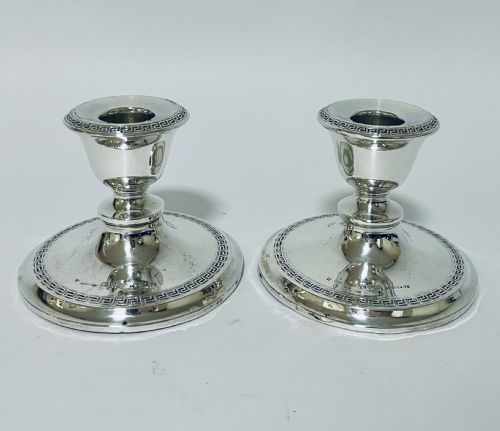


Vintage Silver Taper Holders
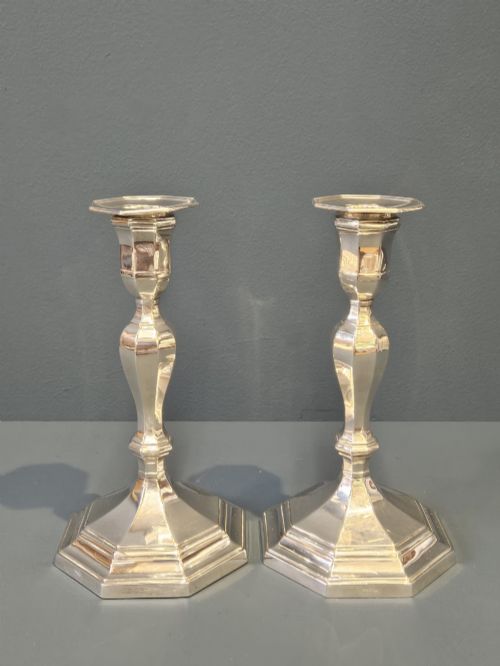
These vintage silver taper holders bring small-scale illumination to a desk, mantelpiece or dining table, combining practical function with period decorative detail.
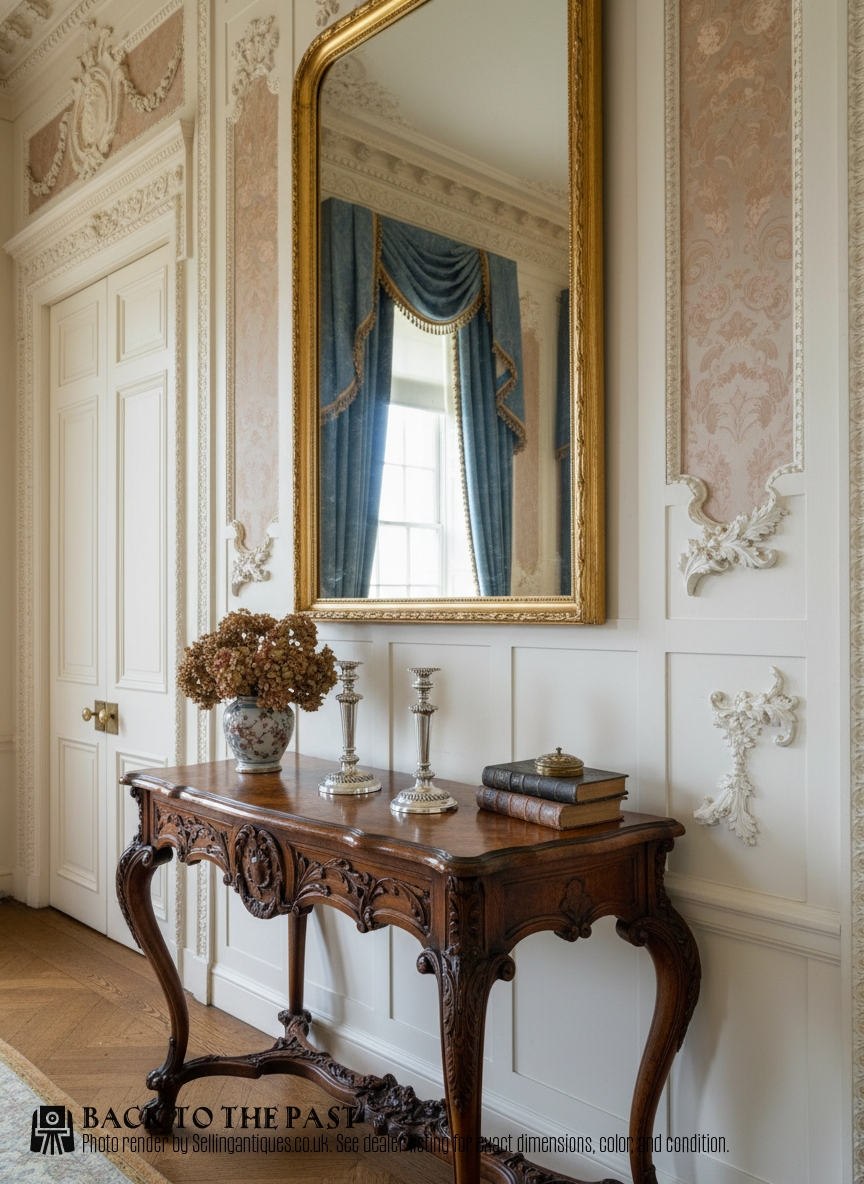
Vintage Silver Taper Holders
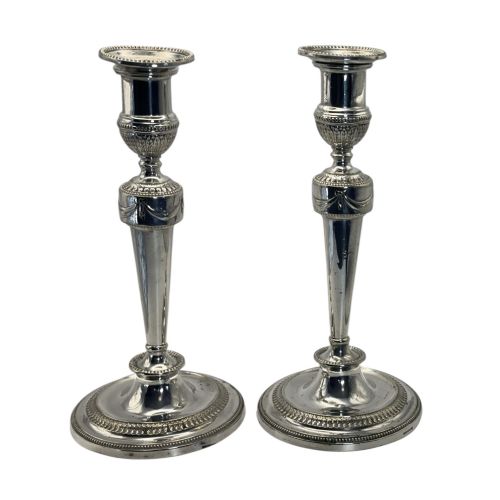
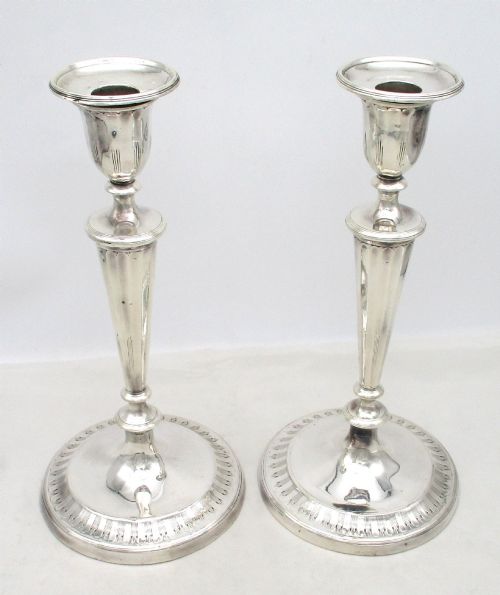
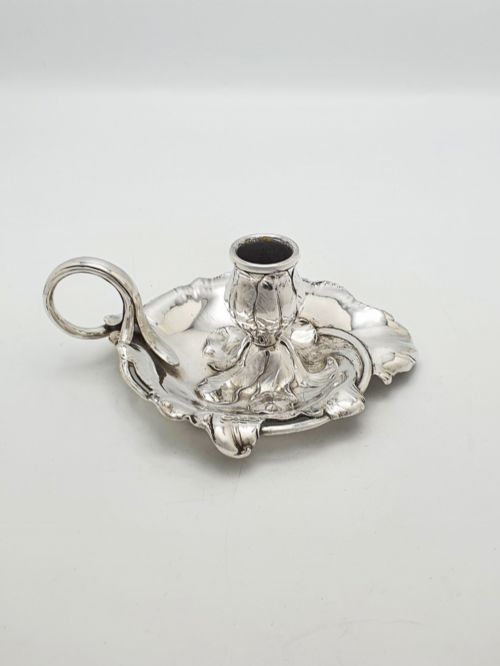
Vintage silver taper holders encompass a range of smaller lighting items, predominantly appearing on this page as candlesticks, chambersticks and desk candlesticks designed for narrow tapers. These items span various eras from the Georgian and Victorian periods through the Edwardian, Art Nouveau and Art Deco styles up to the mid-century.
Buyers will most frequently encounter silver-plated examples alongside sterling silver, Old Sheffield plate and alternative metals such as pewter and copper. Many of these pieces are matched pairs or single desk fixtures, reflecting formal dining arrangements or private writing spaces.
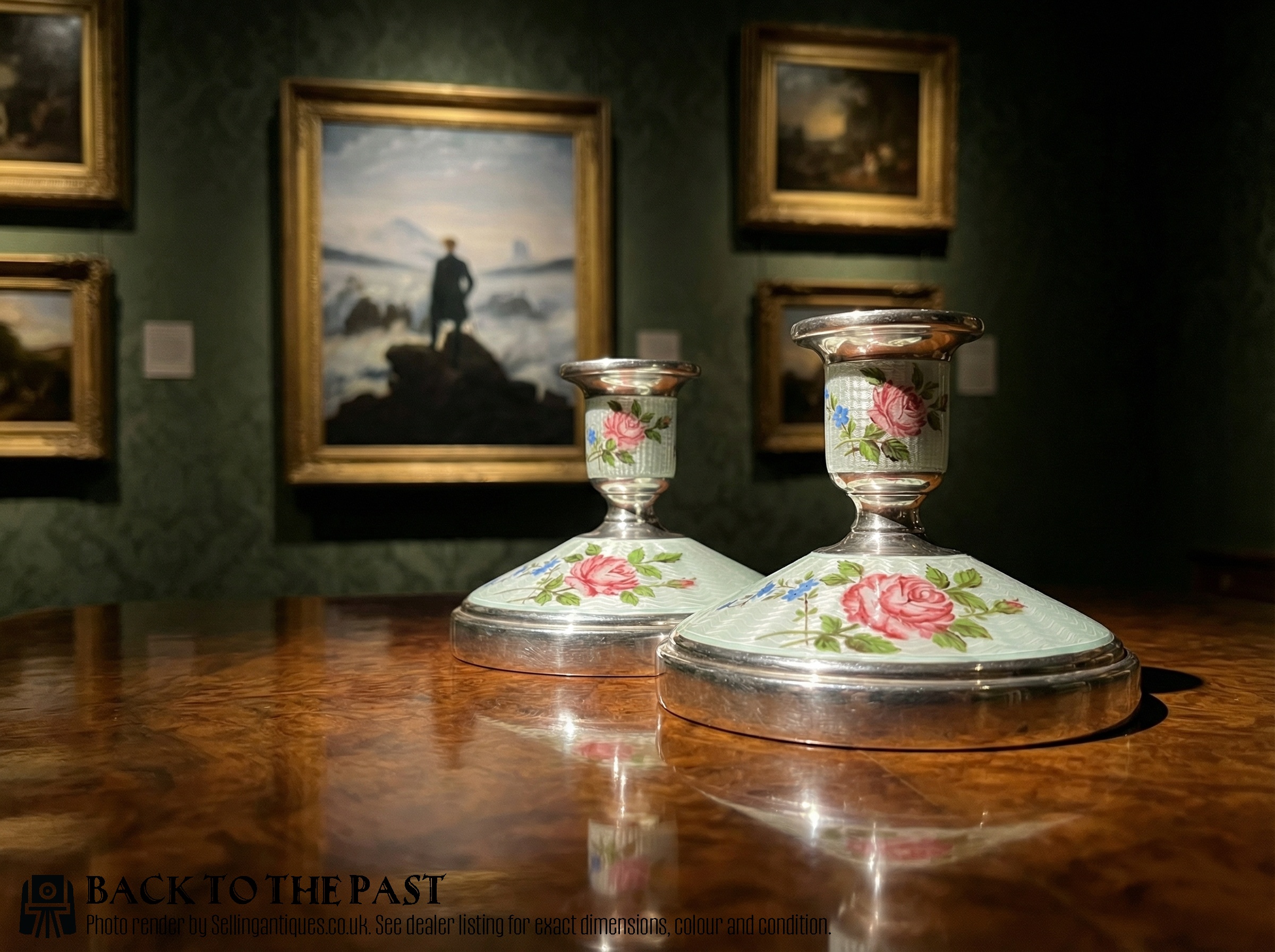
How they were made
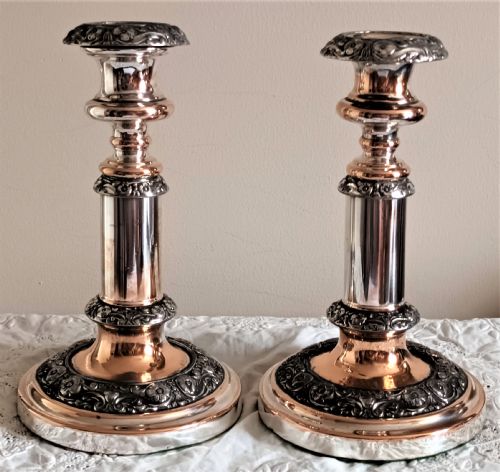
Makers utilised sterling silver, silver plate, Old Sheffield plate, EPNS, pewter and copper, often shaping columns, leaves and chamberstick pans through casting and hammering techniques. Certain Georgian and Victorian examples employ Old Sheffield plate, fusing a thin layer of silver to a copper base.
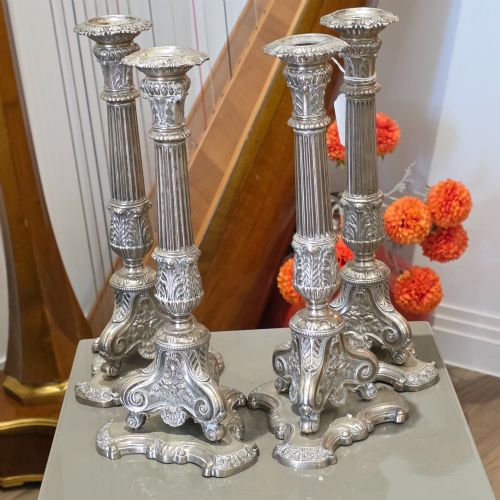
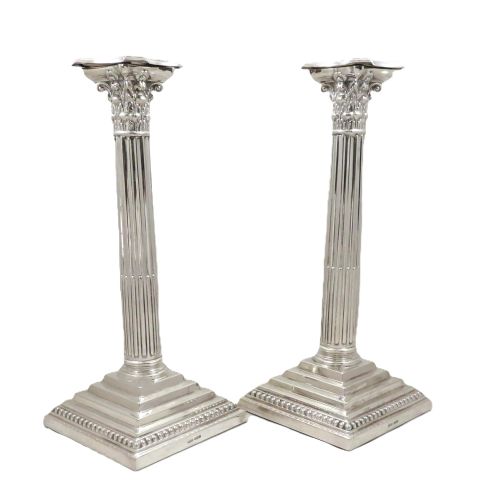
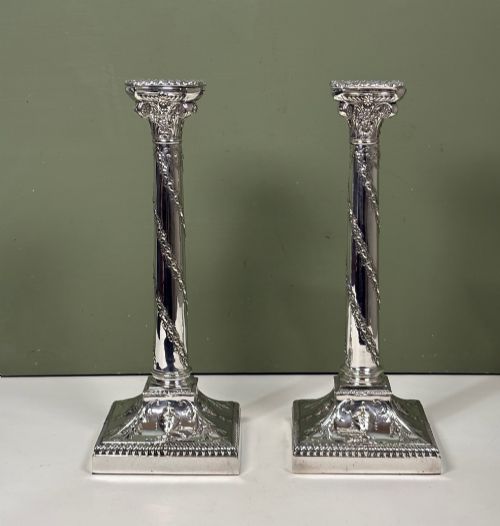
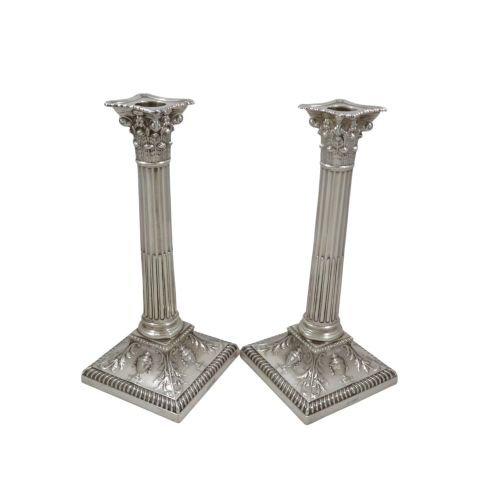
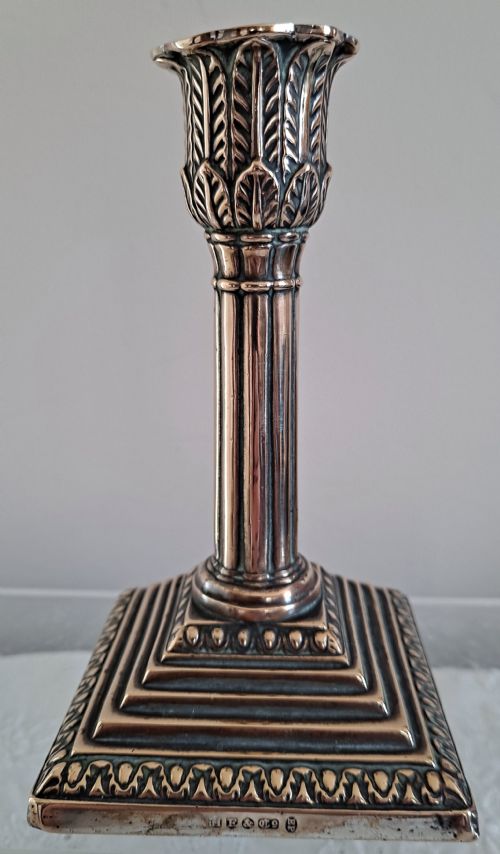
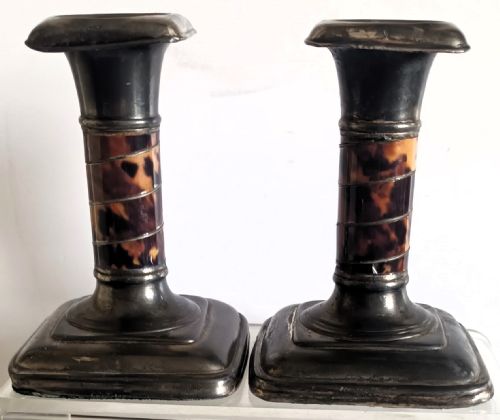
Art Nouveau and Arts & Crafts pieces integrate decorative elements like enamel or tortoiseshell with pewter or silver plating, demonstrating distinct period craftsmanship from workshops such as Tudric. Columnar designs frequently draw on Neoclassical or Corinthian architectural motifs.
Listings span the 18th, 19th and 20th centuries, covering Georgian, Victorian, Edwardian, Art Nouveau, Art Deco and mid-century periods in silver plate and sterling silver.
What varies in quality
The standard of design and execution distinguishes simpler production pieces from finer studio or maker-marked examples. Crispness in cast foliate or Corinthian column detailing indicates superior workmanship.
The integrity of the plated surface or the weight of the sterling silver substance dictates longevity and tactile presence. Maker attribution, such as work originating from established silversmiths, elevates an item's distinction.
Conrad Eduard Mappe·Geoffrey Bellam·Mappin & Webb·Archibald Knox for Liberty & Co·John Pound & Co·Thomas Bradbury & Sons Ltd·Barker Ellis·Garrard & Co Ltd·James Dixon & Sons
The Vintage Silver Taper Holders Glossary
- Chamberstick
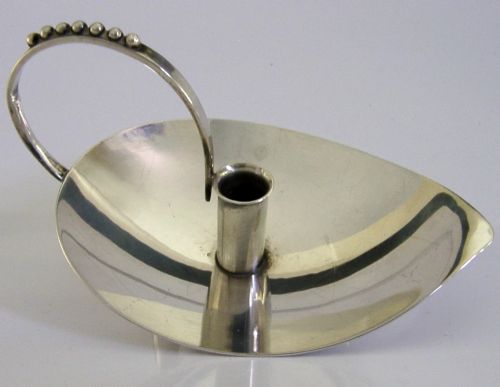
- A short candlestick fitted with a wide drip pan and a loop handle for carrying from room to room. These portable holders were commonly used for lighting the way to bed.
- Old Sheffield plate
- An early method of fusing a thin sheet of sterling silver to a thicker copper core by heating and rolling. This technique produces characteristic edges where the copper base metal becomes visible.
- Taper holder
- A compact candlestick designed specifically to hold thin wax tapers rather than thick household candles. They are frequently found on desks and dressing tables.
- Corinthian column
- An architectural order featuring ornate, acanthus-leaf capitals adapted for the shafts of candlesticks. This classical revival style was popular across the Victorian and Edwardian periods.
- EPNS
- Electroplated Nickel Silver, a common base metal composition coated with a thin layer of silver through an electrical process. It provided an accessible alternative to solid sterling silver.
Vintage Silver Taper Holders: Frequently Asked Questions
What is the difference between sterling and plated?
Sterling silver consists of solid precious metal throughout, marked with official hallmarks indicating its purity. Silver-plated pieces use a base metal like copper, brass or nickel silver covered by a thin outer layer of pure silver.
Over long periods of handling, plated items may show underlying base metal through wear, whereas sterling silver retains its metal composition.
Are these holders meant for standard candles?
These pieces are designed for narrow taper candles rather than thick pillar or standard dining candles. Check the diameter of the sconce before sourcing candles.
Using the correct taper size prevents wax from spilling down the column and protects the holder from heat damage.
How do I date a pair of candlesticks?
Hallmarks on sterling silver items provide specific assay office symbols and date letters that pinpoint the exact year of manufacture. Stylistic indicators like Corinthian columns or Art Nouveau curves offer general period clues for unmarked plated items.
Construction methods, such as the presence of Old Sheffield plate manufacturing traits, also help narrow down the production era.