



Vintage Enamelled Candlesticks
These vintage enamelled candlesticks bring bright colour and steady light to a room, drawing the eye with rich metalwork and fired glass.
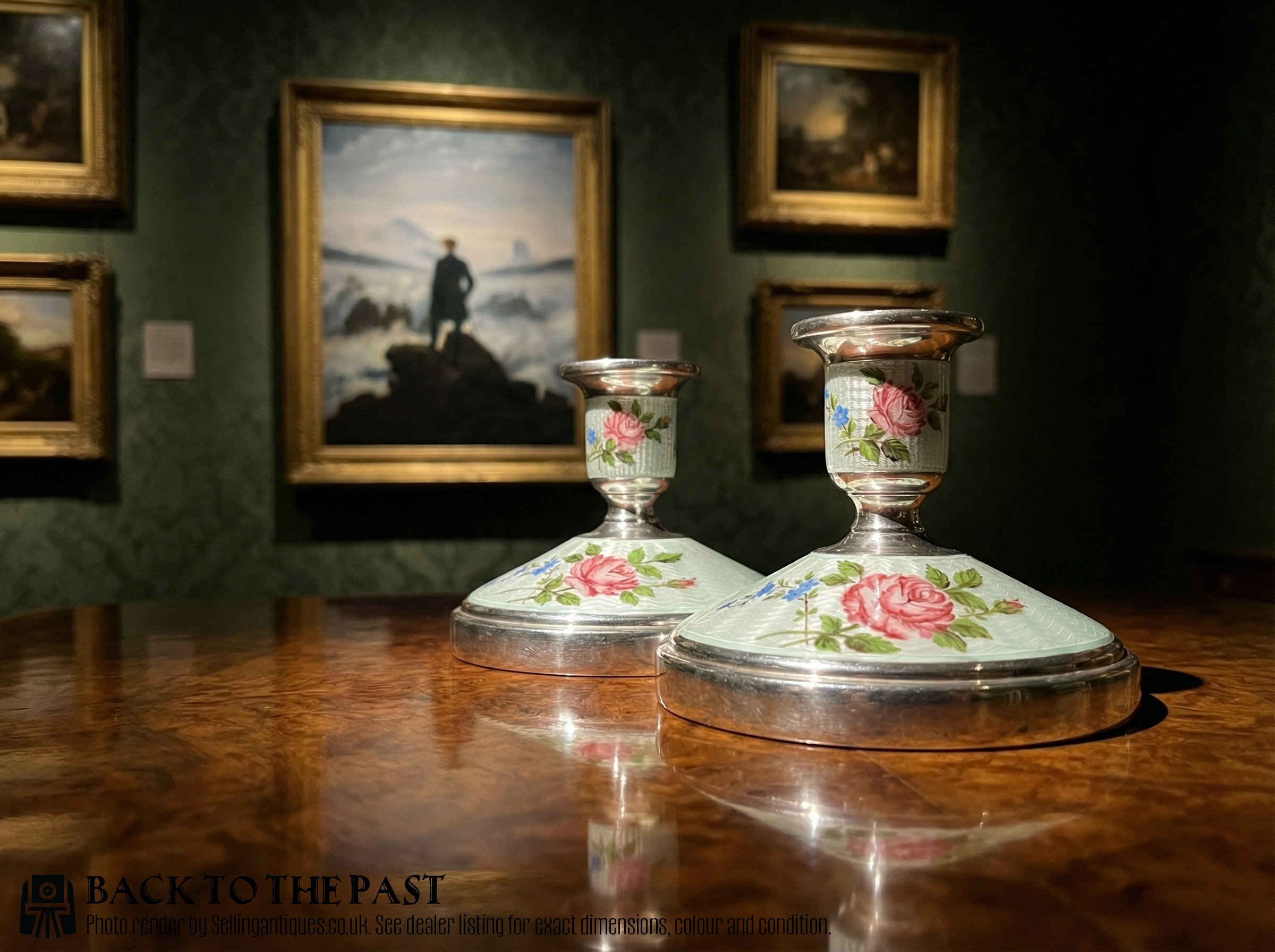
Vintage Enamelled Candlesticks
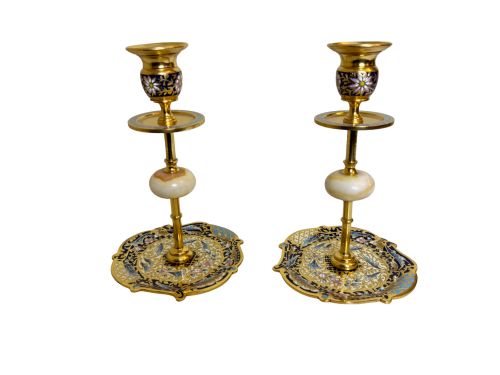
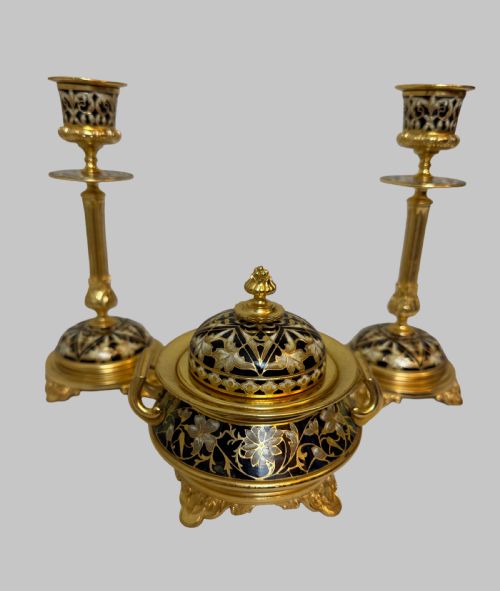
When you search for vintage enamelled candlesticks, you find a varied group of candle holders that combine metal with fused glass colour. The selection spans the nineteenth century through the mid-twentieth century, showing diverse regional tastes from French ornate designs to British Arts and Crafts pieces.
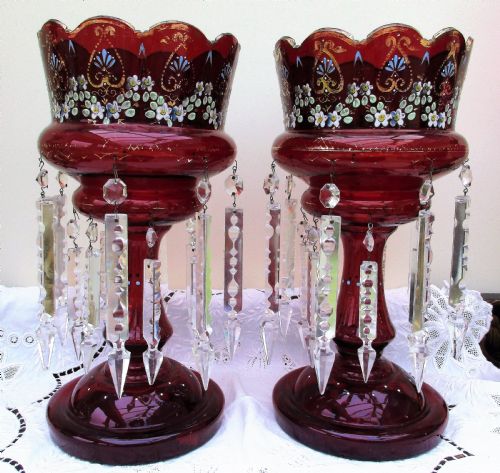
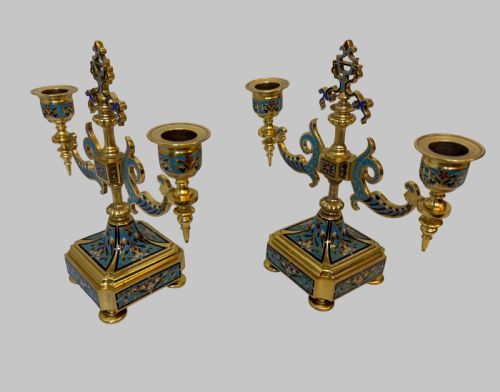
The most frequent examples on this page are nineteenth-century French pairs featuring champleve enamel set into gilt bronze and onyx, alongside British Arts and Crafts items. Forms range from simple chamber sticks to heavy mantel lustres and twin-light candelabra.
Makers and styles cross several decades, including Victorian, Edwardian, and mid-century British periods. Buyers encounter traditional chamber sticks, desk accessories, and tall candlesticks displaying ruby glass, brass, and porcelain enamel.
How they were made
Craftsmen fused powdered glass onto metal bases at high temperatures, creating durable enamelled surfaces in champleve or cloisonne techniques. Artisans often worked enamel into recessed channels on heavy bronze, brass, or pewter foundations.
Support structures combine gilt bronze, onyx, crystal, and spelter to give the candlesticks weight and balance. Finishing touches include gold leaf gilding and delicate ruby glass drops on lustres.
Vintage Enamelled Candlesticks Retail Price Guide 2026
Typical asking prices for vintage enamelled candlesticks among the pieces listed under this phrase on Sellingantiques today, from the lower quarter to the upper quarter. They describe what is for sale here now, not the wider market.
Grand Tour travellers brought home miniature micro mosaics so they could pack Italy's grandeur into their luggage.
What varies in quality
Quality rests on the crispness of the metal casting and the depth of the enamel work. Finer examples show precise cell work and well-preserved gilding on bronze or brass.
The choice of secondary materials marks the difference between standard and superior pieces. Solid onyx bases, crystal drops, and intact micro mosaics elevate a pair far above simpler brass and porcelain versions.
Archibald Knox for Liberty & Co
The Vintage Enamelled Candlesticks Glossary
- Champleve enamel
- A technique where troughs are dug into a metal surface and filled with enamel powder before firing. This method creates bold patterns bounded by metal lines.
- Gilt bronze
- Bronze coated with a thin layer of gold leaf or gold amalgam. It provides a bright, durable finish that resists tarnishing.
- Mantel lustre
- A decorative candlestick hung with glass prisms designed to catch and reflect light. They sit traditionally on a fireplace mantelpiece.
- Chamber stick
- A short candlestick fitted with a pan to catch dripping wax and a handle for carrying. They provided portable light before electric lighting.
- Spelter
- A zinc alloy used as a cheaper substitute for bronze. It takes a bronze-like finish and appears in nineteenth-century decorative metalwork.
Vintage Enamelled Candlesticks: Frequently Asked Questions
How do I clean vintage enamelled candlesticks?
Dust the surfaces gently with a soft dry cloth to protect the fragile enamel and metal finishes. Avoid using harsh chemical polishes or water on enamelled and gilded areas.
Test any cleaning method on a hidden underside first. Professional care is best for pieces with delicate micro mosaics or crystal drops.
Were these candlesticks meant for dining tables?
Many taller pairs and candelabra served as formal dining table or sideboard centrepieces during the nineteenth and twentieth centuries. Shorter chamber sticks were designed for carrying down dark hallways to bedrooms.
Desk accessories and mantel lustres fulfilled decorative and functional roles in studies and reception rooms. Their diverse heights suit different placement around a modern home.
How do I date a pair of candlesticks?
Examine the materials, manufacturing marks, and prevailing artistic style of the piece. Nineteenth-century examples often use champleve enamel on heavy gilt bronze, while later twentieth-century items show cleaner modernist lines.
Assay marks on silver components provide exact decades and towns of origin. Stylistic clues like Arts and Crafts motifs point clearly to the turn of the twentieth century.