
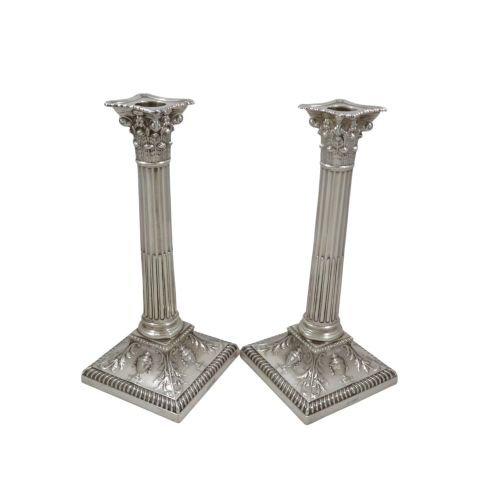
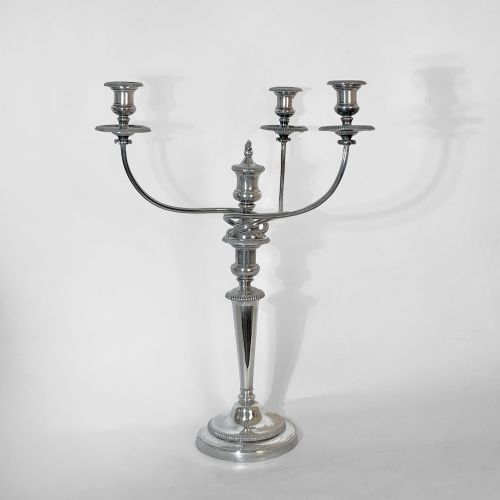
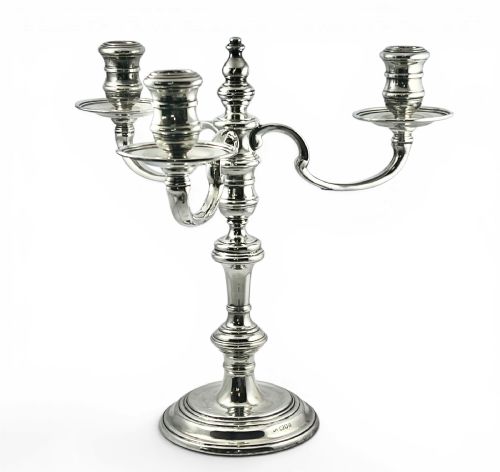

Vintage Silver Candle Holders
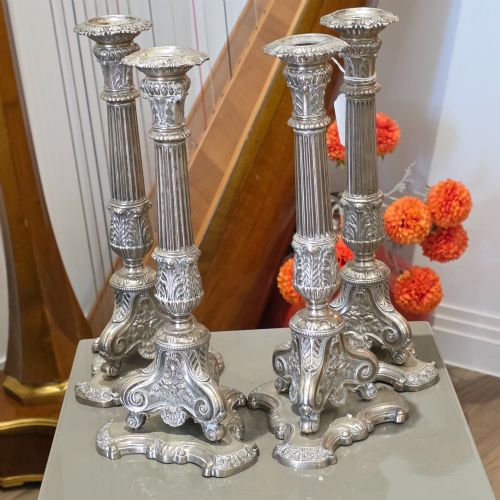
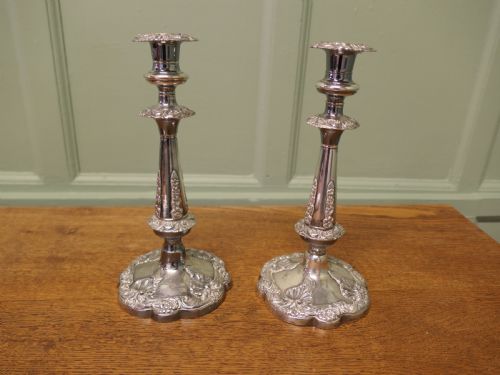
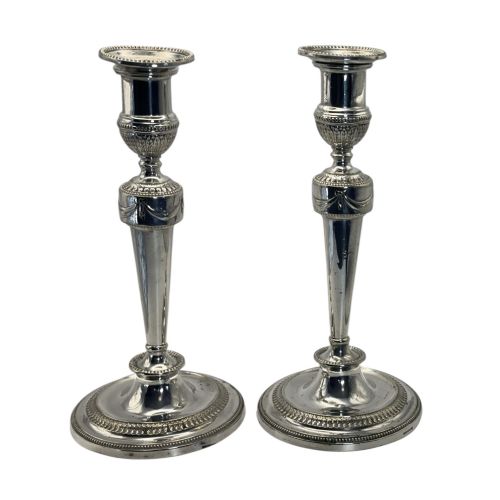
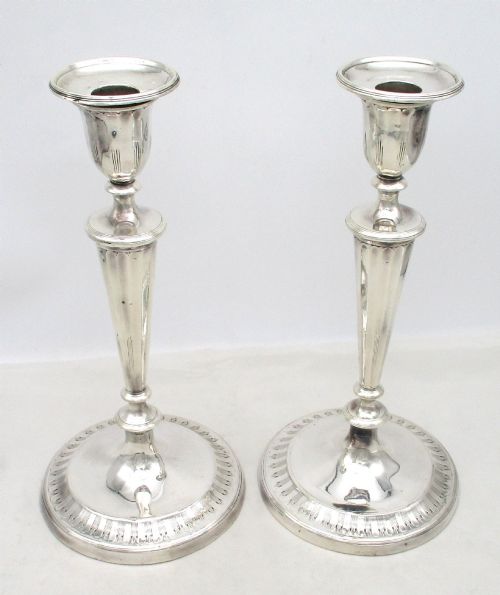
Vintage silver candle holders encompass everything from slender Edwardian sticks to heavy George V table pieces designed to cast a warm glow across a room.
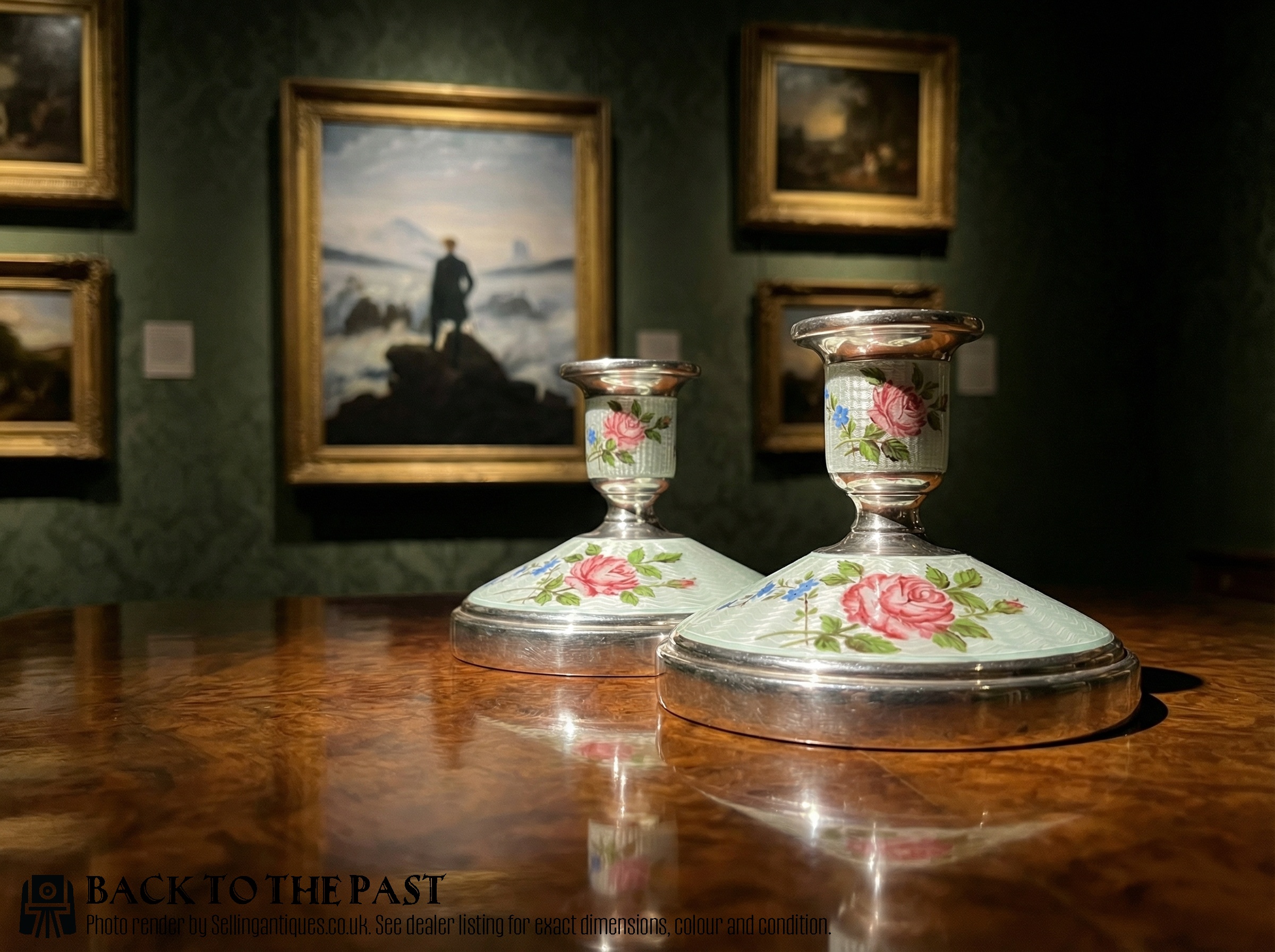
Vintage Silver Candle Holders
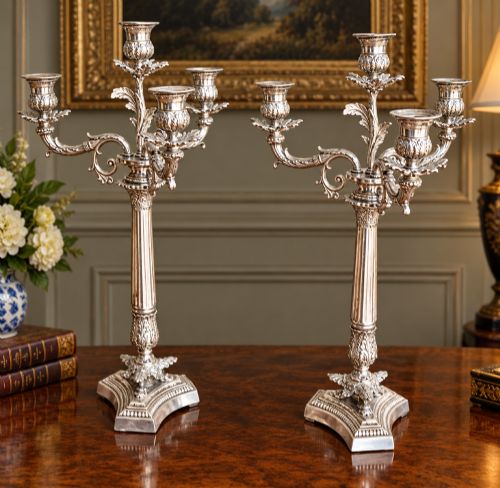
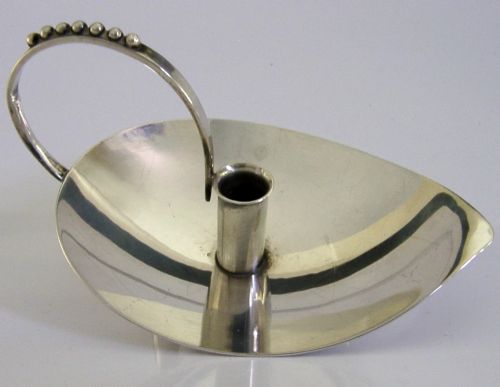
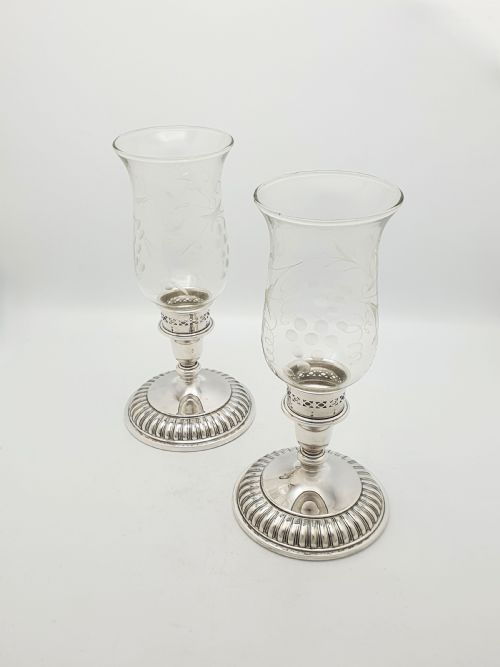
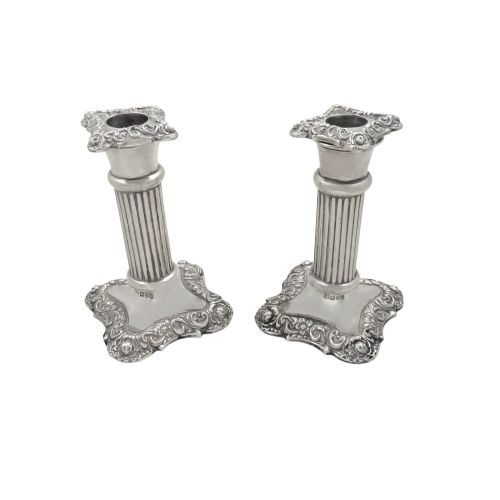
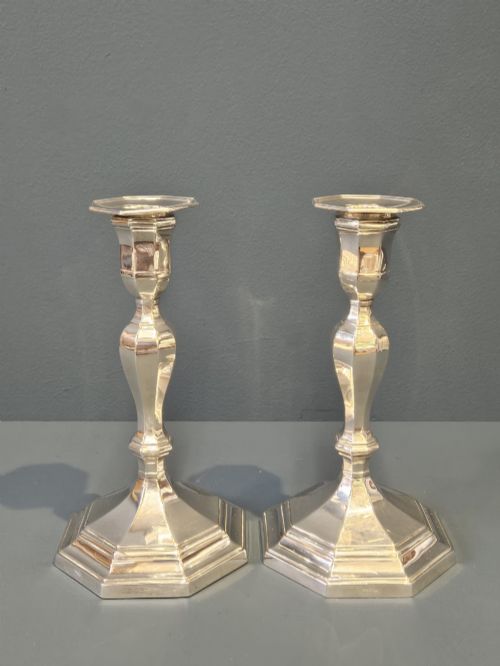
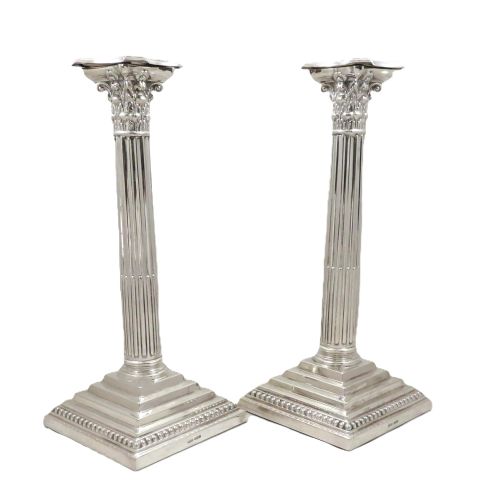
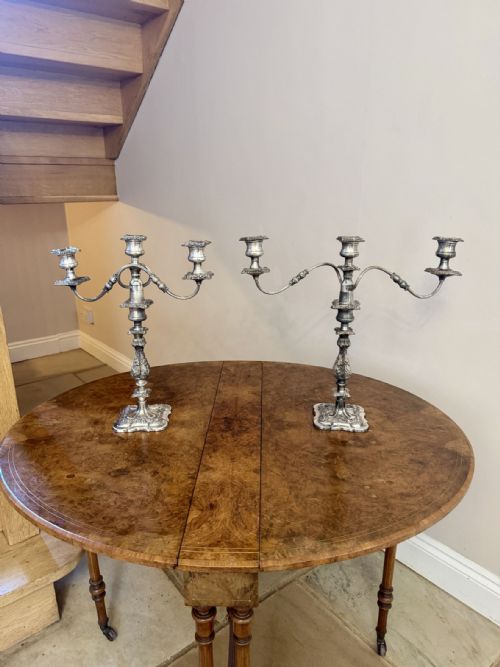
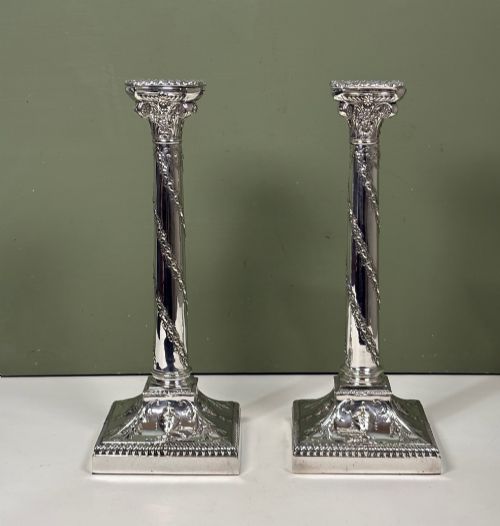
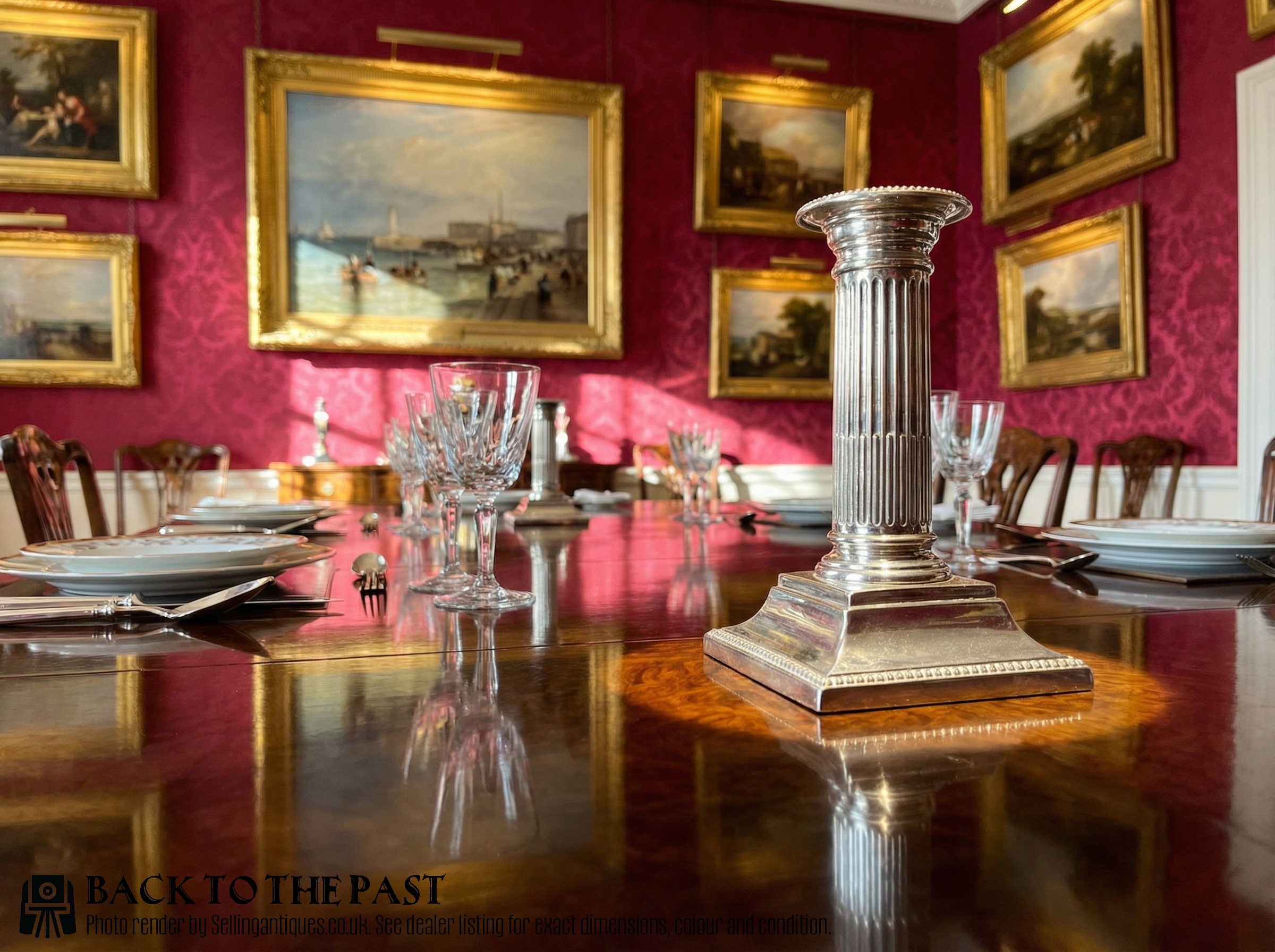
Vintage silver candle holders include single candlesticks, multi-branched candelabras, wall sconces, chambersticks, and table lamps spanning the nineteenth century through the mid-twentieth century. The selection ranges from plain Georgian Revival columns to ornate Rococo Revival designs and sweeping Art Nouveau leaf forms.
Most examples found on this page are paired items made from silver plate or sterling silver, alongside occasional variants in pewter, copper, and electroplated nickel silver. Forms stretch from low desk candlesticks to tall telescopic patterns and convertibles fitted with glass hurricane lamps.
Origins span English workshops in Sheffield and London, alongside continental European makers working in styles from Neoclassical to Arts and Crafts. Pieces often date from the Victorian and Edwardian eras, continuing through the nineteen-thirties and fifties.
Materials and methods of construction
Construction relies heavily on sterling silver or silver plate applied over base metals such as copper or Britannia metal, often weighted at the base with plaster or resin for stability. Old Sheffield plate employs a fused sheet technique, while later items utilise electroplating processes.
Alternative materials like pewter and bronze appear in specific artistic movements, sometimes paired with enamel work or tortoiseshell insets as seen in Arts and Crafts designs.
Casting and stamping techniques shape the nozzles, drip pans, and ornate bases, with columns frequently formed from rolled sheet metal soldered to cast capitals and feet.
Vintage Silver Candle Holders Retail Price Guide 2026
Typical asking prices for vintage silver candle holders among the pieces listed under this phrase on Sellingantiques today, from the lower quarter to the upper quarter. They describe what is for sale here now, not the wider market.
Listings feature items from the nineteenth century through the nineteen-sixties, incorporating sterling silver, silver plate, pewter, and copper.
Assessing quality in silver lighting
Quality reveals itself in the crispness of chased and cast ornament, where rococo scrolls and neoclassical fluting remain sharp rather than softened by excessive polishing or poor casting. Weight distribution and metal thickness also dictate structural integrity, particularly in taller candelabras and multi-light branches.
Maker attribution and hallmarks offer clear distinctions, separating standard commercial production from workshops associated with recognised designers and silversmiths. The survival of original silver plating without extensive base metal telegraphing through thin areas preserves both visual appeal and authenticity.
Conrad Eduard Mappe·Mappin & Webb·WMF·Liberty & Co·Smith & Sissons & Co
The Vintage Silver Candle Holders Glossary
- Candelabra
- A branched lighting fixture holding multiple candles on a single base. These often feature removable arms to convert into simple candlesticks.
- Chamberstick
- A low candle holder fitted with a shallow drip pan and a loop handle. These were carried through bedrooms and corridors in the evening.
- Old Sheffield plate
- An early form of plate created by fusing a thin sheet of silver to a thicker copper core. The underlying copper occasionally shows through at high points with age.
- Telescopic
- A sliding shaft mechanism that allows the height of the candlestick to be adjusted. This engineering feature appears on certain nineteenth-century examples.
Vintage Silver Candle Holders: Frequently Asked Questions
How do I clean vintage silver candle holders?
Use a soft cloth and a gentle silver polish specifically formulated for plated or solid silver surfaces. Avoid abrasive pads that can wear away thin silver plate, especially on older items.
Take care around weighted bases and felted bottoms to prevent moisture from seeping inside the structure during cleaning.
What is the difference between Sheffield plate and silver plate?
Old Sheffield plate involves fusing a layer of silver to a copper base before rolling the sheets, resulting in a sandwich of metals where copper subtly shows through wear. Modern silver plate applies a thin coat of silver via electrolysis over a base metal like nickel silver or brass.
Inspect the edges and wear points to determine which plating method a particular piece utilises.
How do I date an unmarked silver plated candlestick?
Examine the overall style, such as rococo scrolls, neoclassical columns, or art nouveau leaf motifs, which point towards specific Victorian or Edwardian periods. Construction techniques, base weights, and any registry marks or design numbers also help narrow down the decade of manufacture.
Compare the proportion and weight with documented examples from known makers of the nineteenth and early twentieth centuries.