

Classical Silver Candlesticks
Classical silver candlesticks bring monumental order to a dining table through columnar shafts and urn sockets.
What classical silver candlesticks are
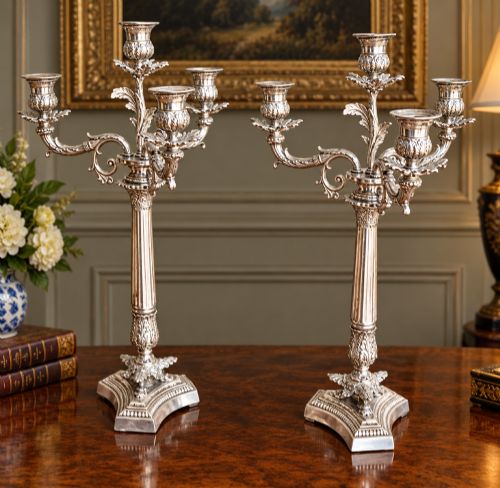
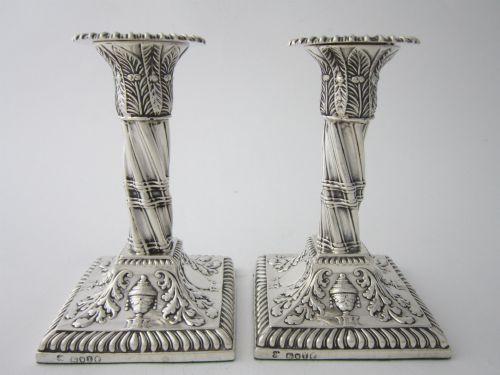
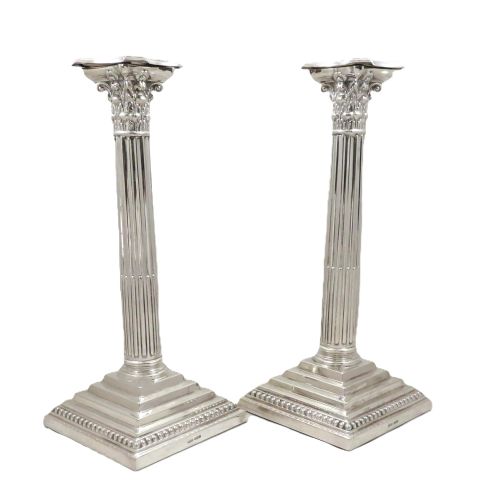
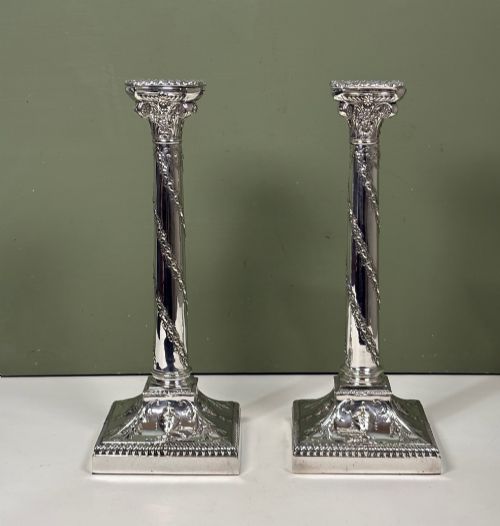
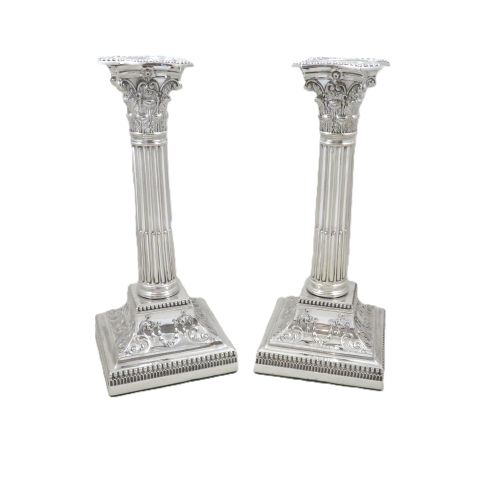
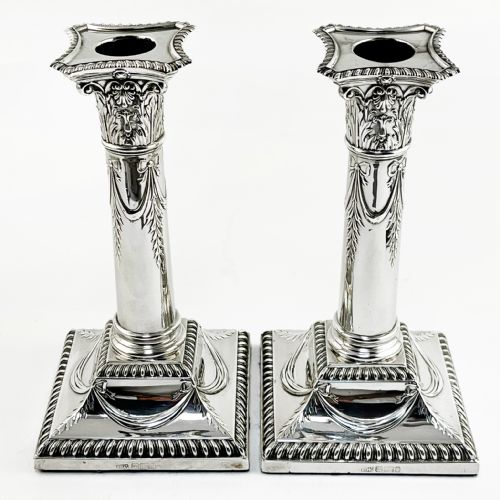
Classical silver candlesticks draw on ancient architectural vocabularies, employing fluted shafts, stepped bases, and capitals inspired by Greek and Roman buildings. When you search for classical silver candlesticks, you encounter pairs fashioned in sterling silver or plated metals across the Georgian, Victorian, and Edwardian eras.
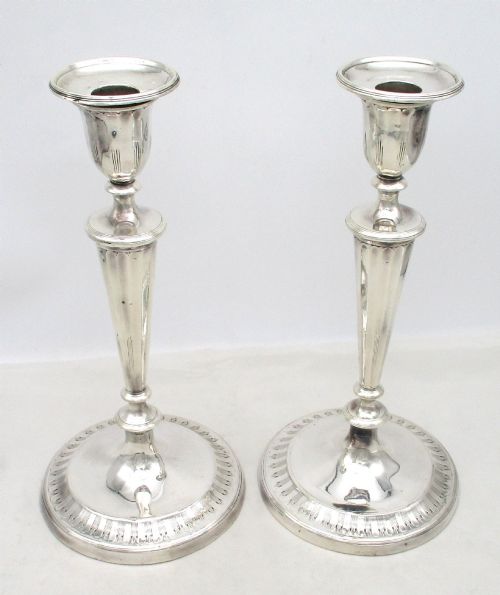
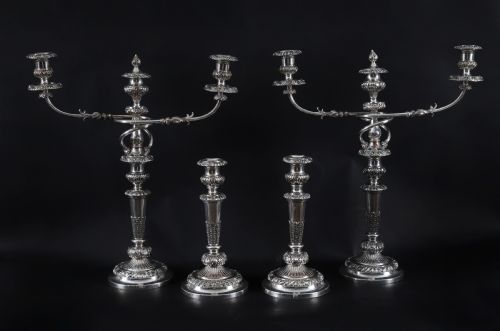
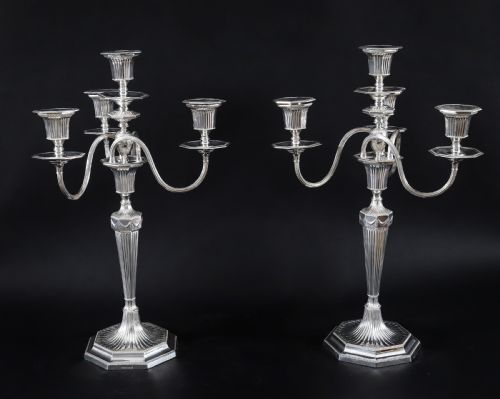
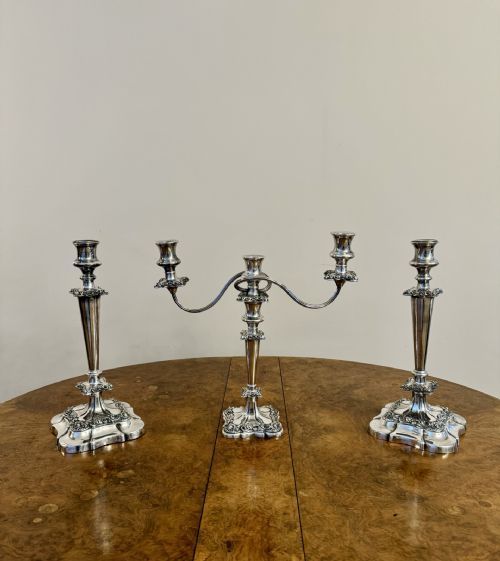
The George III examples frequently utilise Sheffield plate or solid silver with restrained neo-classical detailing, whilst Edwardian interpretations lean towards crisp Adams style motifs. Most survivors appear in matched pairs designed to anchor the ends of a mantelpiece or sideboard.
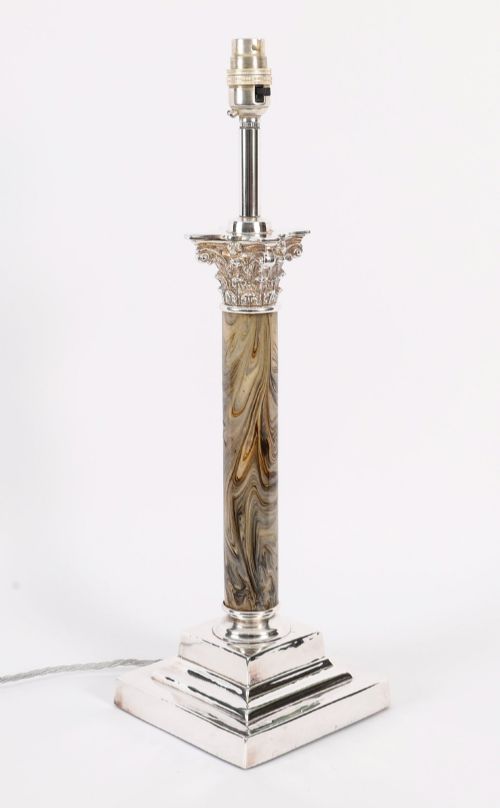
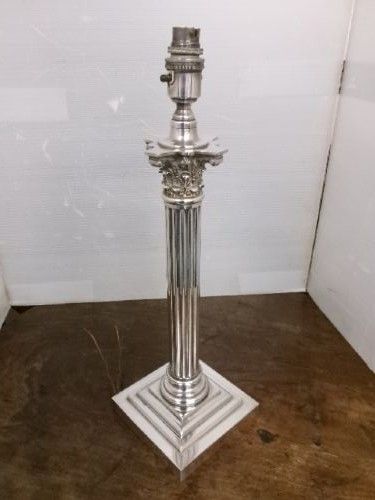
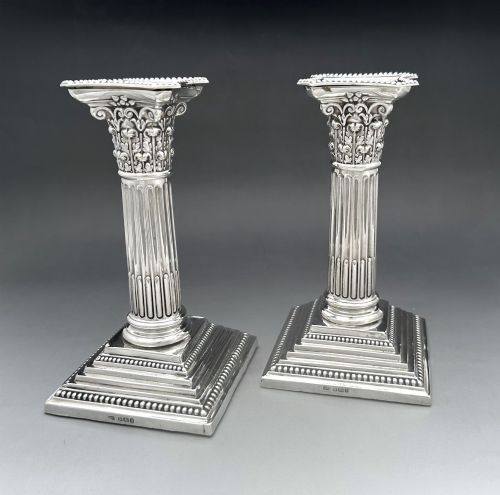
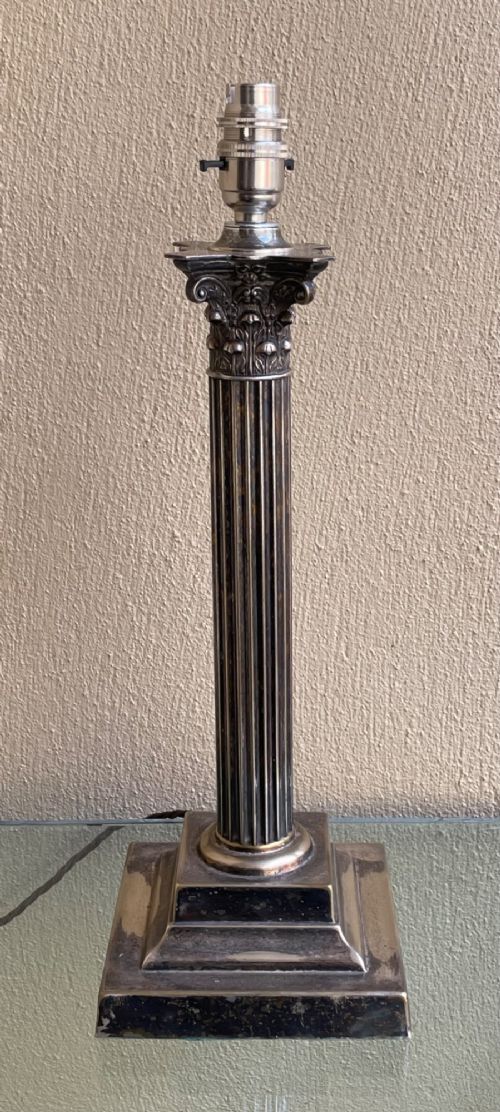
Heavier iterations adopt the Corinthian column form with elaborate acanthus leaf capitals atop square or circular weighted bases. These domestic accessories translate monumental stone architecture into domestic tabletop scale with solemn dignity.
How they were made
Silversmiths constructed solid sterling pieces by raising sheet silver over iron stakes or stamping components with heavy steel drop presses before soldering the junctions. Earlier Sheffield plated items fused a thin sheet of silver to a thick copper core under intense heat and pressure, leaving exposed copper edges hidden beneath applied silver borders.
Telescopic mechanisms in utilitarian examples relied on concentric drawn metal tubes sliding smoothly within one another to alter height. Weighted interiors utilised pine pitch, plaster, or resin mixed with sand to give lightweight metal shells a stable hand.
Retail Price Guide 2026
Typical UK retail prices for classical silver candlesticks, calculated from the Sellingantiques database of over a million retail prices indexed since 2003. This retail price guide relies exclusively on Sellingantiques data; no external sources or auction records are used, so the figures do not describe the wider market.
Some telescopic candlesticks adjusted upwards to keep candlelight out of the diners' eyes as the evening wore on.
What varies in quality
The distinction between standard domestic production and superior workshop output lies in the crispness of the chased and stamped neoclassical ornament. Sharply defined bead reels, distinct fluting, and deeply struck hallmarks denote a maker who invested time in finishing details rather than relying solely on commercial casting.
Proportion dictates visual success, with superior pieces maintaining a harmonious relationship between the breadth of the stepped foot and the taper of the column. Metal gauge also separates robust heavy items from thin-walled counterparts susceptible to denting under polishing cloths.
Walker & Hall·Charles Boyton & Sons·Barker Bros Ltd
The Classical Silver Candlesticks Glossary
- Sterling silver
- A silver alloy containing 92.5 percent pure silver by mass, with the remainder usually copper. This standard ensures durable yet workable metal for domestic lighting wares.
- Sheffield plate
- An early fused plating technique where silver sheet is bonded to a copper ingot. This method predates electroplating and reveals faint copper lines at seams.
- Corinthian column
- An architectural order featuring a slender fluted shaft and an ornate capital decorated with acanthus leaves. It forms a favoured template for formal candlesticks.
- Adams style
- A neoclassical design vocabulary characterised by delicate symmetry, urn motifs, and husks. This style heavily influenced late eighteenth and Edwardian silversmiths.
- Telescopic
- A mechanical design allowing the candlestick shaft to extend upwards. This clever adjustment changed the height of the flame for dining or reading.
Frequently Asked Questions
How do I clean tarnished silver candlesticks safely?
Use a gentle proprietary silver cream applied with a soft cloth rather than an aggressive dip that strips away aged patina. Rinse the residue thoroughly with warm water and dry with a flannel cloth.
Avoid scouring pads or harsh abrasives on plated items, especially Sheffield plate where vigorous rubbing can expose the underlying copper core through the thin silver layer.
Why are silver candlesticks filled at the base?
Makers weighted the interior bases with pitch, resin, or plaster to give stability to an otherwise top-heavy metal object. This weight prevents the tall candlesticks from tipping over easily during use.
Because the metal shell itself remains relatively thin to conserve precious materials, this internal packing provides the necessary heft when handled.
How do I distinguish Sheffield plate from electroplate?
Sheffield plate shows characteristic thin lines of rosy copper where the fused sheets meet at edges or wear points. Electroplated items show a uniform silver layer over a base metal like white brass or nickel.
Examining the underside or seams under a loupe usually reveals the distinct sandwich construction of genuine fused plate.