

Silver Plate Candlesticks
Silver plate candlesticks bring steady candlelight to a dining table or mantelpiece, drawing on Georgian, Victorian and Edwardian forms.
Silver plate candlesticks
Silver plate candlesticks are lighting items designed to hold candles securely on surfaces around the home. When you search for this phrase, you meet pairs, sets of four, and larger suites spanning several centuries of design.
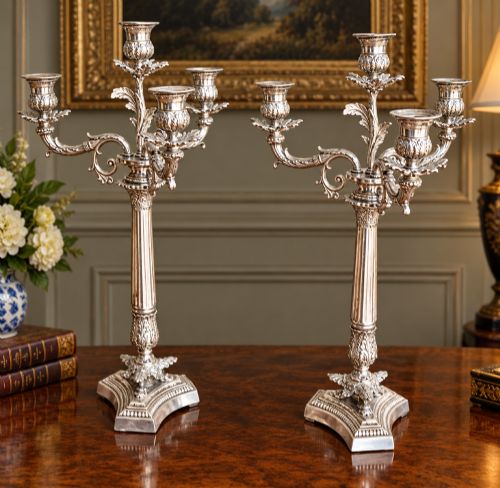
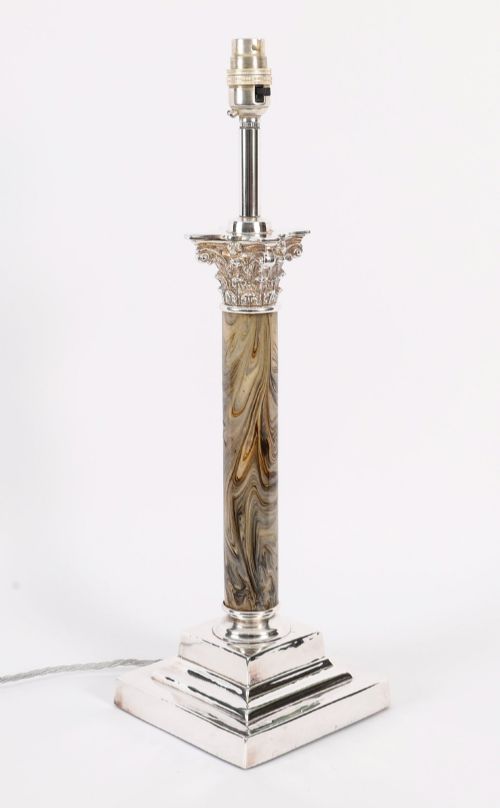
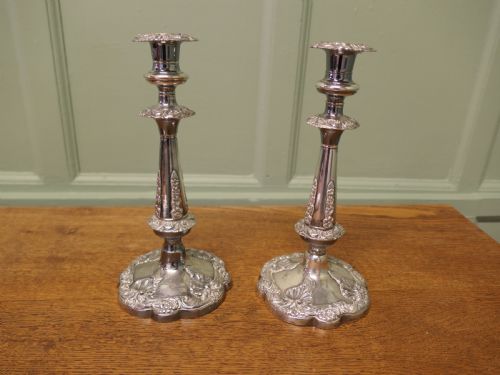
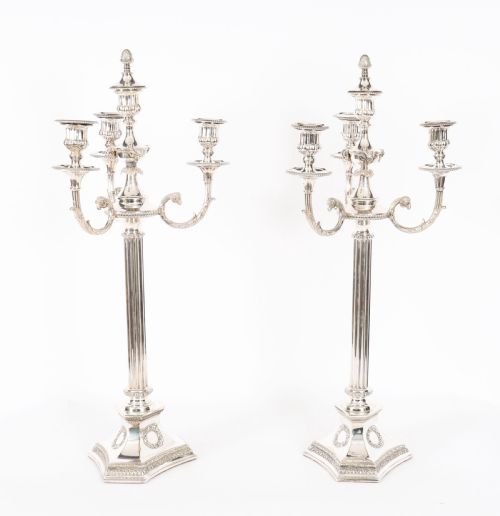
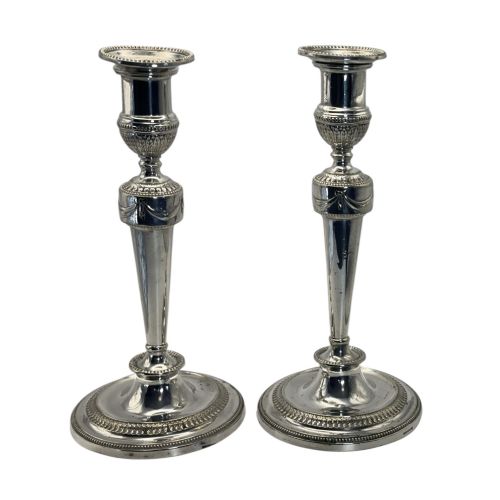
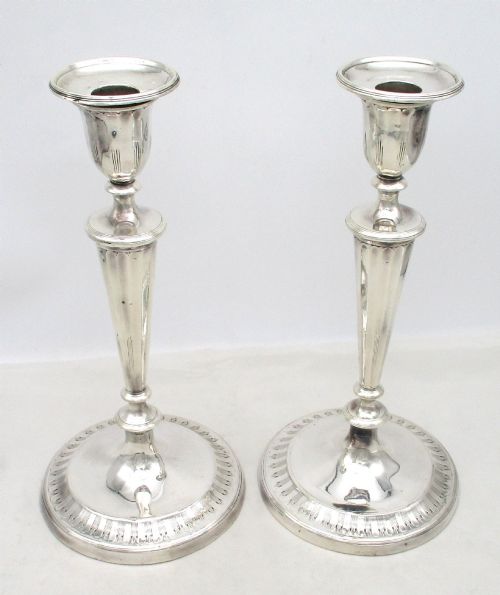
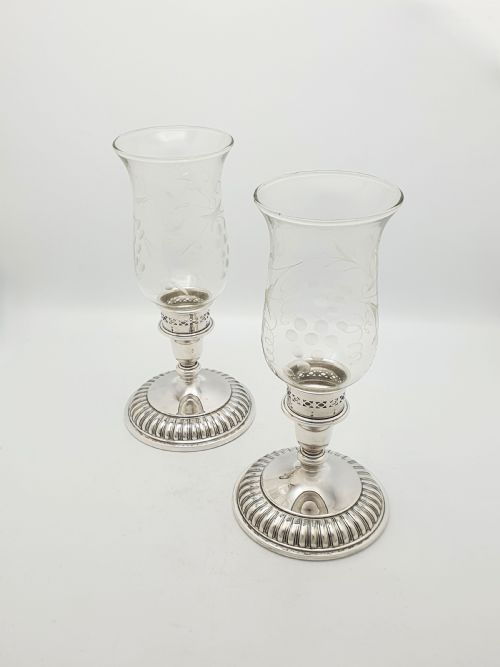
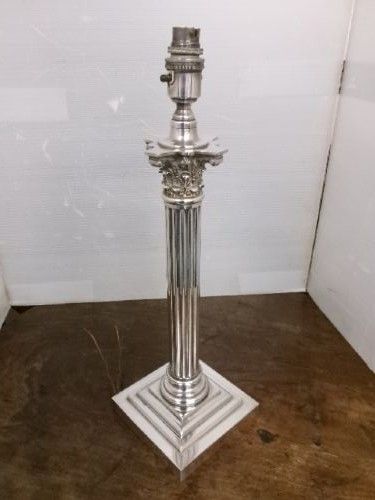
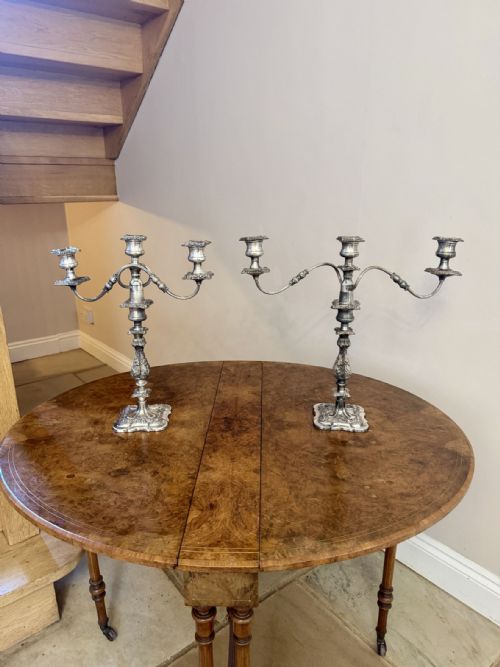
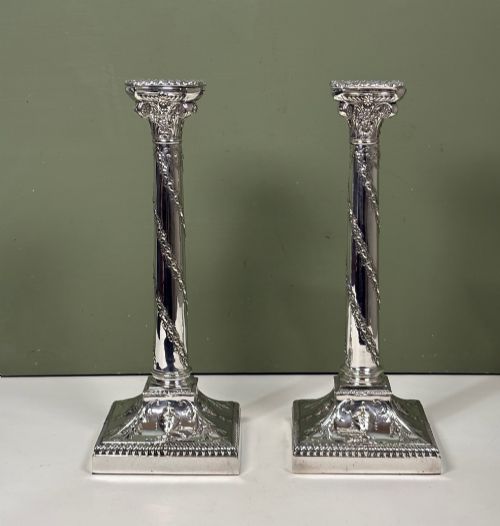
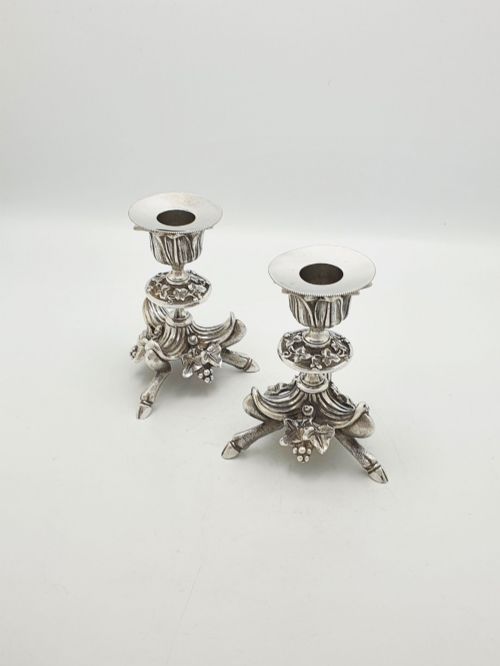
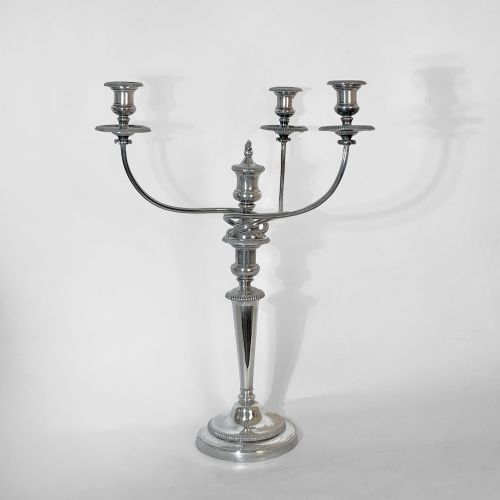
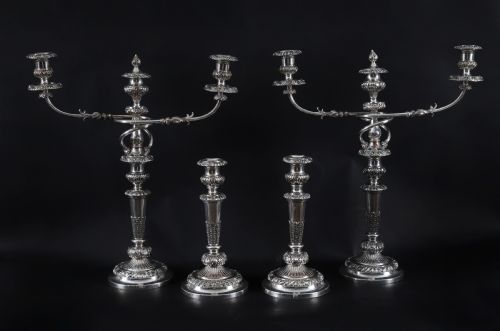
The pieces on this page include Georgian Old Sheffield plate items, Edwardian Corinthian columns, and nineteenth century Rococo Revival forms. They combine traditional pillar shapes with detachable sconces, stepped bases and cast ornament.
Makers such as John Pound, Walker & Hall, and Elkington shaped these items from copper, base metal, and EPNS. They appear in styles ranging from classical revival to Art Deco.
Materials and construction
These items are constructed from base metals, copper, and silver plate, including early Old Sheffield plate where a thin sheet of silver is fused to a copper core. Electroplated nickel silver, known as EPNS, appears frequently in later nineteenth and twentieth century pieces.
Manufacturing methods involve casting columns, bases, and sconces separately before soldering or assembling them together. Many examples incorporate weighted bases filled with resin, pitch, or plaster to provide stability when holding tall candles.
Retail Price Guide 2026
Typical UK retail prices for silver plate candlesticks, calculated from the Sellingantiques database of over a million retail prices indexed since 2003. This retail price guide relies exclusively on Sellingantiques data; no external sources or auction records are used, so the figures do not describe the wider market.
Listings feature items from the Georgian, Victorian, Edwardian, and 19th-century periods, utilising silver plate, copper, EPNS, and silver.
Design and execution
Quality rests in the crispness of cast detail, such as the acanthus leaves on Corinthian capitals or the rocaille scrolls on revival bases. Heavier gauges of metal and substantial weighted interiors distinguish the sturdier items from lighter domestic wares.
Preservation of the original silver layer over the underlying copper or base metal dictates the visual integrity of each piece. Retaining matching removable sconces and maintaining straight columns without distortion separates standard domestic examples from finer workshop productions.
John Pound & Co·Walker & Hall·Elkington & Co·Richard Hodd & Son·Thomas Bradbury·Gibbons of Wolverhampton·William Hutton & Sons·Mappin Bros·Mappin & Webb
The Silver Plate Candlesticks Glossary
- Old Sheffield plate
- A fused composite material made by melting a sheet of silver onto a copper ingot before rolling them together into thin sheets.
- EPNS
- Electroplated nickel silver, a method introduced in the nineteenth century for depositing a layer of silver onto a base metal alloy using electrical current.
- Corinthian column
- A classical architectural order featuring a capital decorated with carved acanthus leaves, frequently utilised for tall nineteenth century shafts.
- Sconce
- The removable pan or nozzle fitted at the top of the shaft to catch dripping wax and hold the base of the candle.
- Chamber candlestick
- A low candle holder featuring a flat pan base and a handle, designed for carrying through a house at night.
Frequently Asked Questions
How do I clean silver plate candlesticks?
Clean silver plate gently using a soft cloth and a mild cream specifically formulated for silver. Avoid harsh scrubbing that can wear through the thin plated layer to the base metal beneath.
Take care around weighted bases and felted bottoms, keeping moisture away from the interior filling materials. Regular dusting with a dry microfiber cloth helps maintain the shine without frequent polishing.
How do I spot Old Sheffield plate?
Look closely at the edges and high points of the piece where the underlying copper shows through as a warm reddish tint beneath the worn silver layer. This fused method produces a distinct layered appearance different from later electroplating.
Items produced by this technique generally date from the eighteenth or early nineteenth century before electroplating processes replaced the fusion method.
What is the purpose of removable sconces?
Removable sconces catch melted wax during use so the wax does not run down the main shaft or ornate capital of the holder. They lift out easily for cleaning in warm water.
Finding a pair with matching original sconces adds to the completeness and historical integrity of the piece.