


Georgian Style Candlesticks
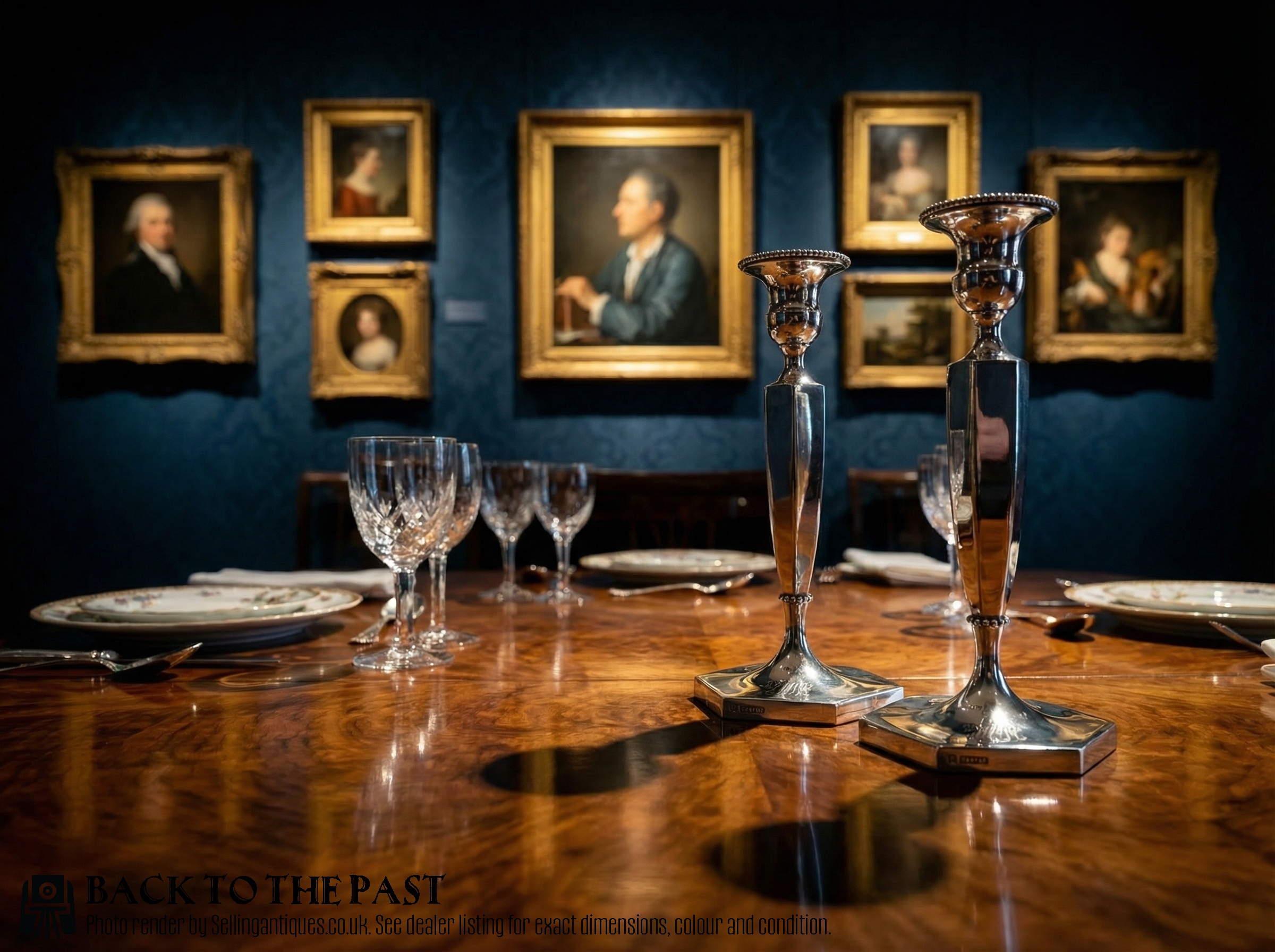
Georgian style candlesticks bring classical proportion and elegance to a room, whether cast in brass, formed in silver, or turned in mahogany.

Georgian Style Candlesticks
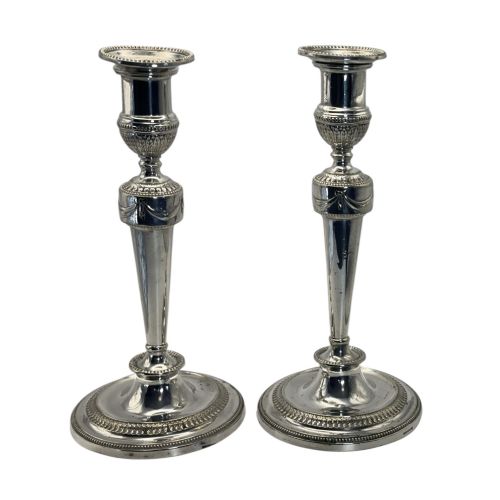
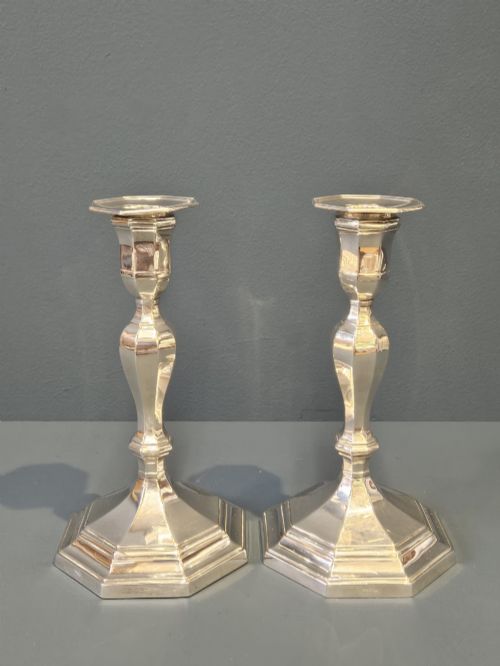
When you search for georgian style candlesticks, you encounter lighting accessories that echo the architectural columns, urn forms, and neoclassical symmetry of the eighteenth century. Most examples on this page date from the nineteenth and twentieth centuries, produced when makers revived earlier Georgian aesthetics in sterling silver, silver plate, brass, and mahogany.
The selection ranges from simple chambersticks designed for carrying through a house to tall pillar candlesticks and multi-arm candelabras for the dining table. Brass and mahogany pairs appear frequently alongside hallmarked silver and silver-plated items.
Many items incorporate historical ornament such as fluting, beaded borders, and stepped bases. These pieces reflect both original period manufacture and later revivals inspired by George III and Regency designs.
How they were made
Metals such as sterling silver, silver plate, brass, and copper were cast, spun, or hammered into shape, often utilising weighted bases for stability. Silver pieces typically carry hallmarks denoting the assay office and year, while brass examples display clean casting seams and turned components.
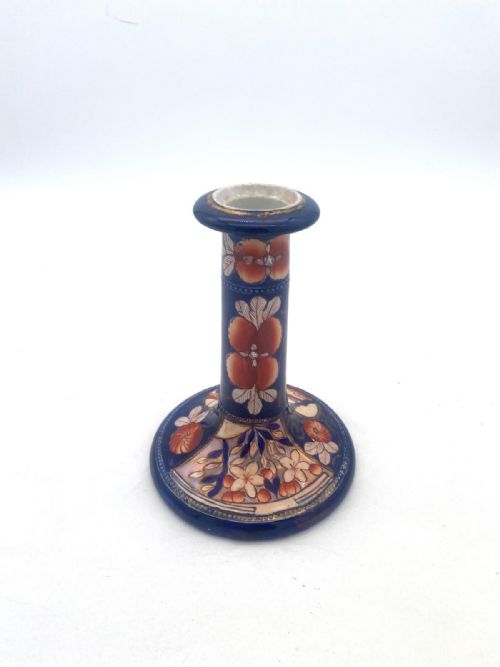
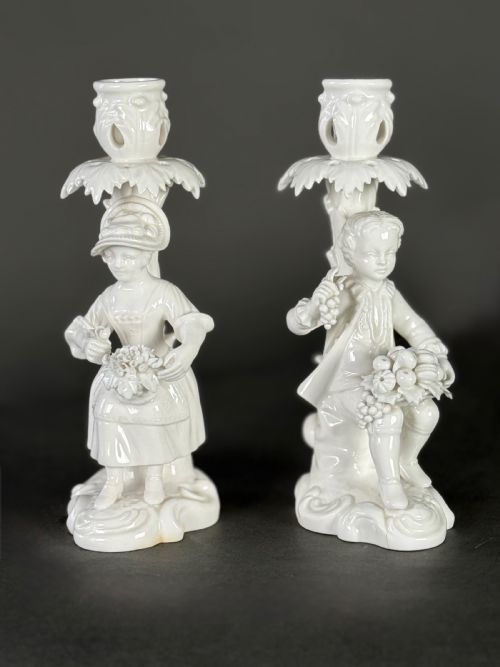
Wooden versions combine turned mahogany shafts with fitted brass sconces and weighted bases. Ceramic and porcelain items involve glazed hard paste or ironstone bodies, sometimes incorporating ormolu mounts.
Georgian Style Candlesticks Retail Price Guide 2026
Typical asking prices for georgian style candlesticks among the pieces listed under this phrase on Sellingantiques today, from the lower quarter to the upper quarter. They describe what is for sale here now, not the wider market.
Listings feature sterling silver, brass, mahogany, and porcelain candlesticks spanning the nineteenth and twentieth centuries.
What varies in quality
The distinction between tiers rests upon the crispness of the casting and the thickness of the metal. Finer silver and brass examples display sharp relief in classical details such as acanthus leaves and reeding, whereas simpler versions show softer definition.
Construction methods also dictate standard; weighted bases that remain solid and secure indicate careful assembly. Hallmarks on silver and maker stamps on brass provide clear attribution to established workshops.
Mappin & Webb·Marson & Jones·Thomas Bradbury & Sons·Carrington & Co
The Georgian Style Candlesticks Glossary
- Sconce
- The socket at the top of a candlestick designed to hold the candle upright and catch dripping wax.
- Chamberstick
- A low candlestick featuring a flat pan base and a handle, historically used for lighting a path through bedrooms and hallways.
- Candelabra
- A branched lighting fixture holding multiple candles upon a single central stem or pedestal.
- Ormolu
- Gilded bronze used for decorative mounts and accents on decorative objects, popular in neoclassical designs.
- Hallmark
- An official stamp applied to precious metals indicating purity, maker, and assay office.
Georgian Style Candlesticks: Frequently Asked Questions
How do I clean tarnished silver candlesticks?
Silver candlesticks benefit from gentle cleaning with a specialised cloth or polish designed for precious metals. Avoid harsh abrasives that can wear away thin plating.
Take care around weighted bases and engraved details where polish can accumulate. Regular dusting prevents heavy tarnish from forming over time.
Were these made for daily use?
Most antique candlesticks served practical lighting needs before electric illumination became common. Households relied on them to illuminate rooms during evening hours.
Today, they function primarily as decorative dining table centerpieces or mantel displays. Many accommodate standard modern taper candles securely.
How can I tell silver plate from solid silver?
Solid silver items usually display official hallmarks indicating the silver standard and assay office. Silver plate lacks these standard assay marks and may reveal base metal underneath where wear occurs.
Maker marks often help distinguish plated manufacturers from silversmiths who worked exclusively in solid silver.
What defines the Adam style in candlesticks?
Adam style pieces draw inspiration from the neoclassical designs of the architect Robert Adam. They feature straight lines, classical urn motifs, bellflower husks, and delicate fluting.
This aesthetic appears across both brass and mahogany examples from the nineteenth and twentieth centuries.