





18th Century Brass Stick
An 18th century brass stick combines practical domestic utility with sculptural form, offering enduring metalwork that grounds a room with period character.
18th Century Brass Stick
When you search for an 18th century brass stick, you encounter functional domestic lighting and meteorological instruments from the Georgian era. The selection centres heavily upon candlesticks, taper sticks, and chambersticks alongside mahogany-cased stick barometers.
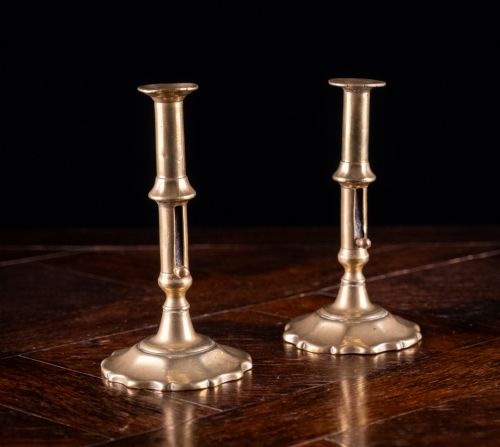
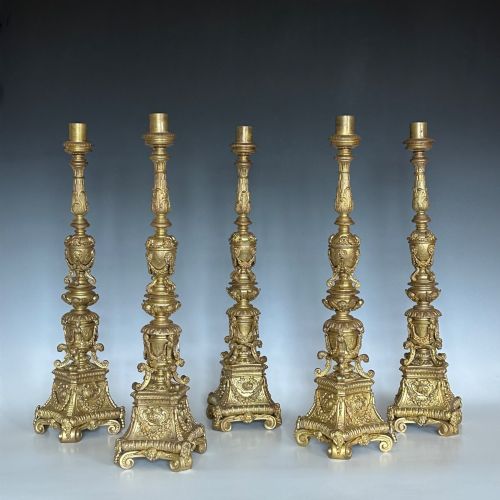
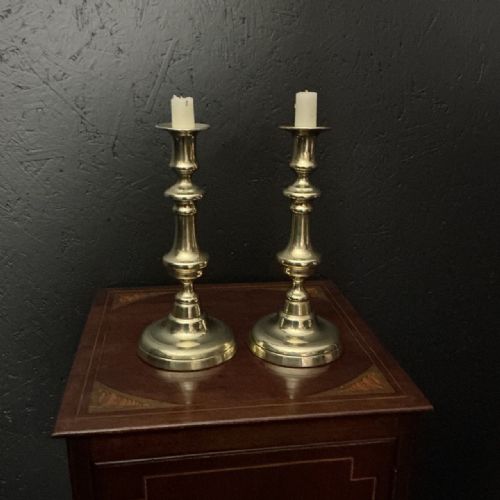
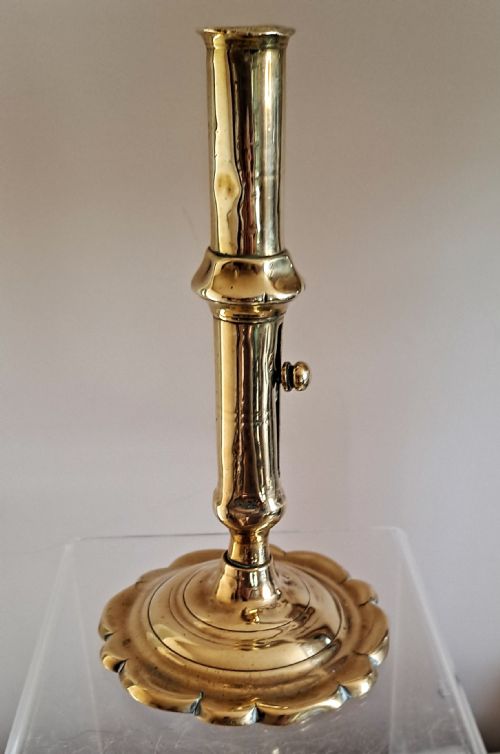
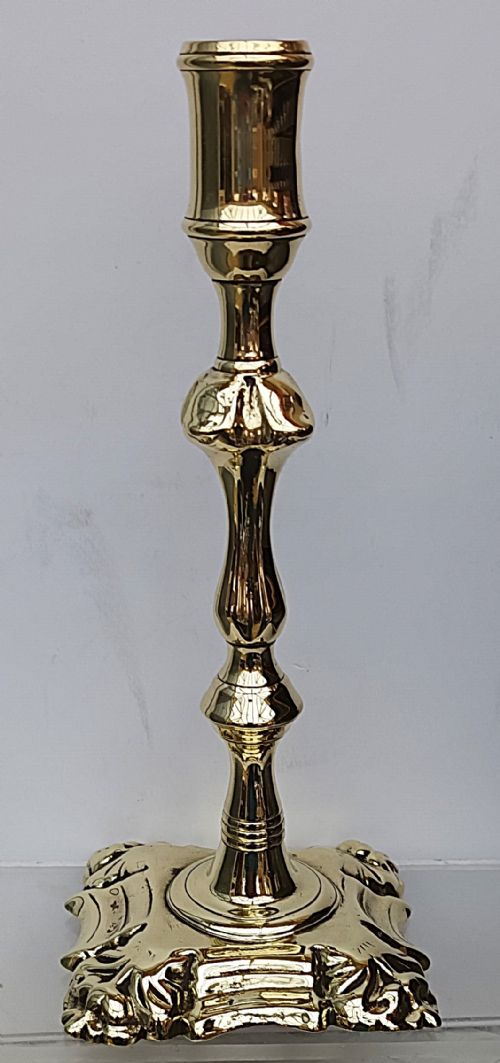
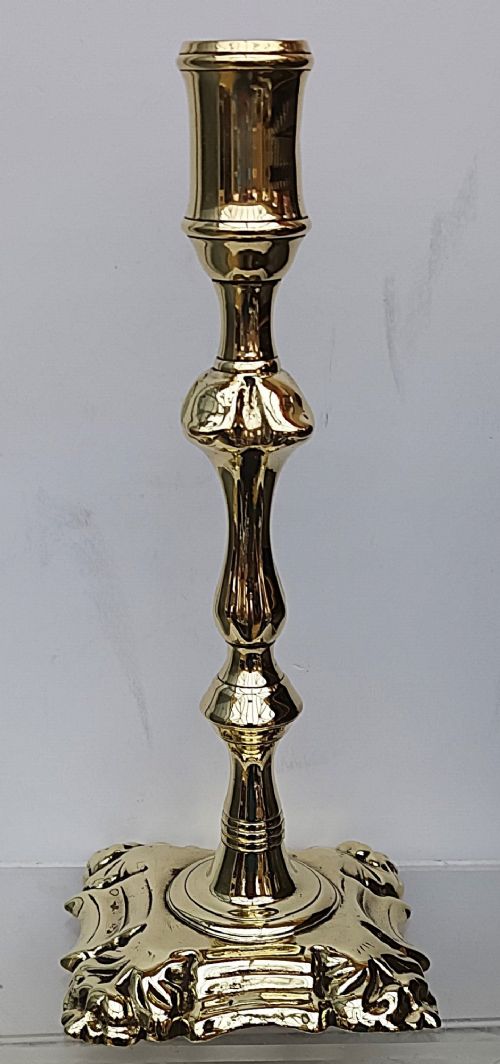
Candlesticks dominate the pieces available, spanning early forms with hexagonal or petal bases through to later baluster stems and neoclassical designs. You also find specialised variations including ejector models equipped with side slides to push out remnants of wax.
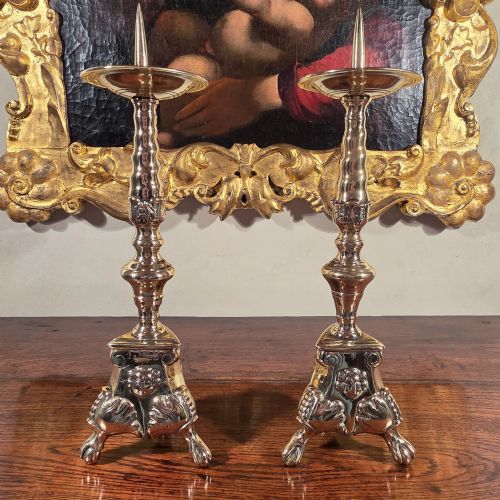
Origins stretch across English workshops, continental European foundries, and the Low Countries, utilising distinct regional casting and turning methods. The survival of matched pairs alongside single examples provides flexibility for tabletop and mantel display.
How they were made
Makers shaped these objects primarily through casting molten brass into multipart sand or loam moulds, followed by lathe-turning to refine profiles and create multi-knopped stems. Many examples utilise seamed construction, joining separately cast components together with solder or mechanical interlocking.
Alternative metal alloys such as paktong and gilt bronze appear alongside traditional copper-zinc brass, while barometer makers housed sensitive glass tubes within polished mahogany or walnut frames. Surface finishing relied upon hand-polishing and occasionally mercury gilding or ormolu mounts to achieve decorative lustre.
What varies in quality
The sophistication of the casting and the crispness of the turned mouldings dictate the standard of execution. Superior examples display sharp definition in multi-knopped stems and well-proportioned bases without smoothing from excessive polishing over generations.
Material composition and mechanical complexity separate standard lighting from exceptional specimens. Integrated components like functional ejector mechanisms and alternative alloys such as paktong elevate the technical interest of individual pieces.
J. Miller·Blunt·Gilbert London·Harrison Patent
The 18th Century Brass Stick Glossary
- Ejector
- A concealed internal or external sliding mechanism designed to push the remaining candle stump out of the sconce. This clever device prevents wax from becoming trapped deep inside the socket.
- Petal base
- A moulded foot shape resembling overlapping flower petals, frequently seen on early Georgian examples. This distinctive profile provides both decorative flair and a stable footprint.
- Paktong
- A copper-nickel-zinc alloy imported from China that mimics the appearance of silver. Craftsmen valued this bright metal for high-status lighting items.
- Baluster
- A turned vertical column shape with a swelling lower portion resembling architectural supports. This form adds visual weight to the centre of candlestick stems.
- Stick barometer
- A tall, narrow instrument featuring an exposed glass tube filled with mercury mounted on a wooden backboard. These devices allowed Georgian households to monitor atmospheric pressure.
18th Century Brass Stick: Frequently Asked Questions
How do I date an 18th century brass stick?
Examine the construction methods, base shapes, and stem profiles to establish the period of manufacture. Early pieces often feature heavy cast components, multi-knopped stems, and hexagonal or petal bases.
Later Georgian designs move toward neoclassical urn shapes and simpler turned columns. Patina and wear patterns also help confirm the age of the metalwork.
How should I clean antique brass?
Maintain the surface by dusting gently with a soft, dry cloth to prevent the accumulation of grime. Avoid aggressive metal polishes that strip away the historical patination accumulated over centuries.
Allow the metal to retain its warm, mellow tone rather than attempting to achieve a bright, modern shine.
What is a stick barometer used for?
A stick barometer measures atmospheric pressure to help forecast impending changes in local weather. The height of the mercury column inside the glass tube rises or falls according to barometric shifts.
Georgian households relied on these instruments in hallways and libraries for practical meteorological tracking.