


Knopped Brass Candle Stand
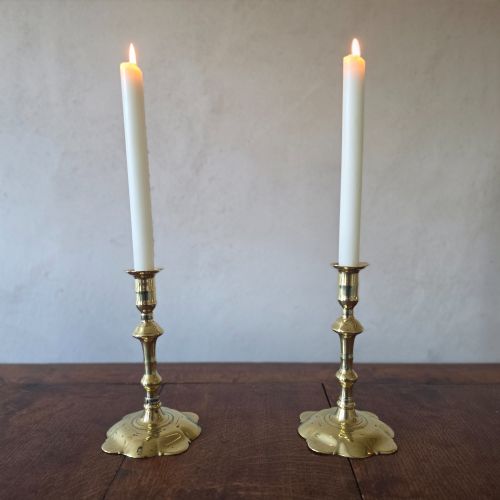
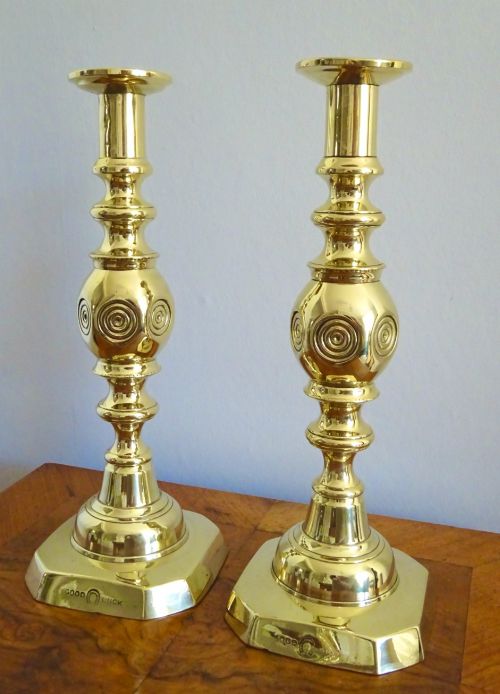
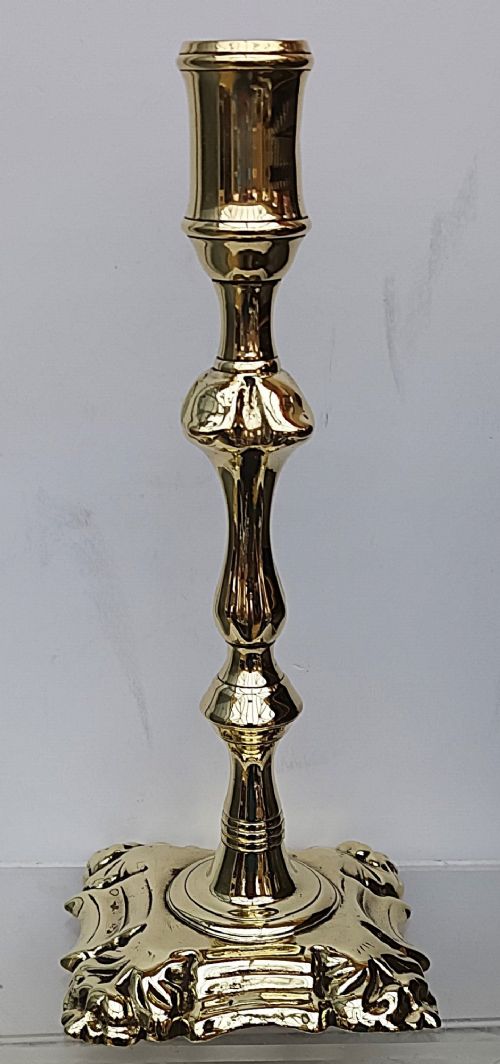
These knopped brass candle stand options range from early English and French examples to Victorian pairs, offering sturdy metal forms designed to hold tapers safely.
Knopped Brass Candle Stand
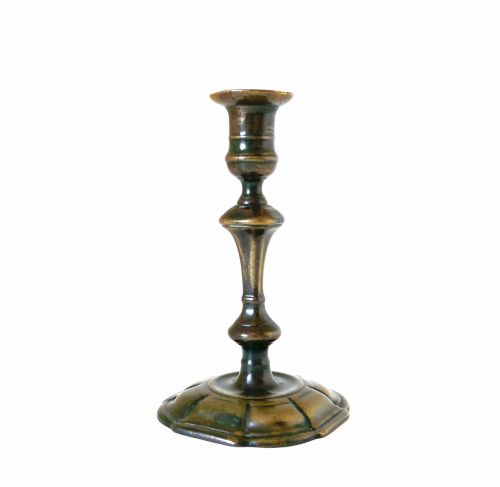
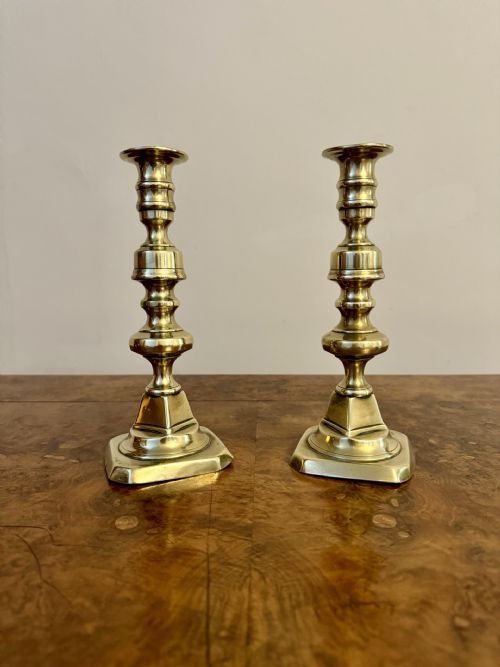
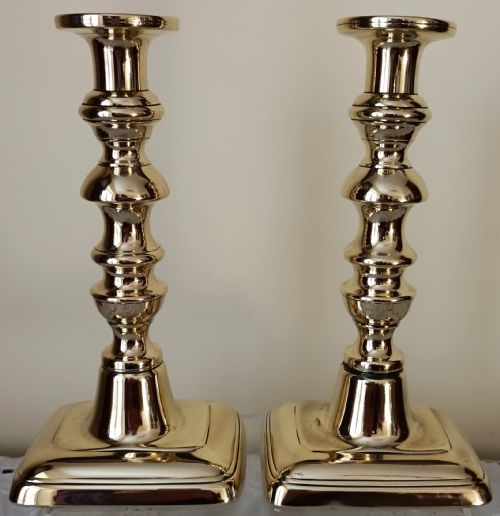
A knopped brass candle stand takes the form of a candlestick, encompassing single items and matched pairs spanning several centuries. The selection on this page centres heavily on Victorian and 18th-century pieces alongside specific named Victorian design variants.
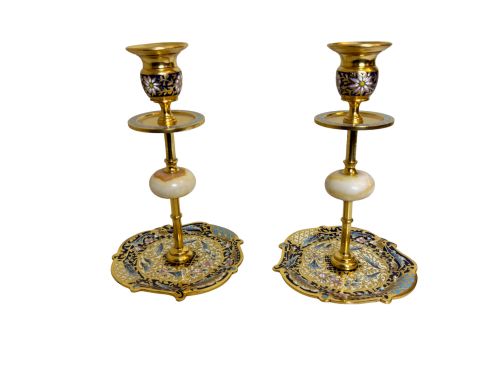
Buyers encounter diverse stylistic interpretations, from Georgian and Dutch Baroque influences to Gothic Revival and Arts and Crafts aesthetics. French Second Empire pieces also appear, sometimes incorporating gilt bronze, champleve enamel, and onyx.
Materials and construction methods
Makers utilised cast and sheet brass to form the structural shafts, bases, and sockets of these candlesticks. Metal components were shaped through casting and turning techniques, often creating the characteristic raised knops along the stem.
Advanced or decorative examples integrate secondary materials such as onyx plinths, champleve enamel detailing, and gilt bronze mounts. Patination treatments were applied to surfaces to alter or preserve the appearance of the metal over time.
Listings span from the 17th century through the Victorian era up to the 1930s, featuring brass, onyx, and champleve enamel materials.
Factors influencing quality and craftsmanship
The precision of the casting and the crispness of the turned knops distinguish superior examples from simpler production. Heavier gauge metal and clean proportions indicate higher workshop standards during manufacture.
Complexity of design also separates standard items from exceptional pairs, particularly where decorative techniques like champleve enamel or combined media such as onyx are present. Maker marks or stamped attribution add tangible weight to an individual piece.
James Clews·J.T. & Co
The Knopped Brass Candle Stand Glossary
- Knop
- A prominent knob or swelling on the stem of a candlestick that improves grip and visual balance. It defines the profile of many traditional brass designs.
- Champleve
- An enamelling technique where troughs are dug into a metal surface and filled with vitreous enamel before firing. It appears on ornate 19th-century French pieces.
- Baluster
- A vertical architectural form with a swelling lower portion, frequently adapted for candlestick stems. It provides a stable and classical silhouette.
- Patinated
- The surface condition resulting from age and chemical interaction on metal. A patinated finish shows darkening or tonal shifts across the brass.
Knopped Brass Candle Stand: Frequently Asked Questions
How do I date an old brass candlestick?
Dating relies on examining the construction methods, base shapes, and assembly marks visible on the underside. Early pieces often exhibit distinct casting flaws and patination patterns.
Stylistic cues such as knop placement and socket design help separate 18th-century items from Victorian reproductions or later iterations.
What are King of Diamonds candlesticks?
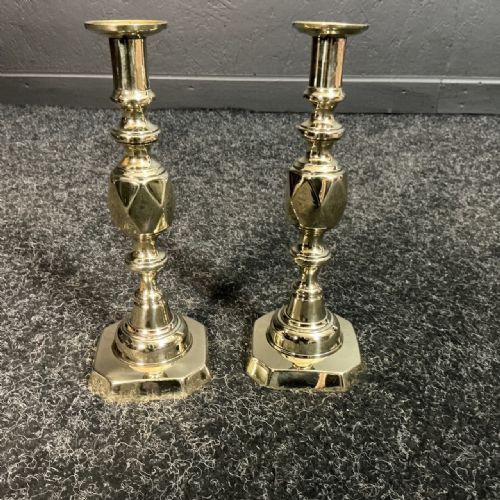
King of Diamonds refers to a specific Victorian pattern of brass candlestick featuring characteristic faceted or diamond-moulded stems. They were produced in matched pairs during the late 19th century.
These pieces often bear specific trade names or stamps on the base relating to the original maker.
How should I clean antique brass?
Cleaning should be minimal to preserve the historical surface and natural patination accumulated over centuries. Dusting with a dry cloth is usually sufficient for daily maintenance.
Avoid aggressive metal polishes that strip away the authentic aged finish and reduce the collector value of the object.
Were these candlesticks made in pairs?
Many examples survive as matched pairs intended for symmetry on mantelpieces or dining tables. Single candlesticks also occur frequently, particularly among earlier 18th-century survivals.
Pair status often enhances the desirability for interior display and collection purposes.