


Antique Brass Table Decor
These antique brass table decor pieces bring heavy metal weight and warm yellow light to a room, exactly what collectors want.
Identifying antique brass table decor
When you search for antique brass table decor, you are looking at domestic metalwork used on tables and surfaces. These pieces include candlesticks, match strikes, display tray centrepieces, and occasional tables featuring brass mounts or beading.
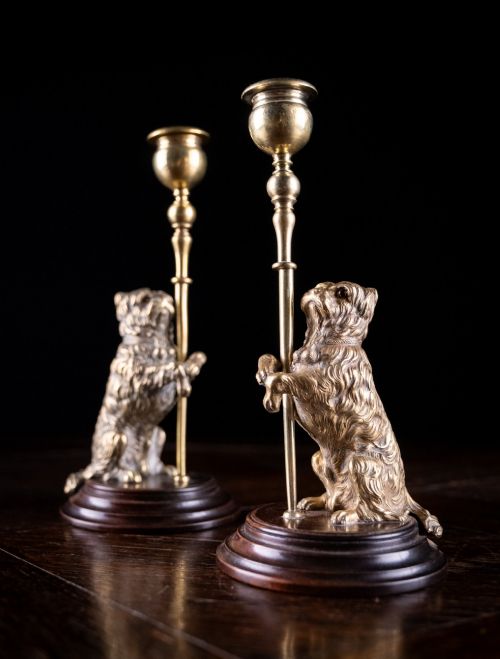
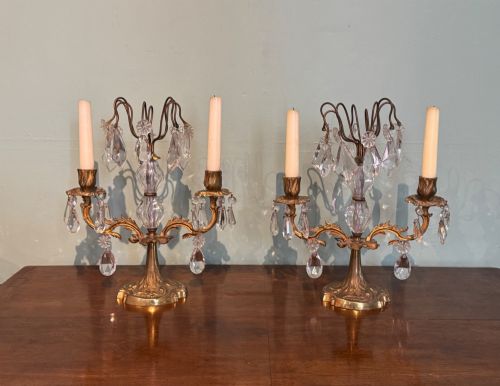
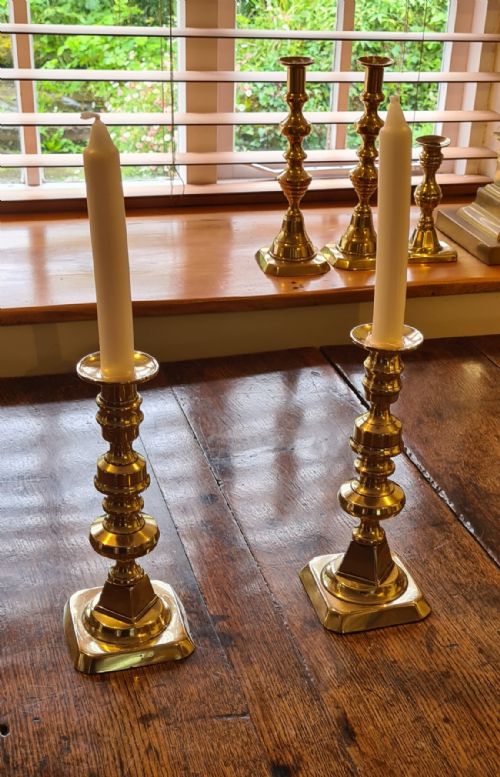
The most common form you will meet on this page is the candlestick, appearing in pairs from the Victorian period up to the early twentieth century. Other forms include occasional tables with brass ormolu mounts and decorative display trays.
The materials span brass and bronze, moving from mid-nineteenth-century items through to Art Deco designs of the early twentieth century. They originate from English workshops and reflect the decorative tastes of the Victorian and Edwardian eras.
Materials and construction
Items on this page are constructed from brass and bronze, often utilising seamed construction methods visible in nineteenth-century candlesticks. Metal is cast or sheet-worked, sometimes incorporating ejector mechanisms inside the stem to push out the candle stub.
Surface ornamentation ranges from decorative brass beading to ormolu mounts fitted to mahogany and satinwood furniture. Match strikes and display trays integrate these cast metal elements with functional domestic objects.
Retail Price Guide 2026
Typical UK retail prices for brass table decor, calculated from the Sellingantiques database of over a million retail prices indexed since 2003. This retail price guide relies exclusively on Sellingantiques data; no external sources or auction records are used, so the figures do not describe the wider market.
Current listings feature items from the Victorian era and the early twentieth century, spanning brass and bronze candlesticks.
Judging quality in brass decor
Quality rests on the crispness of the casting and the integrity of the joins, particularly where seamed brass or bronze meets structural elements. Finer examples display clean lines and well-fitted mechanisms, such as working ejector levers in candlesticks.
The distinction between standard production pieces and finer items lies in the weight of the metal and the subtlety of the surface detail. Secondary brass mounts on furniture vary from simple beading to detailed ormolu work.
The Antique Brass Table Decor Glossary
- Ejector candlestick
- A candlestick fitted with an internal sliding mechanism that pushes out the spent candle remnant. This device became popular in the Victorian period to ease cleaning.
- Ormolu
- Gilded bronze applied as a decorative mount to furniture and objects. It provides a bright gold-coloured finish.
- Match strike
- A small container or textured surface designed for igniting matches safely on a table. These often incorporate brass or vesta holders.
- Centrepiece
- A decorative object placed in the middle of a table, such as a display tray. These items often feature pierced or cast brass rims.
Frequently Asked Questions
What counts as antique brass table decor?
These pieces include table objects and furniture fittings made from brass and bronze, dating from the nineteenth and early twentieth centuries.
They encompass practical household items like candlesticks and match strikes alongside decorative furniture mounts and display trays.
How do I date these brass pieces?
Dating relies on stylistic clues and construction methods, such as seamed metal joins typical of the mid-nineteenth century.
Victorian pieces often show heavier casting, while later twentieth-century items shift towards Art Deco forms and cleaner geometric lines.
Were these items purely decorative?
Most pieces served a clear domestic function, such as holding candles for illumination or striking matches in a parlour.
Even items like tray centrepieces and furniture mounts combined practical utility with the polished appearance of brass.
How do I care for antique brass?
Brass objects require minimal cleaning to preserve their historic surface and natural ageing. Excessive polishing removes the character accumulated over decades.