




Brass Push Up Candlesticks
These brass push up candlesticks are practical lighting antiques designed with internal mechanisms to raise the candle stub, combining mechanical ingenuity with period form.
Brass Push Up Candlesticks
Brass push up candlesticks are practical lighting devices featuring an internal sliding mechanism that raises the candle stub for easy removal. When exploring brass push up candlesticks, buyers encounter forms spanning the eighteenth and nineteenth centuries.
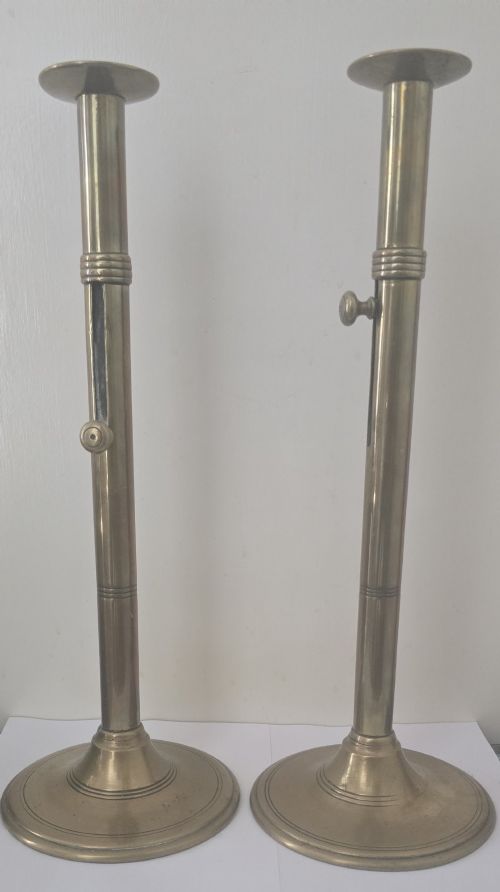
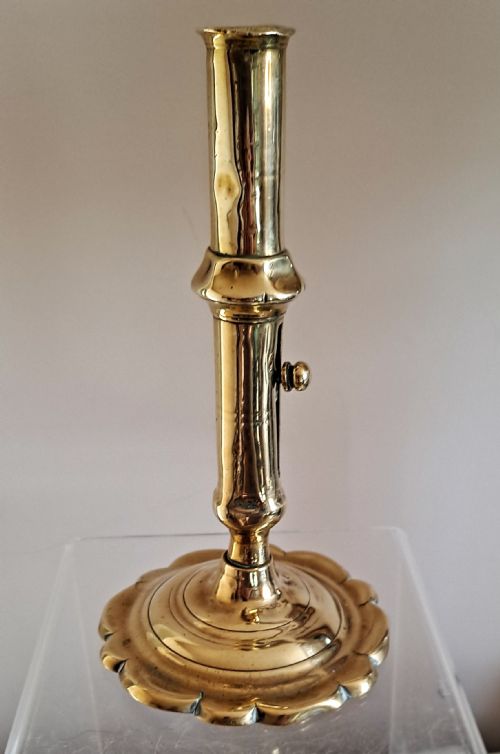
The selection includes Georgian examples alongside Victorian and Arts and Crafts pieces. Common variations include petal bases, scalloped designs, and tall ecclesiastical forms.
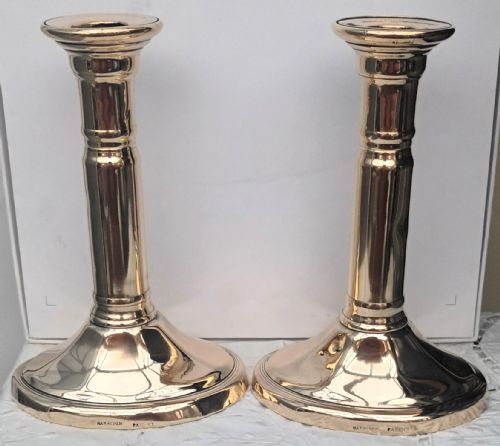
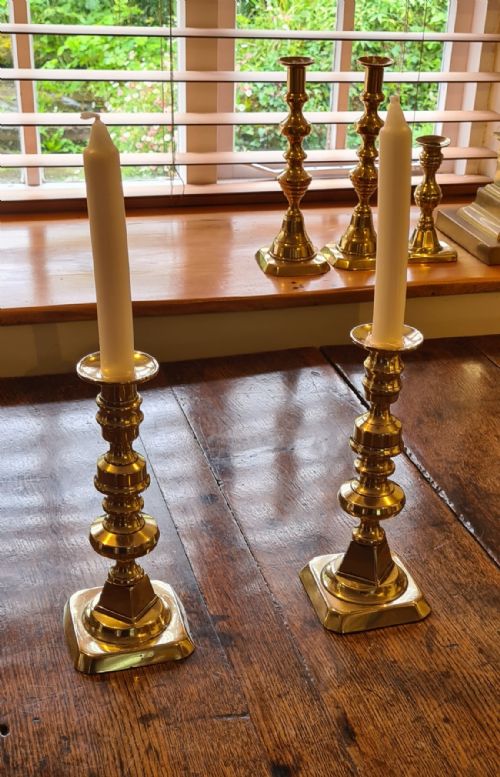
Most items appear in pairs, demonstrating standard domestic and ecclesiastical lighting arrangements from the Georgian and Victorian periods.
How they were made
Makers utilised brass and cast brass, employing seamed construction methods visible in eighteenth-century examples. The manufacturing process required precision to allow the internal ejector mechanism to slide smoothly within the shaft.
Specialised designs such as telescopic mechanisms emerged alongside traditional petal bases and side ejectors. These techniques ensured both structural stability and mechanical function in everyday lighting.
Brass Push Up Candlesticks Retail Price Guide 2026
Typical asking prices for brass push up candlesticks among the pieces listed under this phrase on Sellingantiques today, from the lower quarter to the upper quarter. They describe what is for sale here now, not the wider market.
Candle stubs used to become trapped hopelessly low until clever makers invented the push up to save singed fingers.
What varies in quality
Quality rests in the precision of the casting and the integrity of the push up mechanism. Earlier eighteenth-century seamed pieces demonstrate different manufacturing characteristics compared to later Victorian production.
Proportion and decorative restraint distinguish fine Georgian examples from later variants. The weight of the cast brass and the retention of the original ejector parts determine the standing of an individual piece.
Harrison Patent
The Brass Push Up Candlesticks Glossary
- Push up
- A lighting device featuring an internal rod or button that raises the candle remnant. This mechanism allows the user to clear the socket safely.
- Ejector
- An alternative term for a push up mechanism found inside the candlestick shaft. It uses a side lever or bottom rod to push the candle upward.
- Petal base
- A foot moulded in the shape of overlapping flower petals, popular during the Georgian period. This design provides both decorative weight and a stable footing.
- Seamed brass
- Metal rolled and joined down the side before the invention of seamless extrusion. This technique indicates an eighteenth-century manufacturing origin.
Brass Push Up Candlesticks: Frequently Asked Questions
How do brass push up candlesticks work?
An internal disc sits beneath the candle and connects to a rod running through the stem. Pushing the bottom rod or side lever moves the disc upward.
This mechanism safely elevates the remaining wax for easy removal or replacement without damaging the socket.
What periods do these candlesticks date from?
The inventory spans the eighteenth and nineteenth centuries, including Georgian, Victorian, and Arts and Crafts eras. Specific dates extend from around seventeen-forty through to the late eighteen-nineties.
Earlier examples often feature seamed construction while later items show diverse base moulding.
What is a side ejector candlestick?
A side ejector incorporates a small exterior thumbpiece linked to the internal push up plate through a vertical slot in the stem. This design lets the user operate the mechanism from the side.
It provides a functional variation distinct from bottom push rods.
How should I clean antique brass candlesticks?
Maintain the surface with a soft dry cloth to remove dust without disturbing the historic patina. Avoid harsh chemical polishes that strip age from the metal.
Gentle care preserves the darker tones developed over centuries of handling.