

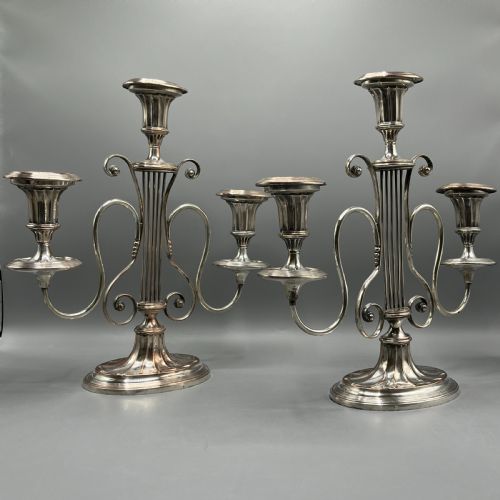
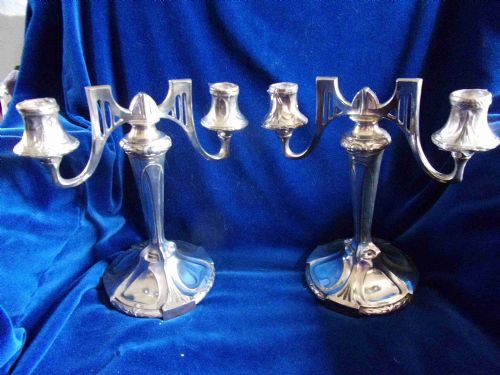

Silver Plated Candelabrum
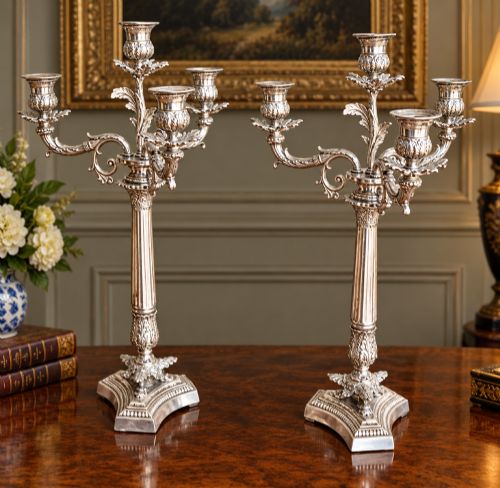
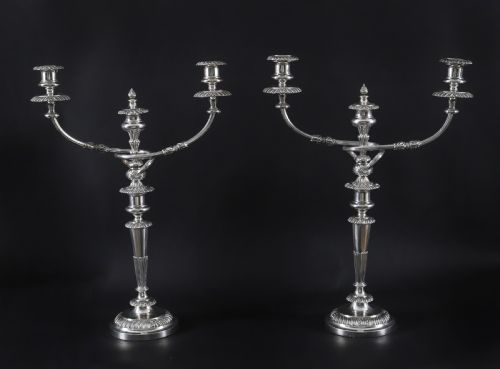
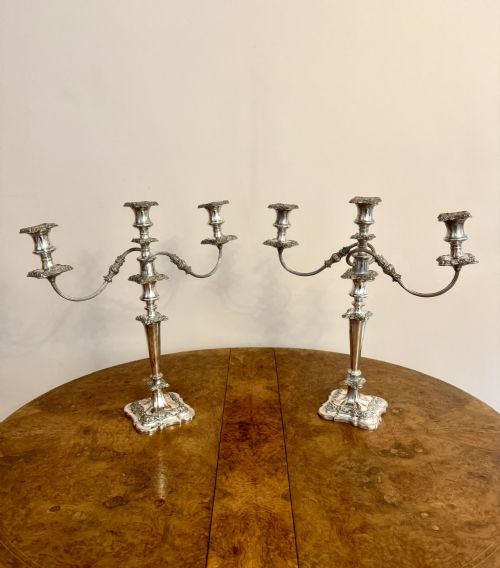
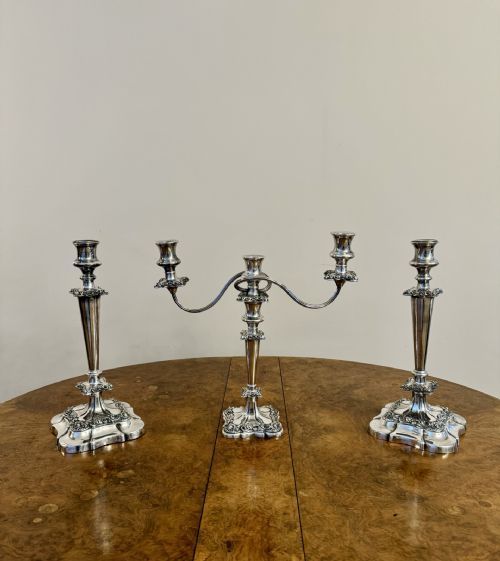
These silver plated candelabrum pieces bring traditional dining room illumination and period elegance to a table.
Silver Plated Candelabrum
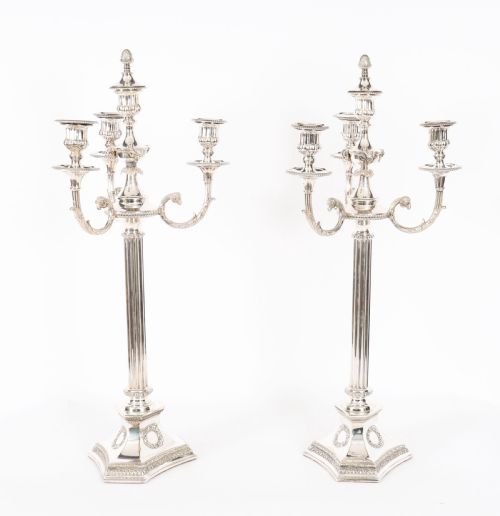
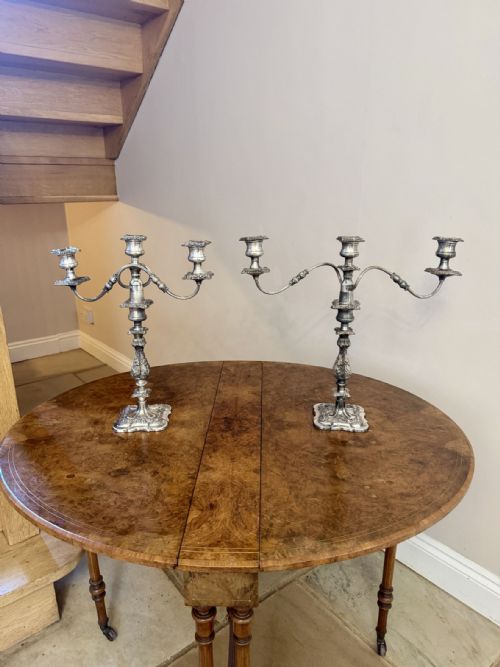
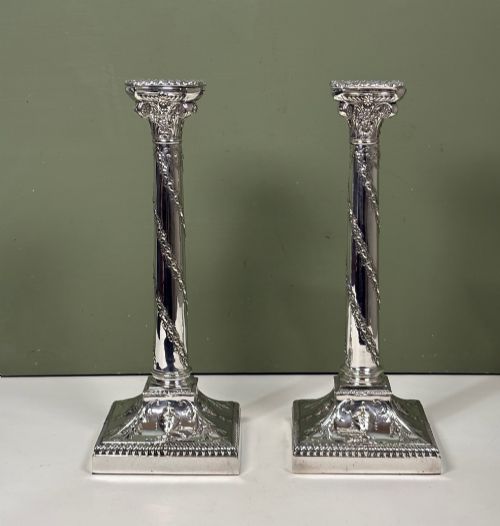
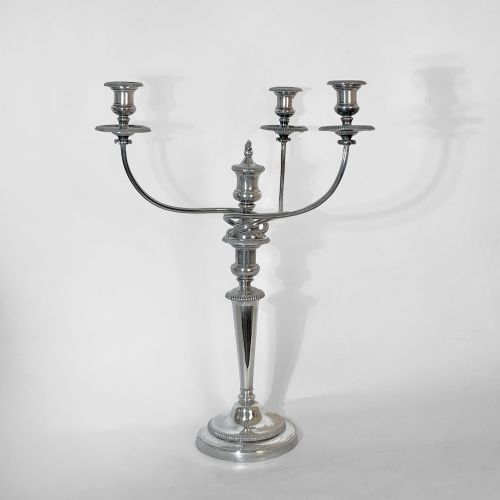
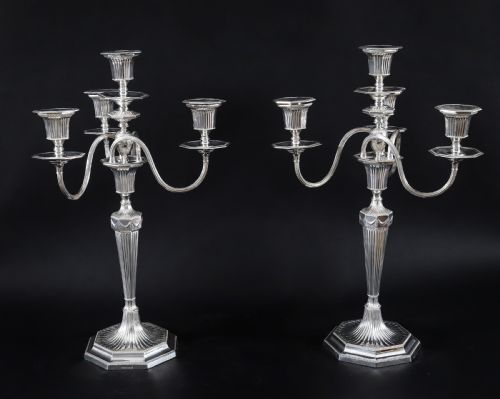
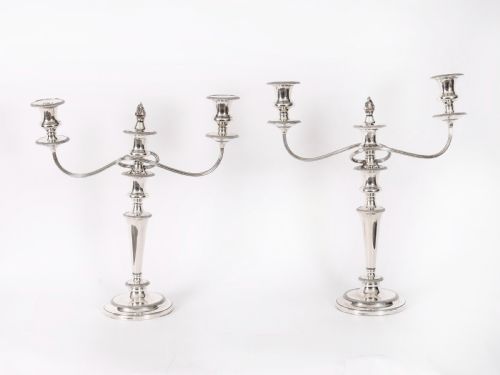
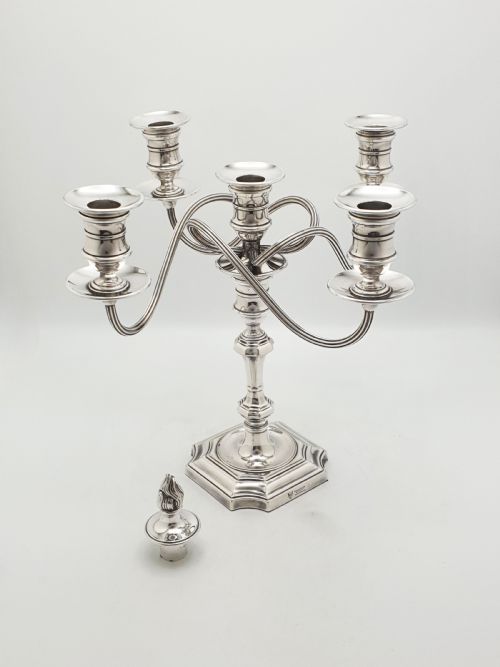
A silver plated candelabrum is a branched lighting fixture designed to hold multiple candles, originating mainly from the eighteenth and nineteenth centuries. Buyers searching for a silver plated candelabrum will encounter designs spanning George III, Regency, and Victorian periods, often configured with three to five branches.
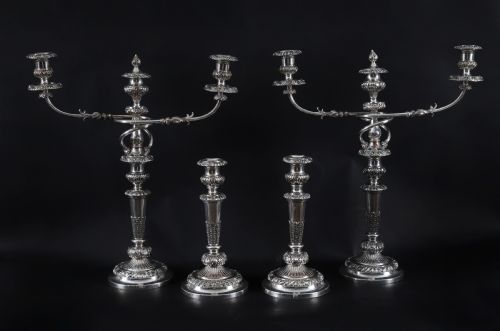
The most common examples on this page are Victorian and Edwardian pairs featuring detachable sconces and ornate cast ornament. These range from low two-branch table models to large dining table centrepieces supported on circular or square bases.
How they were made
Early items utilise Old Sheffield Plate, a technique fusing a thin sheet of silver onto a thicker copper base before rolling and shaping. Later production shifts to electroplated nickel silver and standard silver plate over base metals like brass and copper.
Casting and chasing create the heavier components such as branches and figural elements, while weighted bases provide stability for multi-light arms. Sconces and drip pans are typically detachable to facilitate cleaning after use.
Listings feature periods from the eighteenth century through the Edwardian era, utilising silver plate, copper, brass, and Old Sheffield Plate.
What varies in quality
The distinction between ordinary and superior pieces rests on the crispness of the chased detail and the weight of the metal. Heavier castings hold complex ornament with sharper relief, whereas lighter items lose definition in floral or scroll motifs.
Proportion and balance across the arms and base also separate fine workshops from standard production. Intact original plating without excessive copper bleed-through indicates better preservation and manufacturing standard.
Hawksworth Eyre·Garrard & Co·Matthew Boulton·Smith & Sissons·Barker Ellis·Elkington·Blagden Hodgson·WMF
The Silver Plated Candelabrum Glossary
- Old Sheffield Plate
- A fused laminate of silver and copper produced before the invention of electroplating. This material often reveals faint copper undertones along raised edges where wear has occurred over generations.
- Electroplated Nickel Silver
- A base alloy of copper, nickel, and zinc coated with a layer of pure silver using an electrical current. It became widely utilised by major manufacturers from the mid-nineteenth century onwards.
- Sconce
- The small cup or nozzle at the top of a branch that directly receives the candle. These components are frequently removable for easy cleaning of wax residue.
- Candelabrum
- A branched lighting fixture designed for multiple candles, distinct from a single-stem candlestick. Most examples on this page support three to five lights.
- Centrepiece
- A large decorative table item, often incorporating a candelabrum or a dish arrangement. These form the visual focal point of formal dining settings.
Silver Plated Candelabrum: Frequently Asked Questions
How do I clean a silver plated candelabrum?
Use a soft cloth and a gentle silver polish specifically formulated for plated items, avoiding abrasive brushes that can strip the thin silver layer. Clean each detachable part separately to prevent moisture trapping in the joints.
Store the candelabrum in a dry environment away from direct sunlight and dampness to minimise tarnish accumulation over time.
Can I use standard modern candles?
Most antique sockets accommodate standard dinner tapers, though older dimensions can vary slightly due to hand-finishing. Checking the diameter of the nozzle ensures a secure fit before lighting.
Using dripless candles helps protect the metal surface and the underlying silver plate from stubborn wax buildup during dining.
How can I tell Old Sheffield Plate from later electroplate?
Old Sheffield Plate frequently displays subtle lines of visible copper along prominent edges and seams where the fused silver layer has worn thin. This distinct trait results from the mechanical fusing process used prior to nineteenth-century electroplating.
Electroplated items usually display an even, uniform silver coating across all surfaces without the characteristic copper bleeding seen on older fused pieces.
Where should I place a large candelabrum?
Large multi-branch examples suit the centre of a formal dining table or a substantial sideboard where they can serve as a focal point. Ensuring adequate clearance from overhead fixtures and furnishings allows safe usage.
Lower branch variations work well on smaller side tables or mantelpieces where height restrictions apply.