



Solid Silver Candelabra
Solid silver candelabra bring weighty presence to a dining table, combining practical candlelight with enduring metalwork.
Solid Silver Candelabra
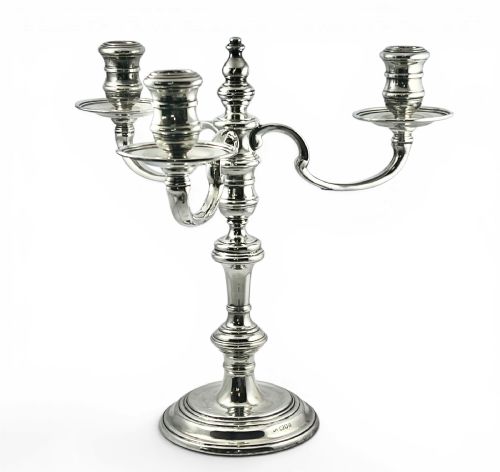
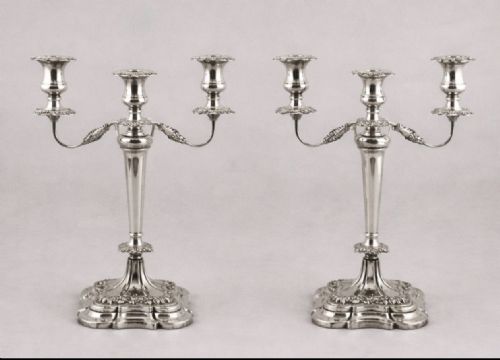
Solid silver candelabra are heavy lighting pieces designed with multiple branches to hold several candles simultaneously. When searching for solid silver candelabra, buyers encounter forms ranging from two-light table pieces to large five-light examples.
The pieces on this page span periods from the late Victorian era through Edwardian designs to mid-century styles including Art Deco and Arts and Crafts. Origin and period dictate the decorative vocabulary, shifting from ornate Rococo revival curves to clean modernist lines.
What varies in quality
Quality rests in the heaviness of the gauge and the crispness of the chased or cast ornament. Superior examples maintain balance across all branches without leaning, showing clean hallmarks and deliberate hand-working.
Design ambition separates standard production pieces from workshop creations that employ distinctive forging techniques. The integrity of the connections between the removable branches and the main stem indicates the maker's precision.
Several heavier pieces exceed five kilograms, demanding strong dining tables and steady hands during dinner parties.
Robert Edgar Stone·Hunt and Roskell·Storr Mortimer and Hunt
The Solid Silver Candelabra Glossary
- Sterling silver
- An alloy containing 92.5 percent silver by mass, with the remainder usually copper. This standard ensures durability while maintaining the bright lustre prized in table silver.
- Candelabrum
- A branched candlestick designed to hold multiple candles on a single base. The plural form is candelabra.
- Hallmark
- An official stamp applied by an assay office indicating the purity of the metal, the maker, and the year of testing. These marks provide definitive historical tracking for antique pieces.
- Chasing
- A metalsmithing technique where a design is hammered into the front surface of the metal to sink it. This creates low-relief ornamentation without removing material.
- Repoussé
- A method of pushing and hammering metal from the reverse side to form a raised design on the front. It is often combined with chasing for finer detail.
Solid Silver Candelabra: Frequently Asked Questions
How do I clean solid silver candelabra?
Use a soft cloth and a specialised silver polish designed to remove tarnish gently without abrading the surface details. Avoid harsh chemical dips that strip the natural patina accumulated over decades.
Take care around engraved lines and soldered joints where polish residue can collect. Wash the piece in warm soapy water afterwards and dry thoroughly with a lint-free cloth.
Are solid silver candelabra heavy?
Substantial weight is typical due to the solid metal content and the internal weighting materials used in the bases. This weight provides stability when the branches hold burning candles.
Larger multi-light examples require careful handling and two hands when moving them across a table or sideboard. The weight distribution prevents the piece from tipping when fully loaded.
Can I use modern candles in antique candelabra?
Standard taper candles fit most antique sockets, though minor variations in diameter occur across different periods. You may need to pare down the base of a modern candle slightly for a secure fit.
Ensure candles sit completely straight in the nozzle to prevent wax dripping onto the silver body. Using drip protectors or snug-fitting beeswax tapers protects the metal from stubborn wax buildup.
How do I identify the date of a candelabrum?
Examine the hallmarks stamped on the base, drip pans, or branches to find the assay office mark and date letter. Reference tables match these letters to specific years of manufacture.
Stylistic cues such as Edwardian neoclassical motifs or Art Deco geometric shapes also narrow down the period of production. Combine hallmark data with construction methods to confirm the age.