

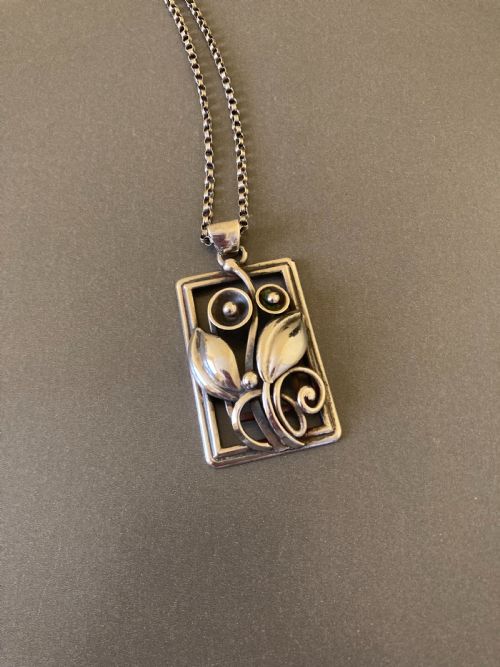


1940s Sterling Silver
These 1940s sterling silver items comprise domestic tableware, desk accessories and personal ornaments crafted during a decade of distinct stylistic transition.
1940s Sterling Silver
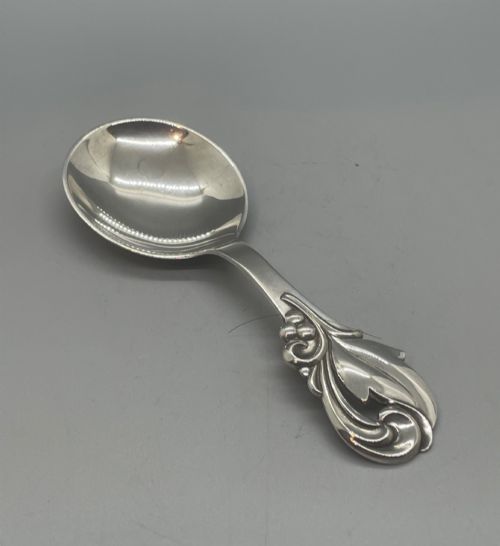
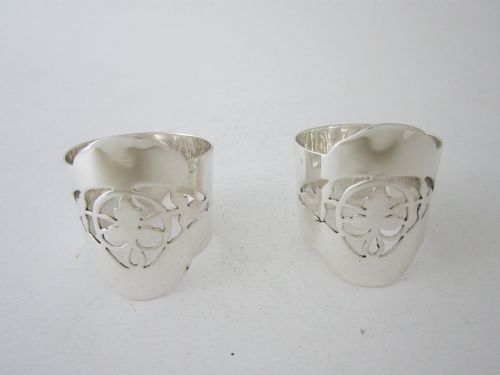
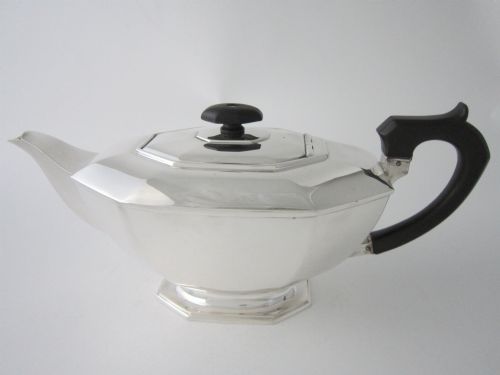
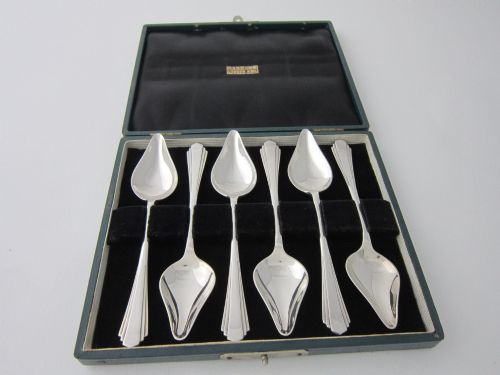
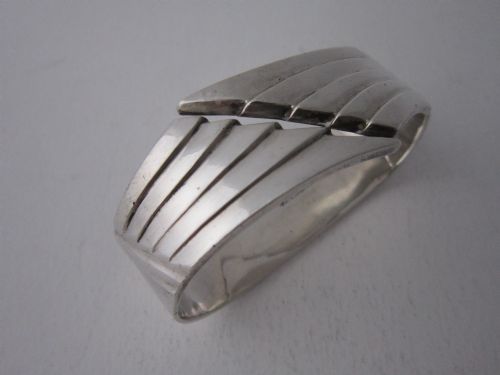
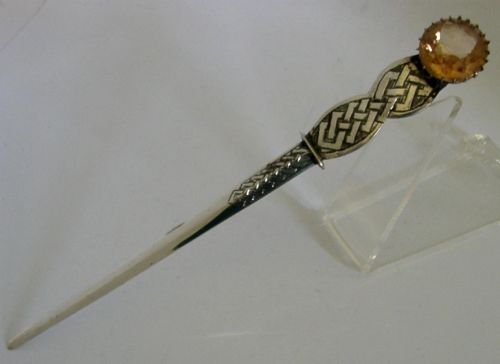
When you examine 1940s sterling silver, you encounter a varied assortment of objects ranging from functional tea services and condiment sets to decorative brooches, letter openers and napkin rings. The domestic pieces frequently reflect the George VI period alongside strong Art Deco influences, while personal items often incorporate enamel work or stones like citrine and white onyx.
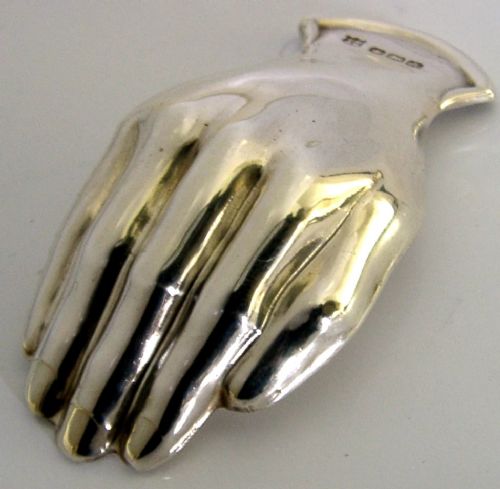
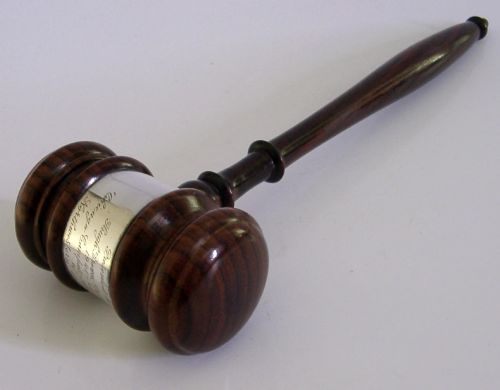
The selection on this page demonstrates both British and international provenance, including specific assay office locations such as Birmingham and Sheffield. Buyers seeking these items will find both cased sets of spoons and individual novelty pieces, such as hand tea caddy spoons and inscribed gavels.
How these items were made
The primary material across the pieces is sterling silver, frequently paired with secondary elements like glass, velvet, leatherette, wood, ebonised wood and fabric in fitted cases or boxes. Craftspeople also utilised enamel, guilloché enamel and silver gilt to add colour and surface texture to brooches, pendants, scent bottles and spoons.
Techniques range from traditional silversmithing methods seen in teapots, hip flasks and sauce boats to detailed stone setting and enamel work. Hallmarks stamped into the metal record the specific year of manufacture, assay town and maker, providing clear technical documentation for each object.
Someone cared enough to forge a tiny sterling silver yacht with gilt sails out of the 1940s.
What varies in quality
The standard of 1940s sterling silver depends heavily on the crispness of the silversmith's work, the integrity of any applied enamel, and the condition of supplementary materials like wood or original fitted cases. Pieces featuring intricate hand-chased details, clean hallmarks and specialist stones such as lapis lazuli or citrine typically represent finer manufacture.
Maker attribution also influences the standing of a piece, with recognised workshops and silversmiths demonstrating superior finishing compared to unmarked or generic items. The preservation of surface crispness, free from excessive polishing wear, distinguishes the better surviving examples.
A H Darby & Son·R. E. Stone·G. Hoppe·William Adams Ltd·James Dixon & Sons Ltd·Ernest Druiff & Co·Mappin & Webb·Cooper Brothers and Sons·Walker and Hall
The 1940s Sterling Silver Glossary
- Sterling silver
- An alloy consisting of 925 parts of silver per 1000 by mass, forming the primary metal standard for these items. Hallmarks verify this precise metallic proportion.
- Hallmark
- An official mark stamped into precious metals by an assay office to indicate purity, origin, and date of manufacture. These stamps establish the exact year and town of production.
- Guilloché enamel
- A decorative technique where intricate geometric patterns are engraved beneath a translucent layer of coloured enamel. This method appears on personal accessories like scent bottles and compacts.
- Caddy spoon
- A specialised short spoon designed for measuring loose tea leaves from a storage caddy. Many surviving examples feature novelty shapes or decorative bowls.
- Silver gilt
- Sterling silver that has been coated with a thin layer of gold on its surface. This finish creates a two-tone decorative effect on items such as small brooches.
1940s Sterling Silver: Frequently Asked Questions
How do I identify a 1940s hallmark?
British pieces from this decade carry standard assay office marks, a lion passant indicating sterling standard, and a specific date letter corresponding to the 1940s.
The shape of the shield enclosing the date letter helps determine the exact year of manufacture and the city where the item was tested.
How were silver tea caddy spoons used?
These small spoons were kept alongside tea caddies to measure loose tea leaves into the pot during daily tea preparation.
Their short handles and specialised bowl shapes allowed them to fit easily inside ceramic or metal storage canisters.
How should I clean silver with enamel?
Enamelled surfaces require gentle cleaning with a soft cloth and mild soapy water, avoiding harsh silver dips that can damage the glass coating.
Keep abrasive polishes away from the decorated sections to preserve the smooth colour and prevent scratching.
What styles define 1940s silverware?
The decade bridges traditional George VI forms with lingering Art Deco geometry and emerging Mid-Century Modern simplicity.
Pieces often combine clean linear silhouettes with decorative flourishes like enamel flowers or natural stones.