


Silver Double Candlestick
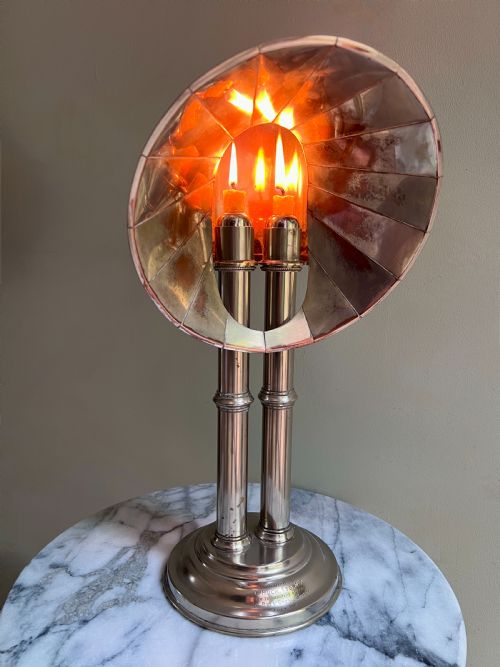
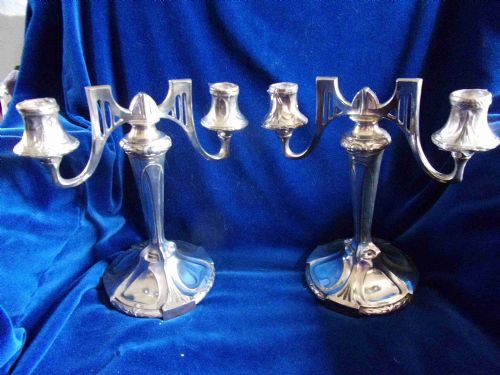
These silver double candlestick pieces bring dual illumination and period presence to a table, combining practical metalwork with decorative branches.
Silver Double Candlestick
A silver double candlestick search reveals two-branch table candelabra, candle lamps, and related desk accessories spanning the Victorian, Edwardian, and Art Deco eras. Buyers find lighting pieces designed to hold two candles simultaneously, often configured as matched pairs or single desk stands.
The versions most commonly met on this page combine silver plate or sterling silver with structural forms from the nineteenth and twentieth centuries. Examples range from nineteenth-century Victorian creations to later Jugendstil and Art Deco interpretations.
Materials and construction methods
Makers utilised sterling silver and silver plate over base metals, nickel silver, and spelter to build these dual-branch lighting fixtures. Some variations incorporate contrasting materials such as onyx or mercury glass alongside the primary metal structure.
Techniques varied from traditional silversmithing for solid sterling pieces to electroplating base metals during the Victorian and Edwardian periods. Stylistic details reflect Arts and Crafts hand-working, Jugendstil curves, and geometric Art Deco moulding.
Listings span periods from the eighteen-fifties through the nineteen-sixties, incorporating sterling silver, silver plate, spelter, and mercury glass.
Assessing quality and finish
Quality rests in the weight of the silver or plating and the crispness of the chased or cast decorative details. Superior examples exhibit balanced proportions across both branches and secure structural joins between the candlestick stem and the dual candle cups.
The distinction between standard commercial production and finer work lies in the depth of the metal finish and the integrity of any hallmarks or maker stamps. Well-preserved plating and crisp period styling distinguish the finer survivors from simpler utilitarian items.
The Silver Double Candlestick Glossary
- Sterling Silver
- A standard alloy containing ninety-two point five percent silver by weight, used extensively for high-end candelabra production.
- Silver Plate
- A base metal foundation coated with a thin layer of silver, common in nineteenth and twentieth-century table lighting.
- Jugendstil
- The continental European manifestation of Art Nouveau, characterised by flowing organic lines seen on turn-of-the-century metalwork.
- Spelter
- A zinc alloy frequently utilised as a base for cast decorative figures and sculptural lamp bases during the early twentieth century.
- Hallmark
- An official stamp or series of marks applied to precious metals to indicate purity, origin, and assay office.
Silver Double Candlestick: Frequently Asked Questions
How do I clean a silver double candlestick?
Clean these pieces using a soft cloth and a specialised silver polish formulated to preserve plated or sterling surfaces.
Avoid harsh abrasives that can wear away silver plating or damage underlying base metals and inserted decorative components.
Are these pieces safe for daily use?
Most of these items function well for occasional dining table illumination or desktop display when handled carefully.
Ensure wax drips are managed gently to prevent staining or heat damage to the metal finish.
How can I tell Victorian from Art Deco pieces?
Victorian examples tend to display ornate floral chasing, heavy casting, and traditional revivalist motifs from the nineteenth century.
Art Deco items feature streamlined geometric shapes, stylized figures, and linear profiles characteristic of the nineteen-thirties.