




Vintage Silver Fruit Spoons
Vintage silver fruit spoons bring a particular refinement to the table, offering tactile pleasure and historical craftsmanship for modern dining.
Vintage Silver Fruit Spoons
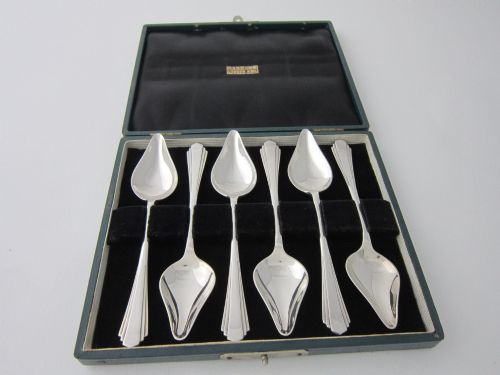
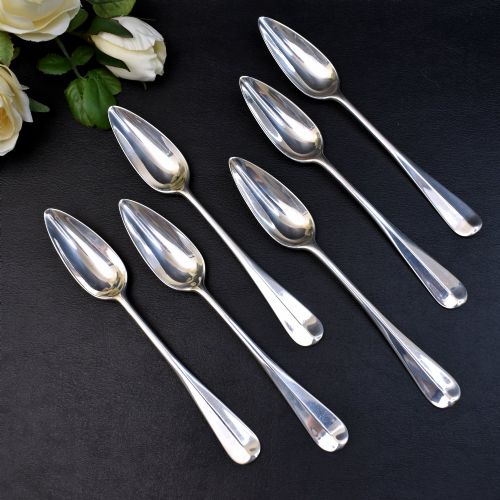
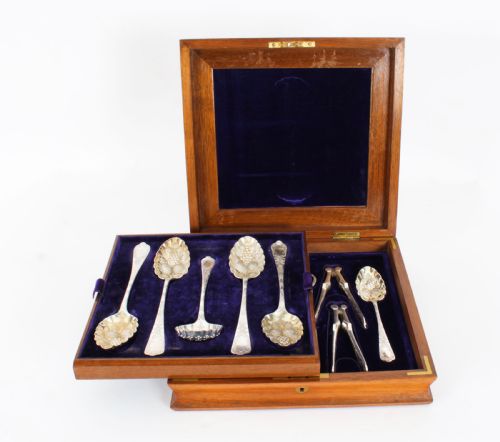
Vintage silver fruit spoons encompass a range of dining implements designed for citrus, berries, and desserts, emerging across multiple eras including the Georgian, Victorian, and Art Deco periods. When exploring vintage silver fruit spoons, buyers encounter specialised forms such as pointed grapefruit spoons, deep berry spoons, and complete boxed fruit sets complete with nutcrackers and grape scissors.
The materials span solid sterling silver and silver plate, frequently housed in original presentation cases lined with velvet, silk, fabric, and leatherette. These pieces reflect the dining customs of the eighteenth, nineteenth, and early twentieth centuries, providing both functional utility and decorative appeal for contemporary collectors.
Materials and manufacture
Makers utilised solid sterling silver and silver plate as the primary metals, shaping bowls into shell forms or pointed profiles suited for segmenting fruit. Handles and bowls often received ornate engraving, hand-chasing, or distinct patterns such as the King Edward design.
Presentation was integral to the production, with many sets housed in fitted wooden boxes lined with velvet, silk, fabric, and leatherette to protect the polished metal surfaces.
Listings span the Georgian, Victorian, and Art Deco periods, featuring materials from sterling silver to velvet and wood.
Assessing quality and craftsmanship
The distinction between standard examples and finer pieces lies in the crispness of the chased engraving and the structural integrity of the bowls and tines. Finer sets maintain clear hallmarks indicating maker and assay office, alongside undamaged original presentation cases.
The weight of the silver and the balance in the hand differentiate mass-produced silver plate from substantial solid sterling silver items produced by notable silversmiths.
Hamilton & Inches·Hukin & Heath·Whiting Co.
The Vintage Silver Fruit Spoons Glossary
- Sterling silver
- An alloy containing ninety-two point five percent silver by mass, with the remainder consisting of copper or other metals. This standard provides the durability required for daily dining implements.
- Silver plate
- A layer of silver applied to a base metal core, such as copper or nickel brass. This technique offered a bright finish at a lower cost than solid silver.
- Hallmark
- An official stamp applied by an assay office to indicate the purity of the metal, the maker, and the year of manufacture. These marks allow collectors to trace the exact origin of the cutlery.
- Berry spoon
- A large serving spoon with a wide bowl, often heavily embossed or engraved with fruit and foliage motifs. These were originally adapted or created in the eighteenth and nineteenth centuries for serving soft fruits.
- Grapefruit spoon
- A specialised spoon featuring a pointed or serrated tip designed to ease citrus segments from the membrane. This form became particularly popular during the early twentieth century.
Vintage Silver Fruit Spoons: Frequently Asked Questions
How do I clean vintage silver fruit spoons?
Use a soft microfiber cloth and a dedicated silver polish designed to remove tarnish without scratching the engraved details. Avoid harsh chemical dips that can strip the natural patina and damage delicate plate.
Store the spoons in their original fitted boxes or anti-tarnish rolls to minimise exposure to air and moisture between uses.
Can I use these spoons for daily dining?
Solid sterling silver pieces are durable enough for regular use if washed by hand immediately after contact with acidic fruit juices. Silver-plated items require gentle handling to preserve the thin outer metal layer over time.
Hand washing prevents the pitting and wear often caused by modern dishwasher detergents and high heat.
Why are some fruit spoons pointed?
Pointed bowls and serrated edges on grapefruit spoons were engineered to cut cleanly through citrus membranes during breakfast service. This specific functional adaptation emerged as citrus fruits gained popularity in nineteenth and twentieth-century dining.
Standard dessert spoons lack this pointed geometry, which remains unique to citrus-specific cutlery.