
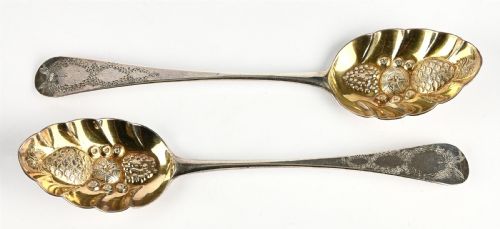


Sterling Silver Berry Spoons
Sterling silver berry spoons bring ornate fruit-serving bowls and chased handles to the dining table, offering collectors a glimpse into Georgian and Victorian dining habits.
Sterling Silver Berry Spoons
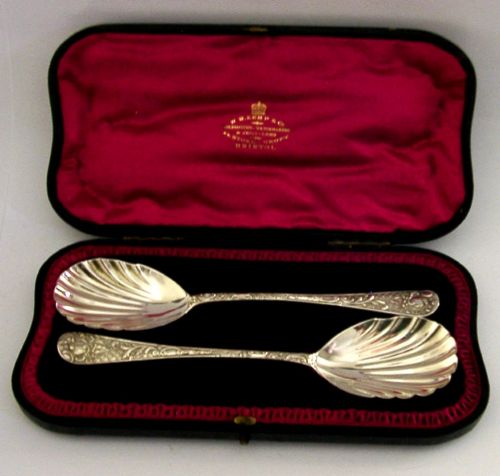
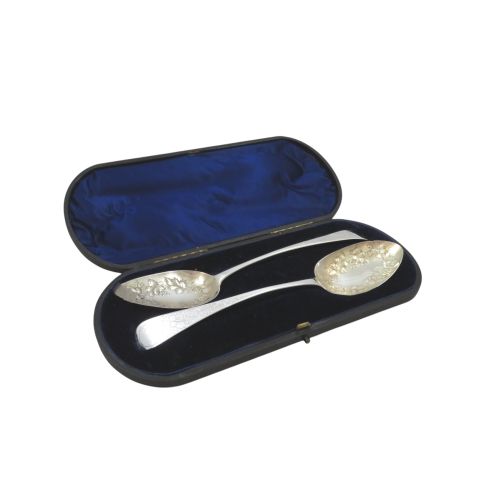
Sterling silver berry spoons are large serving flatware pieces specifically designed for portioning fruit at the table. These utensils frequently appear as matched pairs housed in fitted presentation cases lined with silk, velvet, or satin.
Most examples found on this page hail from the Georgian and Victorian eras, spanning from the mid-eighteenth century through the late nineteenth century. Makers often adapted standard dining spoons by heavily embossing the bowls with fruit and foliage motifs long after the initial manufacture date.
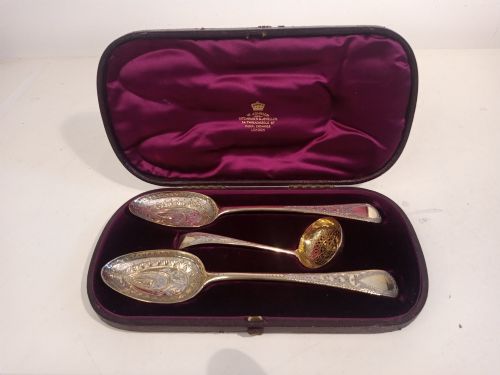
The inventory includes related serving utensils such as sugar sifters and strainer spoons alongside traditional berry servers. Styles range from classical George III designs to later Victorian naturalistic, Art Nouveau, and Arts & Crafts interpretations.
What Varies in Quality
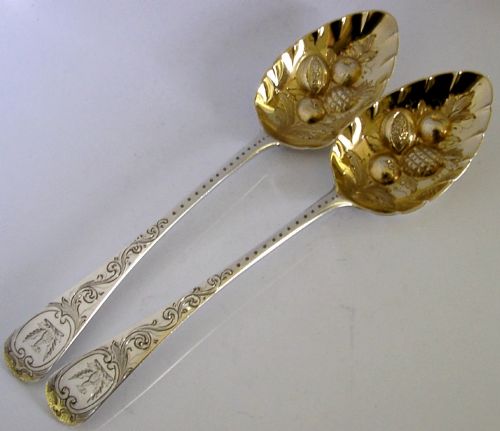
The crispness of the chased fruit decoration separates superior serving spoons from simpler or worn pieces. Crisp, deep relief work preserves the intricate details of leaves and berries without thinning the underlying silver of the bowl.
Original matching presentation cases lined in leatherette, velvet, or silk elevate the desirability of a set. Weight and balance in the hand also distinguish standard production flatware from substantial, heavy-gauge parlour services.
Materials recorded across the inventory include sterling silver, silver-gilt, leatherette, velvet, silk, and satin presentation cases.
Peter and Anne Bateman·William Chawner II·Sebastian Crespell·Walker and Hall·Whiting Co.
The Sterling Silver Berry Spoons Glossary
- Berry spoon
- A large serving spoon with a repoussé bowl depicting fruit and foliage. Many of these pieces began life as plain dining spoons before receiving decorative chasing decades later.
- Silver gilt
- Sterling silver that has been coated with a thin layer of gold through electrolysis or fire gilding. This technique protects the bowl interior from staining when serving acidic fruits.
- Repoussé
- A metalworking technique where the artisan hammers the reverse side of a sheet of silver to form a raised design in relief. Chasing tools are then used on the front to refine the details.
- Sifter spoon
- A serving implement featuring a pierced or perforated bowl designed to sprinkle sugar over desserts. These often accompany berry spoons within fitted presentation sets.
- Hallmark
- An official stamp applied by an assay office indicating the purity of the silver, the city of origin, and the date letter. These marks allow collectors to trace the exact year and maker of the flatware.
Sterling Silver Berry Spoons: Frequently Asked Questions
Were berry spoons used only for fruit?
While originally intended for serving soft fruits and berries from central bowls, these large utensils frequently served multiple roles during nineteenth-century dessert courses.
Their generous bowl capacity made them suitable for portioning trifles, puddings, and other sweet dishes at formal dining tables.
Why do some spoons have gilded bowls?
Silver gilt interiors served a practical purpose during the consumption of acidic fruits like berries and citrus. The gold wash prevented the silver from tarnishing rapidly or developing a metallic taste when in contact with fruit acids.
This decorative treatment also provided a striking visual contrast against the polished silver handles.
Are cased sets original to the spoons?
Fitted presentation cases lined in velvet, silk, or satin frequently date to the Victorian or Edwardian periods, even when housing older Georgian spoons. Retailers often assembled existing antique spoons into custom presentation boxes as wedding or anniversary gifts.
Examination of the interior lining and hinges helps determine whether the case was tailored specifically for that exact pair.
How can I tell a Georgian spoon from a Victorian one?
Assay office hallmarks stamped on the reverse of the handle provide the definitive date of the silver's initial testing and creation. Georgian pieces typically display simpler lines or classic engraving, whereas Victorian examples often embrace naturalistic leaf motifs and heavy gilding.
Many Georgian spoons were later retrofitted with Victorian berry chasing, meaning the bowl decoration date differs from the handle hallmark.