




Georgian Hallmarked Silverware
Georgian hallmarked silverware carries the weight of eighteenth and nineteenth-century dining tables in solid sterling silver.
Georgian Hallmarked Silverware
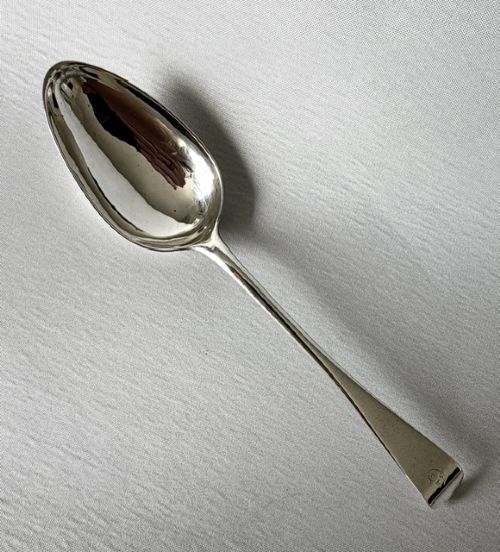
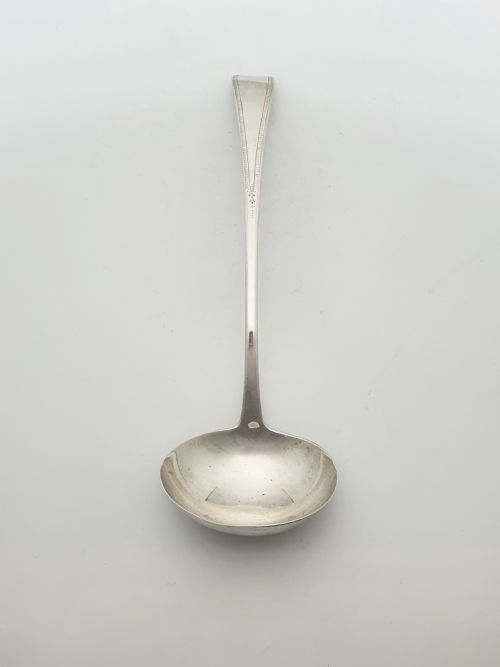
When buyers search for georgian hallmarked silverware, they encounter serving utensils, teapots, and sauce boats spanning the eighteenth century alongside later revival pieces. The selection includes large serving spoons, soup ladles, and basting spoons originating from English, Scottish, and Irish assay offices.
Most items on this page date directly to the Georgian period or the eighteenth century, while others emerge from nineteenth and twentieth-century revivals. Forms range from bullet teapots and sugar casters to double-struck caddy spoons and dessert spoons.
Materials and construction
The primary material across these listings is sterling silver, worked into hollowware forms such as teapots and sauce boats as well as heavy flatware like soup ladles. Wood appears in combination with silver elements, while smiths shaped the metal through hammering, casting, and raising techniques.
Makers struck their pieces with official hallmarks denoting the standard of silver, the assay office, and the date letter, often accompanied by specialist maker's marks such as those of Hester Bateman. Decorative details include threaded borders, polygon sides, and engraved crests.
Early tea drinkers required dedicated silver caddy spoons just to ration out the fiercely expensive leaves brought home from distant ports.
Distinctions in quality
Quality in these silver objects rests on the crispness of the hallmarks, the preservation of original gauge metal, and the balance of the form. Pieces by notable silversmiths retain sharper definition in their chased and engraved decoration.
Weight and gauge distinguish substantial table silver from lighter items, while the clarity of Dublin, Edinburgh, Newcastle, and London town marks anchors the provenance and overall desirability.
James Tookey·Hester Bateman·The Barker Brothers·Roberts And Belk
The Georgian Hallmarked Silverware Glossary
- Hallmark
- Official stamps struck into precious metals to guarantee the fineness and origin. These marks include the maker's mark, town mark, and date letter.
- Bullet teapot
- A spherical or globular teapot resting on a short foot ring, typical of early eighteenth-century domestic silver. The form emphasises smooth, planished silver surfaces without excessive ornament.
- Caddy spoon
- A small specialised spoon designed for measuring loose tea leaves from a caddy into a teapot. They frequently feature decorative bowls and short handles.
- Basting spoon
- A large flatware utensil utilised in the kitchen or at the dining table for spooning pan juices over roasting meat. These items measure significantly longer than standard tablespoons.
Georgian Hallmarked Silverware: Frequently Asked Questions
How do I read silver hallmarks?
Hallmarks consist of a series of small stamped symbols that reveal the specific assay office, the silver standard, and the year the piece was tested. Reference guides match the date letters and maker's initials to historical records.
Finding marks like the leopard head for London or the Hibernia for Dublin establishes the geographic origin of the silverware.
What is the difference between Georgian and Georgian Revival?
Authentic Georgian pieces were manufactured during the reigns of the four King Georges between 1714 and 1830. These items bear period date letters matching the active years of the eighteenth and early nineteenth centuries.
Georgian Revival items were produced later, such as in the 1930s, copying the earlier aesthetic styles while bearing twentieth-century date marks.
How were antique ladles used?
Soup ladles and toddy ladles served specific functions at the communal dining table or punch bowl. Soup ladles transferred liquid from tureens to individual bowls, while smaller toddy ladles portioned hot punch.
Many of these spoons possess reinforced bowls and sturdy handles designed for frequent household service.
How should I care for sterling silver?
Regular use prevents heavy tarnish accumulation, as natural handling polishes the high points of the metal. Wash pieces in warm soapy water and dry them immediately with a soft cloth.
Avoid abrasive cleaners that wear away engraved details and thin the historic hallmarks over generations of maintenance.