


British Hallmark Silver Spoons
British hallmark silver spoons carry clear marks that date their metal and maker, offering solid craftsmanship for everyday use and display.
British Hallmark Silver Spoons
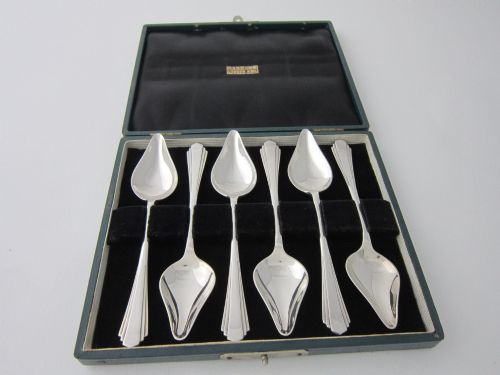
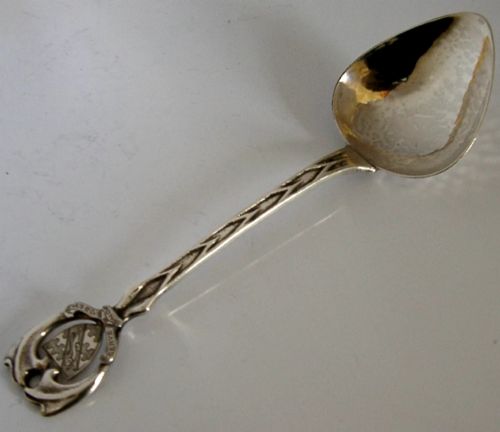
British hallmark silver spoons encompass a diverse range of eating and serving implements shaped from sterling silver across the nineteenth and twentieth centuries. Buyers searching for british hallmark silver spoons encounter various functional forms including caddy spoons, basting spoons, mustard pots, marrow scoops, grapefruit spoons, and ice cream servers.
The pieces on this page span several distinct periods from the Georgian and William IV eras through Victorian times and into the nineteen-forties. Among these, Victorian examples appear frequently alongside pieces from nineteen-thirty onwards, reflecting the output of English silversmiths over generations.
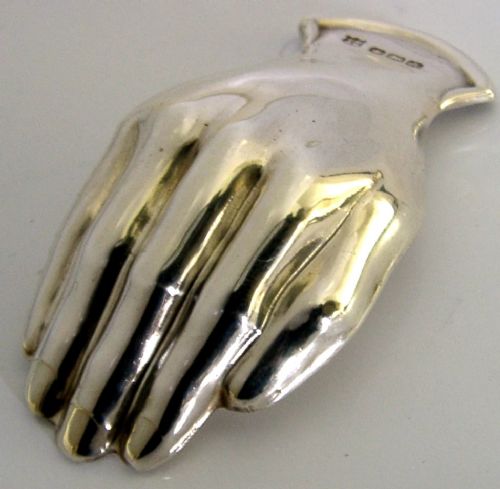
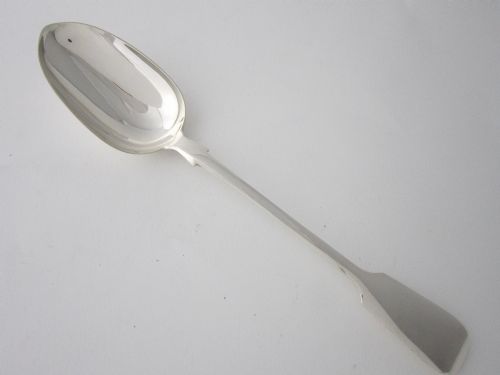
Forms range from novelty hand tea caddy spoons and fiddle pattern serving utensils to matched pairs of Georgian serving spoons and cased rat tail sets. Each object displays the stamped assay office marks, standard marks, and date letters characteristic of British silversmithing traditions.
Materials and construction
These spoons and serving utensils are fashioned from sterling silver, relying on the durable qualities of the metal to form bowls, stems, and handles. Selected items are housed in protective fitted cases lined with fabric and covered in leatherette.
Silversmiths utilised traditional manufacturing techniques to create functional dining implements, hammering, casting, and piercing the sterling silver into specific patterns such as fiddle or old English styles. Maker marks, lion passant symbols, and date ciphers were then stamped directly into the metal.
Some nineteenth-century diners required specialised silver scoops just to extract marrow from bones at the dinner table.
Distinctions in quality and execution
Quality in these items rests upon the clarity and crispness of the British hallmarks stamped into the sterling silver, alongside the preservation of original form and surface detail. Pieces that retain sharp edges on fiddle patterns or well-defined novelty shapes demonstrate superior preservation.
The reputation of the maker, such as Mappin & Webb or George Unite, alongside specialised institutional commissions like the Worshipful Company of Harberdashers, distinguishes certain objects. The complexity of the utensil type, from a standard spoon to a marrow scoop or fitted cased set, also shapes the character of the piece.
Worshipful Company of Harberdashers·Mappin & Webb·George Unite
The British Hallmark Silver Spoons Glossary
- Hallmark
- Official marks stamped on precious metals in Britain to guarantee the standard of purity. These marks typically include a maker's mark, a standard mark, an assay office mark, and a date letter.
- Caddy Spoon
- A short spoon specifically designed for measuring loose tea leaves from a caddy. They often feature decorative bowls and novelty handles.
- Fiddle Pattern
- A nineteenth-century flatware style characterised by a stem that widens towards the end with a slight shoulder, resembling the shape of a fiddle.
- Marrow Scoop
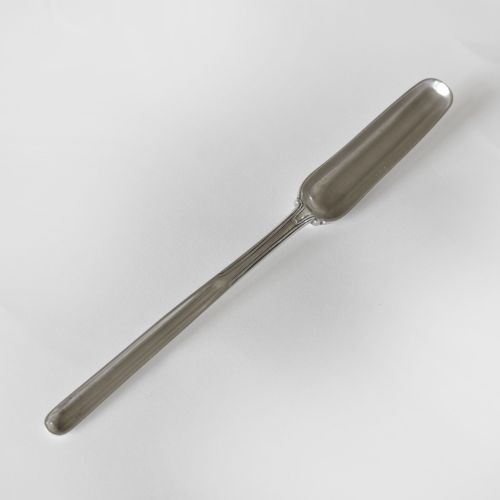
- A long, narrow silver utensil with small troughs at both ends, designed for extracting marrow from bones. They date across Georgian and nineteenth-century dining tables.
- Rat Tail
- A strengthening ridge running down the back of a spoon bowl from the stem. This traditional feature originates from earlier silversmithing practices and appears on twentieth-century cased sets.
British Hallmark Silver Spoons: Frequently Asked Questions
How do I read British silver hallmarks?
British silver hallmarks consist of several distinct punches that together reveal the origin and age of the object. You will typically find a maker's mark, a standard mark indicating sterling quality, an assay office mark showing where it was tested, and a date letter.
Matching these individual symbols against historical assay records allows collectors to pinpoint the exact year and city of manufacture for each piece.
How do I care for antique silver spoons?
Antique sterling silver benefits from gentle cleaning with a soft cloth and specialised silver polish only when necessary to remove tarnish. Avoid harsh abrasive cleaners that can wear away engraved details, maker's marks, and hallmarks over time.
Storing pieces in dry conditions, away from direct sunlight and moisture, helps preserve the finish of the metal and any fitted fabric-lined cases.
What is the difference between Georgian and Victorian spoons?
Georgian spoons span the reigns of the Georges up to eighteen-thirty, displaying traditional hand-wrought forms and classical styles. Victorian spoons, produced from eighteen-thirty-seven onwards, often incorporate heavier cast elements and more ornate decorative patterns.
Assay office date letters stamped onto the silver provide the definitive guide to distinguishing between these two contiguous nineteenth-century periods.