


Neoclassical Gilt Candlesticks
Neoclassical gilt candlesticks bring balanced proportion and rich metallic warmth to a room, drawing on classical architecture and ancient motifs.
Neoclassical Gilt Candlesticks
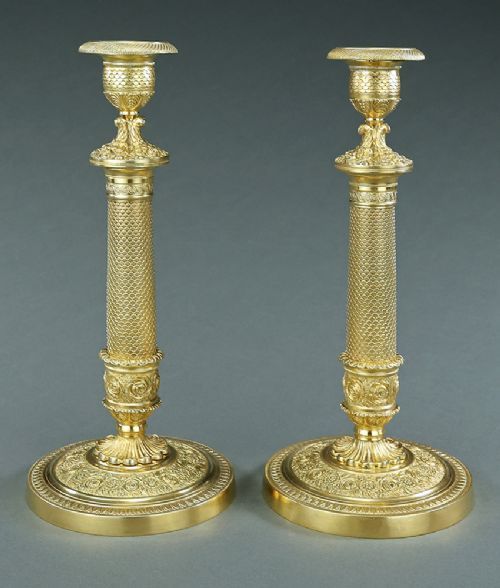
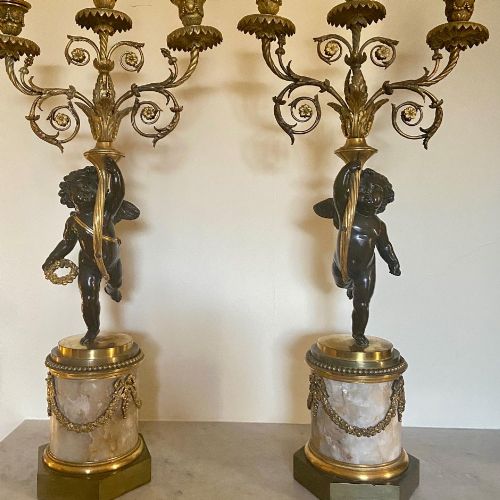
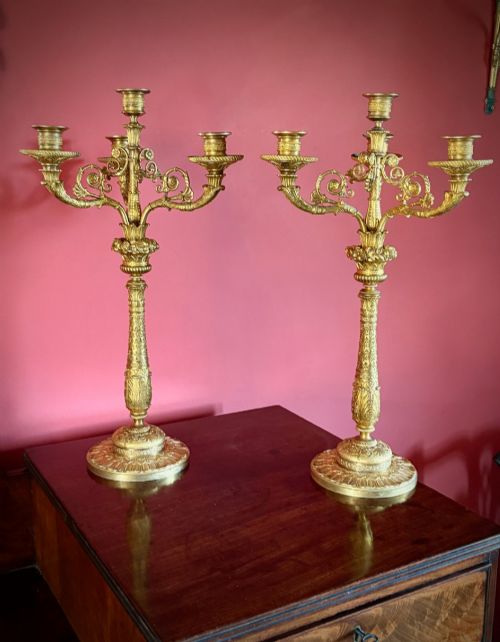
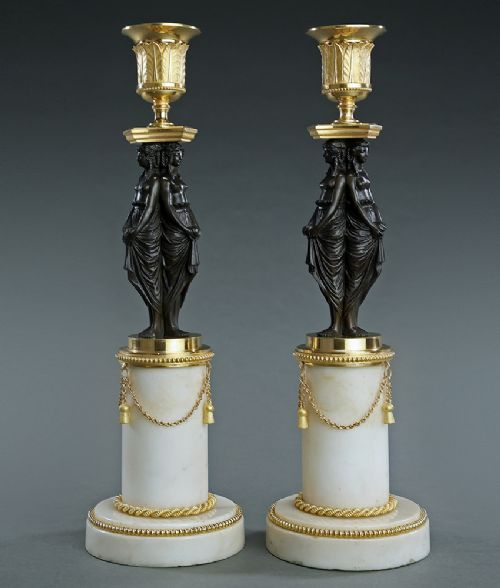
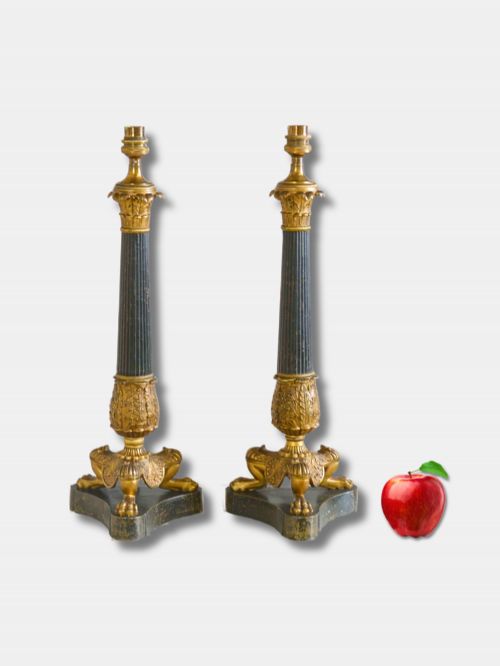
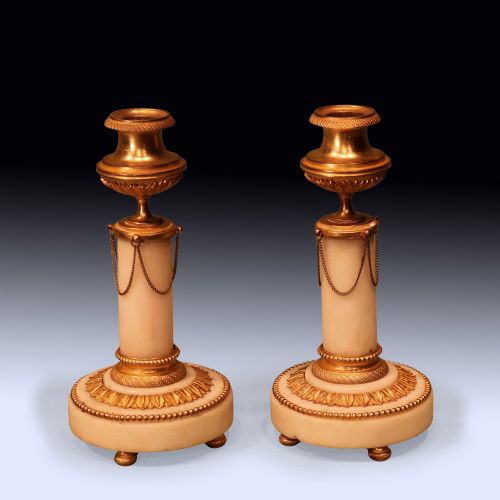
Neoclassical gilt candlesticks embody the architectural restraint and decorative symmetry of the late eighteenth and nineteenth centuries, taking the form of sturdy columns, tripod bases, and slender tapers. You will frequently encounter pairs fashioned in the French Empire and Louis XVI styles, incorporating classical figures like caryatids and putti.
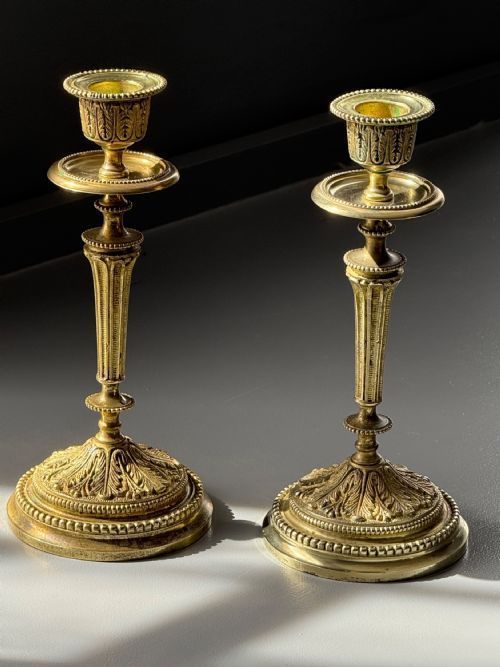
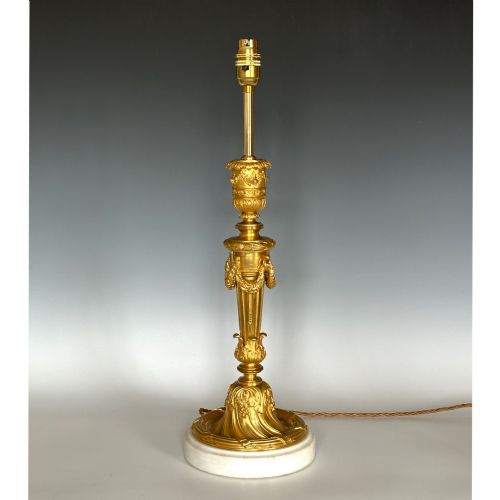
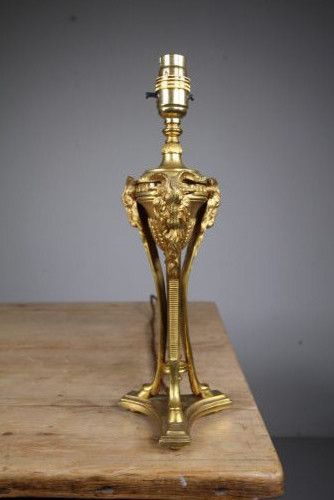
The selection ranges from compact desk candlesticks to grand, multi-branched candelabra and converted table lamps. Many pieces show the enduring influence of classical antiquity through acanthus leaves, lion paws, and fluted shafts originating from French, English, Italian, and Swedish workshops.
Materials and Construction
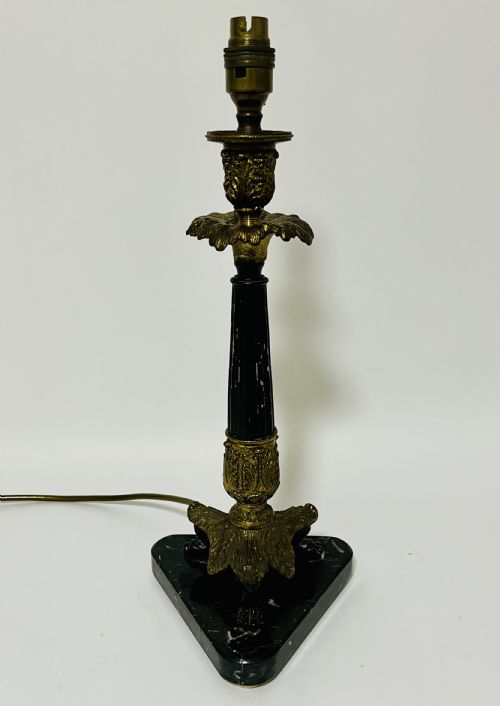
Foundry workers utilised bronze, brass, and ormolu, applying mercury gilding or modern electroplating to achieve a brilliant golden surface that contrasts sharply with dark patinated bronze elements. This metallic structure frequently anchors itself to white marble, slate, or fluorspar bases, grounding the upright design with solid stone.
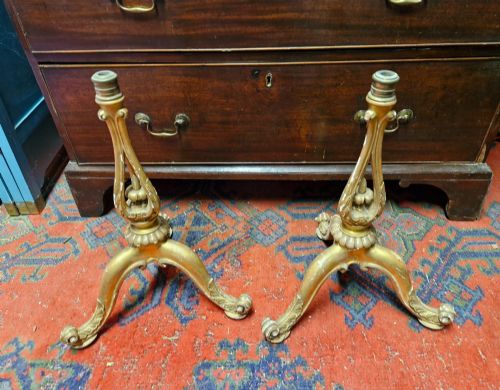
Carved wooden examples employ gesso and silvered or gilded finishes, reflecting the altar-style traditions of Italian and English craftsmen. Fine chasing and engraving define the details on the metal shafts, delineating drapery, feathers, and fluting with sharp precision.
Object forms include standard candlesticks, multi-armed candelabra, wall sconces, and table lamps adapted from older lighting bases.
Craftsmanship and Execution
The crispness of the chasing separates standard foundry production from exceptional work, revealing how deeply the artisan carved the bronze before gilding. Sharp definition in facial expressions, hair, and acanthus foliage indicates a high-grade model.
The harmonious combination of contrasting materials determines the visual success of a piece. Heavier, well-balanced marble plinths and finely articulated patination alongside bright ormolu create a cohesive object.
Francois Redmond·Jean Demosthene Dugourc·Claude Clodion
The Neoclassical Gilt Candlesticks Glossary
- Ormolu
- Finely ground high-carat gold applied to a bronze base using a mercury amalgam technique, producing a deep, lasting golden lustre. Later pieces often substitute this with simpler electrogilt finishes.
- Caryatid
- A sculpted female figure serving as an architectural support instead of a column, frequently appearing on the shafts of these lights. They lend a classical, sculptural presence to the object.
- Putto
- A plump, winged child figure, often depicted as a cherub, commonly cast in bronze or patinated metal alongside the candle sockets. These figures bring a playful mythological element to the rigorous neoclassical symmetry.
- Pricket
- A sharp metal spike set in the centre of a candle-holder to impale a wax taper, typical of ecclesiastical or altar-style pieces. This form predates the standard socket cup used in domestic lighting.
Neoclassical Gilt Candlesticks: Frequently Asked Questions
Were these originally electrified?
These pieces were originally manufactured to hold wax candles or oil before many were converted into table lamps during later periods. The conversion process often involved running wiring through the central shaft without permanently altering the antique metalwork.
Buyers can find both unconverted candlesticks and those already adapted for modern electrical use. Many lamps retain their original form, allowing collectors to appreciate them in their initial lighting context.
How do I distinguish French Empire from Louis XVI style?
Louis XVI pieces typically display lighter proportions, straight fluted columns, and restrained classical ornamentation like ribbons and simple bead reels. The influence remains delicate and overtly architectural.
French Empire designs are heavier and more militaristic, drawing inspiration from ancient Rome and Egypt with sphinxes, laurel wreaths, and deep patinated bronze contrasts. The overall impression shifts from graceful refinement to grand imperial power.
What does Grand Tour mean for these items?
Grand Tour pieces were acquired by wealthy travellers touring the cultural sites of Europe, particularly Italy and France, during the eighteenth and nineteenth centuries. These items served as portable reminders of classical antiquity and Renaissance art.
They often replicate famous architectural fragments or monumental sculptures on a domestic scale. This context explains the frequent appearance of marble bases and bronze mythological figures in the listings.