

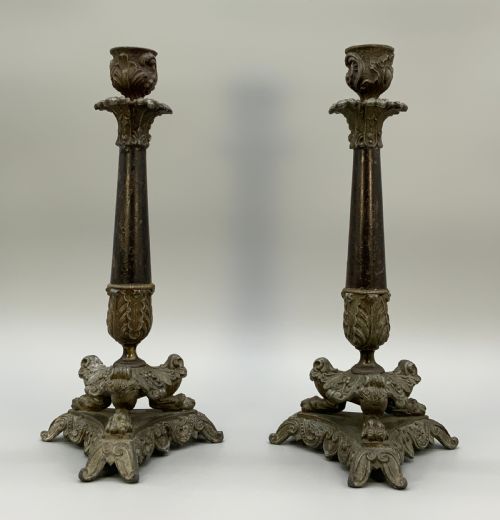
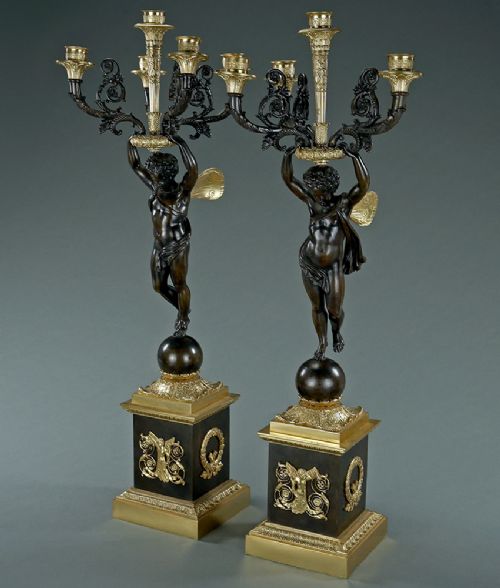
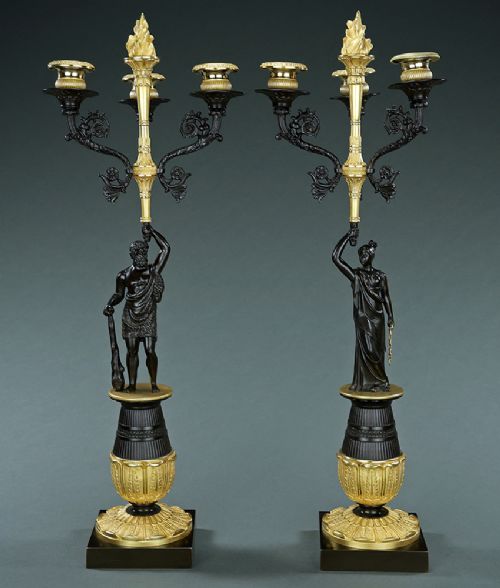
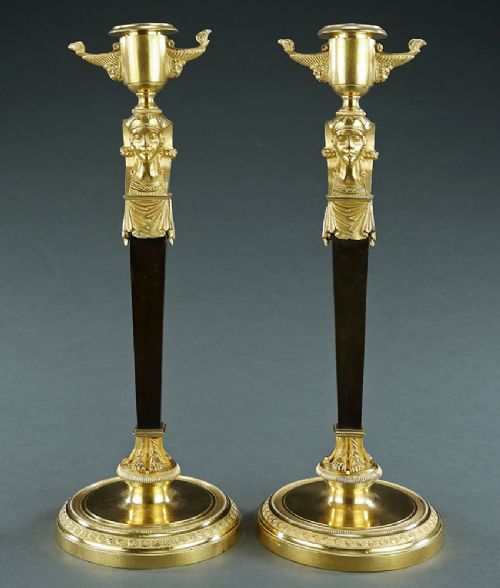
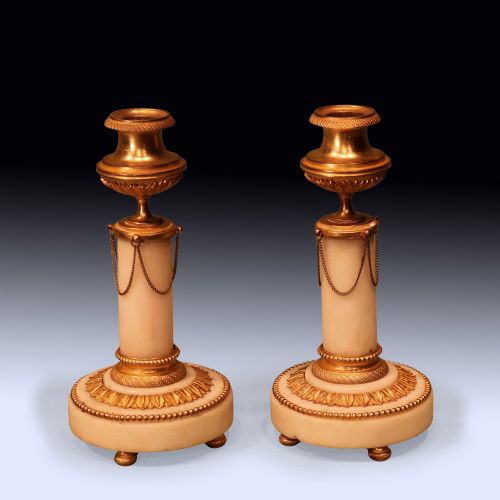


Bronze Empire Candle Holder
A bronze empire candle holder brings neoclassical gravity to a room, combining patinated metal and gilt mounts into a striking source of ambient light.
Bronze Empire Candle Holder
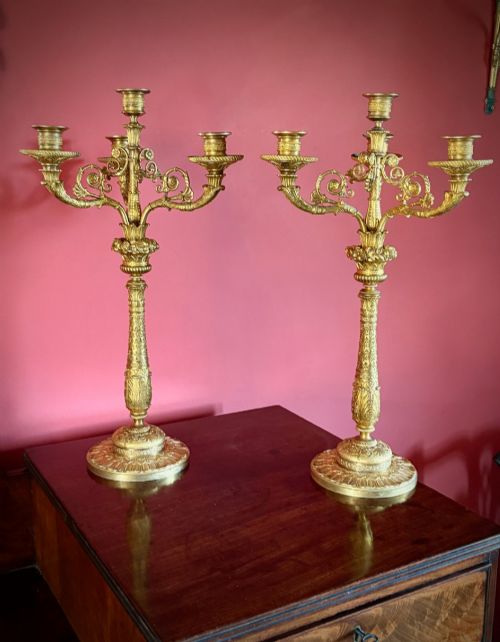
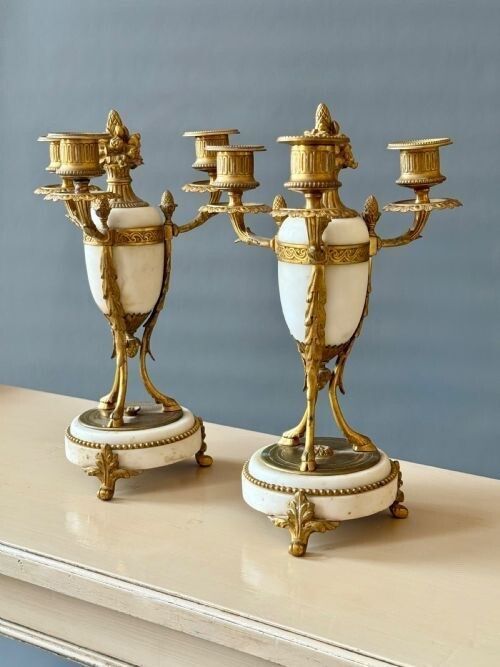
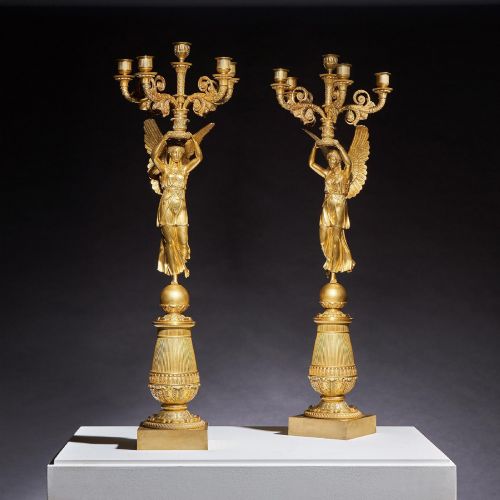
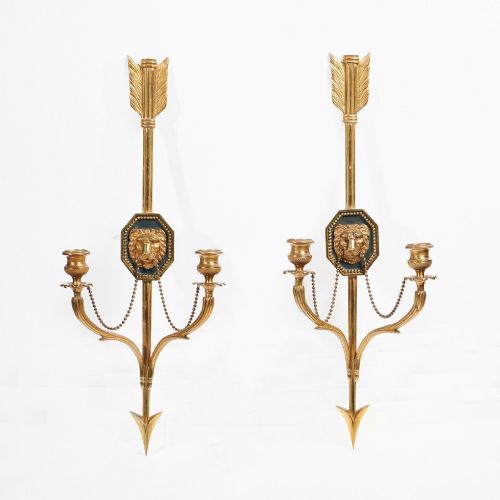
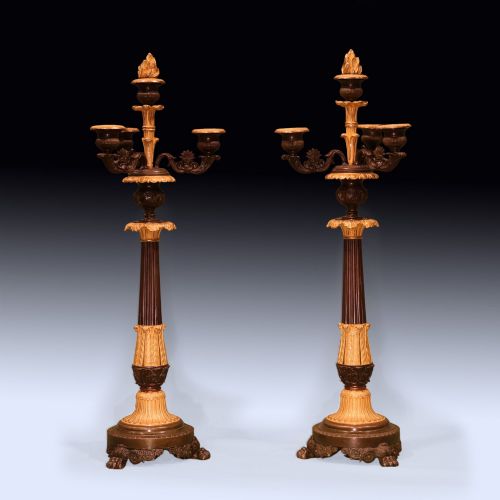
A bronze empire candle holder typically takes the form of a pair of candlesticks or multi-branched candelabra, often dating from the nineteenth century or the Regency period.
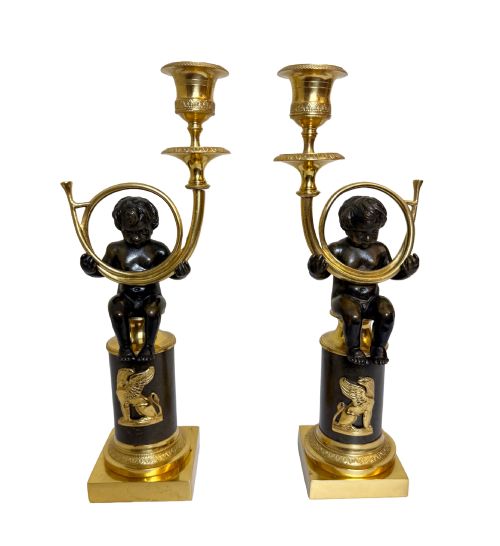
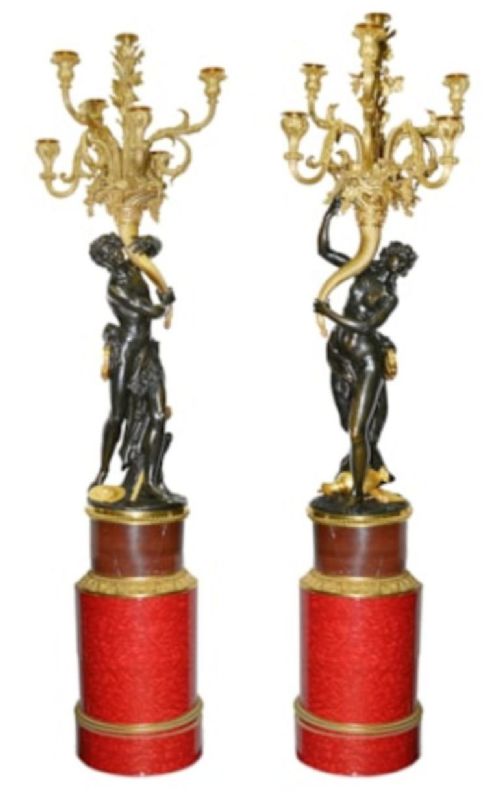
These objects draw on French Empire, Neoclassical, and French Restoration designs, frequently featuring classical figures, architectural columns, or mythological motifs.
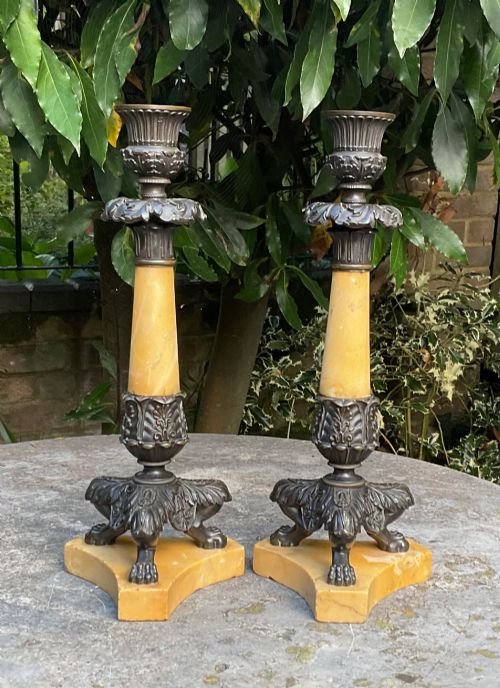
Buyers commonly encounter pairs mounted on white marble, sienna marble, or onyx bases, designed to sit symmetrically on mantelpieces, sideboards, or desks.
Materials and casting
Maker workshops utilised a combination of cast bronze, patinated dark bronze, and bright ormolu, which is mercury-gilded bronze that provides a rich golden contrast.
Many examples incorporate natural stone plinths such as white or sienna marble, turned and polished to support heavy bronze figural shafts and drip pans.
Some nineteenth-century makers hid candle snuffers inside winged putti or mythological figures, turning practical fire safety into a mischievous game.
Casting and mercury gilding
The distinction between ordinary and exceptional pieces lies in the crispness of the chasing and the depth of the ormolu, where superior examples exhibit sharp, hand-finished detail across hair, drapery, and acanthus leaves.
Heavier bronze weight, tighter joints between stone bases and metal mounts, and the presence of signatures from known founders signal higher production standards.
Pierre Philippe Thomire·Rabiat·Auguste Cain
The Bronze Empire Candle Holder Glossary
- Ormolu
- Finely chopped gold amalgamated with mercury and applied to bronze through heat, creating a durable golden surface. It defines the rich yellow highlights on many classical pieces.
- Patinated bronze
- Metal treated with chemical solutions to achieve a dark, uniform brown or black surface. It forms the shadowed background against which gilt mounts stand out.
- Candelabra
- A branched candlestick holding multiple lights on separate arms. These pieces often feature removable top sections for easier cleaning.
- Caryatid
- A sculpted female figure serving as an architectural support or pillar. They frequently form the central shaft of nineteenth-century lighting.
- Grand Tour
- Eighteenth and nineteenth-century travels undertaken by wealthy Europeans to study classical antiquities. Souvenirs from these journeys often included miniature bronzes and candlesticks.
Bronze Empire Candle Holder: Frequently Asked Questions
Were these holders made as pairs?
Many nineteenth-century lighting pieces were cast and finished as symmetrical pairs to adorn mantelpieces and large dining tables. Single candlesticks do appear, but matched pairs remain the standard format for formal display.
Inspect the bases and chasing closely to confirm that both pieces share identical manufacturing quirks and wear patterns.
How do I distinguish Empire from Regency styles?
French Empire design draws heavily on Napoleonic symbols, Roman military motifs, and austere classical proportions. Regency pieces, produced in Britain during a similar era, often blend these French influences with Chinese or Egyptian elements.
Both styles share a fondness for dark patinated bronze contrasted against bright ormolu mounts.
What is the purpose of marble bases?
Marble plinths added necessary weight and stability to tall, top-heavy bronze candle holders. They also provided a crisp architectural contrast to the dark patinated metal and yellow ormolu.
Different stones, including white marble, sienna, and onyx, helped date pieces and indicated the workshop's target market.