



Ormolu Candelabrum Stand
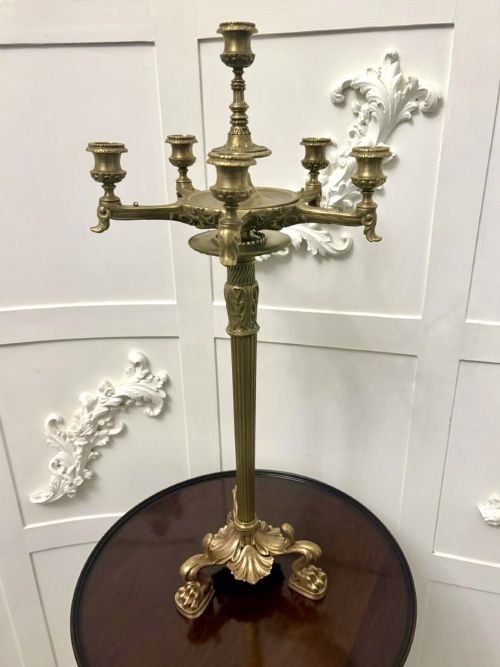
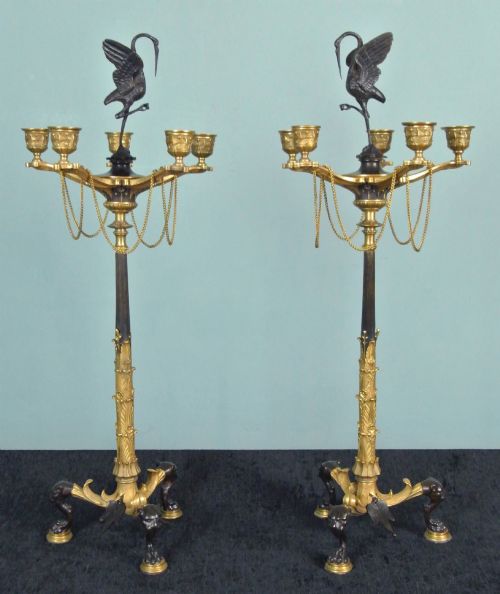
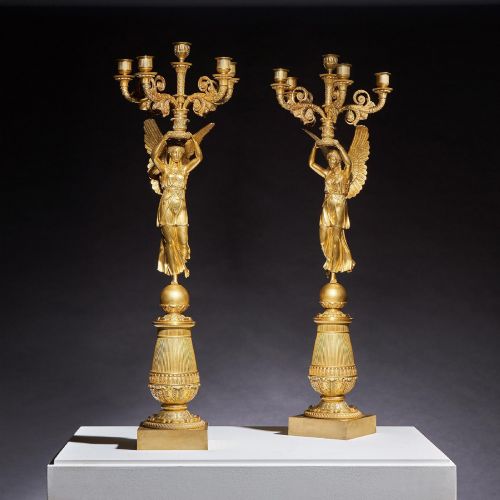
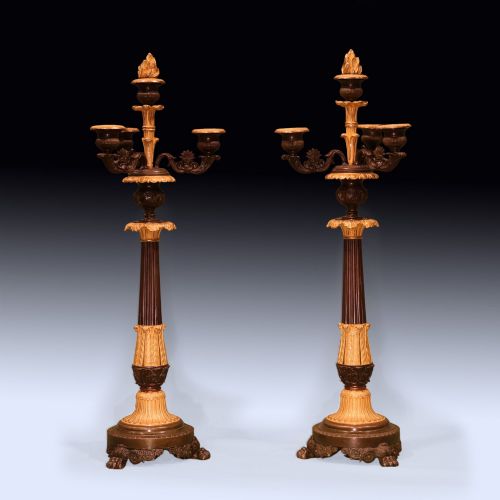
An ormolu candelabrum stand brings tactile warmth and classical French grandeur to a room through heavy gilt metal and sculptural bronze.
Ormolu Candelabrum Stand
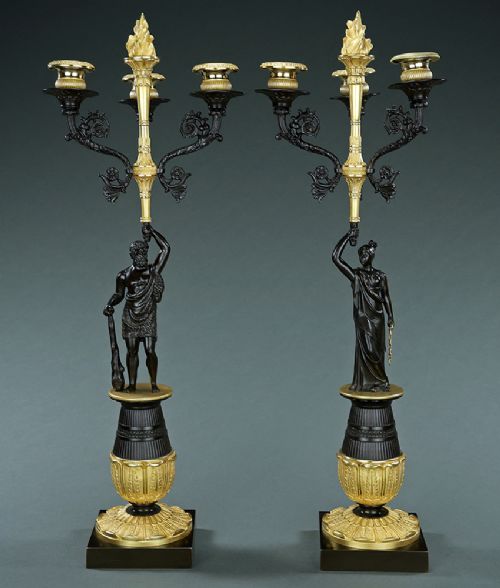
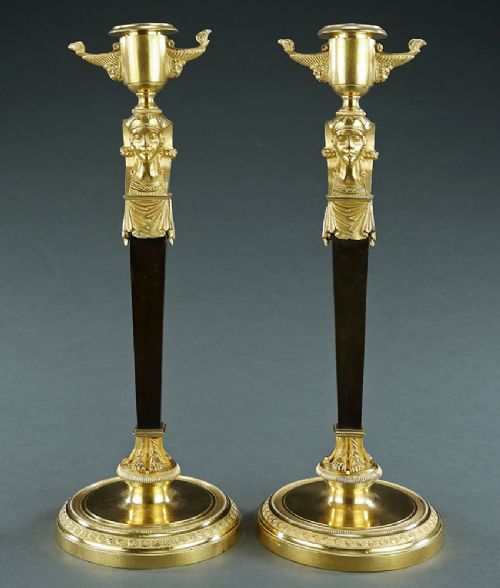
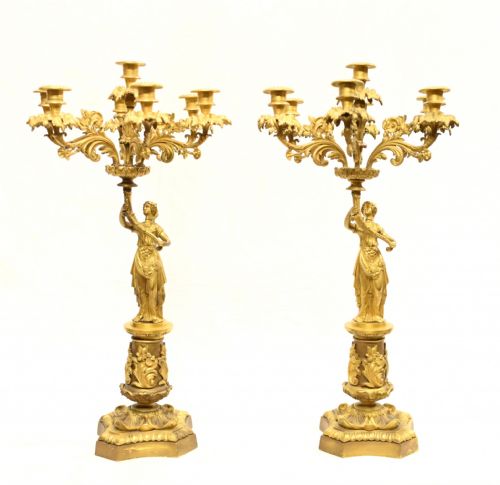
When you search for an ormolu candelabrum stand, you encounter heavy lighting pieces designed to hold multiple candles, often appearing as pairs from the nineteenth century. These objects combine gilded metalwork with patinated bronze, marble, or porcelain, reflecting French Empire, Regency, and Rococo Revival tastes.
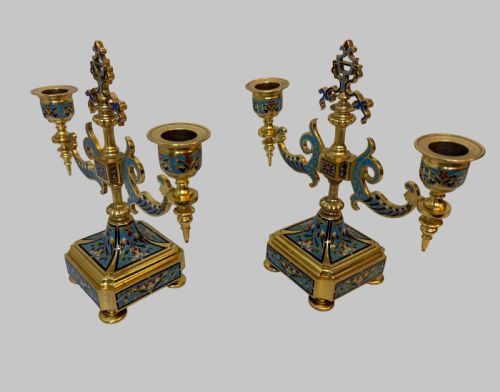
The pieces on this page span the Victorian era and the late nineteenth century, taking the form of candelabra, multi-arm candlesticks, and standard lamps. Many incorporate classical figures, cherubs, or mythological subjects like Hercules and Hesione alongside architectural marble bases.
Makers and foundries of the period, including Barbedienne and Auguste Cain, produced these works to illuminate formal nineteenth-century interiors. Buyers seek them for their sculptural presence and the rich contrast between polished gilding and dark patinated bronze.
Materials and construction methods
Craftsmen built these pieces using cast bronze, brass, and gilt-metal elements combined with natural materials such as marble and porphyry. The gilding process involved applying finely ground gold to a bronze base, creating the distinctive ormolu finish characteristic of French nineteenth-century metalwork.
Distinctions in quality and execution
The fineness of the chased detail defines the upper tier of these metalworks, where facial expressions on figures and leaf veining remain sharp and crisp. Lesser pieces display softer casting lines and shallower definition where the metal meets the mould.
The depth and durability of the ormolu gilding separate superior workshop production from standard commercial output. Heavier gauge bronze and substantial marble or porphyry bases also indicate a higher grade of manufacture from leading nineteenth-century foundries.
Barbedienne·Pierre Philippe Thomire·Rabiat·Auguste Cain·Clodion
The Ormolu Candelabrum Stand Glossary
- Ormolu
- Gilt bronze produced by applying a mercury and gold amalgam to a bronze object and heating it to vaporise the mercury. This technique creates a durable, golden surface finish.
- Patinated Bronze
- Bronze treated with chemicals or heat to produce a dark, protective surface colour that contrasts with bright ormolu mountings.
- Champleve
- An enamelling technique where troughs are dug into a metal surface and filled with vitreous enamel before firing. It appears on nineteenth-century decorative candlesticks.
- Porphyry
- An extremely hard igneous rock with large crystal phenocrysts, frequently utilised for classical decorative bases. It provides a dense, speckled foundation for heavy metalwork.
- Retour d'Egypte
- A nineteenth-century design style influenced by Napoleon's campaign in Egypt, incorporating pharaonic motifs and classical Egyptian figures into decorative arts.
Ormolu Candelabrum Stand: Frequently Asked Questions
How do I clean ormolu?
Dust surfaces gently with a soft dry brush to prevent dirt accumulation in the chased recesses.
Avoid abrasive metal polishes or harsh chemical cleaners, as these strip the historic gold gilding from the bronze base.
Were these electrified later?
Some standard lamps and larger candelabra adaptation occurred during the twentieth century to accommodate modern domestic lighting.
Examine the base and candle nozzles for discreet wiring channels or modifications made to hold electrical fittings.
What is the difference between ormolu and gilt brass?
Ormolu uses a bronze substrate combined with a mercury-gilding technique that yields a deep, warm golden lustre.
Brass is an alloy of copper and zinc that tends to show a brighter, yellower tone when gilt.
How do I date a nineteenth-century candelabrum?
Look to the stylistic cues such as French Empire neo-classical motifs or later Rococo Revival asymmetry.
Foundry signatures, registration marks, and the type of marble or bronze casting offer further clues to the decade of manufacture.