



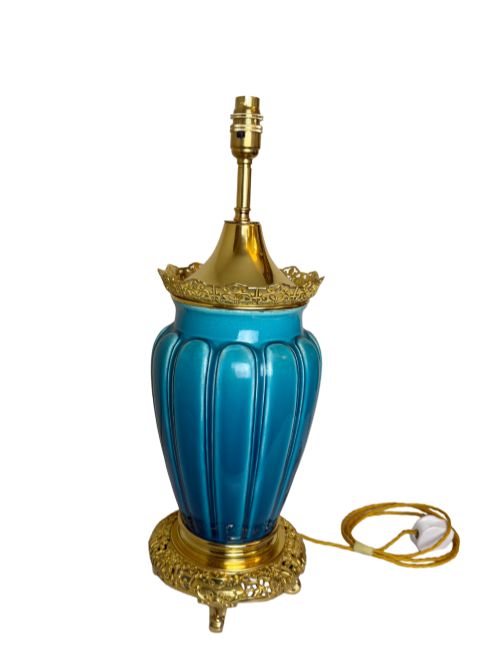
Antique Gilt Table Lights
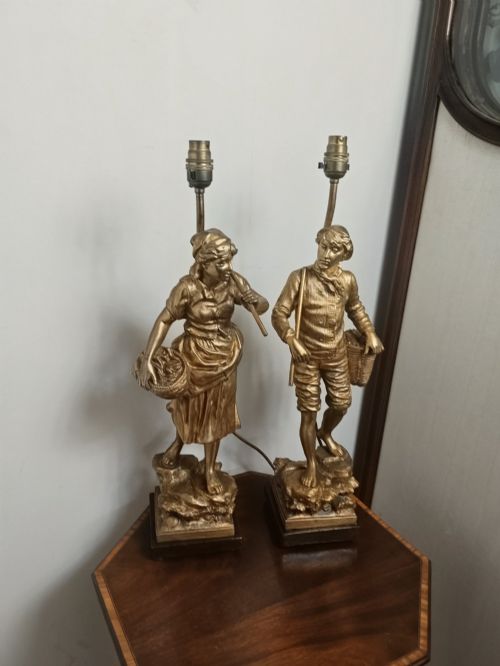
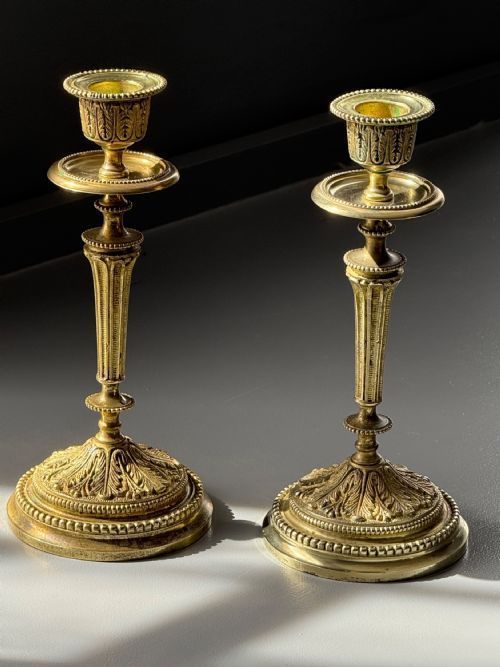
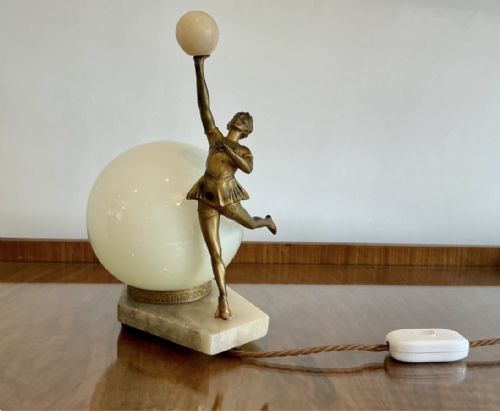
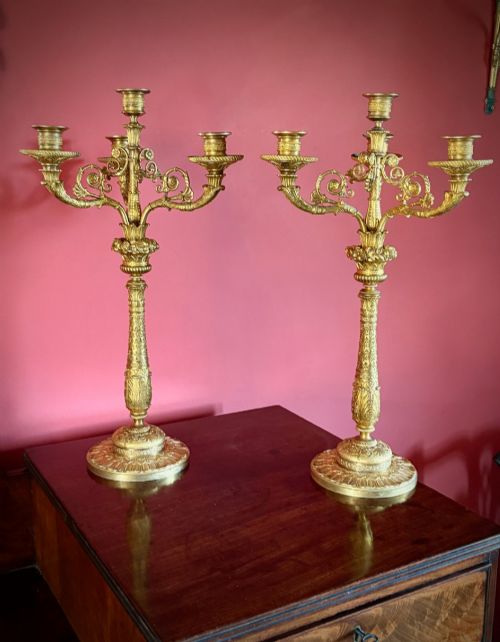
Antique gilt table lights bring warmth and metallic brilliance to a room, spanning French Empire candelabra, Victorian oil lamps, and carved giltwood bases.
Antique Gilt Table Lights
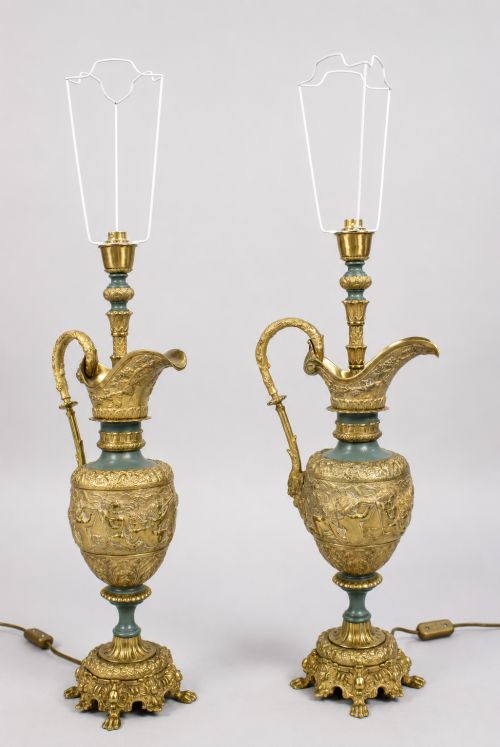
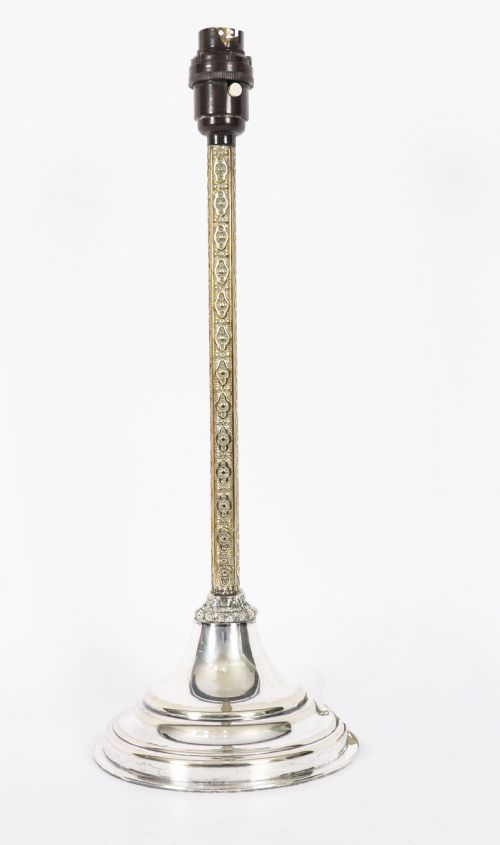
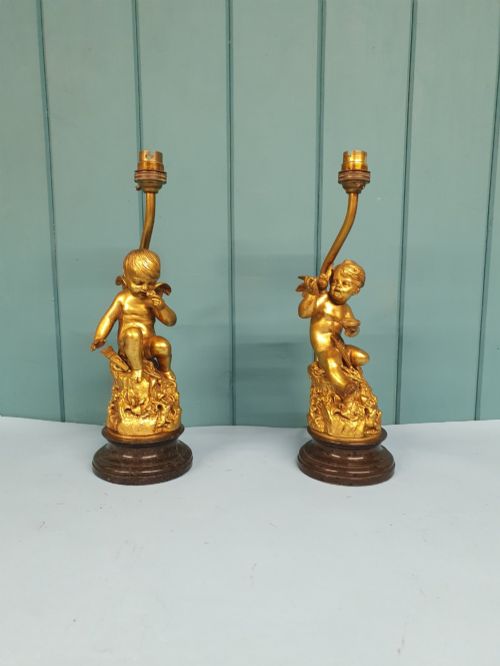
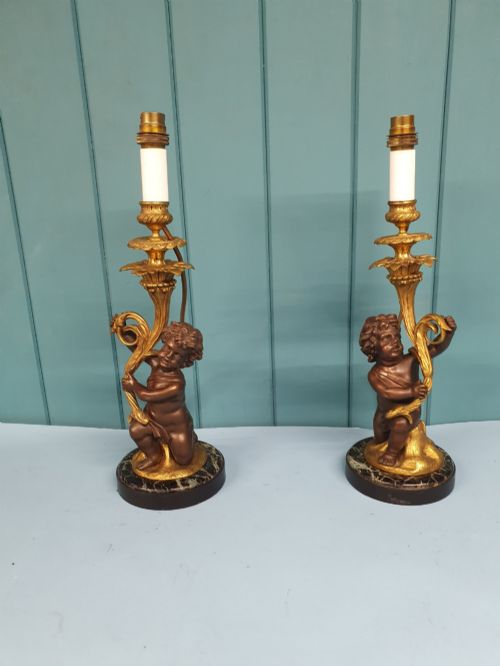
These pieces encompass table lamps, candelabra, candlesticks, and converted oil lamps that utilise a gilded finish to catch the light. When searching for antique gilt table lights, buyers encounter items ranging from 18th-century Venetian candlesticks to 1920s brass and bronze pairs.
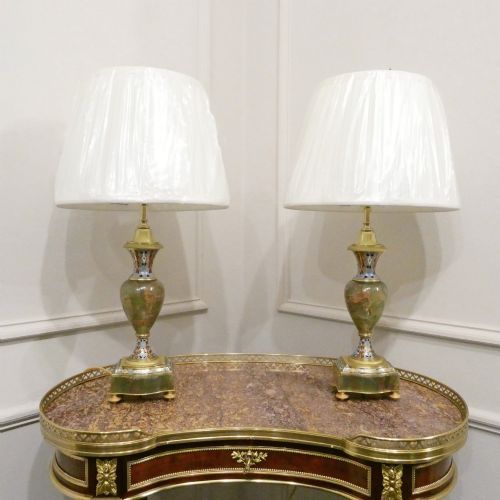
French influence dominates the selection, with Louis XVI style, Neoclassical, and Empire Revival pieces appearing frequently alongside English Victorian examples. Many entries combine metalwork with porcelain, marble, onyx, or glass to create decorative illumination.
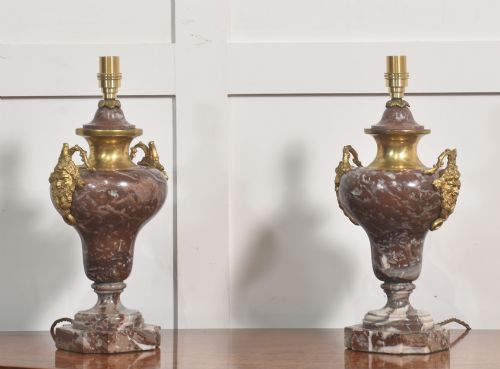
Converted items feature prominently, where older urns, vases, or candlesticks have received electrical fittings. Pairs are common among the selection, offering symmetrical options for sideboard or mantel placement.
Materials and construction methods
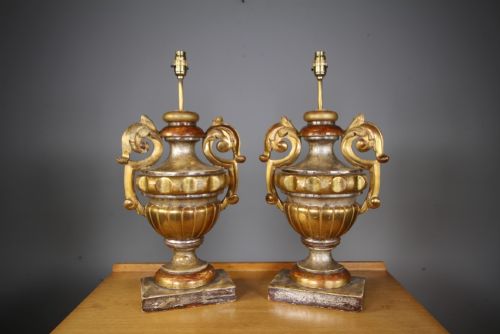
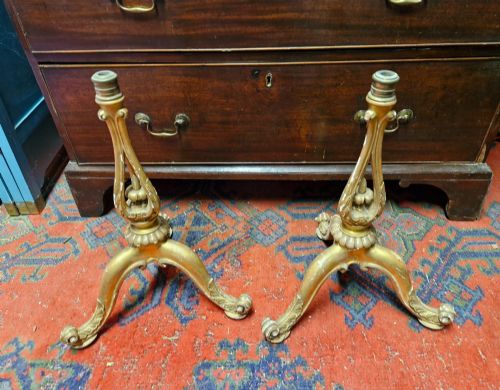
Construction relies heavily on cast metals such as brass, bronze, and ormolu, often paired with carved giltwood or pine bases. Ormolu components involve mercury gilding or modern electroplating techniques applied to bronze substrates.
Makers integrated natural materials including marble, onyx, and cut glass alongside imported porcelain bodies from Sevres, Satsuma, and Ironstone manufactories. Champleve enamel and fabric shades complete the construction of later 19th and early 20th-century examples.
Distinctions in execution and detail
Quality separates ordinary castings from pieces bearing sharp chisel work, deep chasing, and well-defined figural elements such as cherubs, sphinxes, or rams' heads. Superior mounts fit snugly against porcelain, marble, or stone bodies without visible gaps or rough seams.
The weight and depth of the gilding determine longevity, where heavier layers of ormolu retain their warm metallic sheen better than thin finishes that wear away to reveal base metals. Original components and unified design elevate certain items above assembled or later-adapted alternatives.
Mappin and Webb·E Rousseau·Pierre Philippe Thomire·Hicks and Meigh·Dugourc·Mc Gary
The Antique Gilt Table Lights Glossary
- Ormolu
- Gilded bronze produced by applying a mixture of gold and mercury to a bronze base, or through later electroplating methods. This finish yields a rich, golden appearance characteristic of French decorative arts.
- Champleve
- An enamelling technique where troughs or cells are carved into a metal surface and filled with vitreous enamel before firing. It frequently decorates 19th-century French lamp bodies and trim.
- Candelabra
- A branched candlestick designed to hold multiple tapers simultaneously. Many antique examples feature central shafts flanked by matching arms.
- Regency
- A British design period spanning the early 19th century characterised by classical motifs, Greco-Roman influences, and ornate metal mounts. Pieces from this era often incorporate lions' paw feet or column forms.
- Sevres
- A famous French porcelain manufactory known for soft-paste and hard-paste ceramic bodies decorated with hand-painted scenes and rich colours. These bodies are frequently mounted with gilt brass or ormolu mounts as lamp bases.
Antique Gilt Table Lights: Frequently Asked Questions
What is the difference between an ormolu and a brass table lamp?
Ormolu consists of a finely chased bronze base treated with a gold finish, producing a warm, rich lustre that differs from standard yellow brass.
Brass items usually display a simpler yellow metal alloy throughout their structure without the specific mercury gilding or heavy golden overlay associated with ormolu.
Were all these lights originally made as electric lamps?
Most older pieces started life as oil lamps, candlesticks, or decorative urns before receiving later conversions to electricity.
Original wiring is absent on antique examples, meaning modern components have been fitted to accommodate contemporary bulbs and plugs.
How do I identify a French Empire style light?
French Empire pieces typically feature classical motifs inspired by ancient Rome and Egypt, including sphinxes, rams' heads, and military trophies.
They rely heavily on heavy gilt bronze or ormolu combined with dark marble columns or urn bodies.
Where should I place a pair of heavy gilt candelabra?
These tall pieces suit sideboards, large mantelpieces, or entrance hall consoles where their height and branched arms create visual balance.
They work well against contrasting wall colours that make the metallic surface stand out.