




Gold Figural Table Lamp
These gold figural table lamps combine sculptural human and mythological forms with warm illumination, offering a striking centrepiece for any room.
Gold Figural Table Lamp
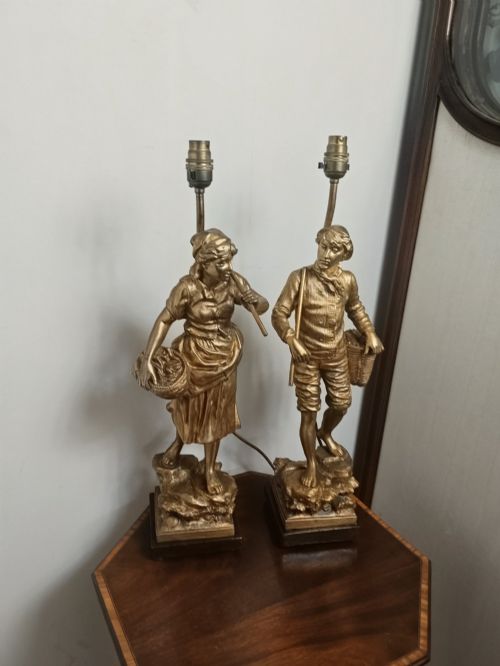
When you search for a gold figural table lamp, you encounter sculptural bases cast in bronze, brass, spelter, and gilt metal, depicting human figures, putti, and classical deities. The selections on this page span the nineteenth century through the art deco and art nouveau periods, bringing historical character and figurative art into domestic lighting.
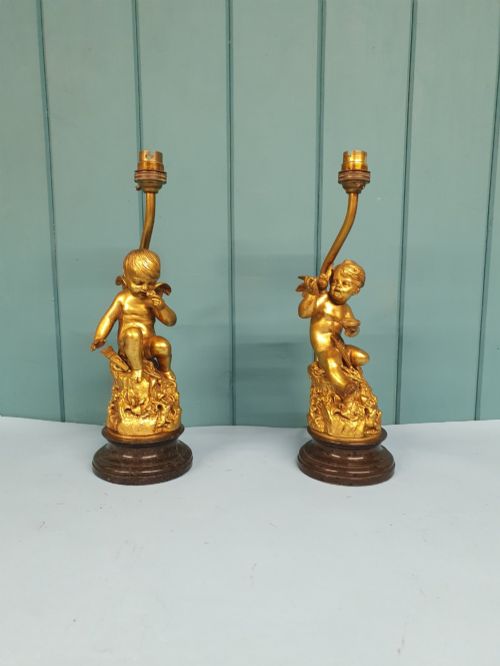
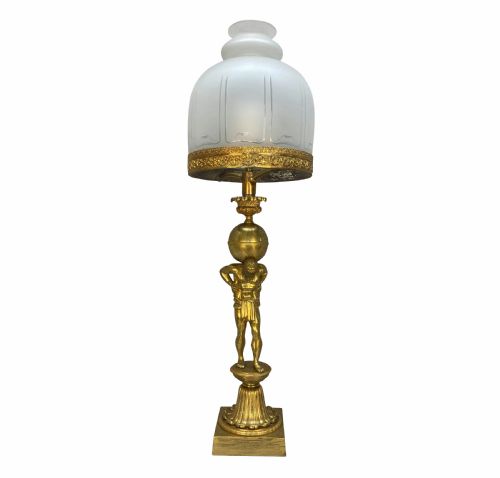
You are most likely to meet pieces depicting cherubs, maidens, and atlas figures, often paired with fabric shades or frosted glass elements. These lamps originate from English Regency workshops as well as French and Italian makers, reflecting stylistic shifts from rococo revival to sleek modernist lines.
How they were made
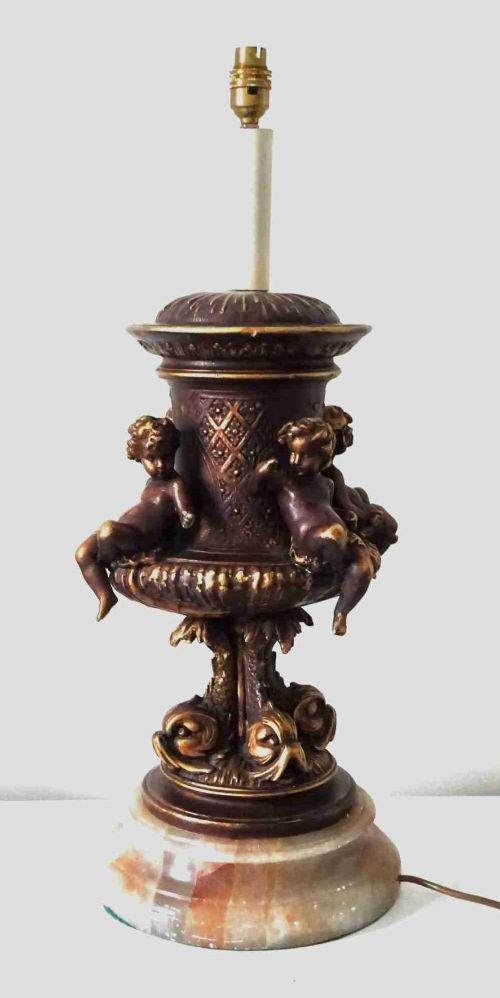
Makers shaped these lamps using metal casting techniques for the figures, employing gilt bronze, brass, and spelter to achieve intricate detail in drapery and facial expressions. Marble and carved wood frequently serve as supporting bases, adding stability and contrasting textures to the metallic finishes.
Surfaces were heavily gilded or bronzed to create the characteristic golden lustre seen across the nineteenth and twentieth century examples. Glass components, including frosted shades and vase bodies, were blown or moulded to complement the heavy metal figures.
Period styles represented include Art Nouveau, Art Deco, Neoclassical, Rococo Revival, and English Regency.
What varies in quality
The distinction between ordinary and exceptional pieces lies in the crispness of the casting and the depth of the metal chasing. Superior examples exhibit fine anatomical precision in the figures and rich, layered gilding that retains its texture over time.
The choice of base materials also dictates overall quality, with solid gilt bronze and carved marble outperforming lighter spelter alloys. Signatures from recognised bronze-workers or makers elevate the standing of a piece considerably.
E Rousseau·L & F Moreau·Henri Honore Ple
The Gold Figural Table Lamp Glossary
- Spelter
- A zinc-based alloy commonly used as a cost-effective substitute for bronze in nineteenth and early twentieth century figural castings. It is softer than bronze and requires careful handling.
- Gilt bronze
- Metal cast in bronze and subsequently coated with a thin layer of gold leaf or mercury gilding. It provides a durable and luminous finish.
- Cherub
- A winged celestial being frequently depicted in art nouveau and revivalist lamp bases. These figures often appear holding lighting elements or supporting lamp columns.
- Art Nouveau
- An international style of art and architecture prevalent in the late nineteenth and early twentieth centuries. It is characterised by intricate linear designs and flowing organic motifs.
- Atlas
- A mythological figure depicted holding the celestial spheres, adapted in Regency design to support structural elements. In lamp bases, the figure bears the weight of the light fixture.
Gold Figural Table Lamp: Frequently Asked Questions
What periods do these lamps come from?
The pieces span the nineteenth century, including the Regency era, through to the art nouveau and art deco periods of the early twentieth century.
Design characteristics shift across these decades from classical mythological themes to flowing organic lines and geometric modernism.
What metals are used in the bases?
Makers utilised gilt bronze, solid brass, and spelter to cast the figurative elements of the lamps.
Some pieces also incorporate carved marble bases or wooden components to provide weight and structural support.
How do I identify an art nouveau lamp?
Art nouveau lamp bases feature flowing, asymmetrical lines inspired by natural forms such as plant stems and draped hair. Figures from this period often depict stylized maidens with long, cascading locks.
Makers working in this style prioritized organic movement over strict classical symmetry.
Were these originally configured as lamps?
Several antique pieces started life as decorative vases, sculptures, or garnitures before being converted into table lamps at a later date.
Conversion is common among nineteenth century bronzes and Satsuma ceramics, integrating modern electrical fittings while preserving the original figural base.