


Brass Five Light Candelabra
These brass five light candelabra provide five branched holders for candles, offering practical illumination and formal symmetry for a table or mantelpiece.

Brass Five Light Candelabra
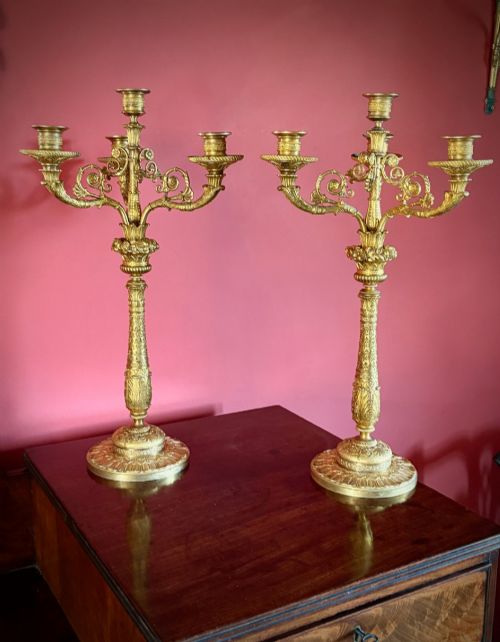
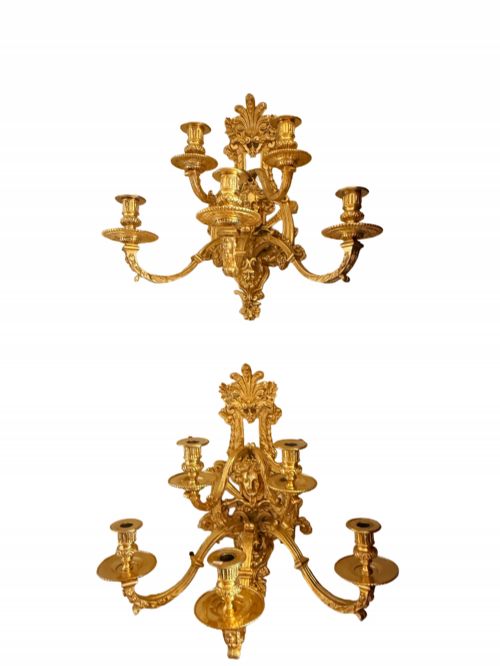
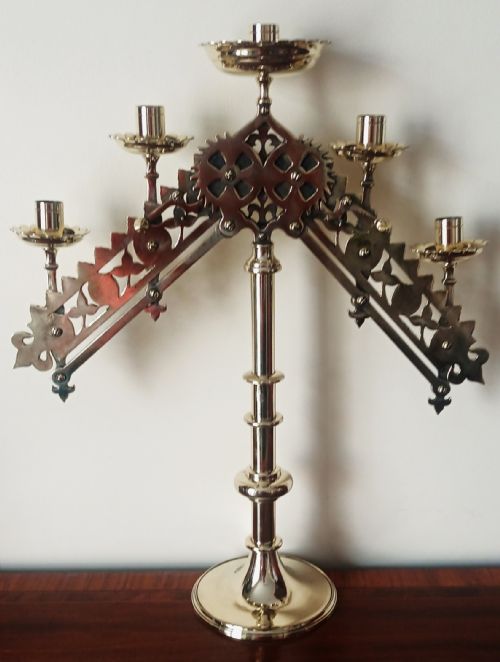
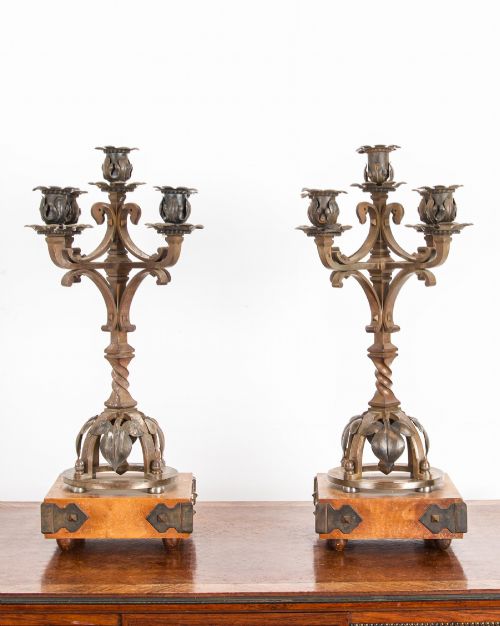
A brass five light candelabra provides five separate sconces or branches for holding candles, designed primarily as a decorative and functional centrepiece. The selection seen here spans the nineteenth and early twentieth centuries, encompassing Victorian, Arts and Crafts, and revivalist decorative movements.
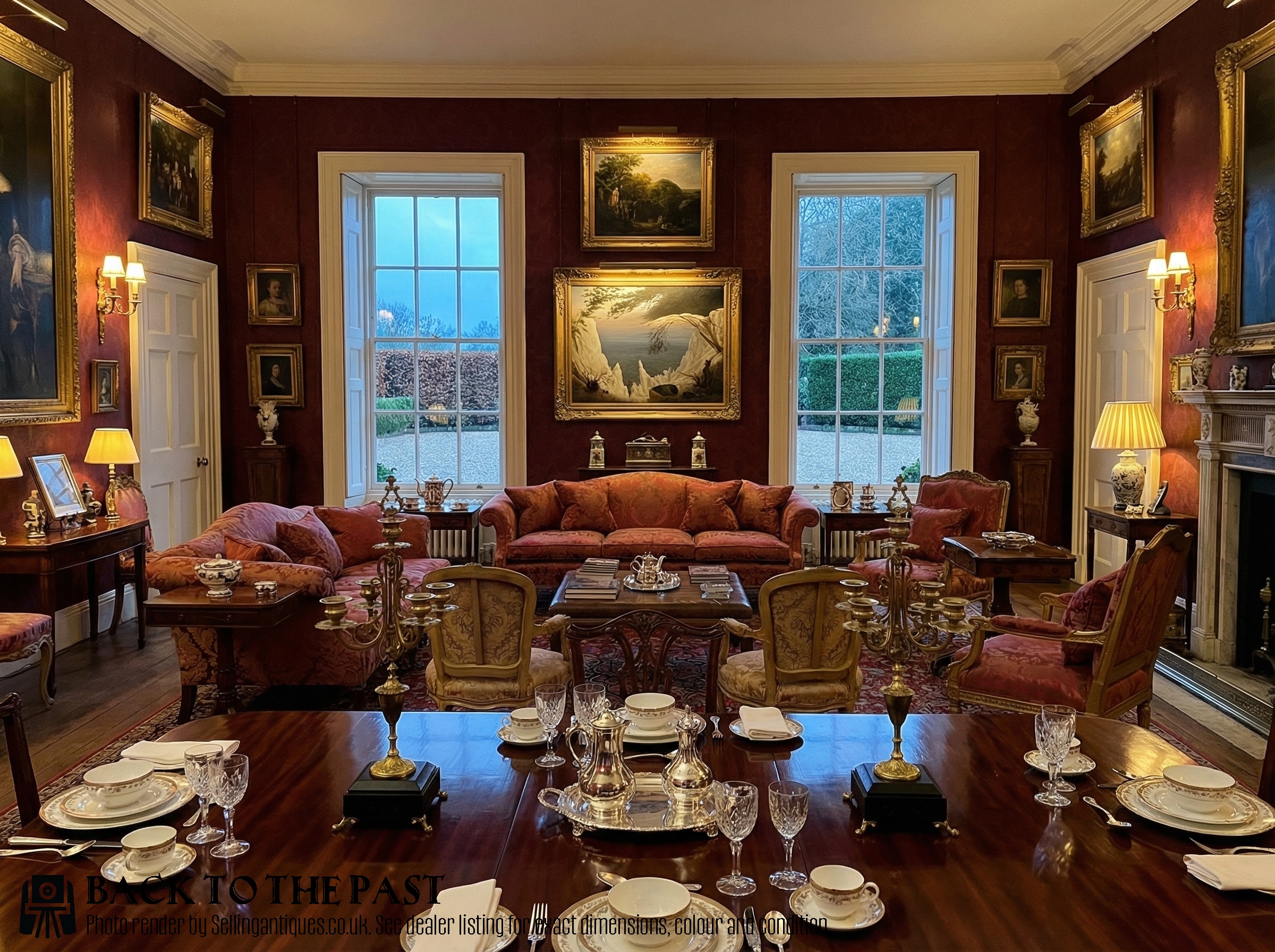
Most examples appear as matched pairs, frequently utilised on dining tables, sideboards, or mantelpieces to create balanced illumination. The forms range from plain articulated brass frames to elaborate French models incorporating marble bases and figurative details.
How they were made
Makers utilised cast and forged metals, predominantly brass, ormolu, and gilt bronze, often combining them with contrasting materials like green marble. Molten metal was poured into moulds before being chased and finished by hand to sharpen the decorative details of the arms and bases.
Surface treatments included fire gilding and lacquering to protect the underlying metal and impart a bright, reflective sheen. Articulated joints and screw fittings allowed multi-branch assemblies to be constructed securely from modular components.
Brass Five Light Candelabra Retail Price Guide 2026
Typical asking prices for brass five light candelabra among the pieces listed under this phrase on Sellingantiques today, from the lower quarter to the upper quarter. They describe what is for sale here now, not the wider market.
The listings span the nineteenth and early twentieth centuries, featuring brass, gilt bronze, ormolu, and marble.
What varies in quality
Quality rests upon the crispness of the metal chasing and the weight of the casting, which determines the stability of the branched arms. Finer pieces display sharply defined ornamentation and secure joints that keep each branch properly aligned.
The choice of secondary materials, such as solid marble plinths rather than simple metal bases, elevates the status of a piece. Heavier castings and careful hand-finishing separate standard production items from workshop examples intended for formal display.
The Brass Five Light Candelabra Glossary
- Candelabra
- A branched candlestick holder designed to support multiple candles from a single base. These objects often feature removable bobeches to catch dripping wax.
- Ormolu
- A technique of applying finely ground high-carat gold to a bronze or brass object using a mercury amalgam. This historic process produces a durable, warm golden finish.
- Gothic Revival
- An architectural and decorative style drawing inspiration from medieval forms, prevalent during the nineteenth century. Pieces in this style frequently display pointed arches and heavy geometric patterning.
- Articulated
- Built with movable joints or pivoting sections that permit adjustment of the arms. This mechanical feature allows the spread of the branches to be altered.
- Bobeche
- A small collar or disc fitted below the candle nozzle to catch falling wax. It lifts off easily for cleaning.
Brass Five Light Candelabra: Frequently Asked Questions
How do I clean antique brass?
Use a soft, dry cloth to remove dust from the surface of the metal without disturbing any historic patination or gilding.
Avoid harsh chemical polishes that can strip away original surface treatments and diminish the character of the object over time.
Can I burn real candles in them?
Standard taper candles fit securely into the nozzles of most period branch holders, provided the diameter matches the socket.
Ensure candles are extinguished before they burn down to the metal to prevent heat damage or wax accumulation in the decorative chasing.
Where should I place a candelabra?
These pieces suit placement on deep mantelpieces, sideboards, or dining tables where their height and branched form can be appreciated.
Keep them away from direct draughts to ensure the candles burn evenly and safely without excessive dripping.
How do I identify the period?
Examine the casting method, fastener types, and stylistic motifs such as French Rococo Revival or Arts and Crafts geometry.
Compare the surface wear and patination with known examples from the nineteenth and early twentieth centuries to establish a likely date.