



Gothic Revival Candelabra
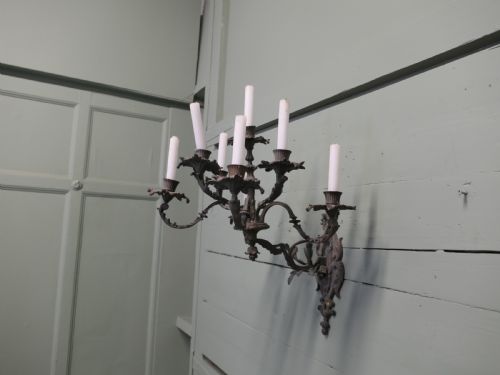
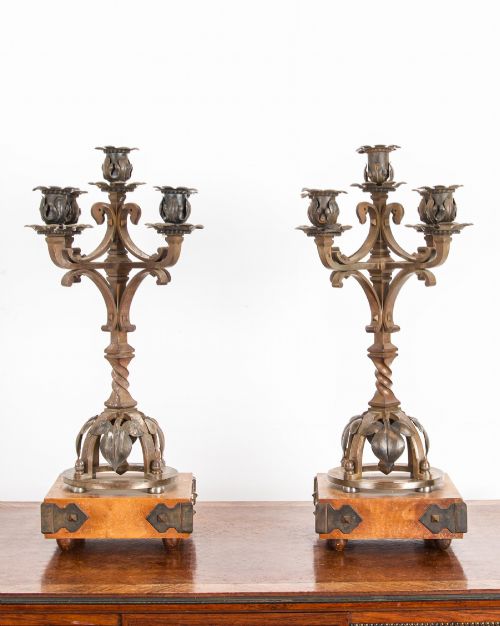
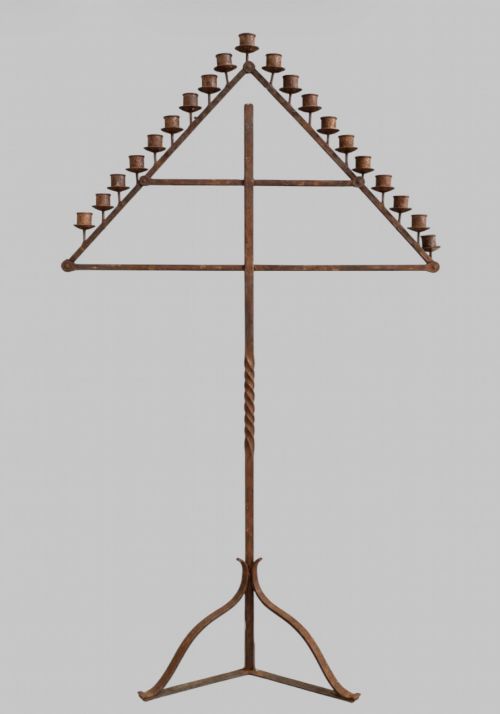
Gothic Revival candelabra bring medieval architectural drama to a room, offering heavy metalwork and branching candle holders for atmospheric lighting.

Identifying Gothic Revival candelabra
These Gothic Revival candelabra take the form of branched candle holders executed in heavy metals, combining medieval structural motifs with nineteenth-century decorative arts. The pieces meeting this search phrase span the nineteenth century and the early twentieth century, including examples from around nineteen twenty.
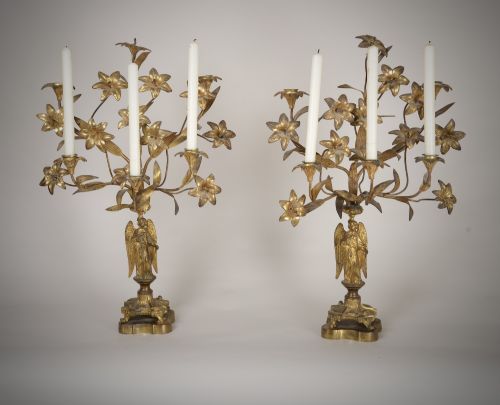
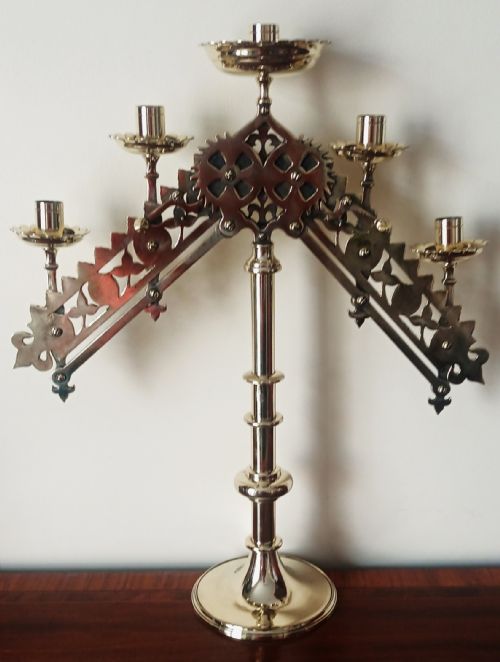
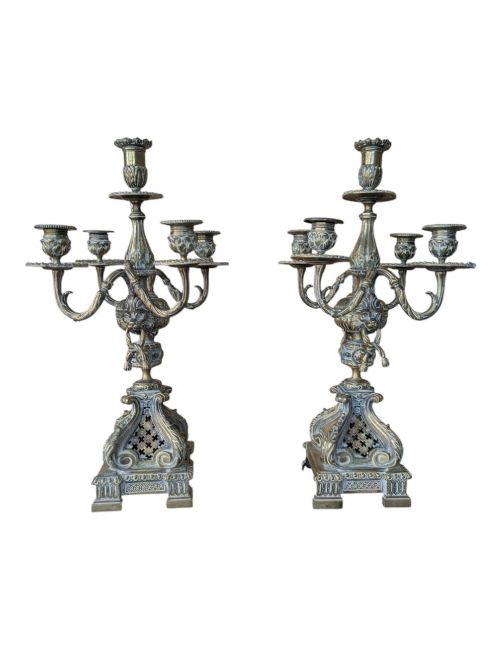
Most items appearing here belong to the Victorian era, categorized under Victorian Gothic Revival and Renaissance Revival styles. Buyers encounter both single pieces and matched pairs, ranging from articulated brass designs to large altar candelabra and figural medievalist gilt bronze candlesticks.
Materials and construction
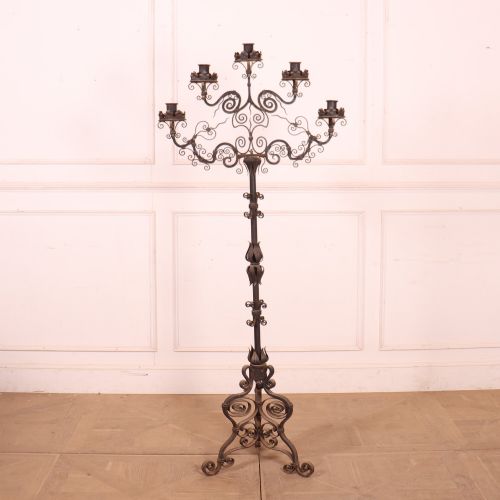
The construction of these pieces relies heavily on cast and worked metals, utilising brass, bronze, wrought iron, ormolu, and gilt bronze. Certain examples incorporate marble bases or wooden elements to add structural weight and varied texture to the metal framework.
Makers employed casting and joining techniques to create multi-branch formats, such as five-light arrangements and articulated arms. The surface finishes include polished brass and gilded bronze, which highlight the intricate medievalist ornamentation.
Retail Price Guide 2026
Typical UK retail prices for gothic revival candelabra, calculated from the Sellingantiques database of over a million retail prices indexed since 2003. This retail price guide relies exclusively on Sellingantiques data; no external sources or auction records are used, so the figures do not describe the wider market.
The documented periods span the nineteenth century, eighteen sixty, and nineteen twenty.
Distinctions in quality
Quality differences emerge in the crispness of the cast ornamentation and the weight of the metal utilised in the branches and bases. Superior examples demonstrate precise detailing in their medievalist motifs and solid structural integrity across multi-branch configurations.
The choice of base materials, such as fine marble or substantial gilt bronze, separates standard production from higher-tier decorative pieces. Articulation mechanisms in brass versions also show varying degrees of mechanical refinement and durability.
The Gothic Revival Candelabra Glossary
- Gothic Revival
- An architectural and decorative style drawing inspiration from medieval forms, featuring pointed arches and heavy structural elements. This aesthetic dominates the design of these candelabra.
- Candelabra
- A branched candlestick holder designed to support multiple candles simultaneously. These pieces typically feature five branches.
- Ormolu
- Finely ground high-carat gold applied to a bronze base, creating a rich golden surface finish. This technique appears on high-end nineteenth-century examples.
- Articulated
- Describing metalwork with movable joints or pivoting arms that adjust the configuration of the light sources. This feature allows the branches to change position.
- Altar candelabra
- Heavy candle holders traditionally made for ecclesiastical settings, translated here into domestic nineteenth-century decorative pieces.
Frequently Asked Questions
How were gothic revival candelabra used?
These metal branches held multiple candles to illuminate rooms before the widespread adoption of electric lighting.
Larger versions served as focal points on sideboards, tables, or ecclesiastical altars during the nineteenth century.
What metals are most common?
Brass and bronze dominate the recorded material palette, frequently enhanced with gilt finishes or ormolu.
Some examples also incorporate iron, wood, or marble elements to support the branching candle sockets.
Are they sold as pairs?
Many listings feature matched pairs of five-branch candle holders intended for symmetrical placement on furniture.
Single pieces also appear, particularly articulated brass designs meant for adjustable positioning.
How do I date these candelabra?
Physical evidence points to nineteenth-century production alongside early twentieth-century examples from around nineteen twenty.
Stylistic markers include Victorian Gothic Revival and Renaissance Revival ornamentations combined with period casting techniques.