


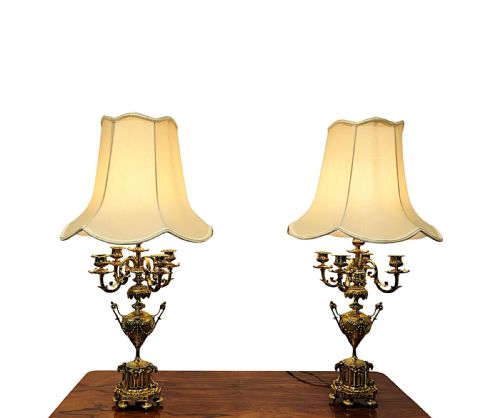
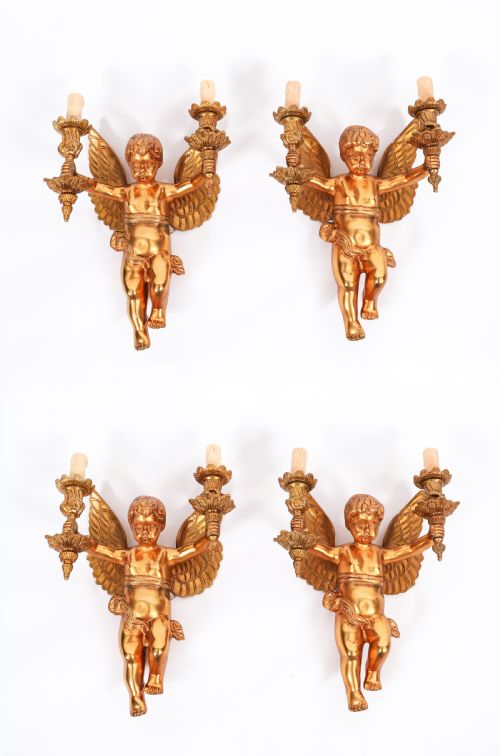
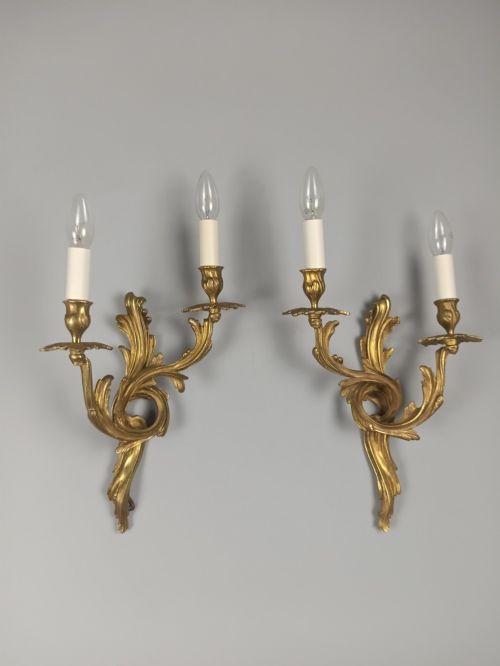
Gold Brass Candelabra
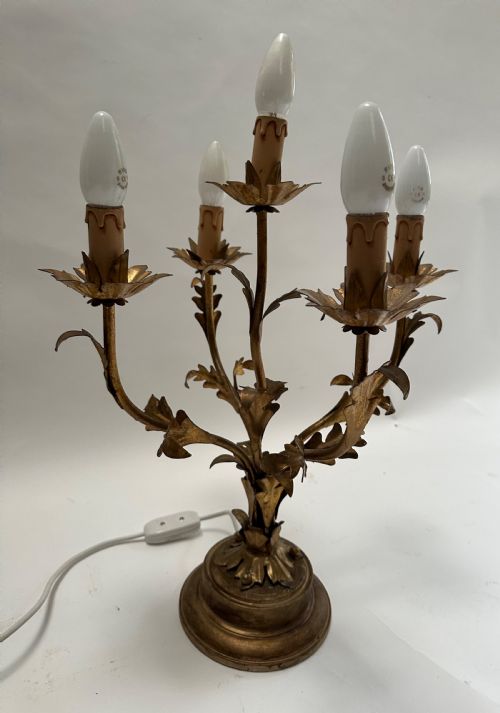
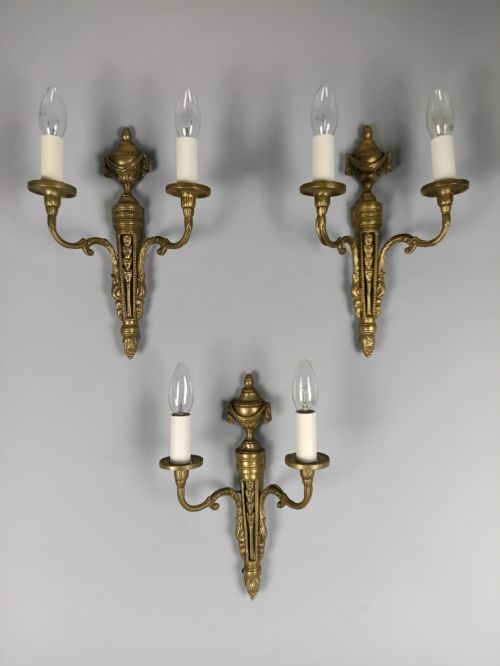
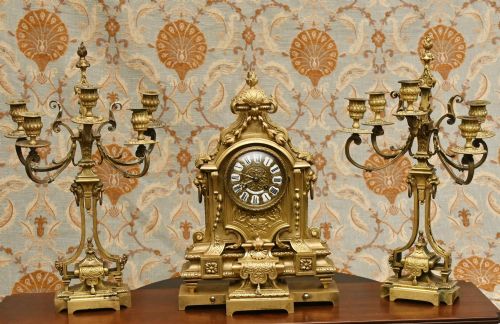
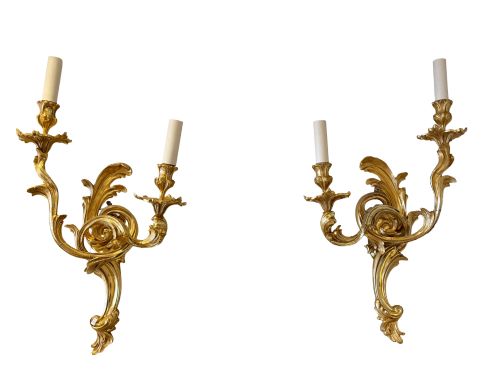
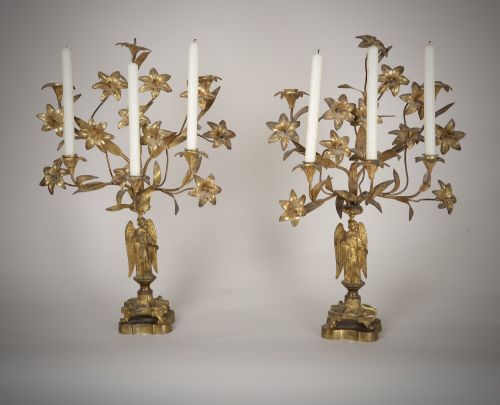
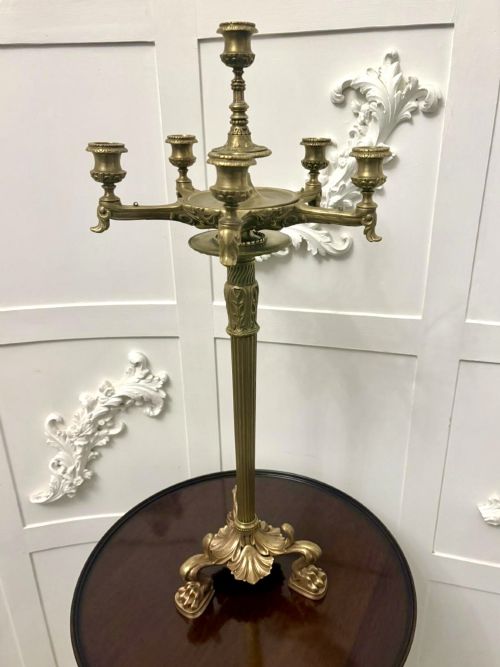
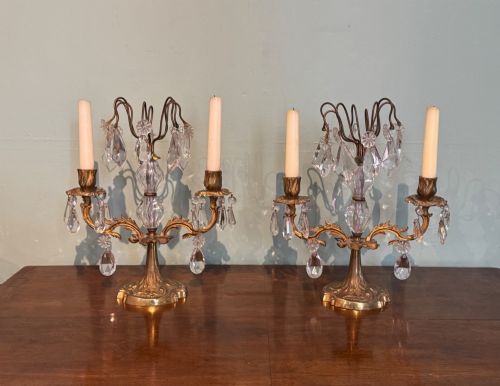
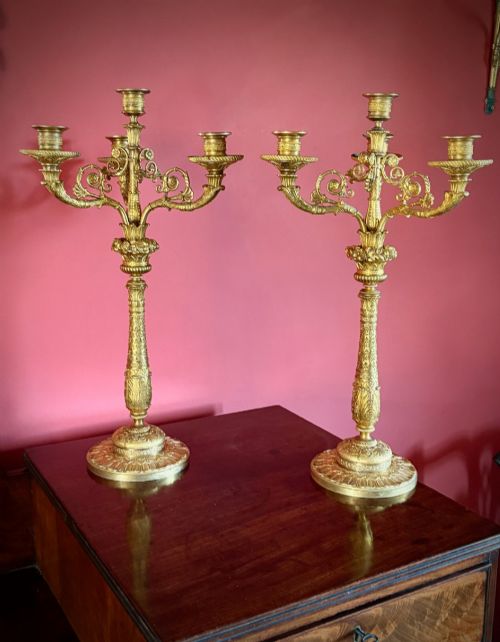
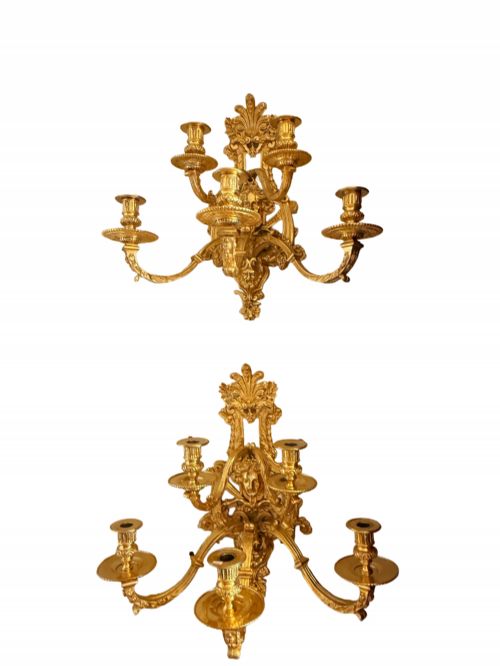
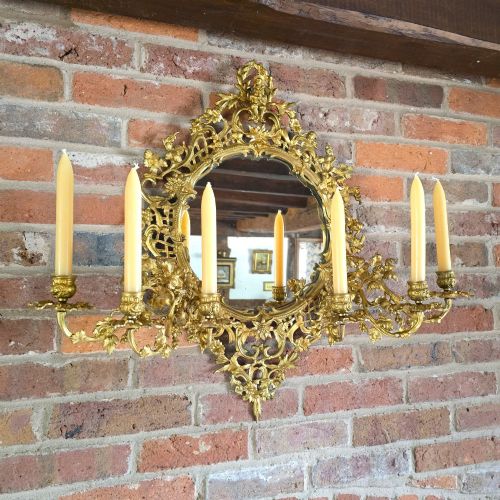
These gold brass candelabra bring genuine period weight and warmth to a room, offering functional candlelight and striking metalwork in equal measure.

Gold Brass Candelabra
The selection on this page draws from the nineteenth century, the Victorian era, and the early twentieth century, spanning 1850 through to 1910. Design movements represented include Rococo Revival, French Rococo Revival, Arts and Crafts, and Victorian Gothic Revival.
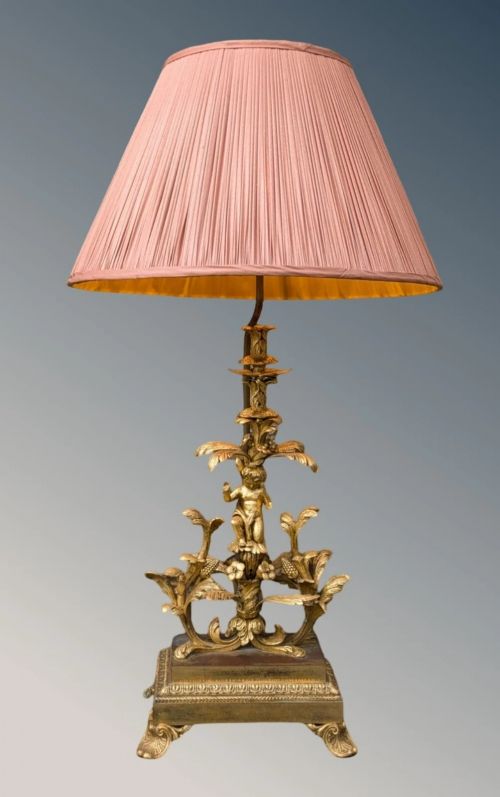
Most pieces arrive as matched pairs featuring triple arms or up to five lights, alongside singular table lamp hybrids and articulated designs. English and French origins dominate the inventory, showcasing both domestic interiors and ecclesiastical settings.
Materials and Construction
Construction relies heavily on cast brass and gilt bronze, utilising metal-working techniques that allow for intricate scrolling arms and structural stability. Secondary elements incorporate patinated metal and fabric components to complete lamp and sconce assemblies.
Victorian and Arts and Crafts makers employed traditional foundry methods, resulting in heavy, solid metal bodies designed to support multiple candle holders securely. Surface treatments range from polished golden brass to gilt finishes and contrasting patinated metal sections.
Gold Brass Candelabra Retail Price Guide 2026
Typical asking prices for gold brass candelabra among the pieces listed under this phrase on Sellingantiques today, from the lower quarter to the upper quarter. They describe what is for sale here now, not the wider market.
Listings feature items dated from 1850 through to 1910, encompassing Victorian, Rococo Revival, and Arts and Crafts aesthetics in solid brass and gilt bronze.
Assessing Quality and Execution
Quality in these pieces rests upon the crispness of the casting and the weight of the brass used in the arms and base. Finer examples display cleanly articulated details and balanced proportions, particularly in revival styles where ornate scrolling can otherwise appear heavy or muddy.
The integrity of the construction, such as secure joints in articulated models and original fixings on altar pieces, separates robust examples from lesser items. The preservation of original surface finishes, whether bright gilt bronze or warm patinated brass, dictates the visual depth of each piece.
The Gold Brass Candelabra Glossary
- Candelabra
- A branched candlestick holding multiple candles or adapted with electrical fittings. These multi-arm fixtures form the central focus of many period dining tables and sideboards.
- Gilt Bronze
- Metal cast in bronze and treated with a gold-coloured finish or mercury gilding. This material provides a bright, luxurious surface common in French decorative pieces.
- Gothic Revival
- An architectural and decorative style drawing inspiration from medieval forms, pointed arches, and ecclesiastical metalwork. Sconces and altar pieces frequently utilise these dramatic motifs.
- Articulated
- Designed with moving joints or adjustable arms to alter the spread of the lights. This mechanical feature allows the user to customise the profile of the piece.
Gold Brass Candelabra: Frequently Asked Questions
Can these candelabra be converted to electricity?
Many period candelabra are found adapted as table lamps or wired for modern illumination while retaining their original multi-arm structures. This allows them to function safely as primary room lighting.
Any electrical conversion should be carried out by a qualified professional using appropriate components. Reversible wiring methods ensure the historic metalwork remains unaltered.
What is the difference between an altar candelabra and a domestic pair?
Altar candelabra originate from ecclesiastical settings and typically display formal, sturdy proportions designed for church rituals. Domestic pairs often feature more decorative ornamentation suited to residential interiors.
Ecclesiastical pieces frequently incorporate Gothic Revival or Victorian architectural motifs. Both types share heavy cast brass construction built to withstand centuries of use.
How do I date a brass candelabra?
Dating relies on stylistic clues such as the ornate curves of Rococo Revival or the restrained geometry of the Arts and Crafts movement. Manufacturing techniques, screw types, and mounting methods also provide key indicators of age.
Comparing the piece against documented examples from periods like the Victorian era helps narrow down the decade of manufacture. Hallmarks or maker stamps, when present, offer definitive chronological proof.