
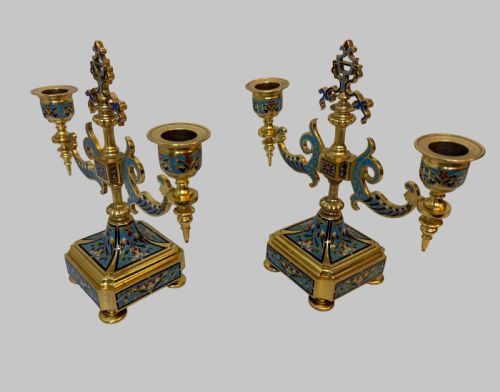


Ornate Bronze Candlesticks
These ornate bronze candlesticks combine heavy cast metal with intricate French and Victorian revival styles to illuminate period interiors.

Ornate Bronze Candlesticks
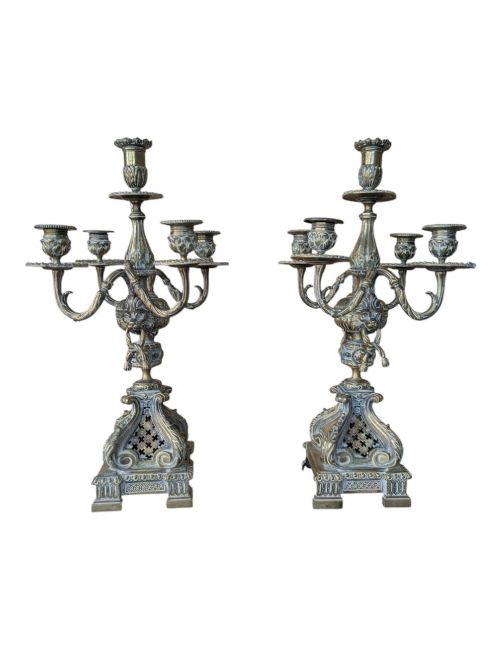
Ornate bronze candlesticks span the eighteenth, nineteenth and early twentieth centuries, drawing heavily upon Regency, Victorian and French revival idioms. Buyers find everything from single altar lights to tall multi-arm candelabra and converted table lamps.
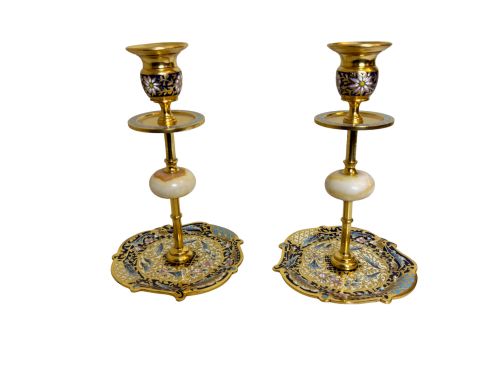
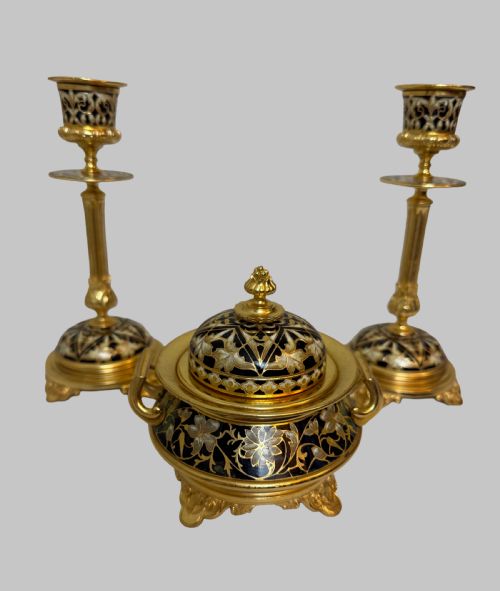
The material palette extends beyond plain bronze to include warm ormolu, gilt brass and champleve enamel details mounted on marble plinths. Many pieces reflect Grand Tour influences or continental workshops making items for British homes.
How they were made
Foundries utilised traditional lost-wax and sand-casting methods to shape the heavy bronze and brass components into elaborate scrollwork and figural forms. Skilled artisans then chased the metal surfaces by hand to sharpen foliage, drapery and architectural motifs.
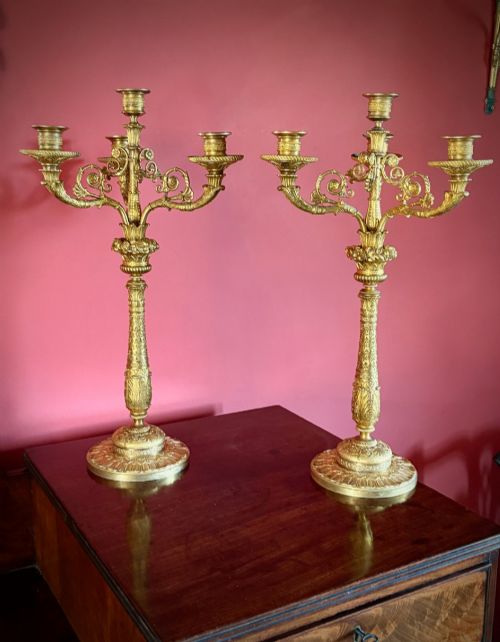
Gilding was applied through mercury amalgamation or fire-gilding techniques to produce the rich ormolu finishes seen on nineteenth-century pairs. Stonework such as sienna marble and onyx was turned and fitted as heavy bases to support the weighted metal stems.
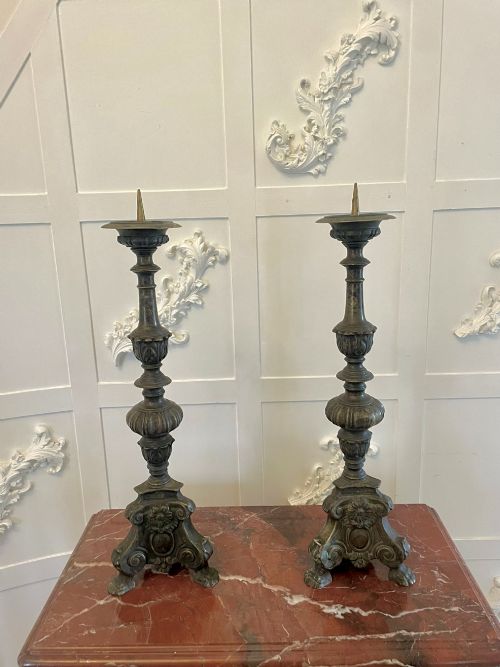
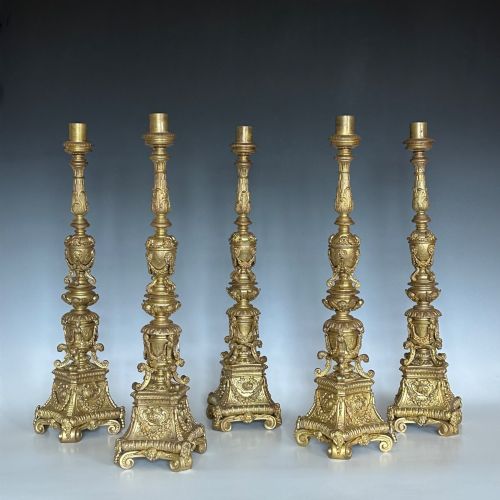
Listings feature materials spanning raw cast bronze, gilt ormolu, champleve enamel and contrasting sienna marble plinths.
What varies in quality
The crispness of the metal chasing dictates the visual success of the casting, distinguishing sharp relief work from softer, mass-produced copies. Superior examples retain original fire-gilding with deep, warm tones rather than flat modern lacquer.
Integration of secondary materials like champleve enamel or inlaid marble determines the complexity of construction. Heavier gauge metalwork provides better balance and structural integrity across multi-arm candelabra.
The Ornate Bronze Candlesticks Glossary
- Ormolu
- Gilt bronze created by applying a finely ground high-carat gold-mercury amalgam to a bronze object before heating. This technique produces a durable golden surface common in French decorative arts.
- Champleve
- An enamelling technique where troughs or cells are hollowed out of a metal surface and filled with vitreous enamel paste before firing. It creates colourful patterned decoration on nineteenth-century candlesticks.
- Candelabra
- A branched candlestick holder designed to support multiple candles simultaneously from a single central stem. Many surviving examples carry three or five arms.
- Pricket
- A sharp metal spike set in the drip pan of a candle holder to secure a large wax taper. They appear frequently on altar sticks and Gothic revival pieces.
- Torchere
- A tall ornamental stand or candlestick designed to elevate a light source above floor level. In bronze, these often feature classical or figural shafts.
Ornate Bronze Candlesticks: Frequently Asked Questions
How do I clean antique bronze?
Dust gently with a soft dry cloth to remove surface particles without disturbing the underlying metal patina. Avoid abrasive polishes that strip away historic ormolu or gilt finishes.
Professional conservation is recommended for pieces showing active corrosion or flaking enamel. Keeping them away from direct moisture protects both the bronze and any integrated marble bases.
Were these electrified later?
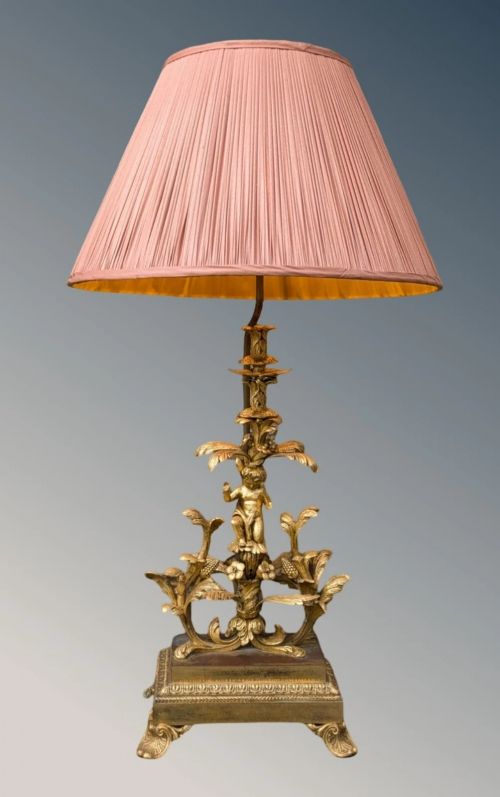
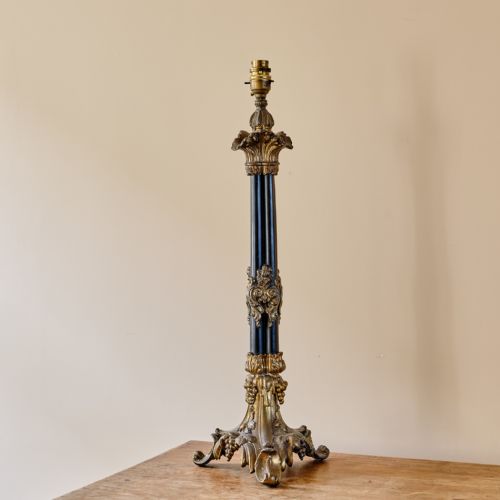
Many nineteenth-century candlesticks and altar lights were converted to wiring during the twentieth century for modern domestic lighting. Some retain their original form, while others hide cords through drilled stems.
Reversible conversions preserve the physical integrity of the bronze work without permanent damage. Buyers should inspect the base fittings to understand how the electrification was installed.
How do I tell French Empire from Victorian?
French Empire pieces rely on strict neoclassical symmetry, classical figures and crisp patination dating around the early nineteenth century. Victorian items often mix Gothic, Rococo and Baroque revival motifs with heavier cast proportions.
Examining the assembly screws and base weights helps clarify the manufacturing origin. Continental workshops generally employed distinct casting marks compared to British foundries.
Why are some mounted on marble?
Sienna marble and onyx plinths provide necessary weight at the base to balance heavy multi-branched arms. The stone also introduces contrasting natural colour beneath the dark or bright bronze work.
Classical styling frequently utilised stone socles to mimic architectural column pedestals. This added height and stability for table use.