



Antique Church Candelabra
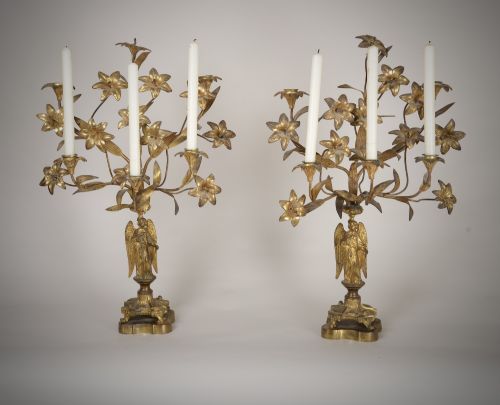
These antique church candelabra are substantial ecclesiastical brass, iron and giltwood lights that bring architectural presence to a room.

Antique Church Candelabra
When you search for antique church candelabra, you are looking at heavy metal and wooden altar lights, floor-standing candelabras, and wall sconces created for ecclesiastical spaces. The examples you meet on this page span the eighteenth, nineteenth, and early twentieth centuries, drawing heavily on Gothic revival, Victorian, and French chateau styles.
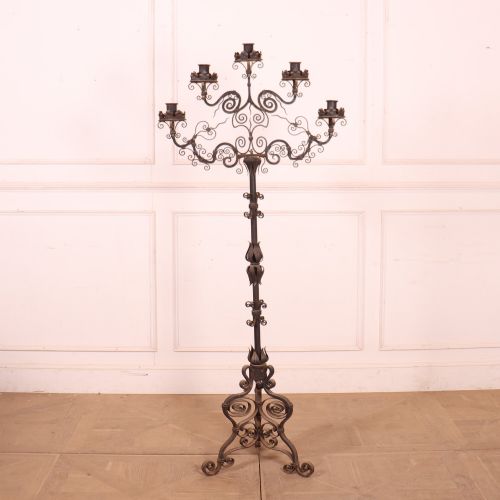
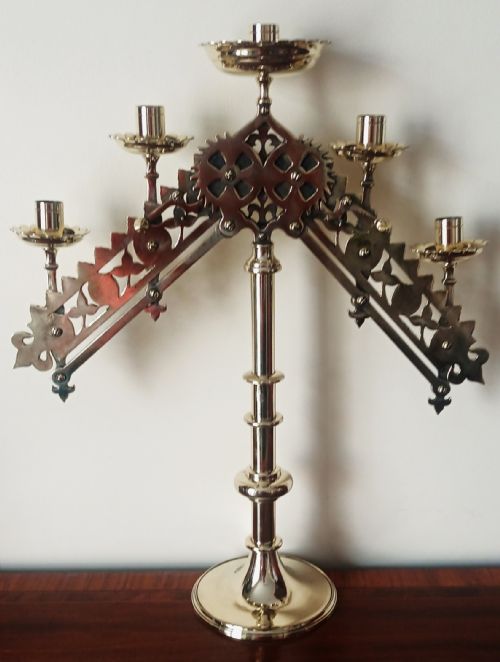
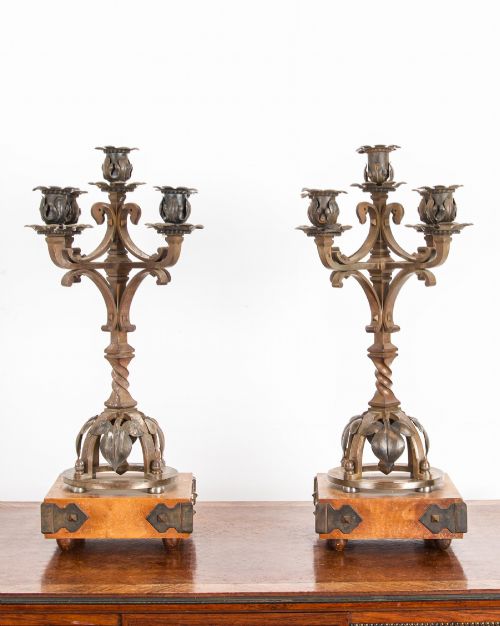
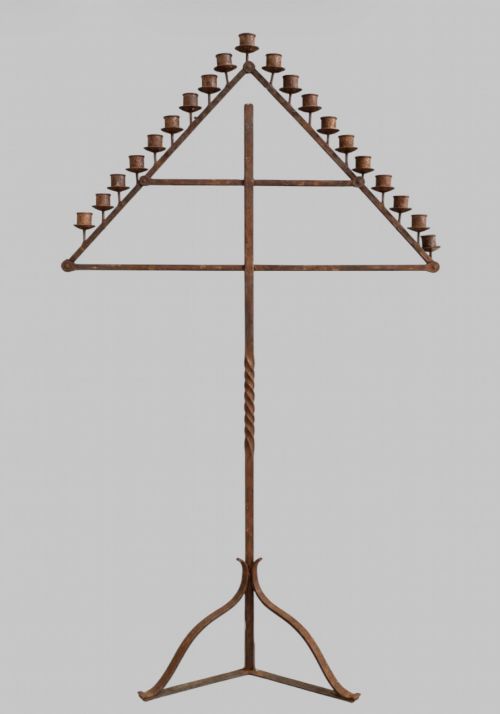
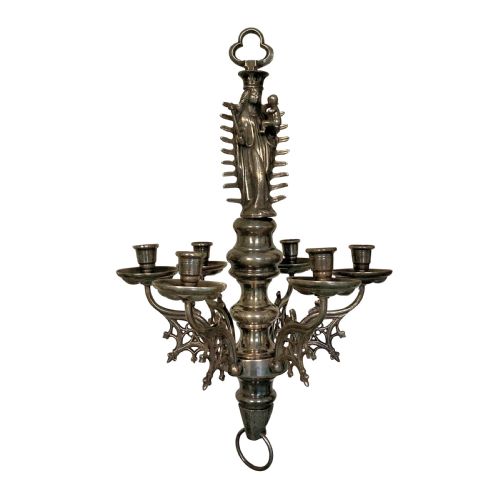
The form ranges from multi-branch table pieces and articulated brass designs to towering wrought iron floor candelabras and pricket chandeliers. Most pieces are brass, iron, or gilt bronze, designed originally to hold tall candles upon altars or within sanctuaries.
You will find pairs as well as individual statement pieces, often showing the distinct influence of Flemish or French ecclesiastical design alongside English Victorian workshop traditions. Each object carries the heavy build and functional purpose required for centuries of liturgical use.
How they were made
The makers of these pieces relied primarily on cast and turned brass, heavy wrought iron, and carved wood with gilt finishes such as ormolu and giltwood. Cast iron and silver plating also appear among the nineteenth-century and 1900s items, providing varied structural weight and surface texture.
Construction techniques involve structural fastening, articulated joints in brass fittings, and hand-wrought ironwork designed to support multiple heavy candles securely. Surface treatments range from the natural dark patina of iron to polished or gilded brass and bronze.
Some nineteenth-century brass pieces come with articulated arms, allowing you to swing the candle branches out like metal wings.
What varies in quality
Quality in these pieces rests upon the crispness of the casting, the integrity of the joints in articulated brass, and the purity of the original materials. Superior items display clean lines in their Gothic tracery and substantial weight without clumsy repairs.
The distinction between standard production and finer work lies in the hand-finishing of surface details, the quality of the gilding or patination, and the architectural proportion of the base and candle branches.
The Antique Church Candelabra Glossary
- Pricket
- A sharp metal spike upon which a large candle is stuck, commonly found on older altar sticks and chandeliers. It differs from a socket candle holder by securing the base of the candle directly onto the spike.
- Torchere
- A tall stand or candlestick designed to carry a light, often taking a monumental form for floor placement. These architectural pieces function well as freestanding vertical statements.
- Ormolu
- Finely ground high-carat gold-copper mercury gilding applied to bronze objects, giving a rich golden surface finish. It appears on French altar pieces and decorative mountings.
- Gothic Revival
- An architectural and decorative style drawing on medieval forms, featuring pointed arches, trefoils, and heavy vertical lines. This aesthetic dominates nineteenth-century ecclesiastical metalwork.
Antique Church Candelabra: Frequently Asked Questions
How were church candelabra used?
These pieces were placed upon altars or stood upon the floor to provide illumination and focal points during liturgical services. Their heavy construction allowed them to safely hold large wax candles for long periods.
Today, they function as striking interior lighting or sculptural floor ornaments in domestic spaces, maintaining their commanding architectural presence.
Are these candelabra electrified?
Many examples retain their original candle-holding configuration, whether using traditional prickets or sockets for wax candles. Some have been adapted for electricity over time depending on their previous placement.
Buyers should examine the specific listing details to see whether a piece holds candles or has been wired for modern bulbs.
How do I date an antique candelabrum?
Dating relies on examining the material composition, casting methods, and stylistic indicators such as Gothic revival motifs or Victorian manufacturing marks. Eighteenth-century pieces often show hand-forged iron or heavier brass turning compared to later nineteenth-century factory production.
Comparing the form against documented ecclesiastical metalwork helps narrow down the period of origin.
Where should I place a floor candelabrum?
Floor-standing iron or brass candelabras require a stable surface and adequate surrounding space to act as a standalone architectural statement. They suit entryways, large living rooms, or empty architectural corners.
Their substantial height and multi-branch designs draw the eye upward, making them effective vertical anchors in a room.