



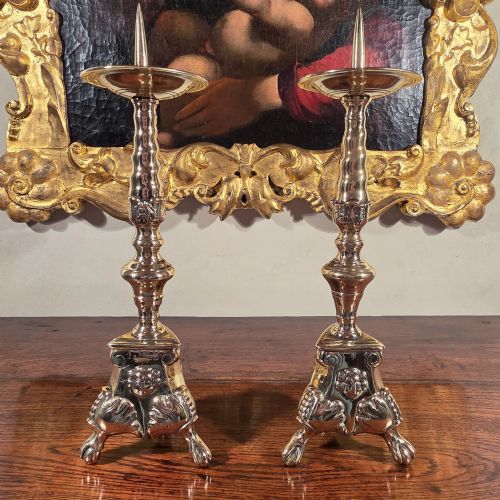


Church Brass Candlesticks
Church brass candlesticks bring monumental scale and heavy metalwork into domestic spaces, drawing on centuries of ecclesiastical design for serious interior impact.
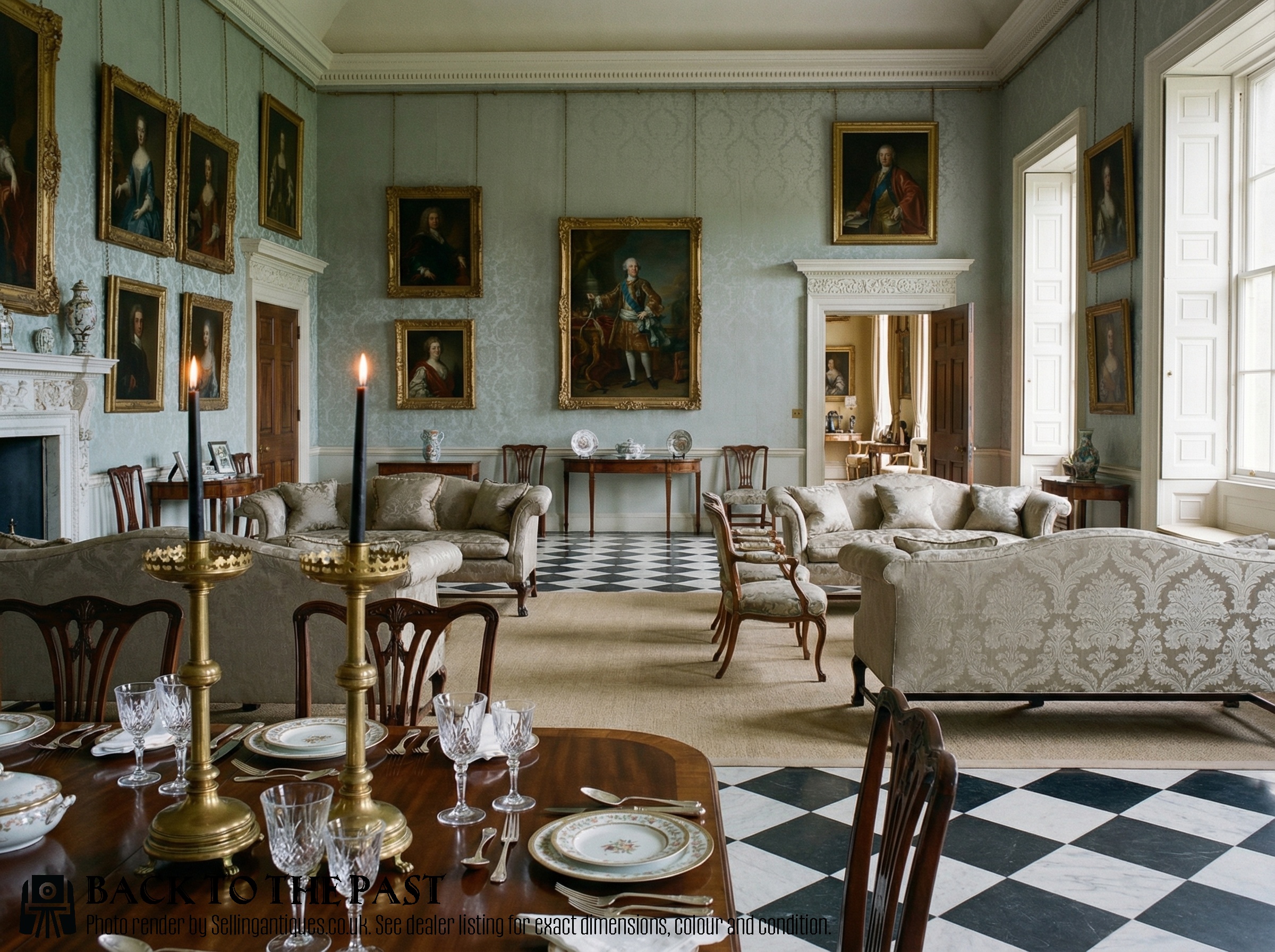
Church Brass Candlesticks
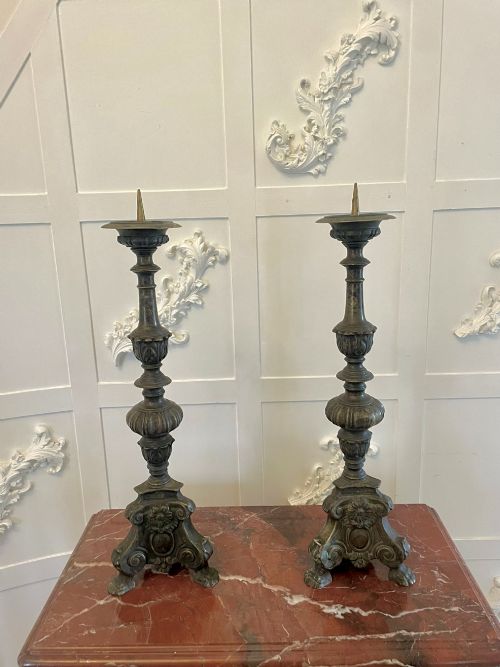
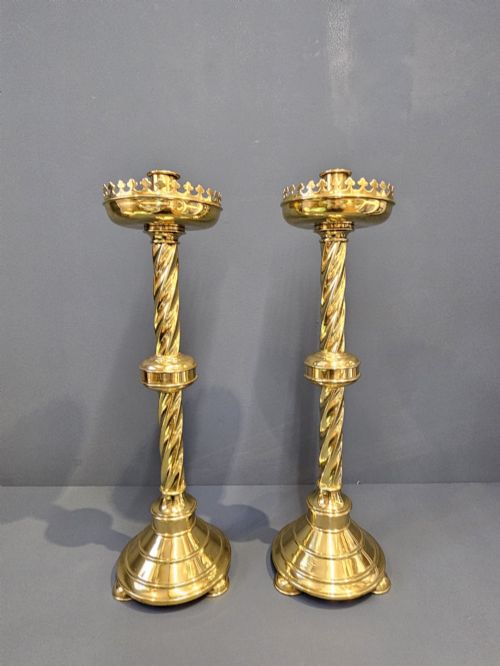
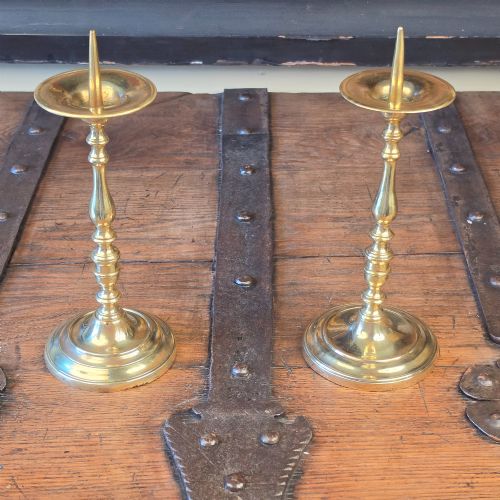
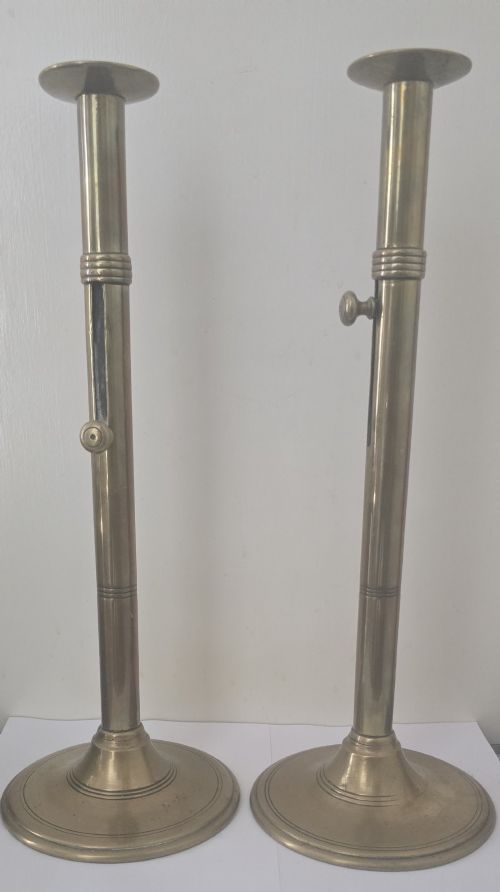
Church brass candlesticks span heavy altar fittings and large floor-standing holders created for ecclesiastical spaces, most frequently appearing from the Victorian period and the nineteenth century. These sturdy liturgical objects range from simple domestic adaptations to massive pricket standards designed to support thick altar candles.
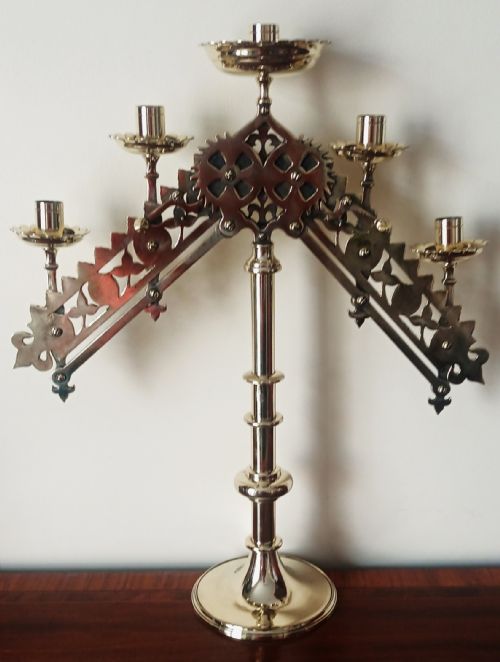
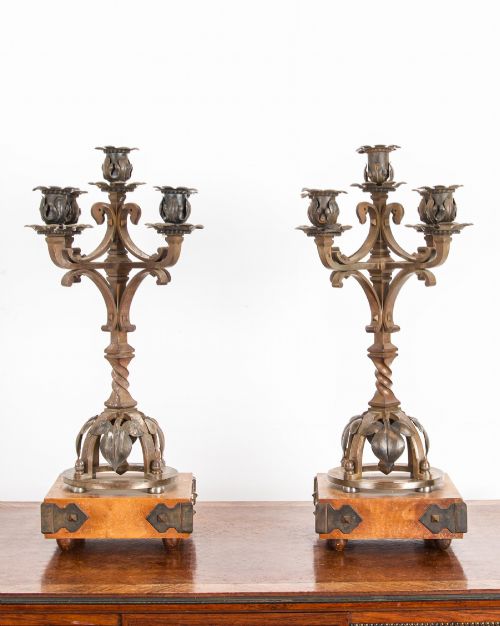
The selection on this page relies heavily on nineteenth-century Gothic Revival designs alongside earlier seventeenth-century styles and later Amsterdam School interpretations. Buyers encounter monumental pairs and graduated sets featuring turned columns, heavy bases, and occasional conversions into table lamps.
Many of these pieces originate from British, French, and Dutch ecclesiastical workshops, showing various adaptations for secular interiors over time. Whether configured with standard sockets or sharp pricket spikes, they provide significant vertical presence for mantelpieces and entrance halls.
How they were made
Makers utilised heavy casting techniques to shape molten brass and bronze into robust structural components, often turning sections on a lathe for smooth profiles. Component parts were then threaded or pinned together to build up the substantial height characteristic of ecclesiastical lighting.
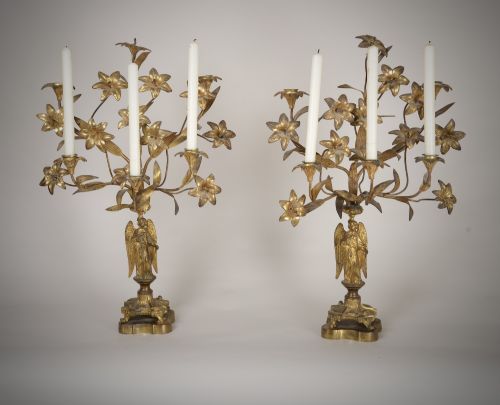
Surface finishes range from polished yellow brass and gilt metal to aged bronze and combinations of brass paired with wrought iron or wood. Decorative enrichment relied on applied chased details, structural knops, and occasional painted highlights rather than delicate surface engraving.
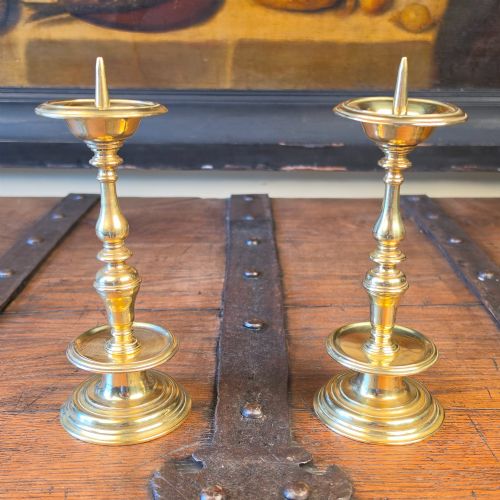
The archive records frequent pairs of French polished church pricket candlesticks alongside monumental Gothic Revival standards and graduated Masonic column sets.
What varies in quality
Quality rests primarily in the weight of the casting and the crispness of the turned mouldings, where superior examples exhibit heavy gauge metal and deep, resolute relief. Lighter commercial pieces lack the monumental heft and architectural authority found in heavy altar standards.
Proportion and structural integrity define the upper tier of survivors, particularly when monumental stems remain perfectly plumb without lean or distortion at the joints. Original components, uncompromised bases, and unaltered pricket spikes separate genuine ecclesiastical survivals from later assembled interpretations.
The Church Brass Candlesticks Glossary
- Pricket
- A sharp metal spike set on a drip pan to support a candle, common on older altar sticks before socket holders became standard. This form requires candles with a hollow base.
- Gothic Revival
- An architectural and decorative style popular during the nineteenth century that mimics medieval pointed arches, trefoils, and ecclesiastical motifs. It dominates much of the Victorian metalwork found here.
- Ormolu
- Ground metallic bronze applied with mercury amalgam to a base metal, creating a rich golden surface finish. It appears on finer ecclesiastical furnishings.
- Amsterdam School
- An early twentieth-century Dutch architectural and design movement known for expressionist brickwork and dynamic metal forms. Pieces from this tradition mix brass and iron with heavy geometric mass.
- Knop
- A prominent decorative knob or swelling on the stem of a candlestick, providing both visual weight and a secure grip for moving heavy liturgical metalwork.
Church Brass Candlesticks: Frequently Asked Questions
Were these candlesticks made for homes?
Almost all of these heavy items were originally forged for chapels, cathedrals, and large institutional places of worship rather than domestic parlours. Their monumental height and pricket spikes served liturgical functions during services.
Victorian and later collectors adapted them for secular interiors to create dramatic focal points in large rooms. Today they function equally well as sculptural floor pieces or wired table lamps.
How do I date a brass candlestick?
Examine the construction methods, base weight, and tool marks hidden beneath the base or inside the socket threads. Heavy sand-cast components and characteristic turning marks often point toward nineteenth-century Victorian production.
Compare the decorative vocabulary against known historical periods like Gothic Revival or seventeenth-century Baroque styles. Stylistic cues combined with material wear patterns provide the most reliable indicators of age.
Can I convert these into electric lamps?
Many examples arrive already converted into table lamps while retaining their original structural brass columns and weighted bases. Professional electricians can route cords internally without drilling through primary weight-bearing antique sections.
Ensure any conversion preserves the outer aesthetic and remains fully reversible to protect the historical integrity of the metalwork. Modern weighted wiring also keeps tall lamp conversions stable on domestic tables.