





Gothic Brass Candlesticks
Gothic brass candlesticks bring medieval architectural severity into domestic spaces, offering heavy cast metal forms and ecclesiastical dignity that collectors prize.
Gothic Brass Candlesticks
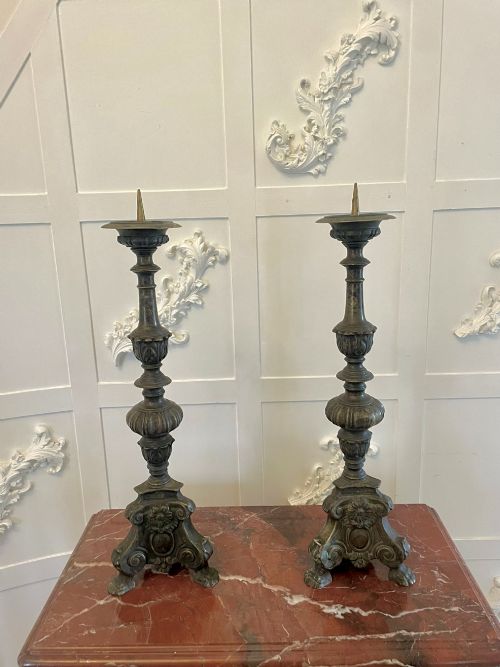
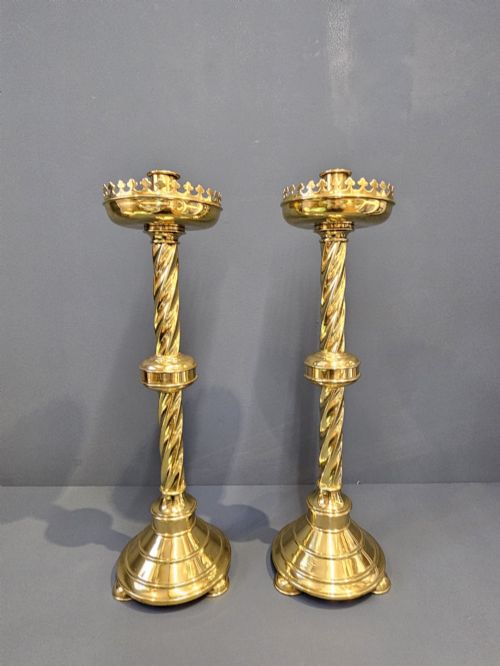
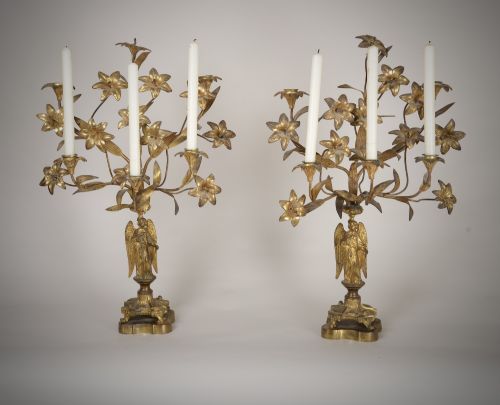
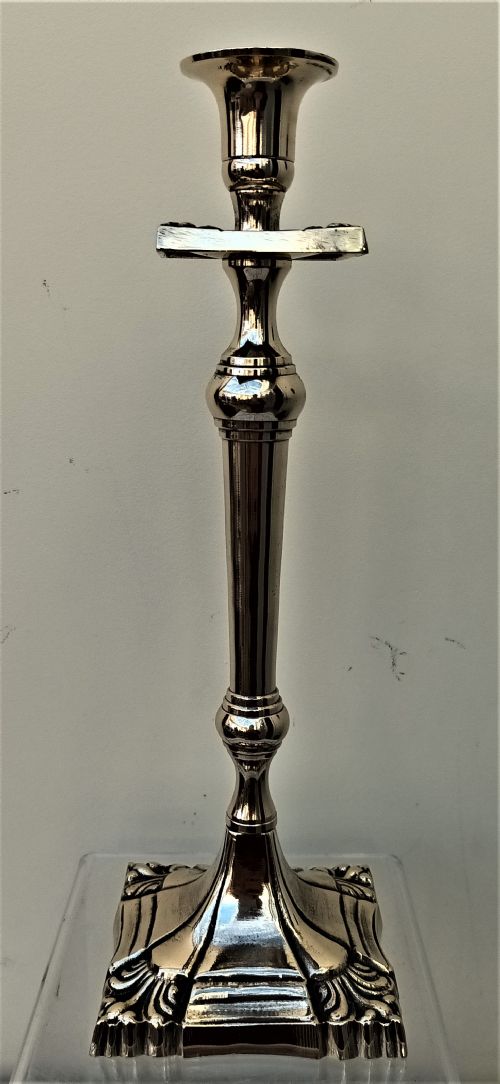
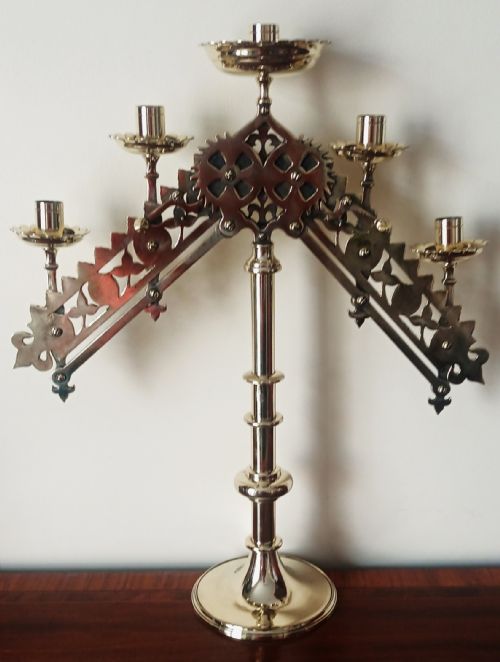
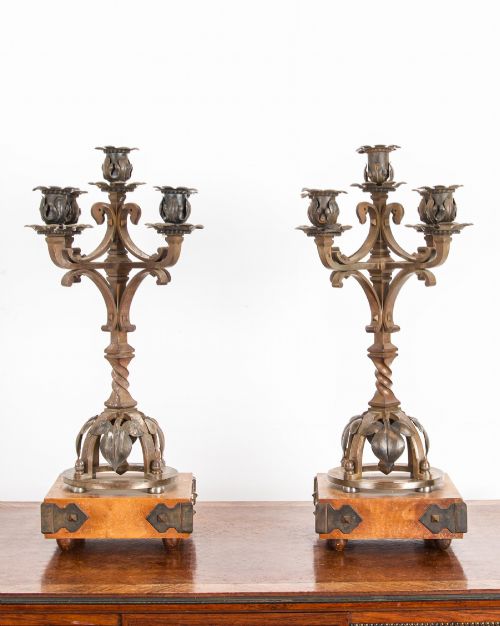
Gothic brass candlesticks comprise heavy church altar pieces, domestic table pairs, and multi-branch candelabra created during the Victorian revival and subsequent twentieth-century periods. These items draw heavily on medieval architectural motifs like pointed arches, quatrefoils, and heavy knops derived from ecclesiastical metalwork.
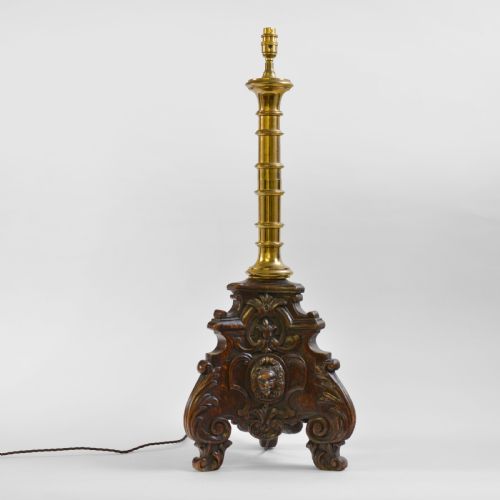
Buyers will most commonly encounter nineteenth-century English and French pairs influenced by the Gothic Revival, alongside later Arts and Crafts interpretations. Many survive as tall church altar candlesticks or pricket sticks, while others have been adapted into table lamps over time.
How they were made
Foundry workers produced these objects primarily through sand casting or lost-wax techniques using brass, cast brass, and occasionally bronze or gilt-brass. Craftsmen then finished the surfaces with hand-chiselling, turning on lathes, and applying applied decorative elements such as cabochon insets or glass shades.
Later Arts and Crafts examples incorporate wrought brass and copper elements alongside hammered textures, reflecting a shift away from mass-produced Victorian ornamentation toward visible hand-working.
Listings feature materials including brass, bronze, cast brass, gilt brass, ormolu, wrought iron, and wood across multiple centuries.
What varies in quality
Quality rests heavily on the crispness of the casting detail and the gauge of the metal used in construction. Heavier specimens with deep relief mouldings and well-defined architectural tracery generally indicate superior workshops compared to lighter, flatter castings.
The integrity of construction also dictates value, particularly in articulated or multi-branch candelabra where joints must support substantial weight without sagging. Original surface patination and the absence of clumsy repairs further distinguish finer examples.
Wm. Tonks & Sons·Dr Christopher Dresser
The Gothic Brass Candlesticks Glossary
- Pricket candlestick
- A candlestick fitted with a central spike or pricket designed to impale the base of a wax candle, commonly found on church altars.
- Candelabra
- A branched candlestick holding multiple lights or candles on separate arms radiating from a central stem.
- Gothic Revival
- An architectural and decorative style popular during the nineteenth century that revived medieval forms, pointed arches, and ecclesiastical ornamentation.
- Ormolu
- Gilt bronze or brass applied to decorative arts, providing a bright gold-coloured metallic finish through mercury amalgamation or electroplating.
- Knop
- A prominent rounded knob or bulging decorative node positioned along the vertical stem of a candlestick.
Gothic Brass Candlesticks: Frequently Asked Questions
How do I clean antique brass candlesticks?
Dust gently with a soft dry cloth to preserve the accumulated patination and age-related oxidation that collectors value on older metalwork.
Avoid abrasive metal polishes or harsh chemical dips that strip away the historical surface character and reduce the piece's desirability.
Were these candlesticks made for churches?
Many examples originate from ecclesiastical settings, including large altar sticks, floor-standing candle holders, and heavy pricket designs used in liturgical services.
Other smaller pairs were produced specifically for domestic interiors, incorporating Gothic architectural motifs into everyday household lighting.
How do I date a Victorian Gothic candlestick?
Examine the casting marks, base construction, and assembly methods, as nineteenth-century pieces often utilise threaded rods or specific fastener types.
Stylistic shifts from heavy Victorian ecclesiastical ornamentation toward simpler Arts and Crafts or Amsterdam School lines help narrow the production era.
Can these candlesticks be converted safely to lamps?
Numerous antique church candlesticks and candelabra have been adapted into table lamps with internal wiring running through the central stem.
Professional conversion methods that avoid drilling through maker marks or damaging original structural brass components are preferred to maintain integrity.