



Ecclesiastical Brass Lighting
Ecclesiastical brass lighting brings heavy altar candlesticks, prickets, and chandeliers into domestic spaces from the nineteenth century onward.
Ecclesiastical Brass Lighting
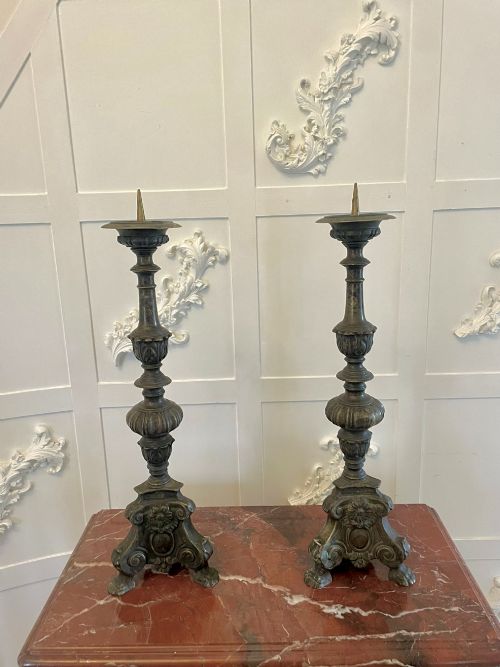
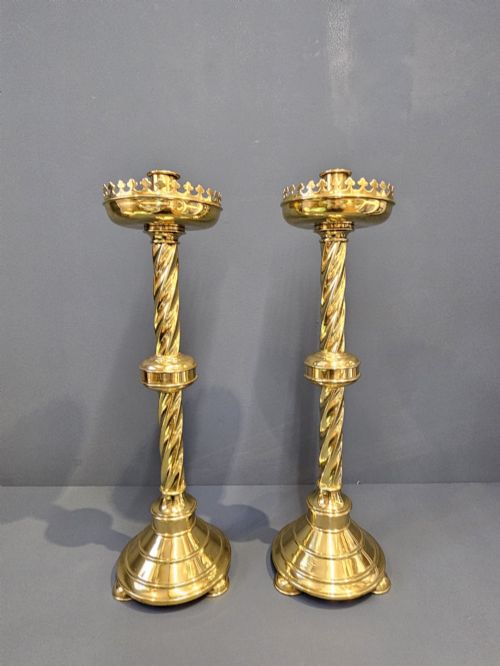
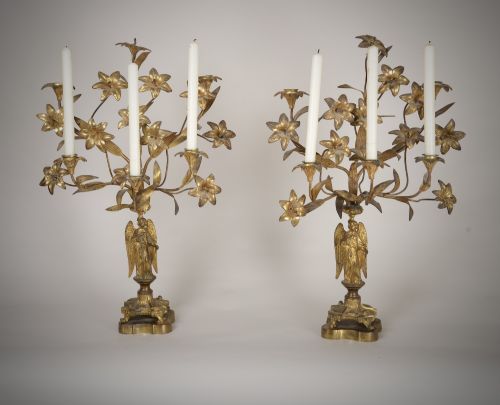
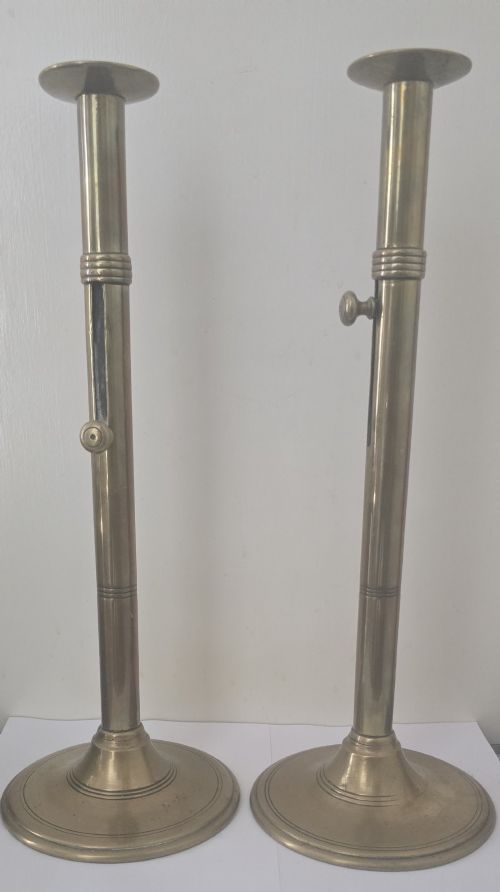
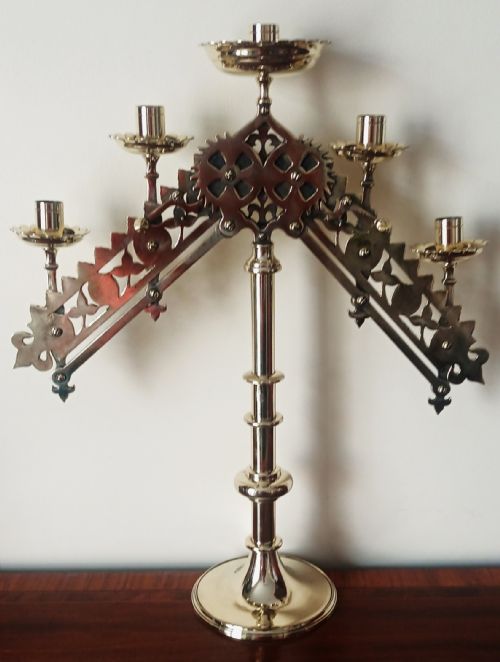
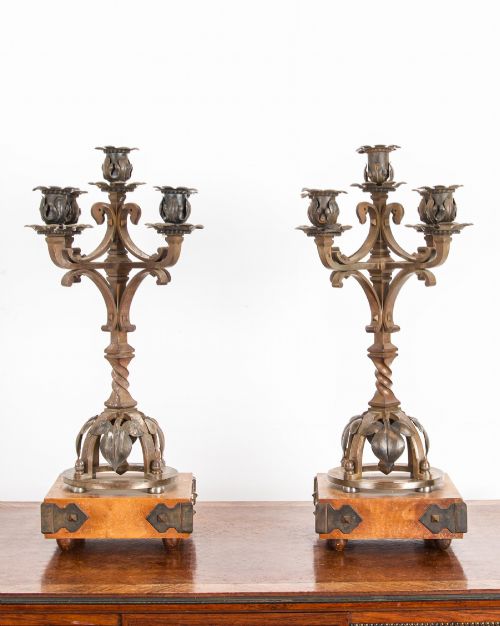
When you search for ecclesiastical brass lighting, you enter a world of heavy altar furniture, church furnishings, and converted liturgical pieces designed for worship. These items span the nineteenth century, including the Victorian era, through to the early decades of the twentieth century. The selection leans heavily toward pairs of large brass candlesticks, pricket stands, and multi-branch candelabra.
You will encounter pieces rooted in Gothic Revival, Neo-Gothic, and Victorian design alongside French and Italian examples. Many tall altar sticks and floor-standing candle holders survive in pairs, while chandeliers and wall sconces appear less frequently. Some pieces have later adaptations, such as conversions into table lamps using fabric shades or glass components.
The materials reflect the chapel or church origin, dominated by cast and turned brass, bronze, and gilt-brass. While most pieces remain in their original configuration for candles, several examples show later electrification for modern domestic interiors.
How they were made
Foundry workers cast brass and bronze components in sections, utilising heavy metal gauges suited to daily liturgical use. Individual elements like drip pans, knops, and stepped bases were turned on lathes before being joined together.
Gilding, ormolu finishes, and surface patination were applied to enhance the rich metallic appearance under candlelight. Wrought iron, wood, and opaline glass appear selectively as supporting materials in structural frames and associated lamp conversions.
Ecclesiastical Brass Lighting Retail Price Guide 2026
Typical asking prices for ecclesiastical brass lighting among the pieces listed under this phrase on Sellingantiques today, from the lower quarter to the upper quarter. They describe what is for sale here now, not the wider market.
Some church candlesticks escaped the altar entirely, trading holy wax for modern lampshades and wiring.
What varies in quality
Cast weight and metal thickness dictate the substance of each piece, distinguishing solid church altar wares from lighter domestic interpretations. Crispness in the chasing of Gothic tracery, knops, and foliate motifs separates standard production from finer foundry work.
Completeness of original components, such as pricket spikes, drip pans, and matching bases within a pair, determines the integrity of the object. Surviving gilding or untouched bronze surfaces hold greater appeal than stripped or overly polished brass.
Joseph Wilmotte Liege·T Thomason And Co
The Ecclesiastical Brass Lighting Glossary
- Pricket
- A sharp metal spike on a candlestick designed to skewer and hold a wax taper or candle securely in place. This form is common on altar pieces from the nineteenth century.
- Altar Stick
- A tall candlestick specifically made for placement upon a church altar. These items often possess heavy stepped bases and decorative knops.
- Gothic Revival
- An architectural and decorative style drawing on medieval ecclesiastical forms, featuring pointed arches, tracery, and quatrefoils. This aesthetic dominates nineteenth-century church metalwork.
- Candelabra
- A branched lighting fixture holding multiple candles simultaneously. They appear in pairs with three to five branches in Gothic and Victorian designs.
- Ormolu
- Finely ground high-carat gold applied to a bronze base using a mercury-gilding technique. It provides a bright, durable golden finish on continental ecclesiastical pieces.
Ecclesiastical Brass Lighting: Frequently Asked Questions
What is a pricket candlestick?
A pricket candlestick uses a sharp upward-pointing metal spike instead of a socket to secure the candle. The base of the wax taper rests directly upon the drip pan.
This form appears frequently on church altars from the Victorian period onwards, designed to hold thick wax candles used during services.
How do I date these pieces?
Dating relies on stylistic clues such as Gothic Revival motifs, heavy cast brass construction, and structural assembly methods. Nineteenth-century examples often display deep patination and distinct foundry marks.
Later pieces extending into the nineteen-thirties sometimes show hybrid designs or early electrical fittings integrated into the historic metalwork.
Are pairs always matching?
While many listings offer matched pairs of candlesticks or candelabra cast from the same workshop mould, slight variations can occur due to hand-finishing. Each piece in a pair was often turned and chased individually in the foundry.
Checking base dimensions, height, and decorative detailing helps confirm if two church candlesticks originated together as a pair.