


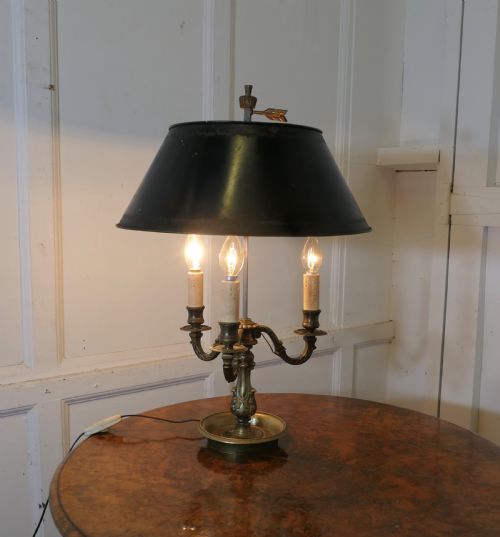


Adjustable Brass Candlestick
An adjustable brass candlestick brings flexible illumination and tactile period mechanics to a room, offering height or arm changes through clever sliding engineering.
Adjustable Brass Candlestick
When you search for an adjustable brass candlestick, you encounter utilitarian lighting pieces designed to alter height or reach through sliding mechanisms, telescopic columns, or articulated arms. These items bridge the gap between practical desk illumination and formal candleholders, appearing in forms such as chambersticks, student lights, and bouillotte lamps.
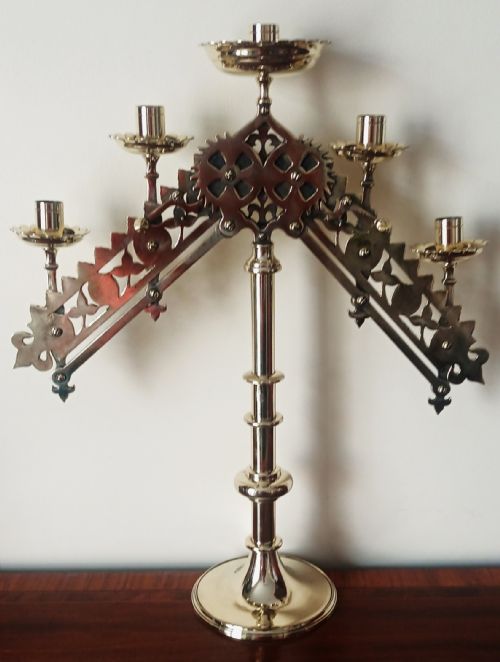
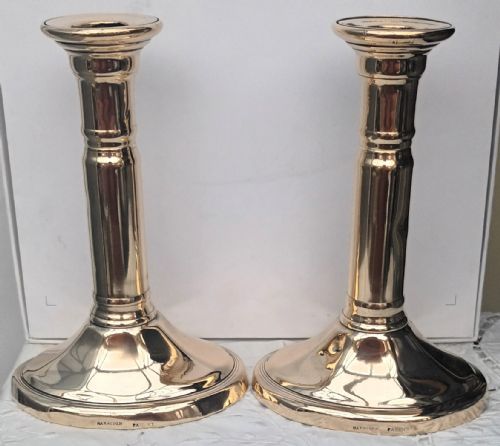
The pieces on this page span the Regency, Georgian, and Victorian periods through to the twentieth century, with materials extending beyond pure brass to include gilt brass, bronze, ormolu, and toleware shades. You will find single candlesticks alongside pairs and multi-branched variants, showing English, French, and Dutch origins.
How they were made
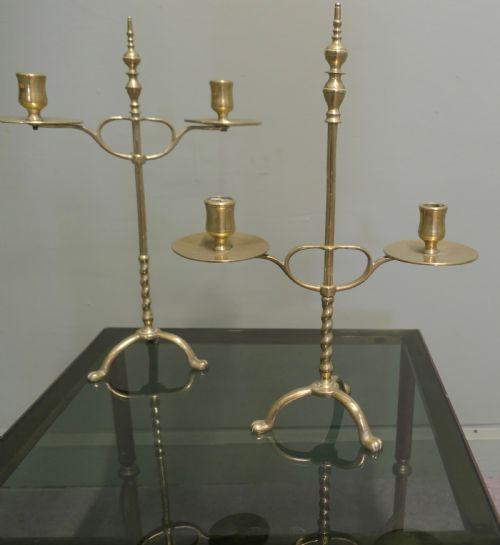
Makers utilised cast and turned brass, bronze, and ormolu, engineering telescopic stems and articulated joints that allowed the candle nozzle or arm to move smoothly and lock into position. These working elements required precise metal-working so the inner sleeves slid without binding or slipping.
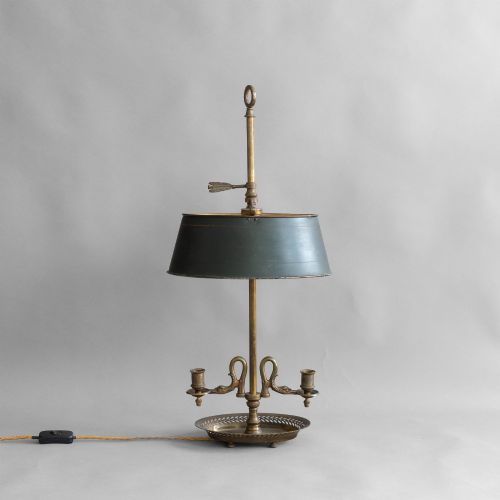
Many examples incorporate painted metal tole or toleware shades in green alongside the metal framework, held by adjustable collars or screw keys. The combination of heavy cast bases and slender sliding rods gave these pieces stability despite their variable height.
What varies in quality
Quality rests in the precision of the mechanical action, where superior telescopic stems and articulated arms move with a satisfying resistance rather than looseness. Patent designs and marked pieces show finer detailing in the casting and finishing of the brass components.
The presence of original paired elements, matching toleware shades, and integrated mounting screws separates standard utilitarian lighting from the finer decorative examples produced in French and English workshops.
The Adjustable Brass Candlestick Glossary
- Telescopic
- An adjustable stem design where one metal tube slides inside another to alter the overall height of the light. This mechanism often uses a side key or internal spring to hold the position.
- Articulated
- Formed with joints that allow arms or stems to pivot and extend outwards. This permits the user to direct light precisely where needed.
- Toleware
- Painted or lacquered metalware, commonly seen in green on the shades of desk and bouillotte lamps. It provides a contrasting colour to the polished brass framework.
- Bouillotte lamp
- A shaded desk or table lamp featuring multiple candle branches surrounding a central adjustable vertical shaft. The shade moves down the shaft as the candles burn lower.
- Ormolu
- Finely chased and gilt bronze applied to decorative metalwork. It brings a bright golden finish to French and Regency pieces.
Adjustable Brass Candlestick: Frequently Asked Questions
How do telescopic brass candlesticks work?
Telescopic candlesticks feature an inner sliding shaft that moves up and down inside a hollow outer column to change the height. A friction fit or a small side screw holds the stem at the desired level.
This simple mechanical adjustment allowed users to raise the light source as the candle burned down or lower it for closer task work.
What is a bouillotte lamp?
A bouillotte lamp is a traditional desk or table light with multiple candle arms arranged around a central column. It traditionally includes a painted metal shade that slides down the stem.
These pieces were originally designed for the French card game of bouillotte, allowing players to adjust the shade to keep the glare out of their eyes.
How do I date an adjustable brass candlestick?
Dating relies on stylistic clues such as the Regency Empire style, Victorian Gothic Revival ornamentation, or Arts and Crafts simplicity. The construction methods, casting marks, and type of fasteners also point to specific eras.
Earlier nineteenth-century pieces often feature heavier cast brass and hand-turned components, while twentieth-century examples show smoother mass production techniques.
Can I use these lamps with modern bulbs?
Many pieces originally made as candle holders or oil lamps have been adapted over time to hold electrical wiring and modern bulbs. Conversion quality varies, so inspect the fitting within the original brass socket or candle nozzle.
Unconverted pieces remain purely for wax candles, while others retain their antique character alongside discreet modern rewiring.