

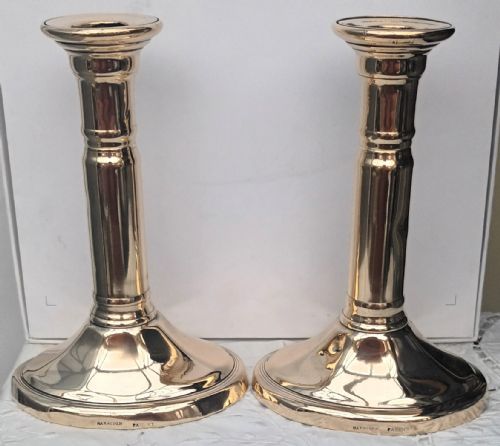


Push Up Candlesticks
Push up candlesticks are practical brass and iron lighting pieces with internal ejector mechanisms that make removing old stub ends straightforward.
Push Up Candlesticks
When you search for push up candlesticks, you encounter practical lighting devices engineered to raise the remaining candle stub by means of an internal slide or mechanism.
The examples found here predominantly date from the eighteenth and nineteenth centuries, taking the form of brass pairs or single iron pieces.
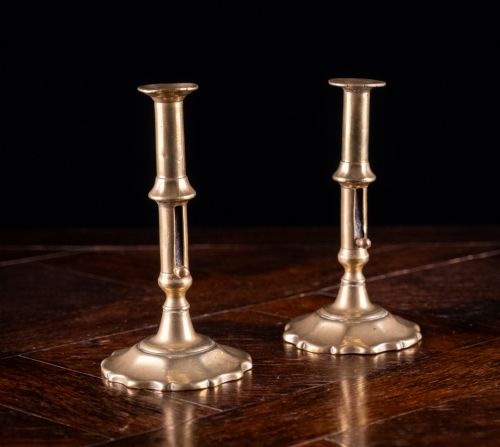
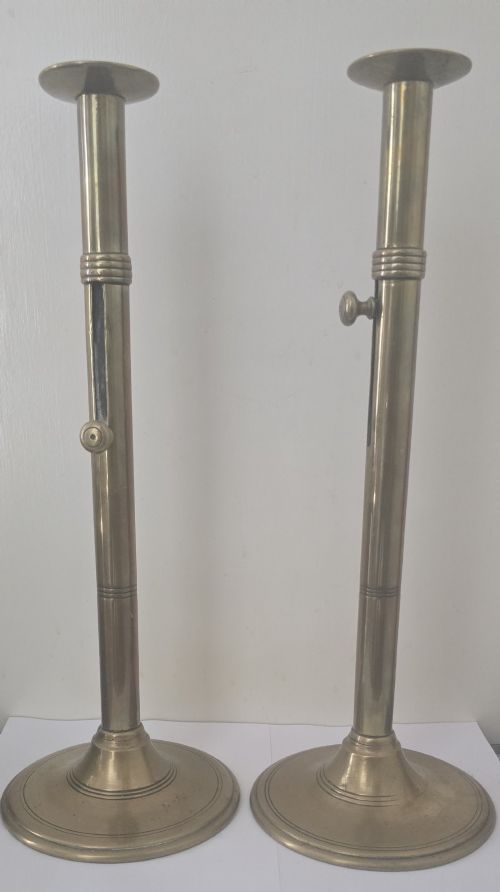
Makers produced these objects in Georgian, Victorian, and Arts and Crafts styles, utilising petal bases, scalloped edges, and tall ecclesiastical proportions.
How they were made
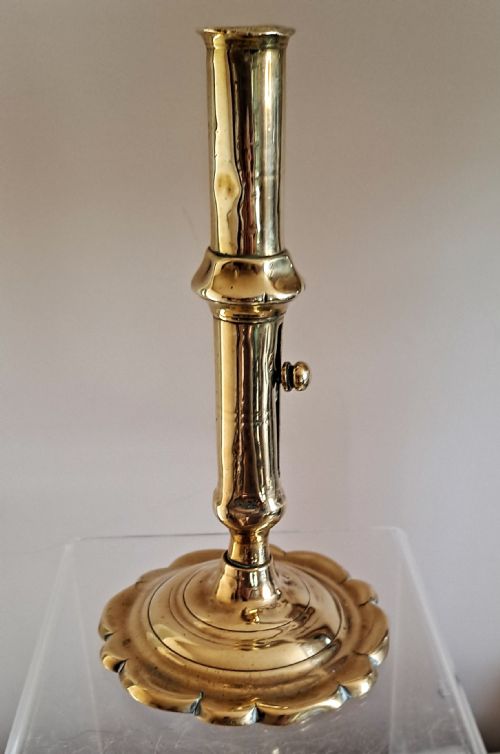
Makers constructed the primary bodies using cast brass, seamed brass, and wrought iron, frequently shaping the metal into petal bases or tall stems.
The internal ejector mechanism relies on a sliding rod or side lever that pushes the internal platform upward to clear the socket.
Current listings span the eighteenth and nineteenth centuries, featuring brass and wrought iron across Georgian, Victorian, and Arts and Crafts styles.
What varies in quality
Quality rests in the crispness of the casting, particularly around petal bases and scalloped shoulders, where sharper detail distinguishes better workshops.
The smooth operation of the internal ejector or side ejector mechanism dictates the functional merit of each surviving example.
The Push Up Candlesticks Glossary
- Push up
- A mechanism featuring an internal disc connected to a stem that raises the candle stub. This device allows users to elevate the candle as it burns down.
- Ejector
- A term interchangeable with push up, denoting a candlestick fitted with a mechanism to clear residual wax. These were produced extensively in brass during the eighteenth and nineteenth centuries.
- Petal base
- A foot moulded into lobed, overlapping segments resembling flower petals. This decorative form appears frequently on Georgian brass candlesticks.
- Seamed brass
- Metal formed by rolling sheet brass and joining the edges down the length of the stem. This technique leaves a subtle vertical seam visible on older candlesticks.
Push Up Candlesticks: Frequently Asked Questions
How do push up mechanisms work?
An internal rod or slide pushes a circular disc up through the socket. This action lifts the remaining wax stub above the rim for easy removal.
Operating the slide from beneath or via a side ejector lever allows the user to clear the holder without digging into the socket.
What metals were used?
Makers relied heavily on brass, utilising both cast and seamed sheet construction methods. Wrought iron also appears in utilitarian spiral designs.
Brass examples often feature polished finishes, while iron pieces display dark, forged surfaces characteristic of nineteenth century metalwork.
Are these pieces Georgian?
Many examples date from the Georgian period, specifically the mid eighteenth century. These typically exhibit petal bases and seamed brass construction.
Later Victorian and Arts and Crafts examples also exist, carrying the mechanism forward into the nineteenth century with alternative stylistic details.
How do I spot a side ejector?
A side ejector incorporates a small external lever or button linked to the internal sliding platform. This allows the user to push the candle upward from the side rather than underneath.
Such examples often appear in taller ecclesiastical brass forms dating from the nineteenth century.