

Georgian Table Lighting
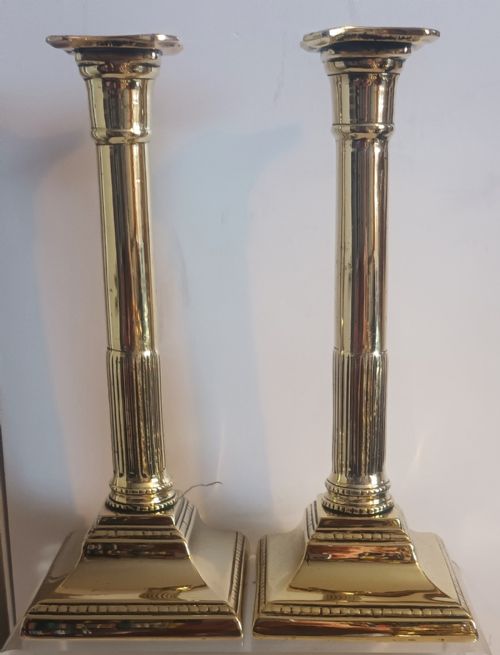
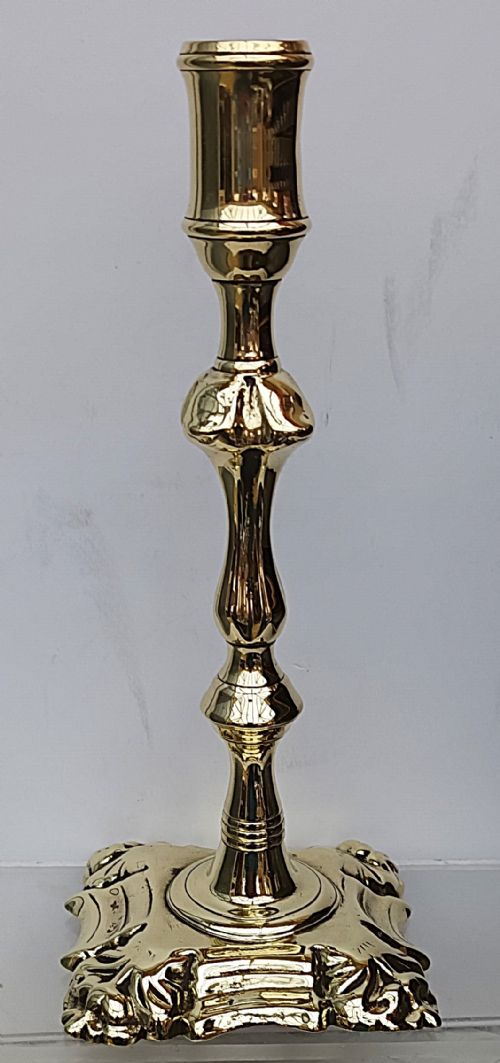
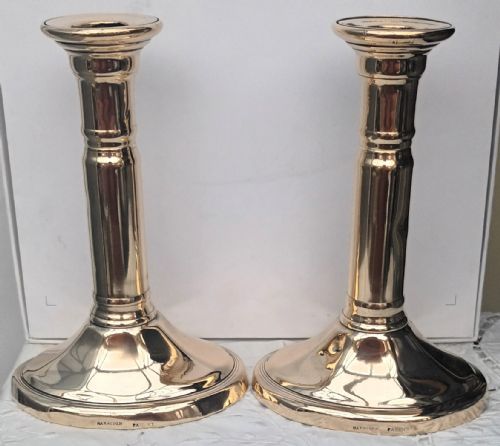
Georgian table lighting brings together heavy brass candlesticks, silver-plated candelabra, and occasional lamp conversions that illuminate period rooms.
Georgian Table Lighting
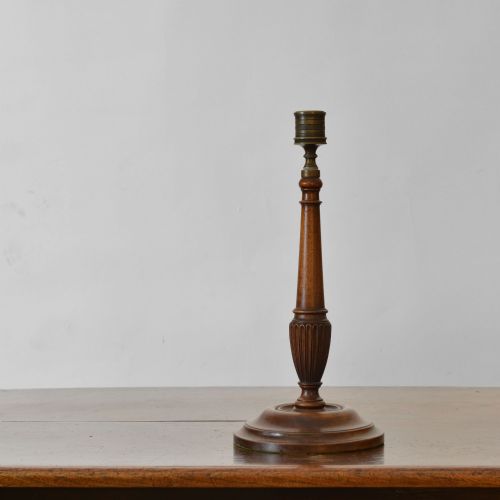
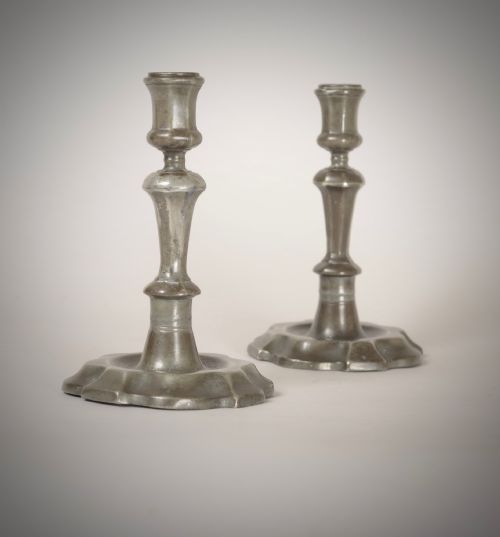
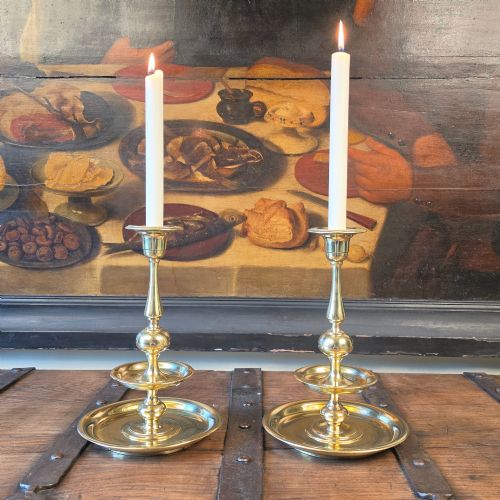
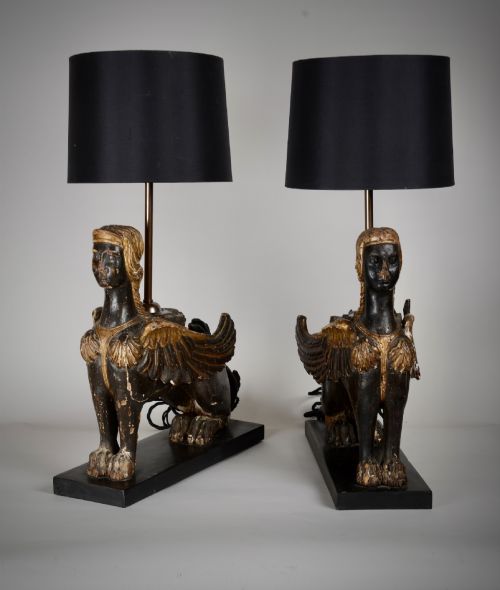
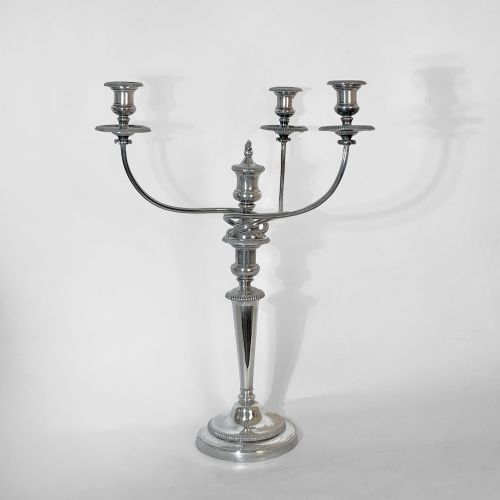
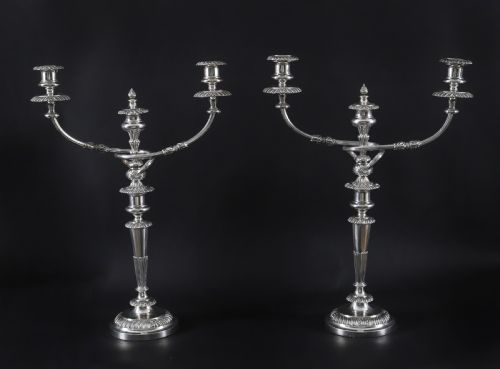
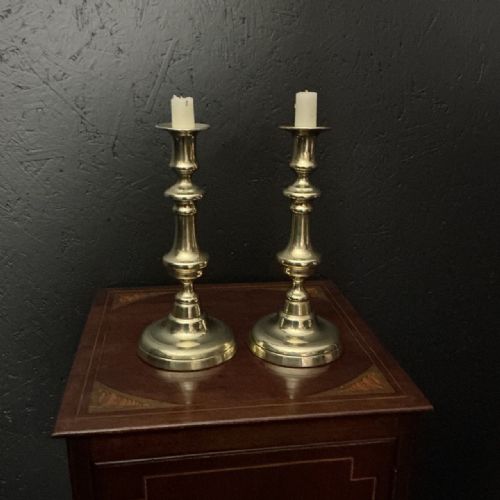
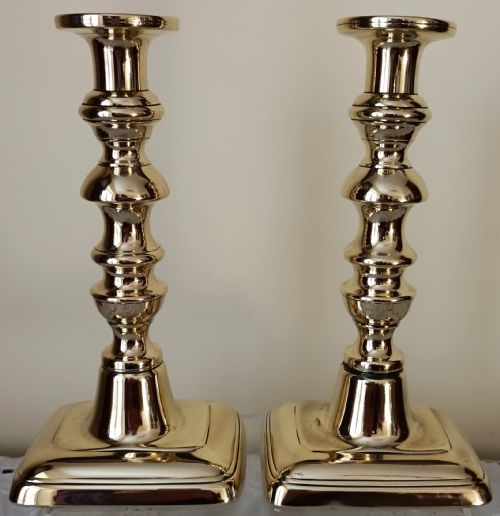
Georgian table lighting encompasses candlesticks, multi-branch candelabra, and occasional lamp conversions designed to hold candles or direct electric light in domestic interiors. The examples met most frequently on this page are heavy brass candlesticks and silver-plated multi-light candelabra originating from the eighteenth and nineteenth centuries.
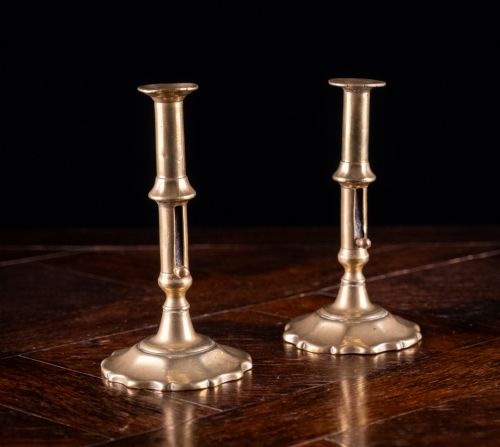
The selection ranges from simple turned brass stems and seamed ejector candlesticks to ornate Sheffield plated candelabra and bronze figures adapted for illumination. Alongside traditional candle holders, the inventory includes ceramic vase lamps and treen pieces that reflect period tastes in interior lighting.
How they were made
Metalwork forms the core of these objects, utilising brass, copper, pewter, and silver plate shaped through casting, spinning, and seaming techniques. Many brass candlesticks employ seamed construction methods where components are joined and finished on a lathe to create smooth profiles and sturdy bases.
Silver-plated items rely on fused metal plates over a base metal core, often incorporating applied wire mounts and cast details. Secondary materials such as mahogany, oak, and ebonised wood appear in related items and specialised lighting bases, utilising traditional joinery and turning.
The pieces span multiple periods, with eighteenth-century and nineteenth-century examples appearing alongside later revival styles from the twentieth century.
What varies in quality
The distinction between standard domestic lighting and finer workshop production rests on weight, crispness of cast detail, and the integrity of assembly. Superior brass pieces display heavy metal gauge, precise turning marks, and sharp petal or column bases without excessive smoothing from polishing.
Plated items demonstrate quality through the uniform thickness of the silver layer over the base metal and the neatness of soldered joints on multi-light branches. Patent mechanisms, such as telescopic stems, require precise engineering to function smoothly over centuries of use.
Matthew Boulton·Messenger·J.T. & Co
The Georgian Table Lighting Glossary
- Candelabra
- A branched candlestick holding multiple candles on separate arms. These pieces often feature two or three lights arranged symmetrically around a central shaft.
- Ejector candlestick
- A domestic candlestick containing an internal sliding mechanism to push out the remaining candle stub. This mechanical addition simplifies the removal of burned wax.
- Sheffield plate
- A composite material made by fusing a thin sheet of silver to a thicker copper core. This technique predates modern electroplating and produces a characteristic warm metallic tone.
- Pricket
- A sharp metal spike set in the drip pan to secure a candle without a socket. This medieval form persists in specific ecclesiastical and decorative revival lighting pieces.
- Chamber candlestick
- A low-profile candle holder fitted with a wide saucer base and a loop handle. These items were carried through corridors to illuminate sleeping quarters.
Georgian Table Lighting: Frequently Asked Questions
How were chamber candlesticks used?
Chamber candlesticks accompanied individuals through dark hallways and stairwells before the advent of domestic gas or electric lighting. The wide saucer base caught dripping wax while the loop handle provided a secure grip during transit.
Many examples included a matching conical snuffer resting in the tray. They sat on bedside tables until morning routines commenced.
Can I convert these lamps back to candles?
Many lamp conversions utilise existing structural channels without drilling destructive holes through the primary metal body. Reversing the electrical wiring often involves removing the lamp holder and restoring the original socket or drip pan.
Consult a professional restorer to inspect internal modifications before attempting any alterations. Preserving the existing conversion is sometimes preferred for practical daily use.
How do I spot old Sheffield plate?
Old Sheffield plate reveals a faint copper tinge along exposed edges where the thin silver layer has worn away through generations of polishing. This subtle tonal contrast distinguishes fused plate from uniform modern electroplate.
Examine the weight and construction seams closely, as early pieces lack the absolute uniformity of twentieth-century manufacturing methods. Maker marks, when present, provide further clues to origin.