





Tall Ecclesiastical Candle Holders
Tall ecclesiastical candle holders bring commanding vertical scale and solemn presence to a room, sourced directly from chapels, churches and altars.
Tall Ecclesiastical Candle Holders
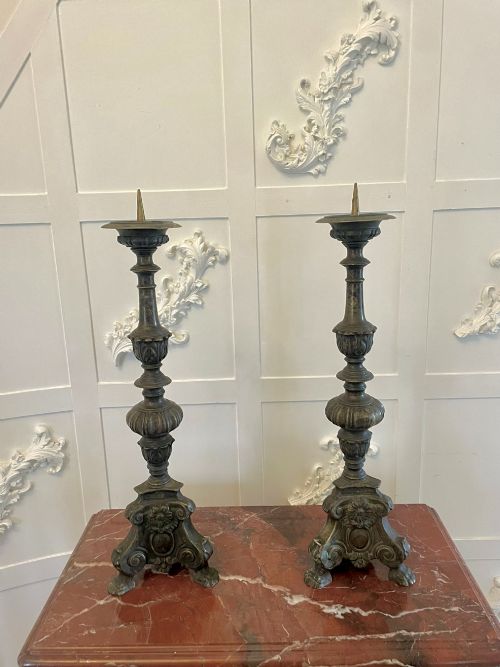
Tall ecclesiastical candle holders encompass tall candlesticks, pricket sticks, floor candelabras and altar stands designed for sacred spaces. You find pieces spanning the eighteenth, nineteenth and early twentieth centuries, rooted in styles from Georgian and Victorian Gothic Revival to Italian Neoclassical.
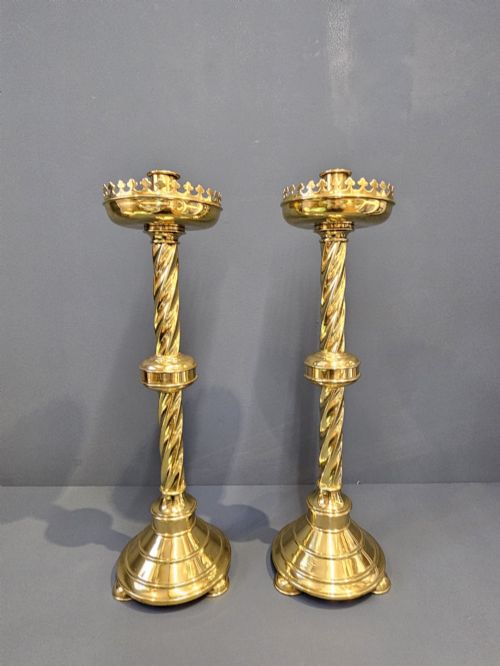
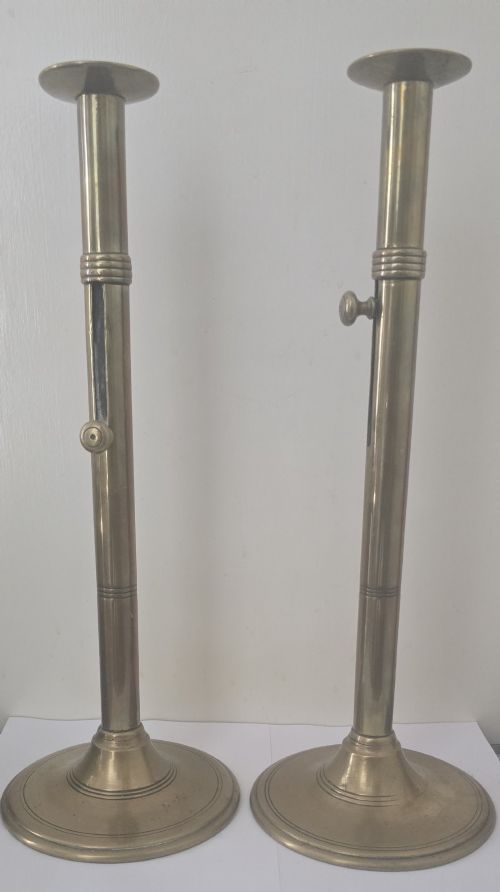
Brass is the material you meet most frequently among these listings, alongside bronze, wrought iron and carved wood. Forms range from table-standing pairs with side ejectors to massive floor-standing architectural statement pieces.
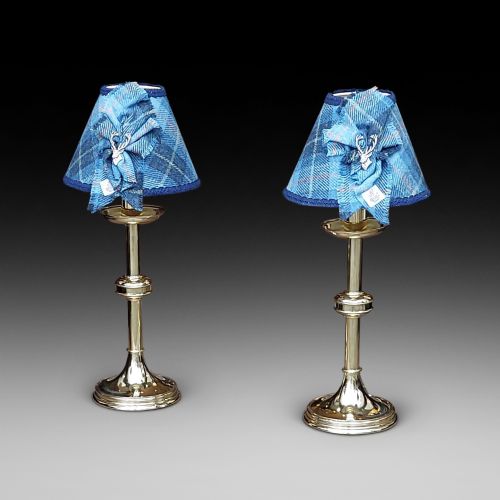
Many examples originating from churches have been adapted over time into table lamps or fitted with lamp bases while retaining their original ecclesiastical design. The selection balances domestic candle holders with monumental floor pieces built for heavy ritual use.
How they were made
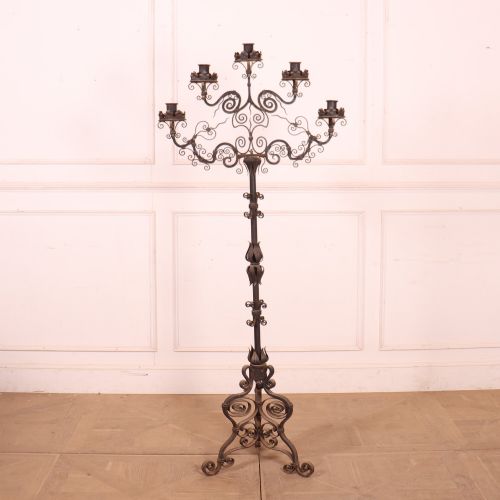
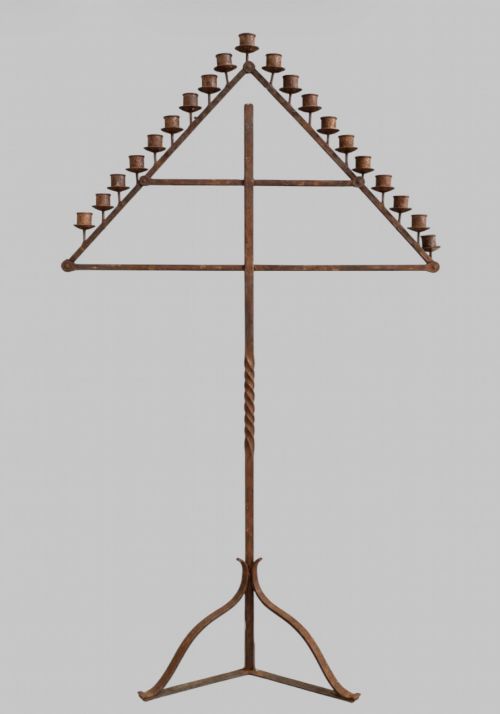
Metal versions utilise cast brass and bronze, often shaped with heavy turnings and applied ornamentation suited to church interiors. Wrought iron pieces are forged to create structural, architectural candle holders capable of supporting multiple lights.
Wooden examples rely on hand-carving in woods that are subsequently finished with silver leaf, gesso or gilt metal to achieve a rich liturgical appearance. Construction prioritises stability and weight to hold tall candles safely upright.
What varies in quality
The distinction in quality lies in the depth of casting detail, the crispness of hand-carved ornament, and the integrity of the original surface finish whether silver leaf, gilt or patinated metal. Heavier gauge brass and solid bronze castings display sharper enrichments and sturdier joints than lighter counterparts.
Proportion and scale dictate the visual impact of floor-standing items, where balanced architectural framing and harmonious structural elements separate ordinary utility items from commanding statements.
The Tall Ecclesiastical Candle Holders Glossary
- Pricket stick
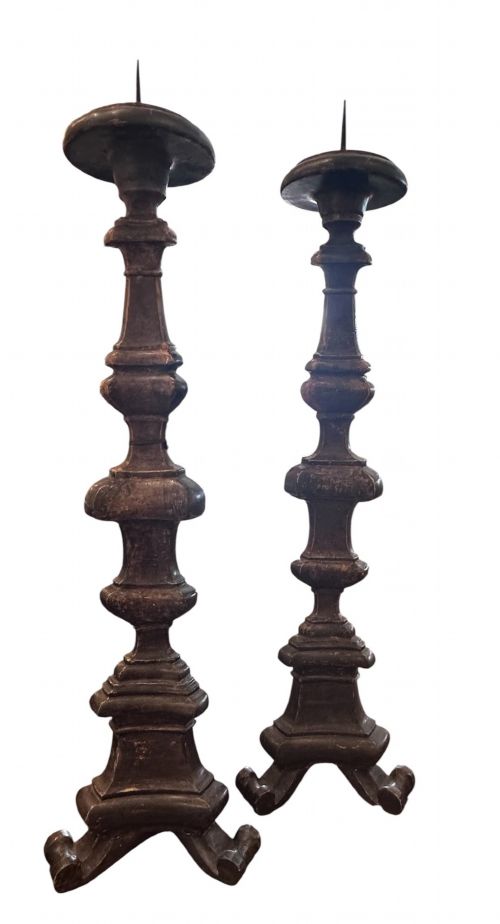
- A candlestick featuring a sharp metal spike at the top designed to impale the base of a candle rather than a socket holding it. This form is common in traditional church settings.
- Gothic Revival
- An architectural and decorative style popular during the Victorian era that imitates medieval Gothic forms, often seen in ecclesiastical metalwork. It incorporates pointed arches and heavy tracery motifs.
- Altar stand
- A tall support or candlestick placed upon or near an altar for ceremonial lighting. These items often possess grander scale and more ornate decoration than domestic counterparts.
- Side ejector
- A mechanical feature on a candlestick allowing the user to push the candle remnant out using a small lever on the side. This mechanism aids in clearing burnt wax from the holder.
Tall Ecclesiastical Candle Holders: Frequently Asked Questions
What is a pricket candlestick?
A pricket candlestick uses a sharp metal spike to secure the candle instead of a traditional cylindrical socket. This design was standard for large church candles.
Such sticks often appear in pairs and date back through the nineteenth century and earlier.
How do I light a room with them?
Tall ecclesiastical holders provide striking vertical accents and can hold large wax candles safely if placed on firm floors or sturdy tables. Many pieces have also been converted safely into lamp bases.
Their substantial height makes them ideal focal points in corners or beside fireplaces.
Are these pieces from actual churches?
The selection includes items sourced from chapels, altars and ecclesiastical environments across Britain and Continental Europe. Their construction reflects the heavy-duty requirements of historic religious spaces.
Craftsmanship in brass, bronze and carved wood points directly to this institutional origin.
How do I date an antique candle holder?
Dating relies on identifying material composition, casting techniques, and stylistic markers such as Victorian Gothic Revival or Georgian turning patterns. Tool marks and wear on the base provide further clues.
Comparing proportions against documented period pieces helps narrow down the century of manufacture.