
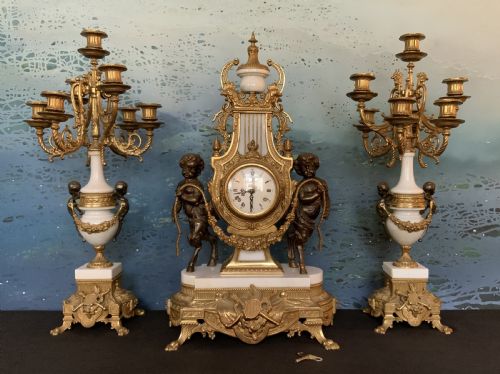


Ormolu and Marble Candelabra
Ormolu and marble candelabra combine golden cast bronze with polished stone bases, bringing classical symmetry and warmth to a mantelpiece or side table.
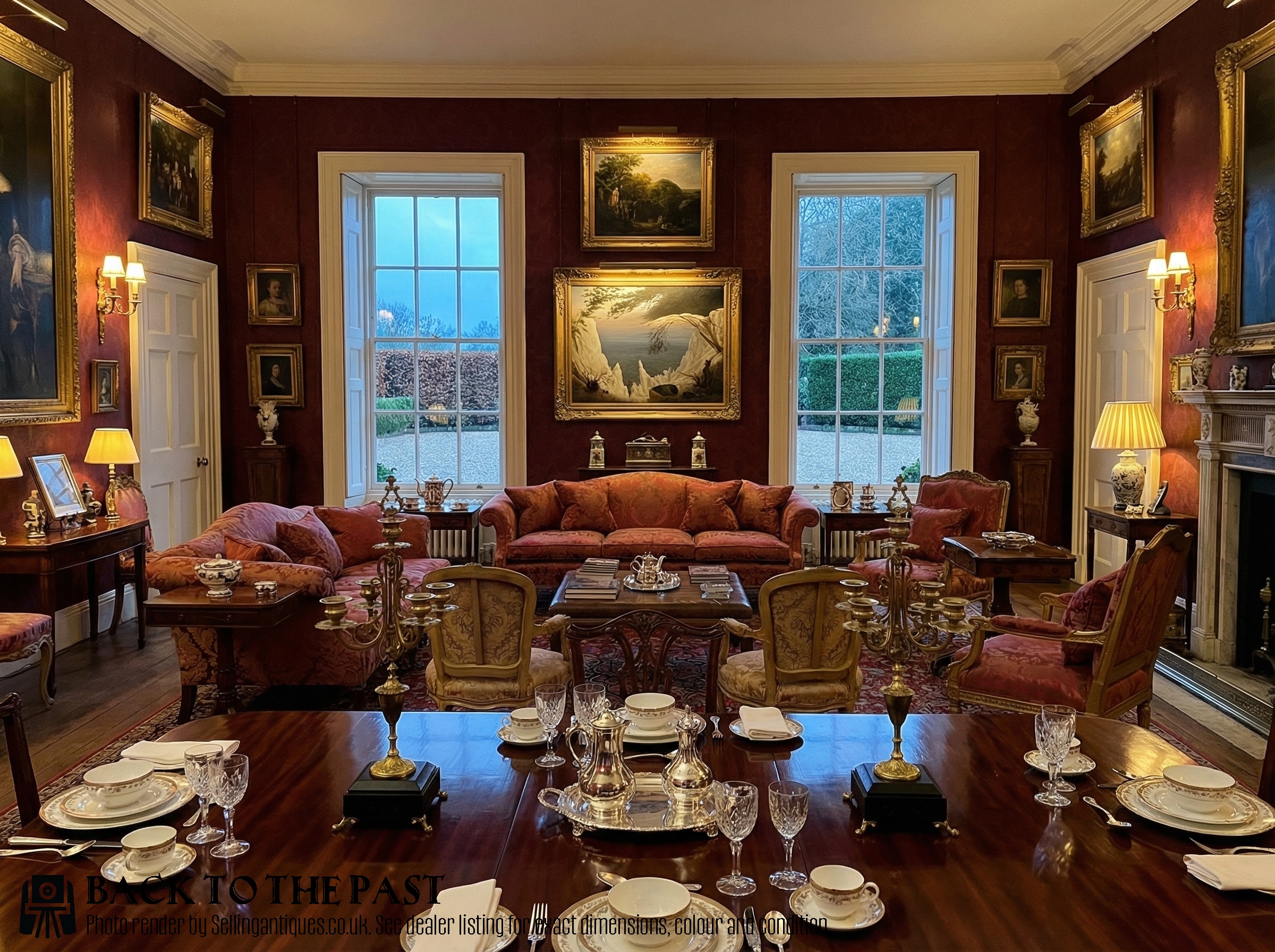
Ormolu and Marble Candelabra
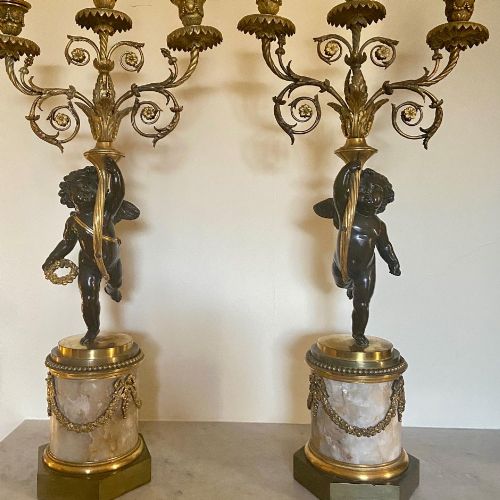
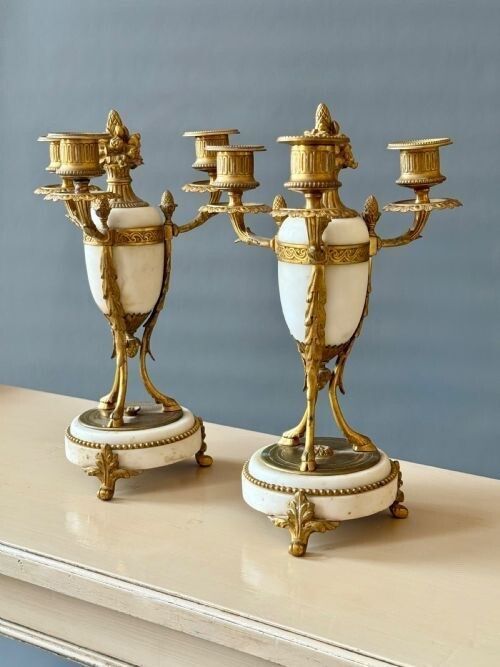
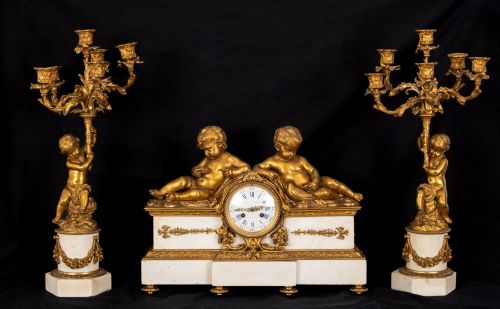
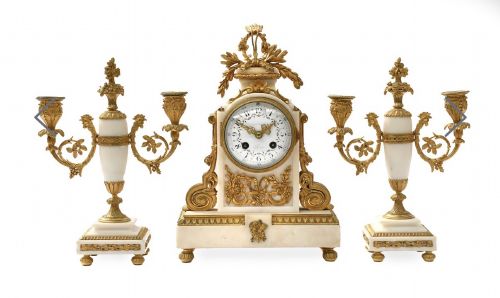
When you search for ormolu and marble candelabra, you find multi-branch lighting pieces designed predominantly in the Louis XVI style and French Empire taste. These objects frequently appear as part of three-piece clock garnitures alongside matching mantel timepieces.
Nineteenth-century French workshops produced the majority of these items, often incorporating patinated or gilded bronze figures such as cherub putti alongside white or green marble plinths. Pairs of candelabra stand alongside single examples, featuring branching arms that range from two to five lights.
How They Were Made
Craftsmen built these pieces by combining mercury-gilded bronze, known as ormolu, with turned and polished sections of natural stone such as white marble, verde antico, and porphyry. Artisans cast the bronze components using traditional methods before chasing the surface details by hand to achieve crisp definition.
The bronze elements were secured to the stone bases using threaded metal rods and nuts, allowing the contrasting textures of polished metal and matte or glossy stone to sit in structural harmony.
Many cherubs on these candelabra appear caught mid-climb, proving that even classical bronze putti struggled to stand still on a slippery marble plinth.
What Varies in Quality
The quality of the gilding also dictates the character of the object, with superior mercury or fire gilding retaining a warm, deep luminescence rather than a flat, brassy shine.
Francois Redmond·H Luppens Paris·Claude Clodion
The Ormolu and Marble Candelabra Glossary
- Ormolu
- Gilded bronze produced by applying a mixture of mercury and gold to a cast bronze base and heating it. This technique creates a durable golden finish characteristic of fine French decorative arts.
- Garniture
- A set of matching ornamental objects designed to be displayed together on a mantelpiece or sideboard. They typically comprise a central clock flanked by matching candelabras or urns.
- Putti
- Depictions of chubby male infants, often winged, used extensively as decorative supports in sculpture and metalwork. They frequently appear clambering across the stems of nineteenth-century candelabra.
- Verde Antico
- A dark green serpentine breccia marble often utilised for classical architectural details and luxury decorative bases. Its mottled surface provides a dramatic contrast to bright gilded bronze mounts.
- Louis XVI Style
- A neoclassical design movement characterised by straight lines, symmetry, and classical motifs such as ribbons, urns, and floral garlands. This aesthetic heavily influences nineteenth-century French metalwork.
Ormolu and Marble Candelabra: Frequently Asked Questions
Were these originally wired for electricity?
Nineteenth-century candelabra were strictly manufactured to hold wax candles for illumination. Conversion to electricity typically occurred during the twentieth century to adapt the pieces for modern domestic lighting.
When buying, check whether the wiring runs discreetly through the central stem without damaging the original structural components of the metal and stone.
How do I spot a clock garniture set?
A complete garniture set consists of a central mantel clock accompanied by two matching side pieces, such as candelabra or urns. These items share identical decorative motifs, materials, and stylistic periods to create a unified display.
Matching sets are particularly desirable because individual components were frequently separated or lost over decades of domestic use.
What distinguishes Louis XVI style pieces?
Louis XVI style items rely on strict geometric symmetry, straight architectural lines, and classical antiquity motifs. Look for details like fluted columns, laurel wreaths, and ribbon bows rather than the asymmetrical curves of earlier rococo designs.
In candelabra, this translates to orderly branching arms and disciplined placement of bronze mounts against the marble body.