


Brass Mantel Candelabra
These brass mantel candelabra bring sculptural lighting and formal symmetry to a room, combining cast metalwork with decorative stone.
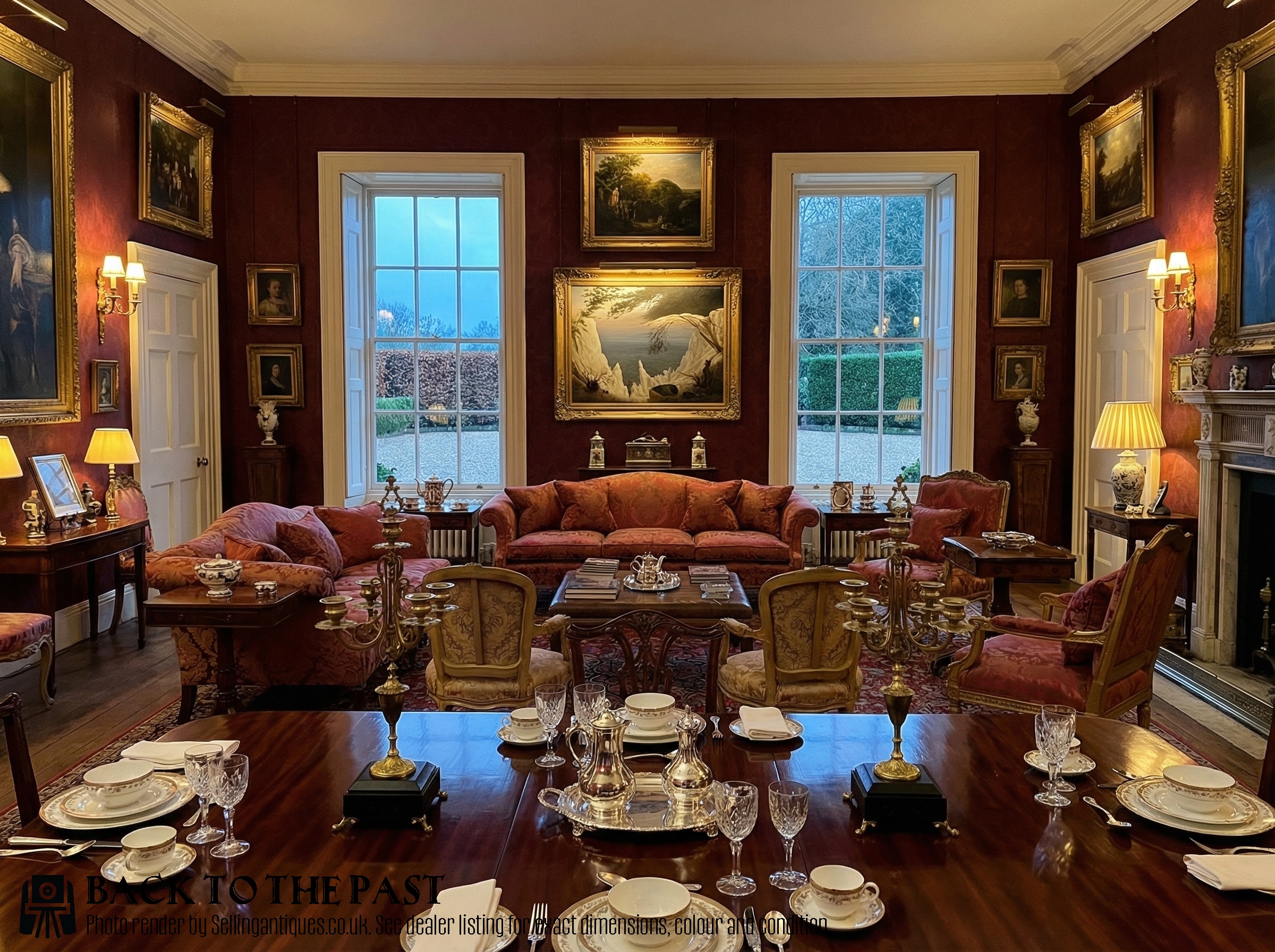
Brass Mantel Candelabra
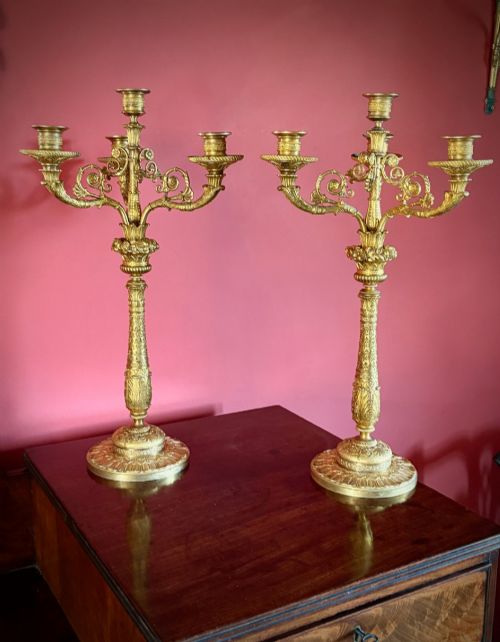
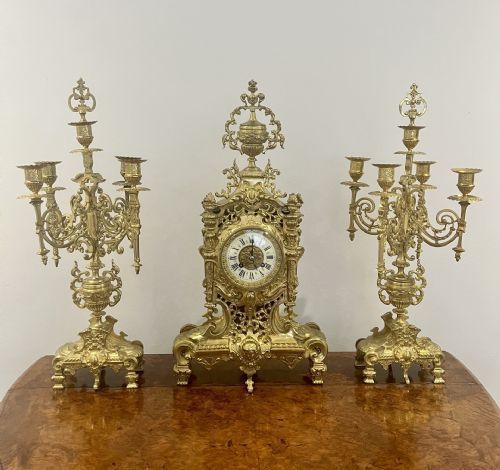
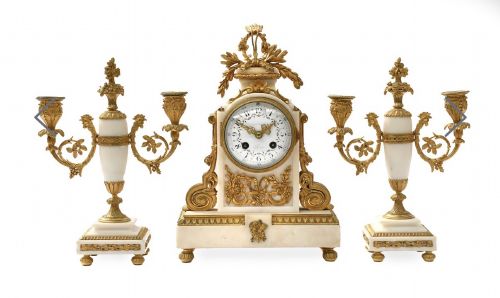
Brass mantel candelabra are multi-branched lighting fixtures designed to sit upon fireplace mantels, frequently appearing alongside matching clocks as part of coordinated garniture sets. The pieces found here span the nineteenth century and the early twentieth century, with many originating from French workshops following classical or revivalist decorative schemes.
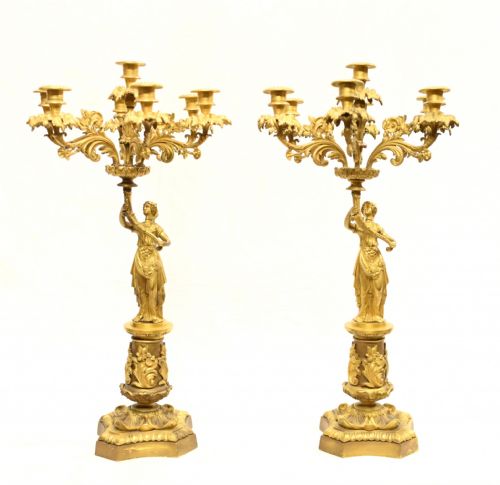
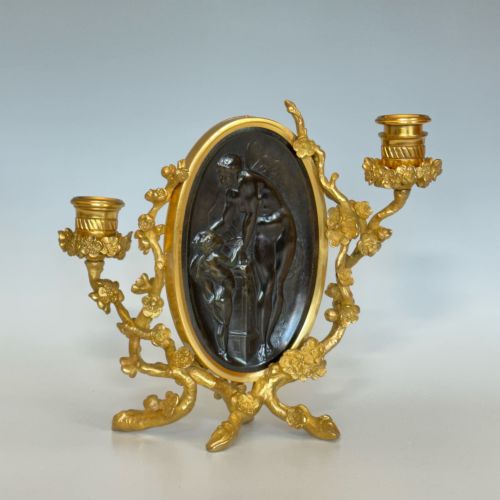
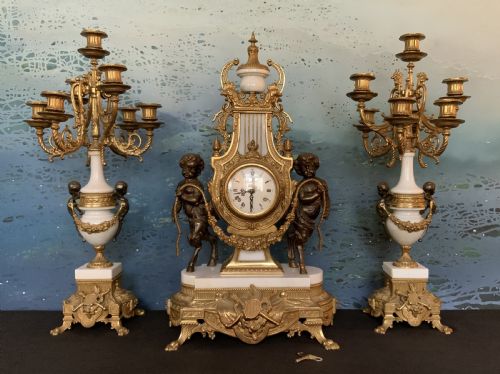
Buyers encounter pairs of candelabra with double or triple arms, standalone candlesticks, and larger three-piece clock sets that integrate central timepieces with flanking light fittings. These decorative objects draw upon historical motifs including Louis XVI style, French Rococo, and Empire designs, often featuring figures such as cherubs or cupids.
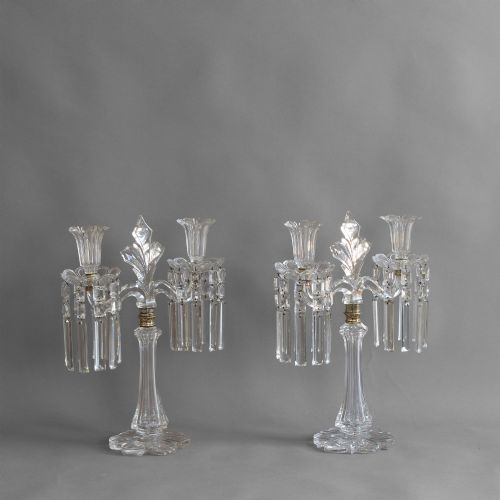
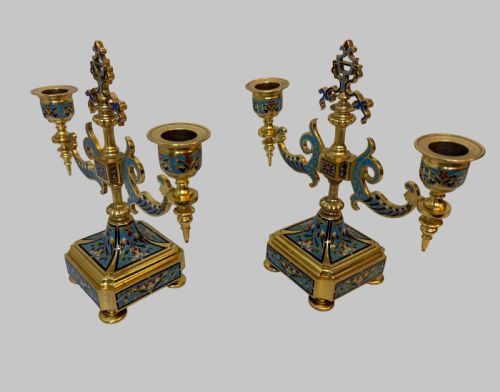
The materials paired with the metalwork include white or green marble, onyx, enamel, and cut glass drops that catch the candlelight. While some items rely purely on cast brass and ormolu, others incorporate patinated bronze and gilt bronze to create varied textural contrasts across the mantelpiece.
How they were made
The manufacture of these pieces relies heavily on bronze casting, fire gilding, and brass fabrication, complemented by stone bases turned from solid blocks of marble or onyx. Artisans cast components in sections before chasing the surfaces by hand to sharpen details on foliate scrolls, figures, and architectural mounts.
Gilt bronze and ormolu finishes receive their characteristic golden lustre through the application of mercury gilding or chemical finishing techniques onto cast bronze bases. Stonework components are polished smooth and fitted precisely with metal bezels, drip pans, and candle sockets.
Several pieces feature mischievous bronze cherubs caught mid-mischief while holding up candle nozzles.
What varies in quality
The choice and execution of secondary materials also divide the range, from simple turned brass to finely veined marble bases fitted with champleve enamel or cut glass lustres. Harmony between the clock and its flanking candelabra in a garniture set indicates higher original workshop ambition.
Thiebaut Freres·Deniere Paris·Vincenti·Japy Freres
The Brass Mantel Candelabra Glossary
- Garniture
- A set of ornamental objects designed to be displayed together on a mantelpiece, typically comprising a central clock flanked by a pair of candelabra or vases. These matched sets create a balanced decorative display.
- Ormolu
- Finely chopped high-zinc brass applied to bronze objects to give a gold-coloured appearance through mercury gilding or similar historic techniques. This finish provides the bright metallic sheen seen on many nineteenth-century pieces.
- Champleve
- An enamelling technique where troughs or cells are hollowed out in the metal surface and filled with vitreous enamel before firing. The resulting coloured patterns decorate the stems and bases of candlesticks.
- Lustre
- A candelabra or candlestick hung with cut glass drops or prisms designed to refract candle illumination. These glass pendants swing around the central nozzle to amplify the ambient light.
Brass Mantel Candelabra: Frequently Asked Questions
What is a clock garniture?
A clock garniture is a decorative matched ensemble featuring a central mantel clock accompanied by two matching side pieces, such as candelabra, vases, or urns.
These three-piece sets were designed to create a balanced, formal display across a fireplace mantel or sideboard in nineteenth-century interiors.
How do I clean gilt bronze?
Gilt bronze surfaces require gentle dusting with a soft, dry brush to remove accumulated particles without disturbing the delicate metallic finish.
Avoid using abrasive metal polishes, chemical solvents, or water, as these substances can strip away the historical ormolu or gilding entirely.
Where should I place a candelabra?
These decorative objects work best positioned on a sturdy fireplace mantel, a credenza, or a large console table where their height and weight remain secure.
Keep them away from direct foot traffic and busy corridors to prevent accidental knocks to the balanced arms and hanging glass prisms.
How do I date these pieces?
Dating relies on identifying stylistic revival periods, construction methods, and maker marks stamped onto the movement backplates or the bronze bases.
Nineteenth-century pieces often incorporate nineteenth-century French styling cues like Louis XVI Revival or Empire motifs alongside cast brass and marble foundations.