




Antique Double Candlestick Holders
These antique double candlestick holders bring dual-light illumination to a room, offering both practical utility and decorative presence.
Antique Double Candlestick Holders
Antique double candlestick holders appear in forms ranging from simple two-branch table candelabra to ornate twin-light designs with paired candle holders and central supports. Buyers seeking these dual-branch pieces will find examples spanning from the seventeenth century through the Victorian and Edwardian eras into the nineteen-thirties.
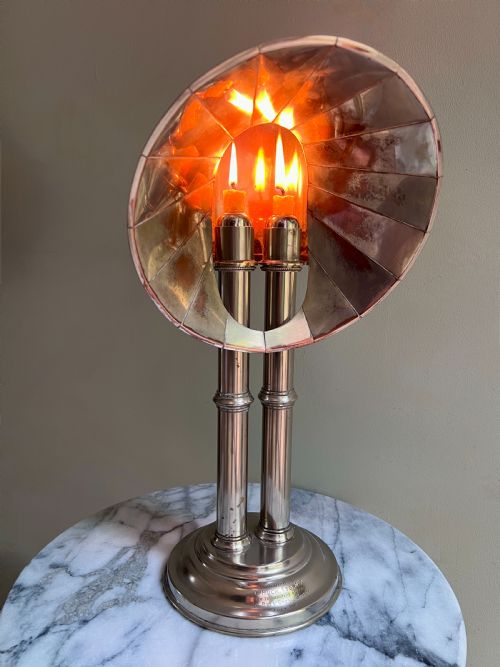
The selection includes matched pairs and individual desk accessories that incorporate candle functions alongside inkwells or reflector shields. Origins stretch across British workshops and continental European centres, displaying styles from French Empire and Jugendstil to Art Deco.
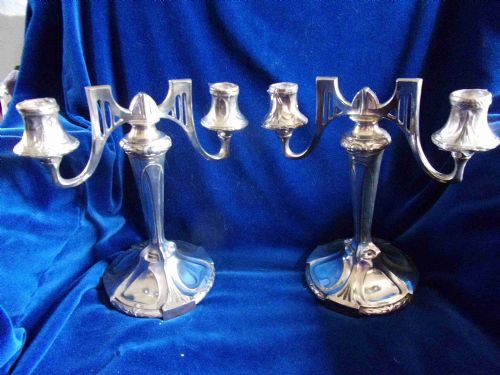
The version most commonly met on this page is the paired double-arm or twin-light candlestick from the nineteenth century, often executed in silver plate, bronze, or brass.
Materials and construction
Metalworking dominates the construction of these items, utilising cast and chased bronze, wrought iron, and brass as structural foundations. Silver plating and sterling silver provide reflective surface finishes, while gilt bronze adds contrasting tone and texture.
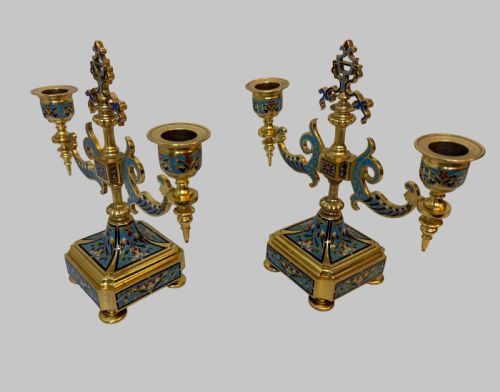
Decorative elements incorporate champleve enamel panels, cut glass components, and spelter figures to enrich the basic metal armature. Components are joined through threading, soldering, or integral casting depending on the period and the workshop responsible.
The documented periods include seventeenth-century wrought iron, nineteenth-century French bronze, Victorian, Edwardian, Jugendstil, and nineteen-thirties Art Deco.
Distinctions in quality
Quality rests upon the crispness of the casting and the depth of the chasing on bronze, brass, and spelter components. Superior pieces exhibit clean junction lines between branches and bases, retaining the intended proportion and balance without visible distortion.
The integrity of surface treatments such as silver plating, gilding, and enamel work separates finer examples from standard production items. Hallmarks on silver items and legible inscriptions or dates add documentary weight that influences standing within the range.
The Antique Double Candlestick Holders Glossary
- Candelabra
- A large branched candlestick designed to hold multiple candles simultaneously. These pieces often feature a central shaft dividing into two or more arms.
- Champleve
- An enamelling technique where troughs are dug into a metal surface and filled with vitreous enamel before firing. This method creates colourful geometric or pictorial patterns across the bronze or brass body.
- Spelter
- A zinc alloy frequently used as a cheaper substitute for bronze in nineteenth-century decorative figures and candle holders. It takes patination and metallic paint finishes well to imitate heavier bronze.
- Jugendstil
- The continental German-language variant of Art Nouveau, prominent around nineteen hundred. It relies on stylized organic lines and floral motifs.
- Reflector
- A polished metal screen positioned behind the candle flame to project extra light forward. These are found on specific nineteenth and early twentieth-century candle lamps.
Antique Double Candlestick Holders: Frequently Asked Questions
What is a double candlestick holder?
A double candlestick holder is a lighting device designed to support two candles at once, typically utilising a branching arm structure or a twin-socket top.
These pieces provide increased illumination compared to single sticks while maintaining a balanced, symmetrical form on a table or desk.
How do I date an antique candle holder?
Dating relies on stylistic clues, manufacturing techniques, materials, and any accompanying hallmarks or dated inscriptions. Nineteenth-century examples often show distinct revival styles or industrial casting marks.
Comparing the construction methods to known period pieces helps narrow down the decade of production.
Were these used for dining tables?
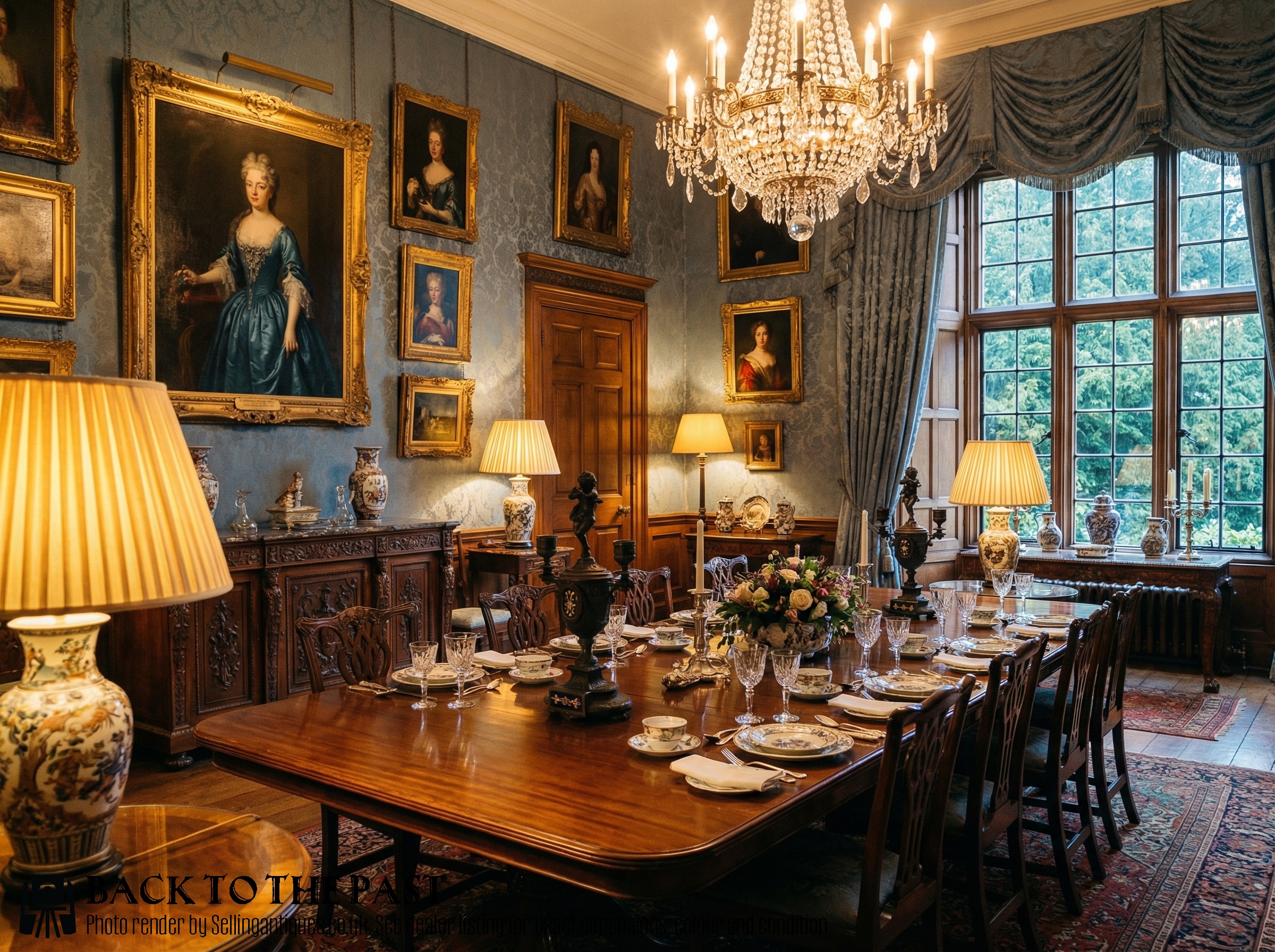
Many double-arm candelabra and table candle holders served primarily in dining rooms and parlours to provide ambient light during meals and evening gatherings.
Smaller desk accessories combined the candle function with inkstands for writing tasks.
How do I clean silver-plated candlesticks?
Silver-plated items require gentle cleaning with a soft cloth and specialised silver polish to avoid wearing through the thin plating layer.
Harsh abrasives and chemical dips should be avoided, particularly around enamel or glass insets.