
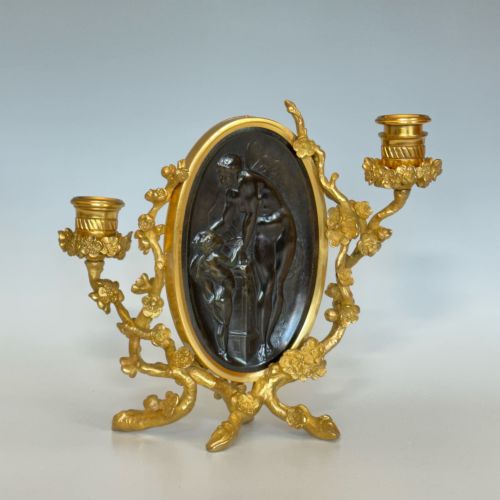


Nineteenth Century Bronze Candelabra
Nineteenth century bronze candelabra combine heavy metal casting with functional branch lighting, bringing classical French and Regency weight to a mantelpiece.
Nineteenth Century Bronze Candelabra
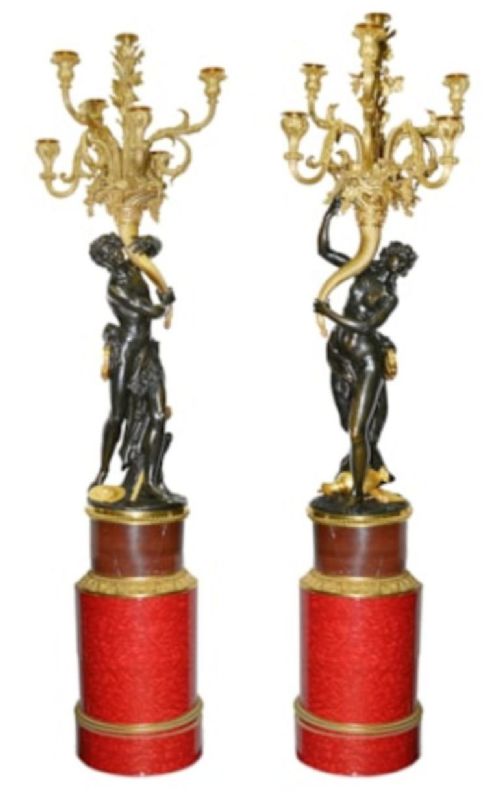
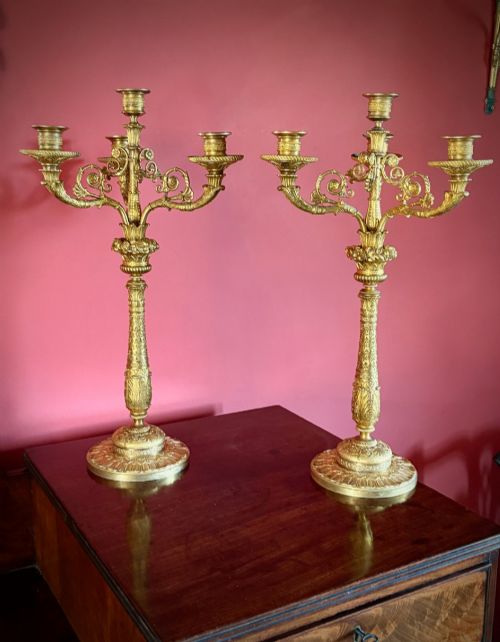
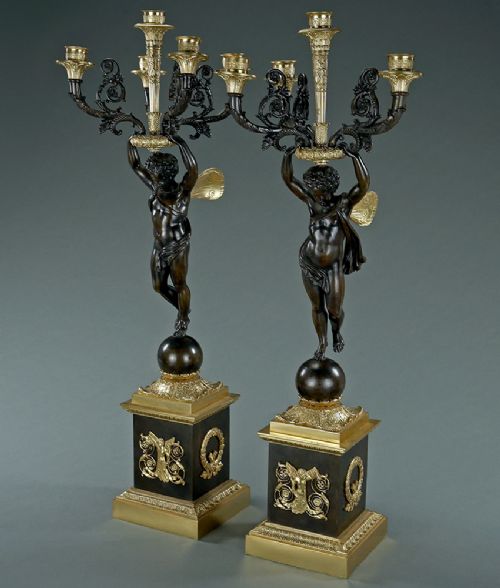
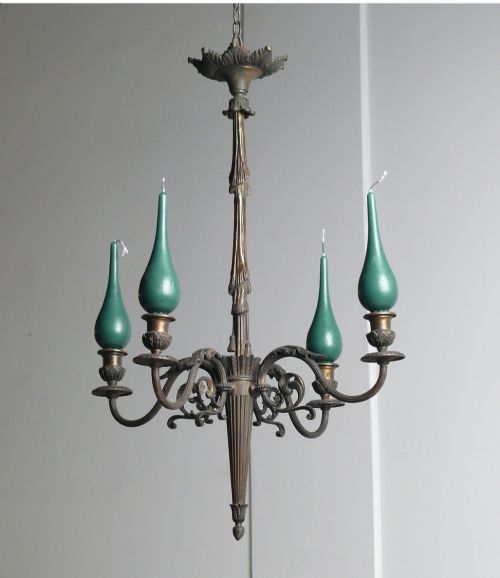
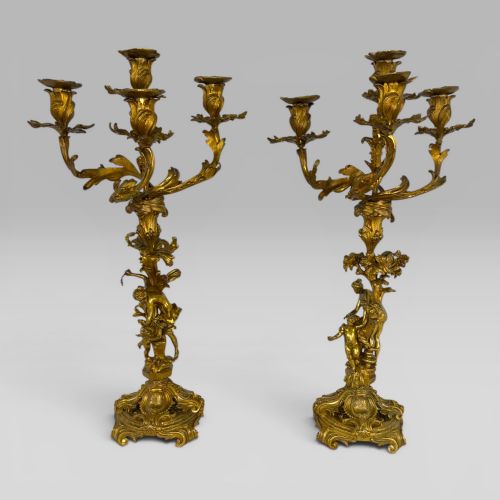
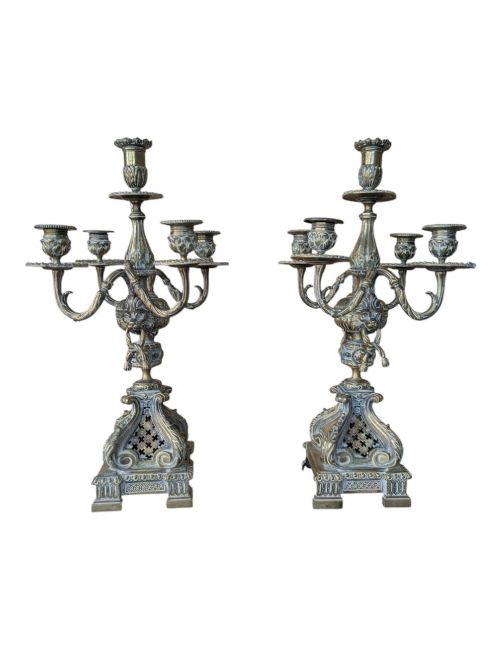
Nineteenth century bronze candelabra are multi-light candle holders designed for formal room illumination, typically standing in matched pairs upon tables or mantelpieces. The forms range from simple three-branch designs to elaborate figural compositions featuring cherubs, classical motifs, and medievalist styles.
French makers dominate the selection, bringing Louis XVI, Régence, and Empire revivals into the physical record alongside English Regency examples. While the core objects are candelabra and candlesticks, related items such as chandeliers, table mirrors, and clock sets also appear across the periods.
Materials and Construction
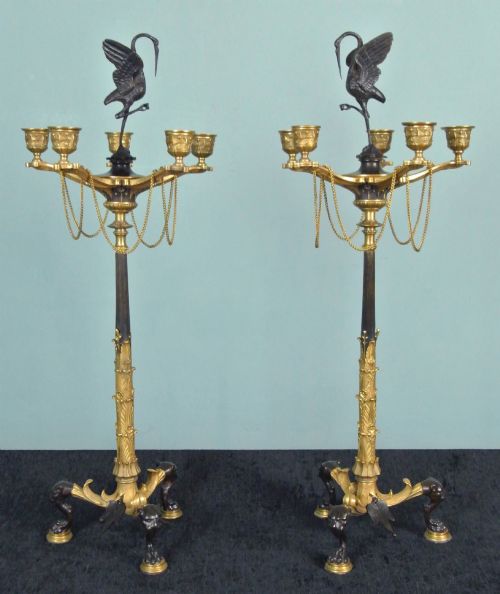
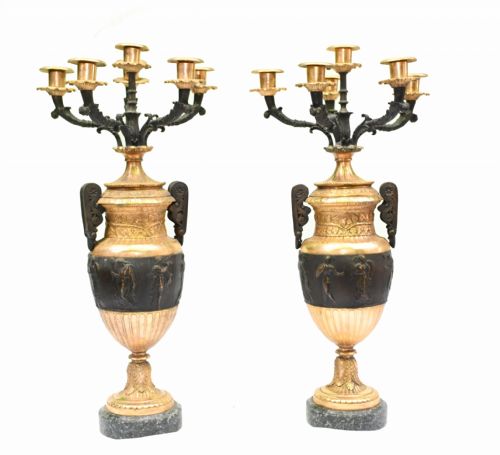
Foundries combined patinated bronze with bright ormolu, applying mercury gilding to brass or bronze bases to create sharp tonal contrasts. Secondary materials like white marble, onyx, slate, enamel, and cut glass frequently provide structural weight and decorative detail to the bases and stems.
Casting techniques allowed intricate figural elements, such as cherubs or scrolling acanthus leaves, to be assembled from multiple chased and fitted components. Adjustable arms and multi-light branches required precise metalworking to ensure stability under the weight of several candles.
Materials recorded across the listings include gilt bronze, ormolu, white marble, onyx, slate, enamel, and cut glass.
Evaluating Quality
The refinement of the chasing and the crispness of the bronze casting separate standard production from exceptional workshop output. Superior pairs display deeply detailed figural carving and careful hand-finishing across every leaf and facial expression.
The integration of contrasting materials, such as finely polished marble or crisp ormolu mounts against dark patinated bronze, indicates higher ambition in design. Heavier overall weight and secure, seamless joints between the branches and the central stem reflect superior construction standards.
Barbedienne·Thiebaut Freres·H Luppens Paris
The Nineteenth Century Bronze Candelabra Glossary
- Ormolu
- Gilt bronze produced by applying a gold and mercury amalgam to a bronze object and heating it until the mercury vaporised. This technique created a durable, rich golden surface characteristic of fine French decorative arts.
- Patinated bronze
- Bronze that has been chemically treated to alter its surface colour, usually achieving deep brown or dark green tones. This finish contrasts sharply with bright ormolu highlights on nineteenth-century lighting.
- Cloisonné
- An ancient enamel technique where thin metal wires are soldered to a metal base to create compartments filled with coloured glass paste. These enamelled sections are then fired and polished flat.
- Regency
- An English design period spanning the early nineteenth century, drawing heavily on Greek, Roman, and Egyptian classical archaeology. Pieces from this era often utilise clean bronze forms paired with gilt metal mounts.
Nineteenth Century Bronze Candelabra: Frequently Asked Questions
How do I clean nineteenth century bronze candelabra?
Dust the surfaces gently with a soft, dry brush to prevent dirt accumulation in the recessed chased details.
Avoid chemical polishes entirely, as abrasive liquids will strip the original patination and damage the delicate ormolu gilding.
Were these candelabra wired for electricity?
Most nineteenth century bronze candelabra were manufactured strictly for wax candles before widespread domestic electrification.
Some examples have been adapted for electric lamps by later owners, though many survive in their original unaltered candle-holding configuration.
How can I distinguish French from English pieces?
French production often leans towards heavier figural ornamentation, incorporating cherubs and elaborate Empire or Louis XVI revival motifs in ormolu and patinated bronze.
English Regency examples frequently display more austere classical lines, relying on restrained bronze and ormolu contrasts.