


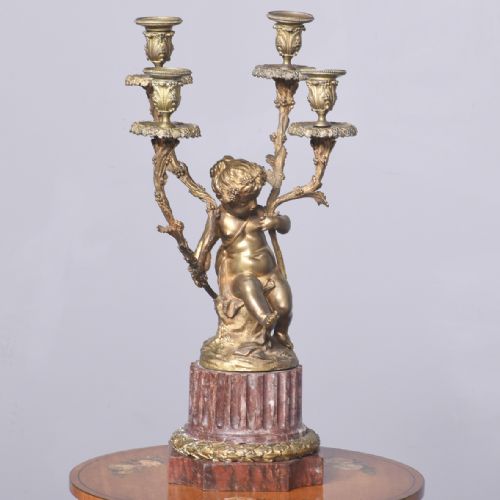


Putti Cherub Candle Holders
Putti cherub candle holders combine classical mythology with domestic illumination, bringing sculptural figures of winged infants holding light.
Putti Cherub Candle Holders
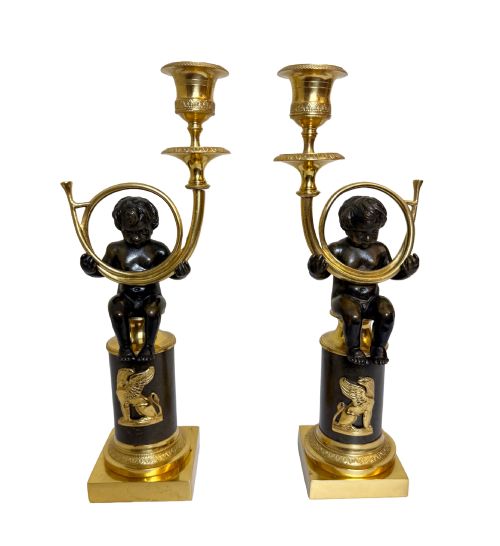
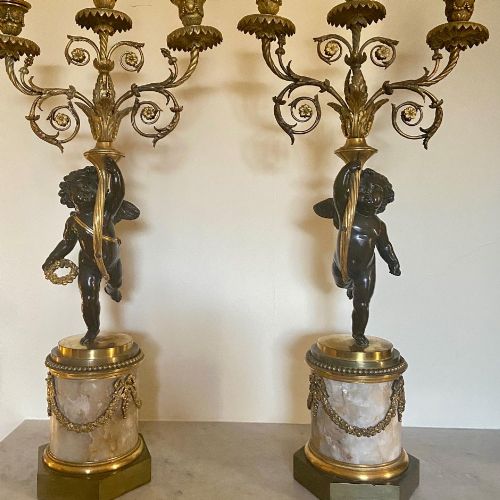
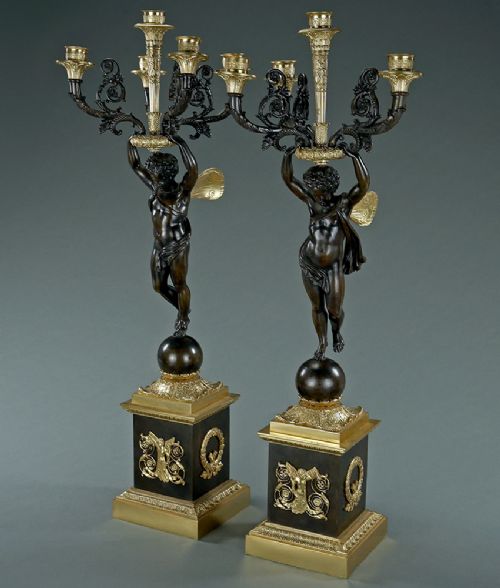
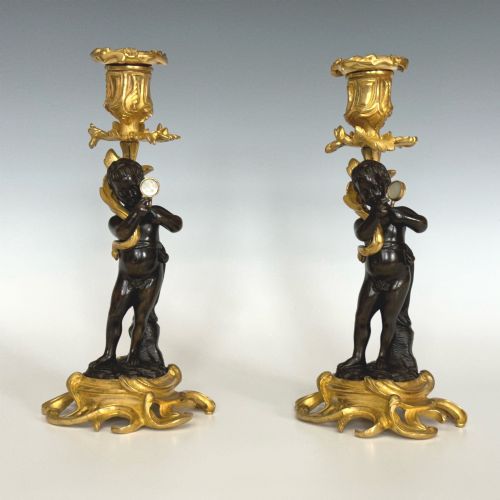
Putti cherub candle holders take the form of winged figures rendered in bronze, porcelain, and marble, appearing frequently as pairs of candlesticks or multi-arm candelabra from the eighteenth and nineteenth centuries.
Buyers seeking putti cherub candle holders encounter French Empire and Louis XVI styles alongside Rococo Revival designs, where these mythological infants support single candles or branch into multiple lights.
The objects serve primarily as table and mantel ornamentation, combining functional illumination with the sculptural traditions of European metalwork and ceramic manufacture.
How They Were Made
Foundry workers utilised bronze casting, mercury gilding for ormolu, and patination techniques to create metallic figures mounted upon marble or fluorspar bases.
Ceramic examples employ porcelain bodies, including blanc de chine and enamel decoration, shaped through factory moulding processes during the eighteenth and nineteenth centuries.
Listings feature eighteenth-century Georgian pieces alongside nineteenth-century French Empire and Louis XVI revival designs.
What Varies in Quality
The refinement of the chasing upon cast bronze figures determines the clarity of hair, facial expression, and wing feathering.
The integration of materials, such as the stability of the mount between a bronze putto and its marble or giltwood base, distinguishes workshop standards.
Chelsea·Minton·Triebner ENS and Eckert Volkstedt·Sitzendorf
The Putti Cherub Candle Holders Glossary
- Putto
- A plump, naked winged infant figure derived from classical art. These figures populate Renaissance and later decorative arts.
- Ormolu
- Ground gold applied to a bronze base using a mercury amalgam. This technique produces a bright golden surface common in French decorative metalwork.
- Candelabra
- A branched candlestick holding multiple lights. These objects range from twin-light versions to large five-light arrangements.
- Fluorspar
- A halide mineral prized for its coloured banding. This material provides decorative bases for bronze figures.
- Blanc de chine
- A white porcelain glaze developed in China and emulated by European factories. It highlights the smooth contours of ceramic figures.
Putti Cherub Candle Holders: Frequently Asked Questions
What is a putto candle holder?
A putto candle holder is a figural support depicting a winged infant holding a socket or branch for candles. These pieces draw on classical motifs revived during the eighteenth and nineteenth centuries.
They appear in materials including bronze, ormolu, and porcelain, functioning as both lighting and decorative sculpture.
How do I date these items?
Dating relies on stylistic indicators such as Louis XVI revival proportions, casting methods, and material combinations like patinated bronze on marble bases. Examining the underside and wear patterns helps place them in the nineteenth or eighteenth century.
Maker marks on porcelain examples or foundry stamps on metal further clarify the period of manufacture.
Where were they placed?
These items stood upon mantelpieces, desks, and side tables within nineteenth-century drawing rooms and salons. Pairs often flanked clocks in garniture sets.
Their dual function provided ambient light and displayed sculptural taste.
What distinguishes candelabra from candlesticks?
Candlesticks support a single candle upon a single shaft. Candelabra feature branched arms that support multiple candles from one central stem.
Both forms utilise cherub figures as the primary vertical support.