
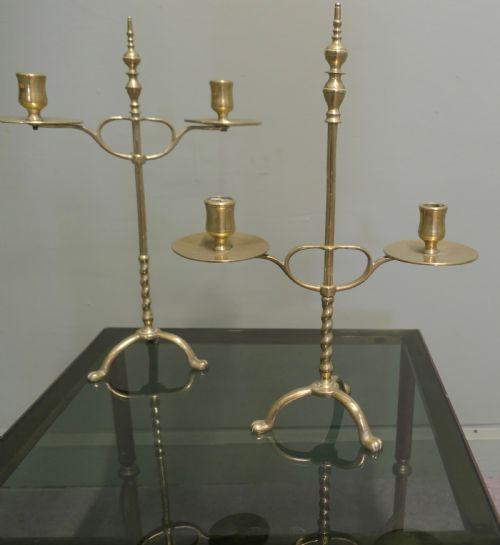


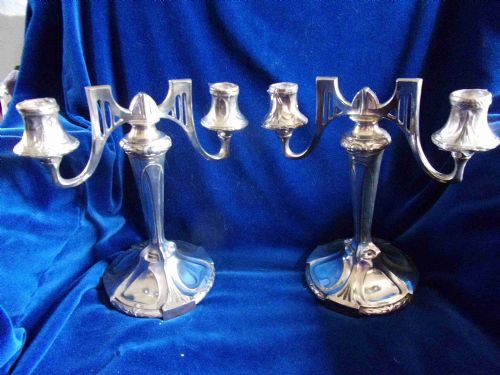


Pair Twin Light Candlesticks
Pair twin light candlesticks bring balanced illumination to a room, offering symmetrical metalwork designed to hold multiple candles securely.
Pair Twin Light Candlesticks
Pair twin light candlesticks provide dual illumination from a single matching set of holders, often featuring double arms or branches. When searching for pair twin light candlesticks, collectors typically encounter examples spanning the nineteenth and twentieth centuries in forms ranging from simple brass desk lamps to elaborate gilt bronze candelabra.
The selections on this page incorporate diverse styles such as Arts and Crafts, Victorian, Jugendstil, and Neoclassical designs. These pieces often function as candelabras or candleholders, manufactured in materials from sterling silver to patinated bronze and marble.
How they were made
Makers utilised metals like sterling silver, brass, gilt bronze, and silver plate, frequently casting or hand-wroughting the components into complex shapes. Bronze and spelter figures were often patinated, gilded, or combined with marble bases to create sturdy foundations for multiple candle nozzles.
Techniques varied from the hand-hammered surfaces seen in Arts and Crafts pieces to the precision casting of ormolu and Renaissance Revival figural works. Silver pieces often incorporate standard hallmarks and applied arms to support twin lights securely.
What varies in quality
Quality in pair twin light candlesticks rests upon the crispness of the casting, the integrity of the joins between arms and stems, and the weight of the base materials. Heavier metals and well-defined figural details distinguish superior workshop output from simpler production pieces.
The preservation of original patination, gilding, or silver plating also dictates the standing of an item. Hand-wrought elements and clear hallmarks indicate careful craftsmanship by known makers or dedicated silversmiths.
Elkington and Company·Robert Edgar Stone
The Pair Twin Light Candlesticks Glossary
- Candelabra
- A large branched candlestick holding multiple candles or lights. These fixtures often feature removable branches to convert into standard single candlesticks.
- Ormolu
- Finely ground high-carat gold-copper mercury gilding applied to bronze objects. This technique creates a rich golden finish popular in French and revival decorative arts.
- Spelter
- A zinc alloy frequently used as a cheaper substitute for bronze. It takes patination well to imitate heavier metals in decorative Victorian pieces.
- Jugendstil
- The continental German-language variant of Art Nouveau. It emphasises flowing organic lines and natural motifs popular around the turn of the twentieth century.
Pair Twin Light Candlesticks: Frequently Asked Questions
How do I clean silver candelabras safely?
Silver candelabras require gentle cleaning with a soft cloth and specialised silver polish to preserve hallmarking and fine details. Avoid harsh abrasive substances that can wear down thin silver plate or sterling surfaces.
Store them away from direct sunlight and damp environments to prevent tarnishing and degradation of any internal weighting materials.
Can I convert these candelabras for electricity?
Many twin light candelabras and candleholders can be adapted for electrical wiring by professional conservators. This process usually involves running a discreet cord through the central stem without damaging the original metalwork.
Reversible conversions help maintain the antique integrity of the piece while allowing modern use as table lamps.
How do I date a pair of brass candlesticks?
Dating brass pair twin light candlesticks involves examining the casting methods, base construction, and stylistic indicators such as Arts and Crafts hand-hammering or Jugendstil curves. Tool marks and assembly techniques often reveal whether a piece dates to the nineteenth or twentieth century.
Comparing the proportions and ornamentation to documented period styles helps narrow the manufacturing era.