



Bronze Table Candelabra
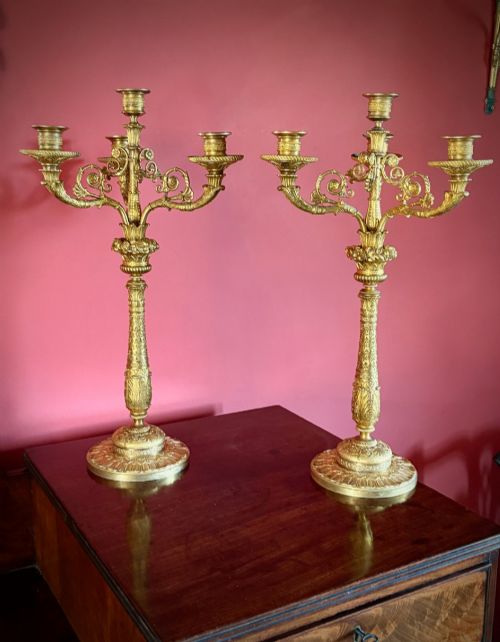
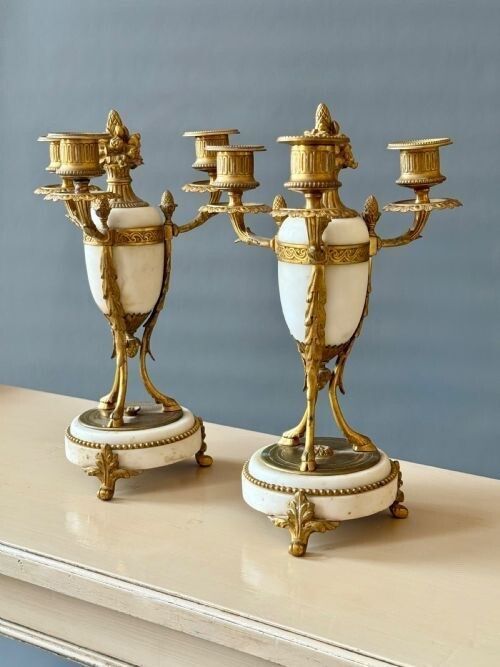
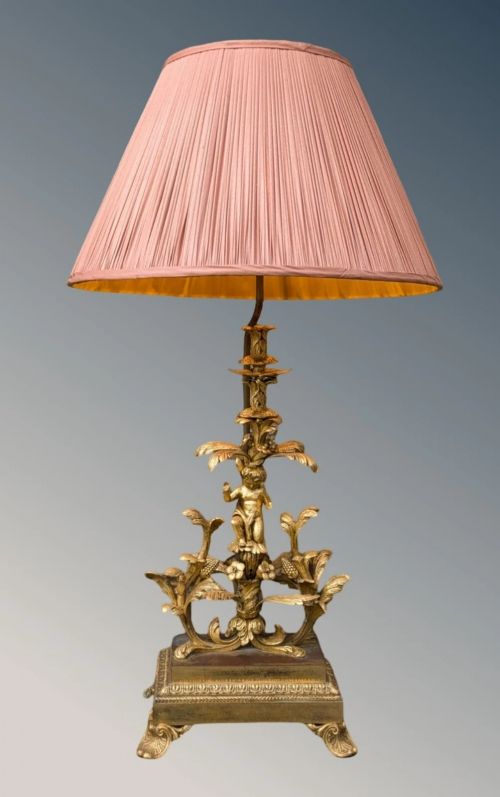
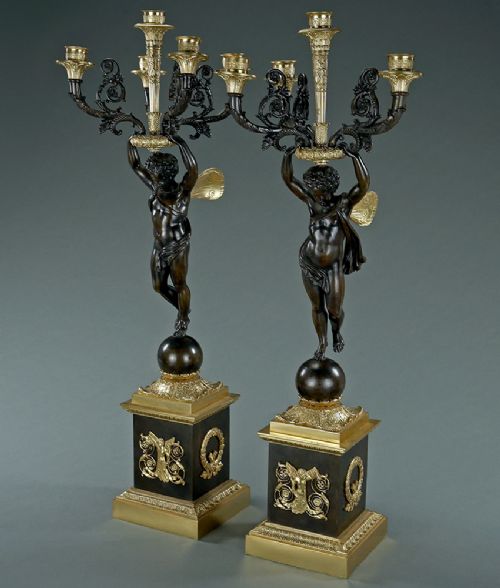
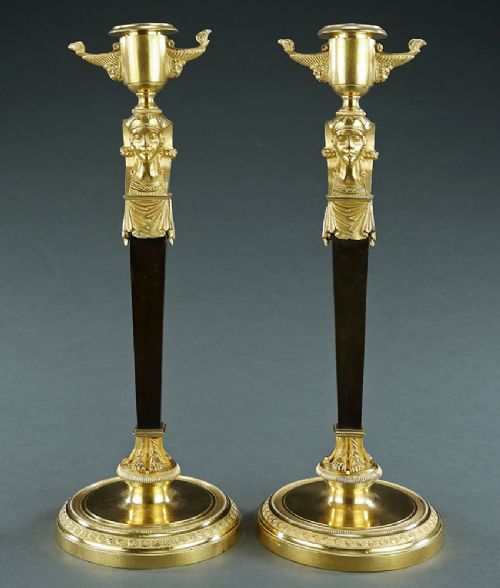
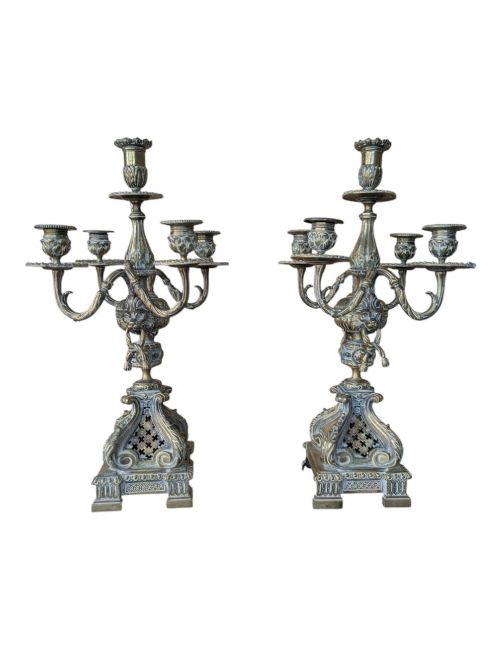
These bronze table candelabra bring structured light and sculptural weight to a room, drawing the eye with their polished surfaces and classical forms.
How they were made
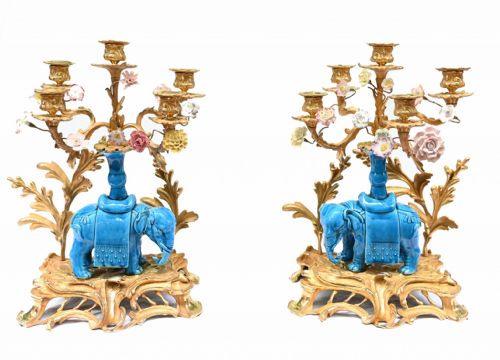
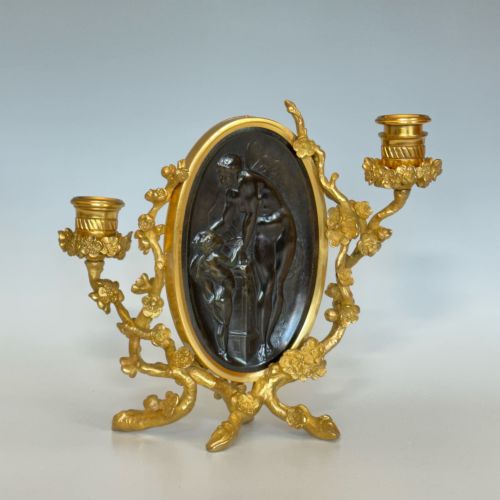
The construction of these pieces relies on cast bronze components, often finished with mercury gilt or ormolu to create brilliant golden surfaces contrasting against dark patinated bronze. Artisans shaped the metal through detailed casting and chiselling, assembling individual branches, nozzles, and drip pans into complex multi-light structures. Many examples incorporate turned or carved white marble plinths, fitted tightly with bronze mounts and feet.
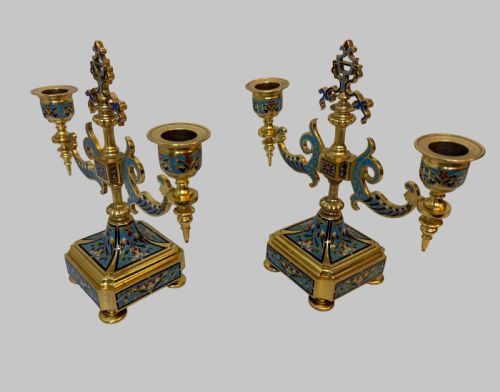
Decoration often extends to champlevé enamel work and applied porcelain elements, requiring diverse workshop specialisms to combine glass, ceramic, and metal. Secondary materials such as crystal drops and brass pins hold the complex assemblies together. Surviving pieces frequently show evidence of hand-chasing on the bronze, sharpening the cast details of leaves, drapery, and figurative elements.
What varies in quality
The treatment of the metal surfaces dictates the visual hierarchy of the range, with thick, durable ormolu gilding holding its warmth far better than thin, washed applications. Furthermore, the weight and selection of accompanying materials, such as dense solid marble bases rather than lighter substitutes, separate ambitious workshop output from standard commercial production.
Materials recorded on this page include gilt bronze, ormolu, patinated bronze, white marble, porcelain, champleve enamel, and crystal.
Pierre Philippe Thomire·Rabiat·Thiebaut Freres·Auguste Cain
The Bronze Table Candelabra Glossary
- Ormolu
- Gilded bronze produced by applying a mercury and gold amalgam to a bronze base and heating it to drive off the mercury. This technique creates a rich, lasting golden finish characteristic of French decorative metalwork.
- Patinated bronze
- Bronze treated with chemical solutions to produce a darkened surface colour, ranging from deep brown to black. This dark tone provides visual contrast against bright ormolu mounts.
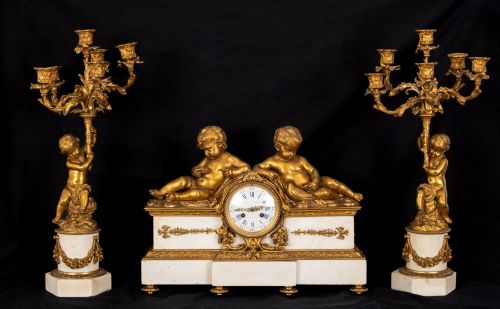
- Clock garniture
- A set comprising a mantel clock flanked by matching decorative objects such as candelabra or urns. These matched suites formed unified decorative schemes for nineteenth-century interiors.
- Champlevé
- An enamelling technique where troughs or cells are hollowed out of the metal surface and filled with vitreous enamel powder before firing. The resulting coloured patterns sit flush with the surrounding metal partitions.
- Torchère
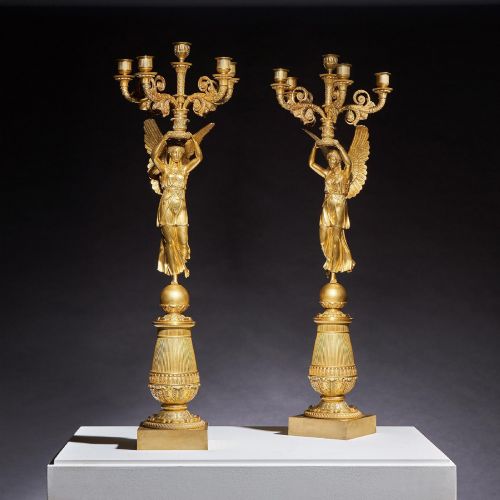
- A stand or candelabrum designed to carry a torch or multiple candle branches, often modelled as a classical figure holding a light source.
Bronze Table Candelabra: Frequently Asked Questions
Were bronze candelabra electrified later?
Many nineteenth-century pieces have undergone conversion to electricity to function as table lamps while retaining their original aesthetic form. This adaptation often involves running internal wiring through the central column without damaging the historic metalwork.
Collectors often weigh the original candle-burning configuration against the practical convenience of wired table lighting when selecting a pair for modern use.
How do I identify French Empire style?
French Empire pieces rely on strict symmetry, classical military motifs, and references to antiquity such as Greco-Roman figures and Egyptian revivals. The metalwork uses sharp contrasts between dark patinated bronze and bright burnished ormolu.
These designs date primarily from the early nineteenth century and project a heavy, monumental presence compared to the lighter, curving lines of later revival styles.
What is a clock garniture set?
A clock garniture is a coordinated set featuring a central mantel clock accompanied by matching side pieces like candelabra or vases. These suites were designed to sit together on a fireplace mantel or console table as a unified decorative display.
Matching materials such as white marble, ormolu, and bronze tie the components of the set together visually.
How should I clean gilded bronze?
Gilded bronze surfaces require gentle dusting with a soft brush or a dry cloth to prevent the accumulation of dirt in recessed chased details. Water and chemical cleaning agents can strip delicate ormolu finishes or damage underlying patination.
Professional conservation advice is recommended if deeper cleaning becomes necessary to address heavy tarnish or accumulated grime.