


Empire Candle Holders
Empire candle holders bring neoclassical symmetry and heavy metalwork into a room.
Empire Candle Holders
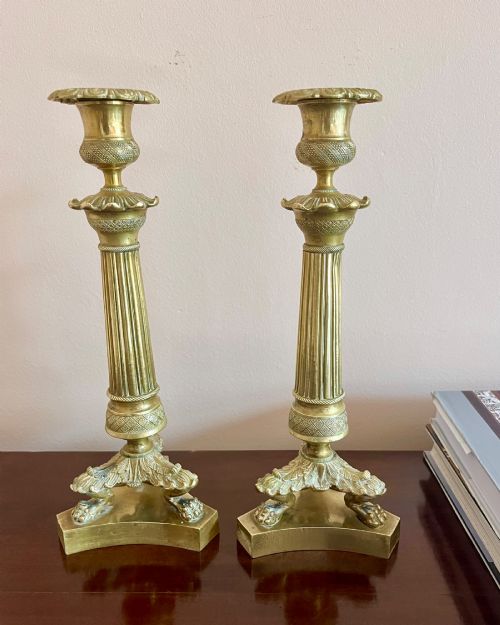
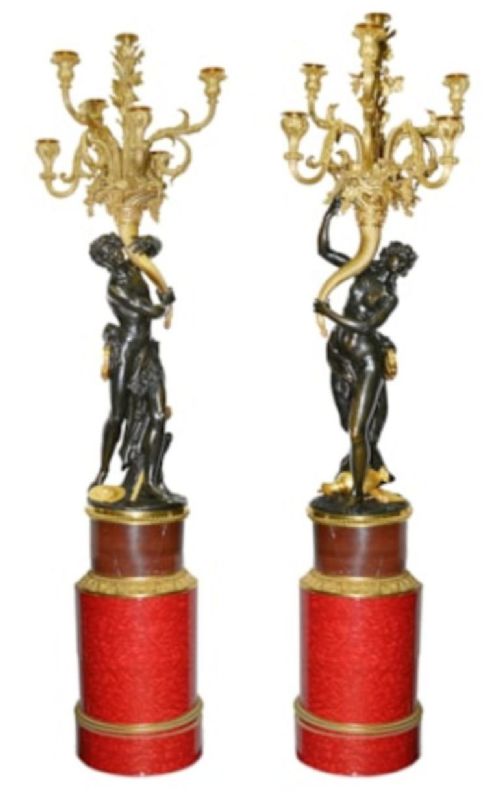
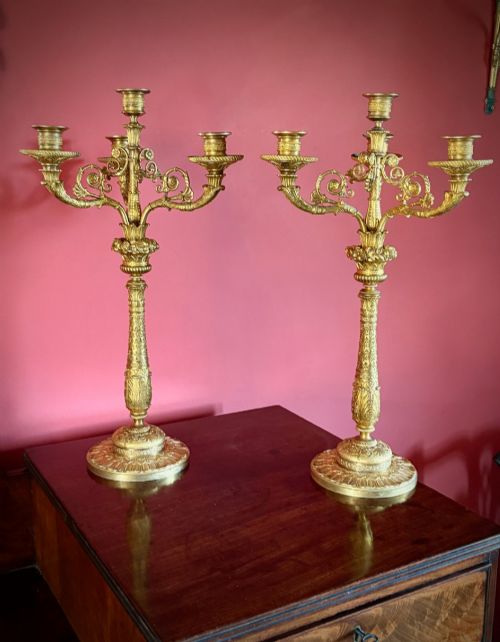
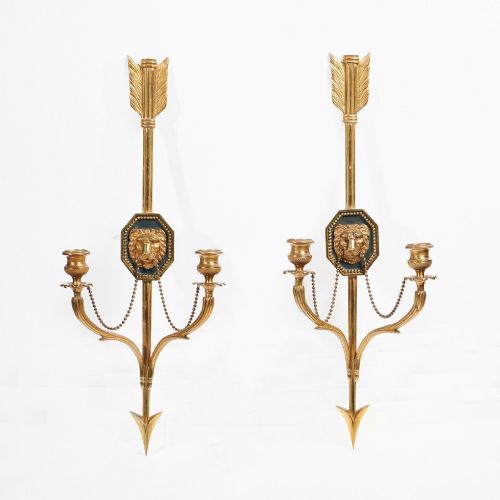
Empire candle holders combine heavy cast metalwork with classical motifs drawn from Roman, Greek, and Egyptian history. These pieces arrive in forms ranging from simple single-light sticks to multi-branched candelabra and wall sconces.
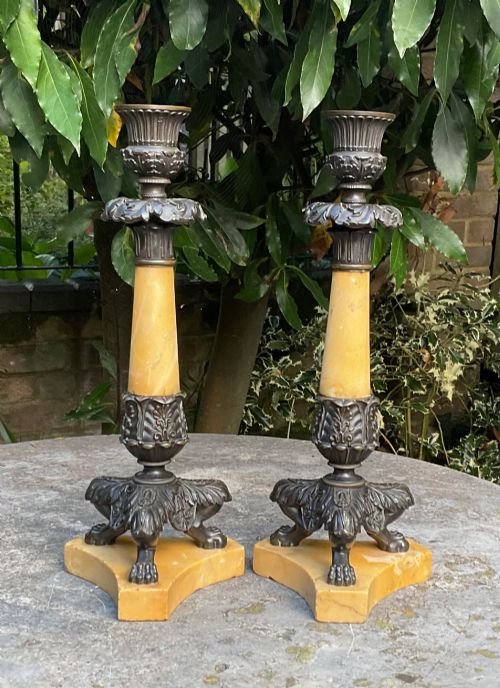
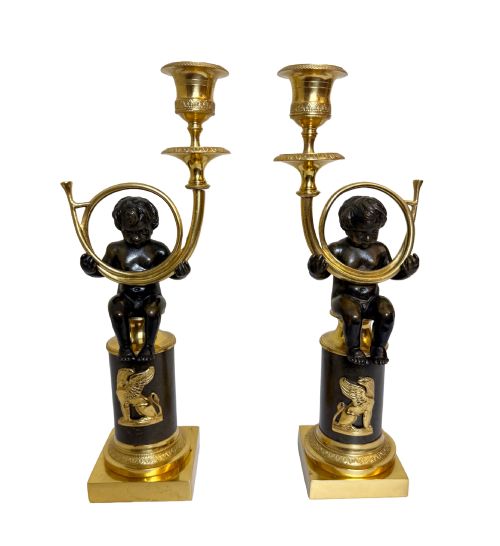
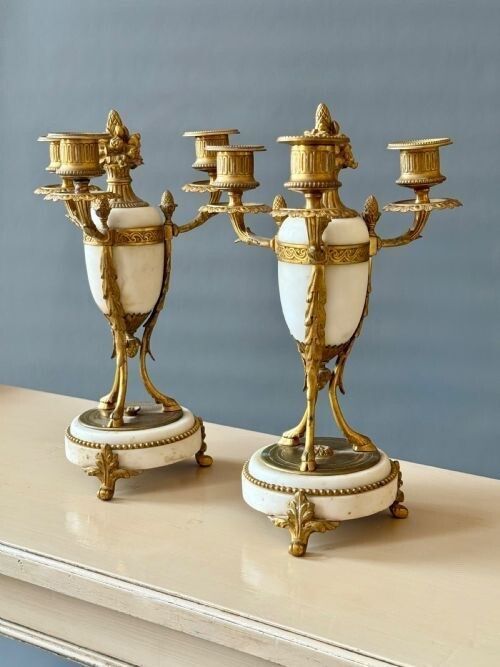
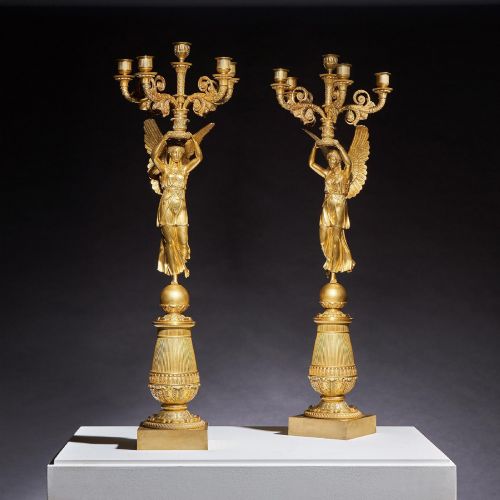
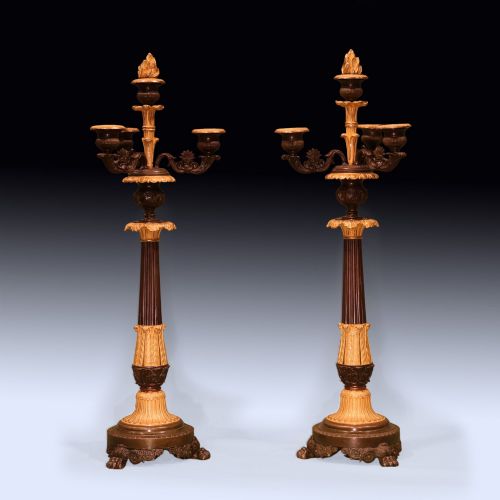
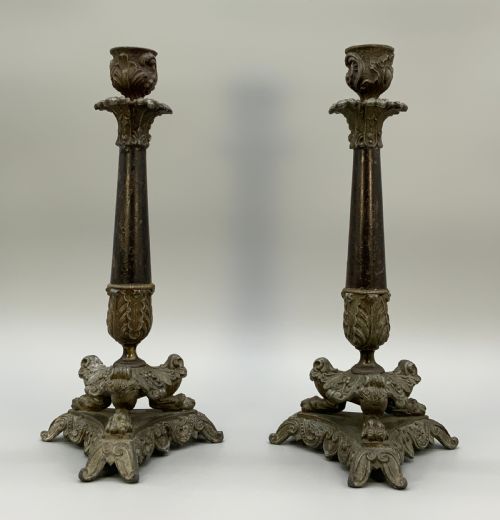
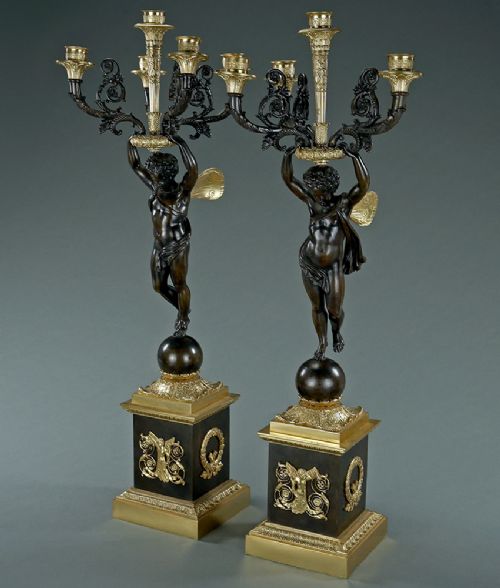
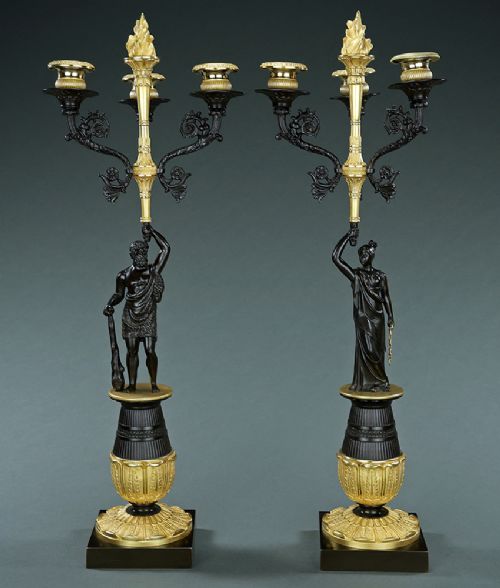
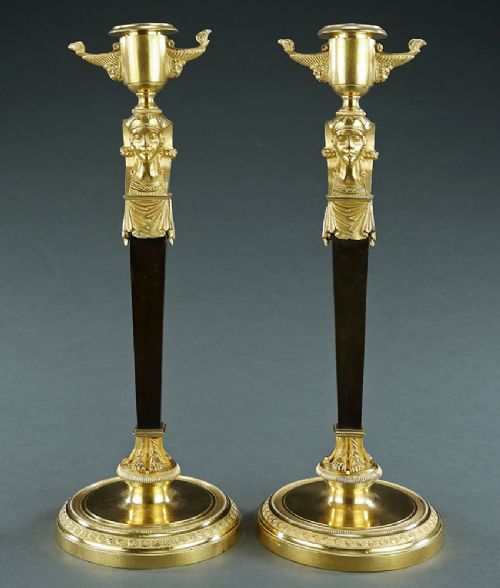
The version most commonly met on this page is a nineteenth-century pair cast in France or England during the Regency or Empire periods. Many pair patinated bronze figures with gilded highlights, mounted directly onto white, sienna, or black marble plinths.
Makers and designers drew upon classical architecture, military triumphs, and mythological figures like Hercules or winged putti. Buyers select these objects to anchor a mantelpiece or sideboard with distinct period weight and proportion.
Materials and technique
Foundry workers cast components in bronze, brass, or gilt metal using traditional methods before hand-chasing the surface details. Patinated bronze sections received chemical treatments to achieve a dark, matte finish that contrasts sharply against bright gilded highlights.
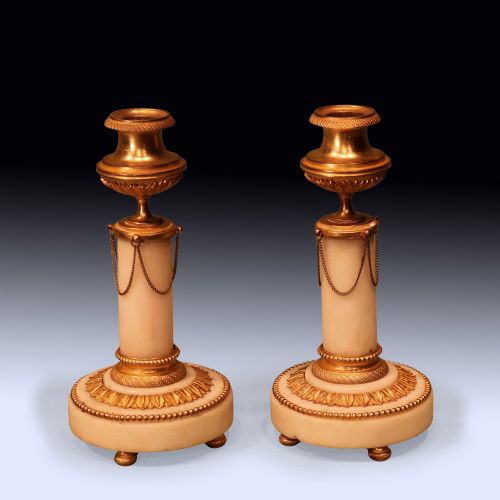
Ormolu, or gilded bronze, required an application of mercury and gold amalgam heated to bond the precious metal to the bronze underneath. Craftsmen then mounted these metal assemblies onto turned marble or onyx bases, securing them with internal threaded rods.
The object forms recorded in this inventory include multi-branch candelabra, single candlesticks, wall sconces, inkstands, and decorative tazzas.
Evaluating quality
The distinction between standard production and top-tier work rests entirely in the crispness of the chasing and the depth of the gilding. Superior examples retain microscopic detail in facial expressions, drapery folds, and acanthus leaves, whereas lesser pieces show softened edges from worn moulds.
Weight and structural integrity also separate the tiers. High-grade items use thick, heavy gauges of bronze and genuine solid marble rather than thin plated metals or composite stone bases.
Pierre Philippe Thomire·Rabiat·Auguste Cain
The Empire Candle Holders Glossary
- Ormolu
- Gilded bronze produced by applying a mercury-gold mixture to a bronze base and firing it in a kiln. This technique yields a warm, durable finish characteristic of the period.
- Patinated bronze
- Bronze that has been treated with chemical solutions to darken the surface. This dark tone provides a visual contrast to bright gilt elements.
- Candelabra
- A branched candlestick holding multiple lights on separate arms. These pieces often feature removable top sections for easier cleaning.
- Plinth
- The flat base block upon which a candlestick or figure stands. They frequently employ white marble, sienna marble, or onyx.
- Chasing
- The manual process of refining a cast metal surface using small punches and hammers. Master metalsmiths used this technique to add texture and sharpen details after casting.
Empire Candle Holders: Frequently Asked Questions
How do I clean ormolu candle holders?
Dust gently with a soft, dry brush to prevent dirt buildup in recessed areas. Avoid water, abrasive cloths, and chemical polishes that strip away the historic mercury gilding.
Inspect the joints periodically to ensure the mounting screws remain secure. Handle the pieces by their heavy bases rather than delicate arms or branches to avoid bending.
Were these wired for electricity later?
Many nineteenth-century lighting pieces have undergone conversion for modern lamps at some point in their history. Examine the base or central stem for drilled holes or threaded channels.
Unconverted examples retain their original solid undersides and internal tie rods. Buyers frequently choose whether to display them with candles or restore them to wired lamps.
How do I tell Regency from Empire style?
Regency design reflects English interpretations of classical antiquity during the early nineteenth century. These items often incorporate nautical motifs, patinated bronze, and animal forms.
French Empire style tends toward grander military symbols, Egyptian Revival elements, and extensive use of ormolu. Both share a reliance on strict symmetry and classical proportions.
Why are most pieces offered as pairs?
Candle holders and candelabra were manufactured in balanced sets to flank fireplace mantels, sideboards, or mirrors in formal rooms. Surviving pairs command greater interest because matching pieces often became separated over centuries of use.
Inspect the bases and casting marks to confirm that both items share the same workshop origin. Minor variations in hand-chasing indicate individual artisan work even within matched sets.