

Ormolu and Bronze Candelabra
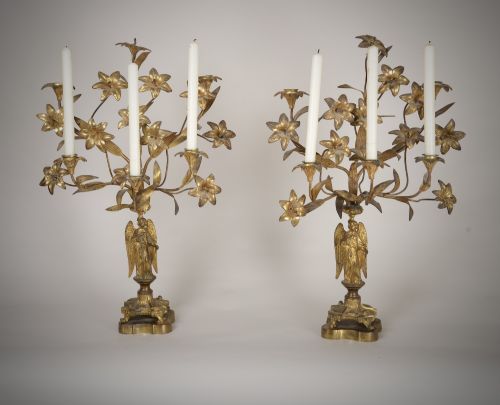
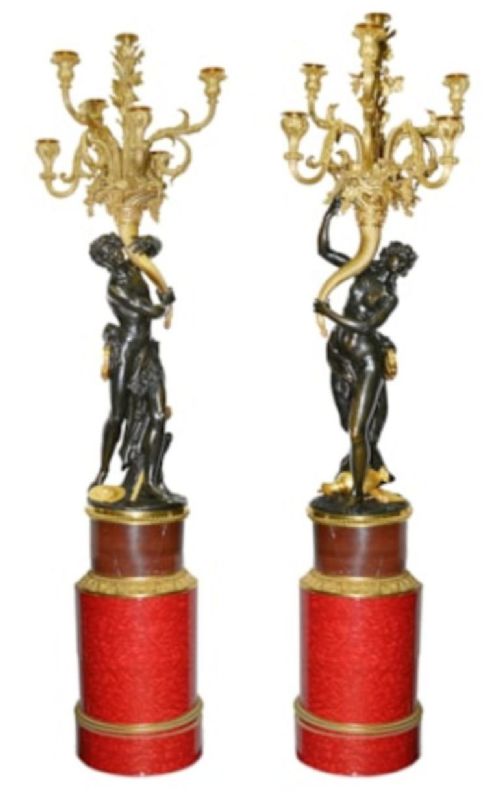
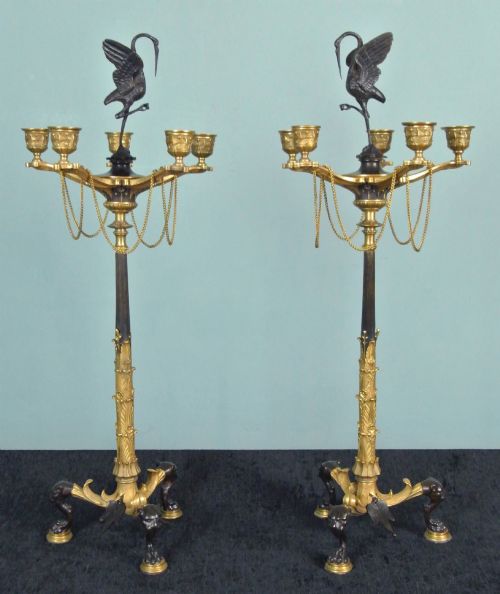
When choosing ormolu and bronze candelabra, you select from nineteenth-century lighting pieces that combine polished golden metal with dark cast figures.
Ormolu and Bronze Candelabra
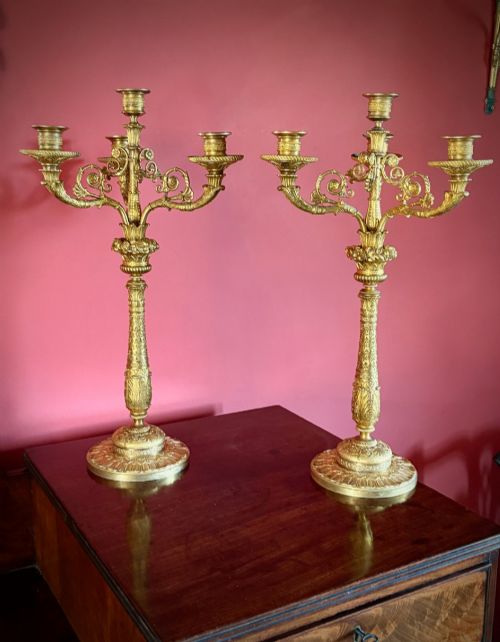
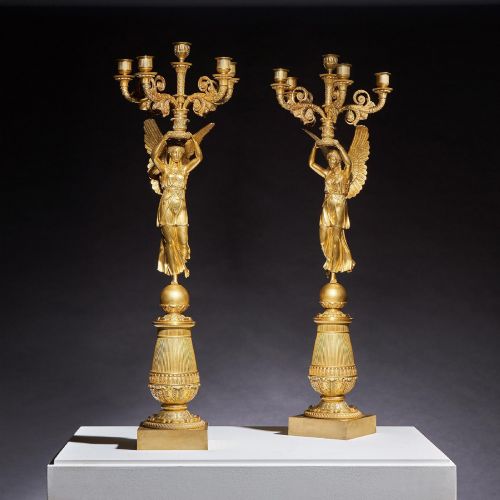
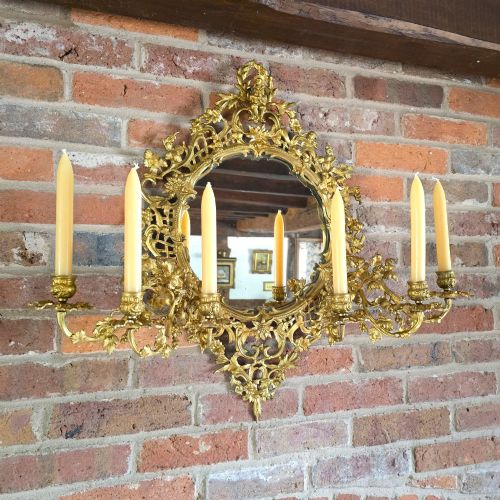
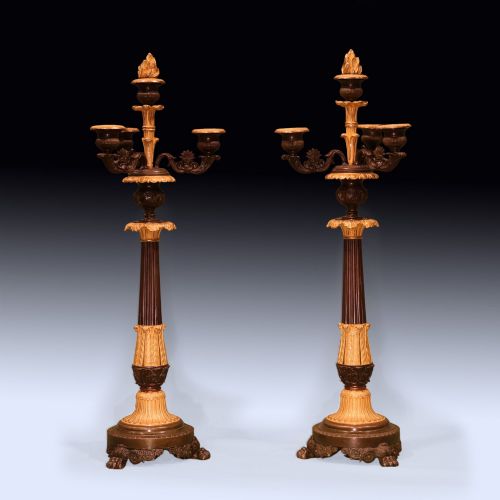
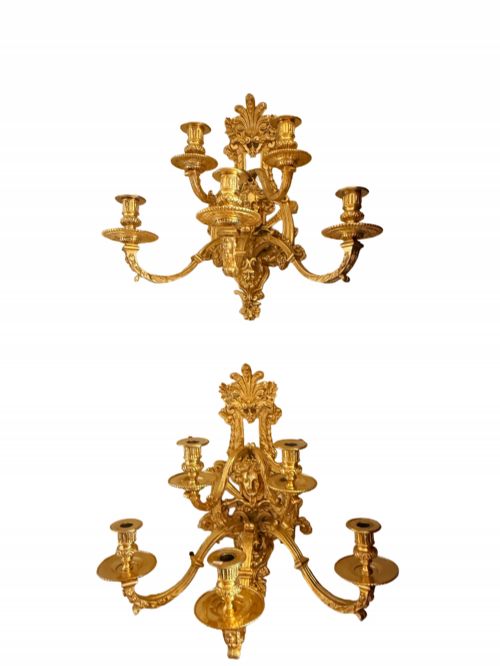
Buyers exploring ormolu and bronze candelabra encounter heavy, multi-branch lighting fixtures designed for tables, mantelpieces, and walls. Most available pieces date from the nineteenth century, drawing heavily on French Empire, Louis XVI, and Rococo revival styles.
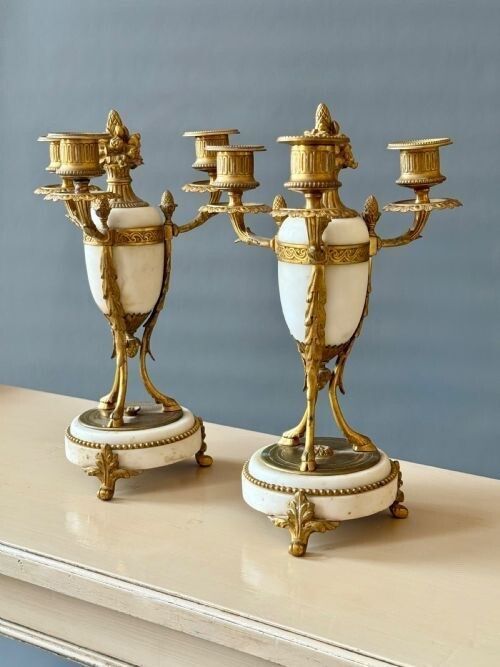
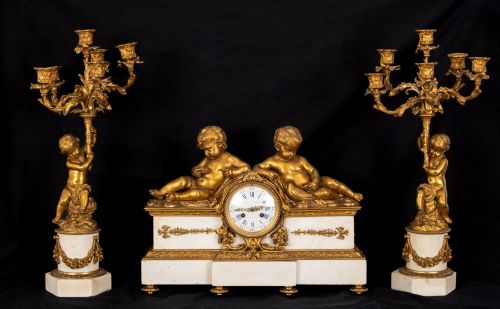
The selections frequently appear in matched pairs, often accompanied by marble bases or integrated into larger clock garniture sets with matching candelabras and mantel clocks.
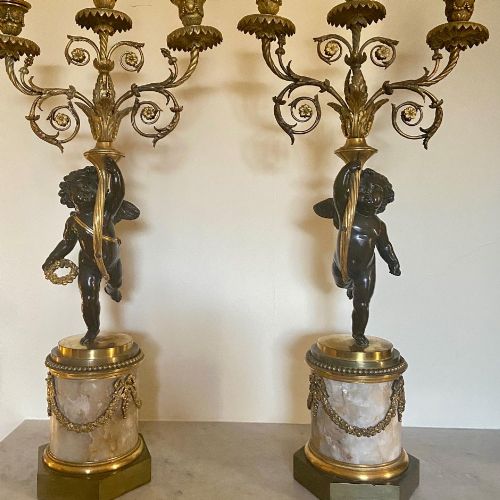
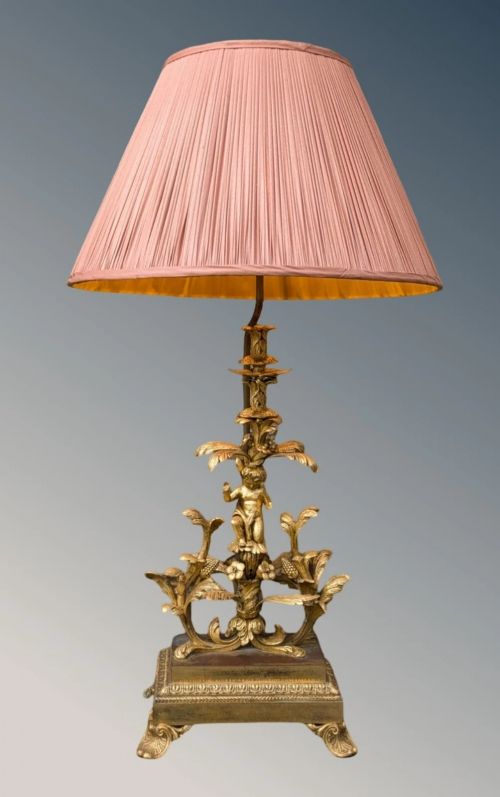
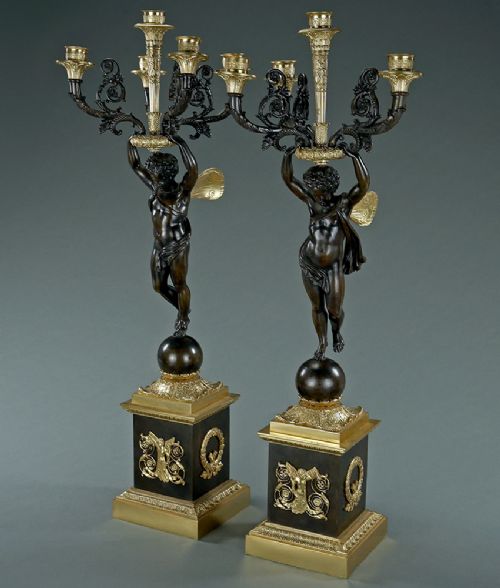
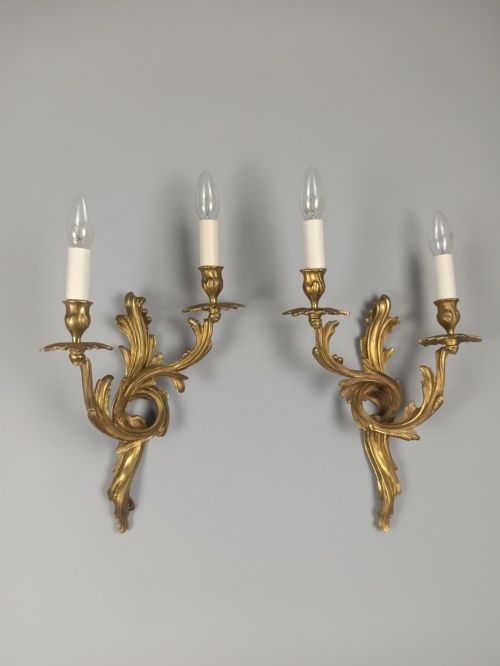
Forms range from simple twin-branch candleholders to elaborate figural compositions featuring putti, mythological subjects, and intricate acanthus scrolls.
How they were made
The contrasting finish known as ormolu involved applying a mercury gilding process to bronze, creating a bright golden layer that highlights the dark, patinated bronze components.
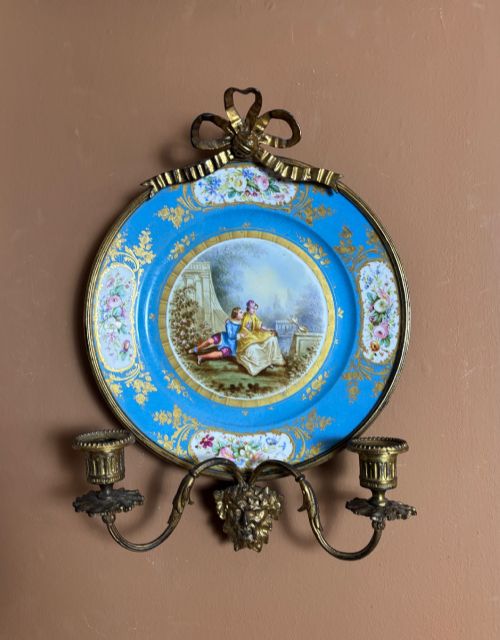
Many nineteenth-century examples incorporate additional materials such as white marble plinths, carved fluorspar, enamel accents, and painted porcelain sections derived from Sevres traditions.
Listings feature nineteenth-century French and English works, predominantly employing gilt bronze, patinated bronze, white marble, and Sevres porcelain.
What varies in quality
The distinction between ordinary and exceptional items lies principally in the crispness of the bronze chasing and the depth of the mercury gilding. Superior examples retain sharp, clean lines in facial expressions and leaf work rather than soft, rounded edges.
Weight and structural integrity also separate tiers of manufacturing, as better pieces use heavier bronze gauges and secure internal threading rather than superficial joins.
Attribution to documented foundries and prominent nineteenth-century bronziers elevates certain examples above unmarked commercial production.
Barbedienne·Francois Redmond·Pierre Philippe Thomire·Thiebaut Freres·Rabiat·Thomas Hope
The Ormolu and Bronze Candelabra Glossary
- Ormolu
- A method of applying finely ground gold amalgamated with mercury to a bronze object, followed by firing to drive off the mercury and leaving a rich golden surface. This technique was heavily regulated by guild statutes in France.
- Patinated bronze
- Bronze treated with chemical solutions to produce a darkened, stable surface colour ranging from deep brown to near black. This dark tone provides visual contrast against bright ormolu mountings.
- Garniture
- A coordinated set of ornamental objects designed to sit together on a mantelpiece, typically comprising a central clock flanked by matching candelabras or urns. These matched sets became popular during the nineteenth century.
- Putto
- A plump, winged child figure, frequently depicted as a cherub or classical attendant in sculptural bronze work. These figures often support candle branches or adorn marble bases.
- Champlevé
- An enamelling technique where troughs or cells are hollowed out of the metal surface and filled with vitreous enamel paste before firing. The resulting coloured patterns ornament the bronze framework.
Ormolu and Bronze Candelabra: Frequently Asked Questions
How do I clean antique ormolu?
Dust gently with a soft, dry brush to prevent accumulation in crevices. Avoid harsh chemical cleaners or abrasive cloths that strip the thin gold layer.
Moisture can damage older mercury gilding and underlying bronze. Professional conservation is recommended for heavily tarnished surfaces.
Are these candelabra wired for electricity?
Most antique examples remain in their original form designed exclusively for taper candles. Alterations to accept electrical wiring occur but often reduce historical integrity.
Examine the central nozzle and base pathways carefully before attempting any modern conversions. Many collectors prefer using wax candles to preserve the original structure.
How do I distinguish Empire style from Rococo?
Empire pieces feature strict symmetry, classical military motifs, and heavy geometric lines inspired by antiquity. They project an authoritative, monumental presence.
Conversely, Rococo revival designs embrace asymmetrical scrolling, naturalistic foliage, and playful shell motifs. The overall movement feels fluid and organic rather than rigid.
What is a clock garniture set?
A garniture set consists of a central mantel clock accompanied by two matching side pieces, usually candelabras or urns. These matched suites unified interior decor schemes across nineteenth-century drawing rooms.
Individual pieces occasionally become separated over time, making complete matching sets particularly notable for collectors.