

Gold Bronze Candelabrum
A gold bronze candelabrum brings warmth and architectural presence to a room, offering both decorative splendour and functional candlelight.
Gold Bronze Candelabrum
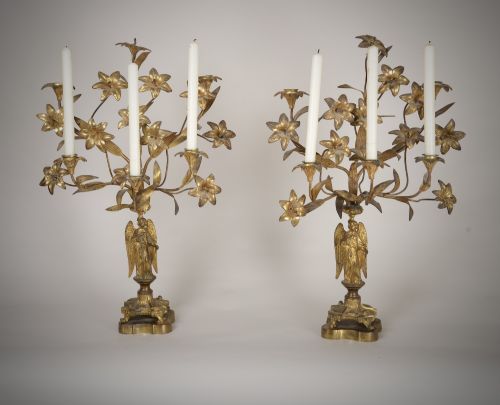
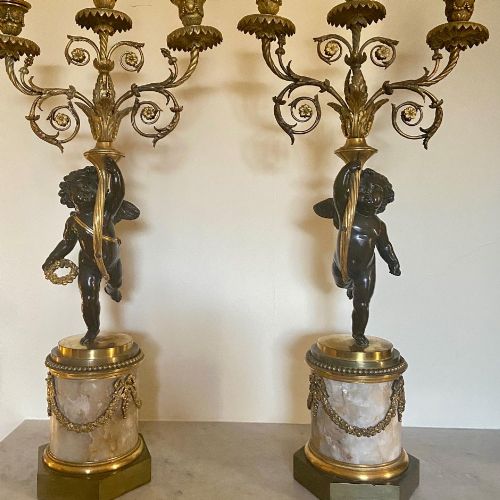
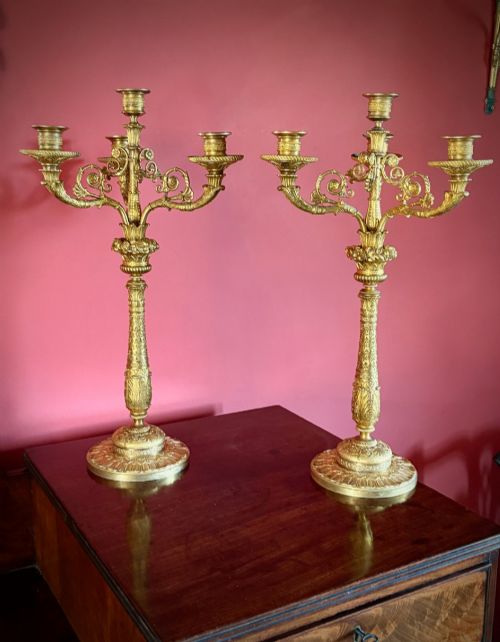
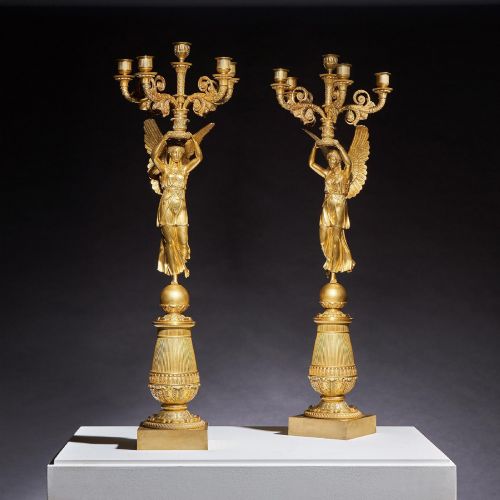
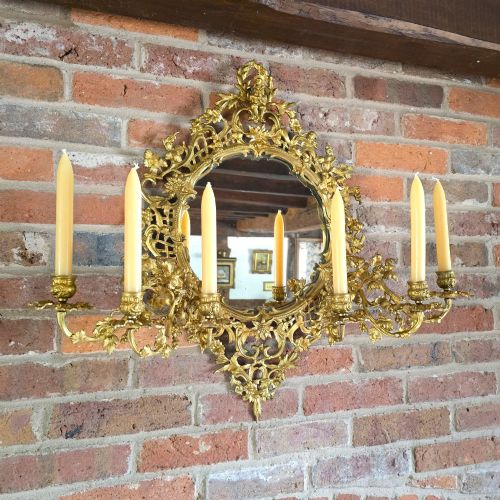
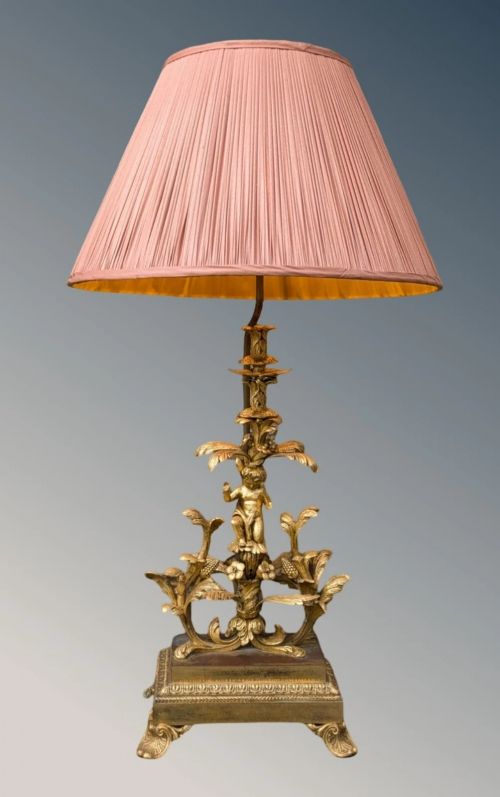
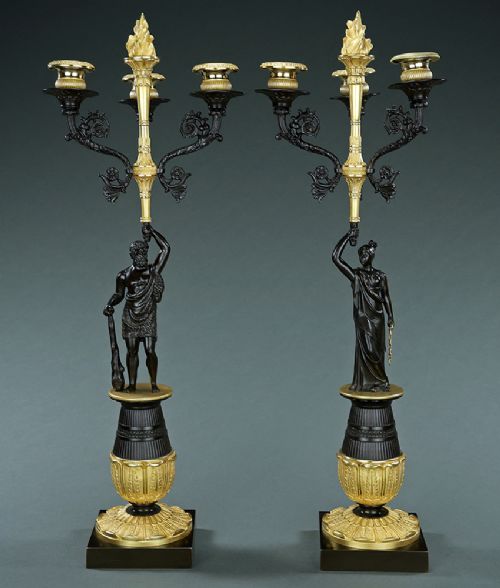
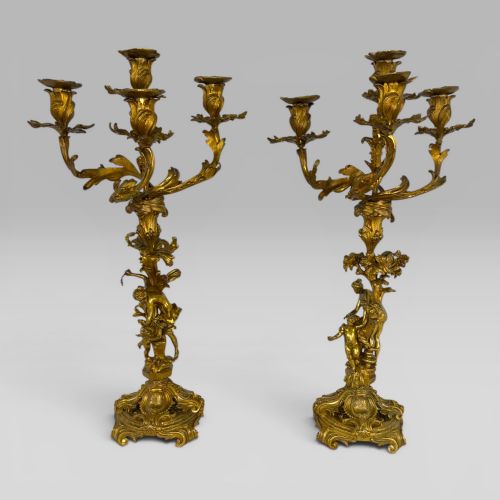
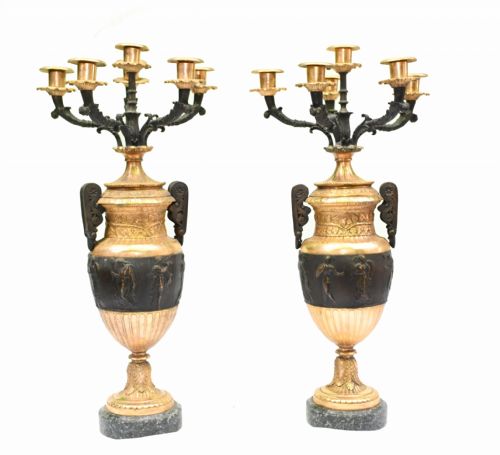
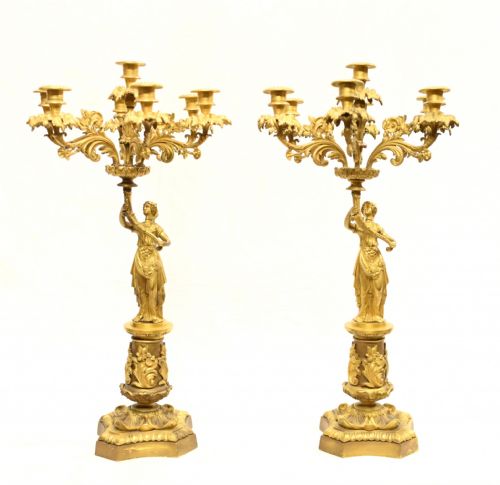
When you search for a gold bronze candelabrum, you encounter pieces primarily originating from nineteenth-century France and England, alongside related wall lights and garniture sets. These items take many forms, from multi-armed table candelabra featuring putti and classical figures to wall sconces and candlesticks cast in brass, ormolu and patinated bronze.
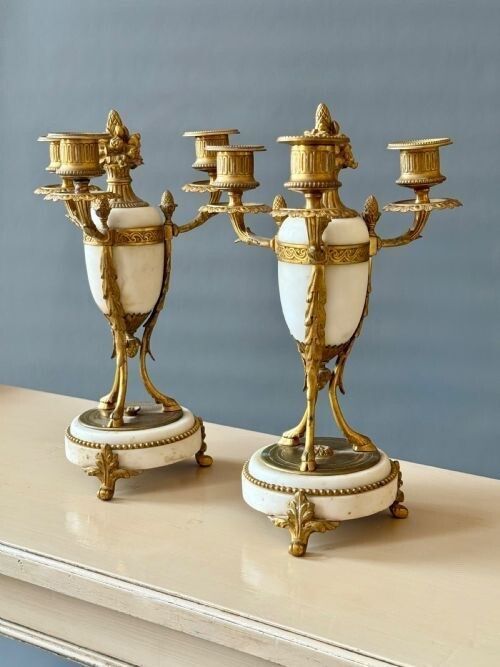
The versions you meet most often on this page belong to nineteenth-century revival styles such as Louis XVI, Rococo and Empire. Makers frequently combined gilded metal with contrasting white marble bases or incorporated crystal details to enhance their visual weight in a domestic interior.
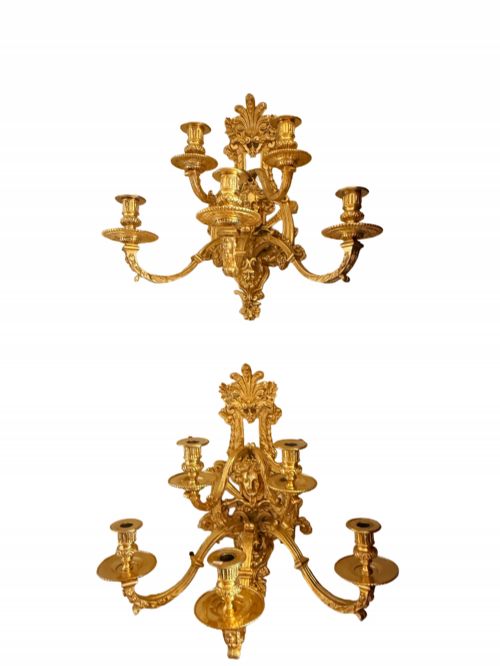
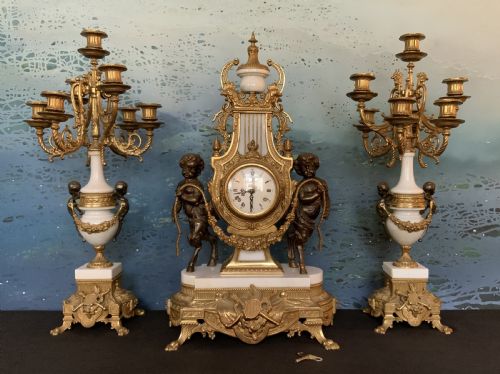
Beyond standard table models, the selections span paired wall lights, mantel clock garnitures and floor-standing arrangements. Each piece reflects the nineteenth-century taste for opulent interior lighting, whether rendered as a simple two-branch stick or a monumental ten-light candelabrum.
Materials and construction methods
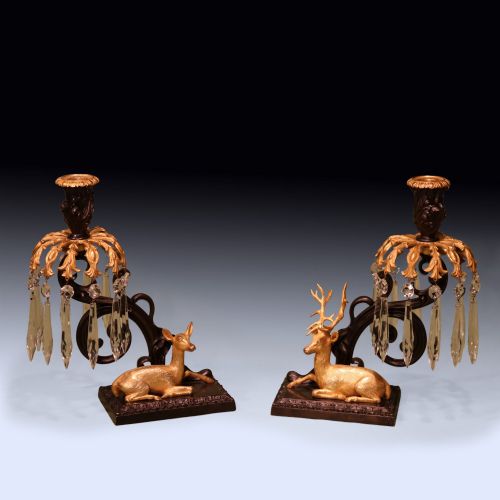
Makers integrated natural materials like white marble and fluorspar into the heavy bases to provide stability for the multi-branched sconces. Patinated bronze often contrasted directly against the bright gilded surfaces, while subsidiary details utilised enamel and crystal pendants to catch the ambient light.
Distinctions in craftsmanship and design
The finest examples display crisp, deep chasing where every feather, leaf and curl of hair remains sharp and well-defined. Lesser pieces suffer from softened details and shallow casting textures resulting from worn moulds or hurried finishing.
Proportion and structural integrity differentiate superior works from ordinary production items. Top-tier candelabra stand straight on their marble or metal bases without wobble, and their removable drip pans and branch assemblies fit together with precision.
Francois Redmond·Pierre Philippe Thomire·Henry Dasson·Auguste Cain·Rabiat
The Gold Bronze Candelabrum Glossary
- Ormolu
- Gilded bronze produced by applying a mercury-gold amalgam to a bronze base and heating it until the mercury vaporised, leaving a durable golden coating. Later pieces often substituted this method with electrogilding.
- Garniture
- A set of matching decorative objects, typically comprising a central mantel clock flanked by a pair of candelabra or vases designed to sit together on a fireplace mantel.
- Patinated bronze
- Bronze treated with chemical solutions to produce a dark brown, green or black surface finish, which often provided a tonal contrast to bright ormolu mountings.
- Putto
- A representation of a plump, naked male child, frequently winged, appearing often as a supporting figure or decorative motif in nineteenth-century figural metalwork.
- Sconce
- A wall-mounted lighting fixture designed to hold candles or electric bulbs, featuring one or more projecting branches.
Gold Bronze Candelabrum: Frequently Asked Questions
How were candelabra used in historic interiors?
Historic households placed candelabra on dining tables, sideboards and mantelpieces to provide primary illumination before the widespread adoption of gas and electric lighting. They functioned as both practical light sources and status symbols during evening gatherings.
Servants regularly tended the candles, trimming wicks and replacing wax tapers as needed. Paired sets created symmetrical arrangements within formal nineteenth-century rooms.
How do I care for antique ormolu?
Dust your gilded metalwork gently using a soft, dry artist's brush or a microfiber cloth to prevent the accumulation of grit in recessed chasing. Avoid commercial metal polishes, as abrasive compounds or harsh chemicals strip away the historic gold layer.
Keep pieces away from direct heat sources and damp environments to protect underlying bronze and marble elements. A microcrystalline wax can be applied sparingly by professionals to guard against oxidation.
What is a garniture set?
A garniture set consists of a central clock accompanied by matching side pieces such as candelabra, urns or vases. Manufacturers designed these matched groupings to create a balanced decorative display on a fireplace mantel.
These sets unified the aesthetic of a grand salon by repeating decorative motifs across all three objects. Complete surviving sets remain particularly sought after by collectors of nineteenth-century interiors.
How do I distinguish Empire style from Rococo?
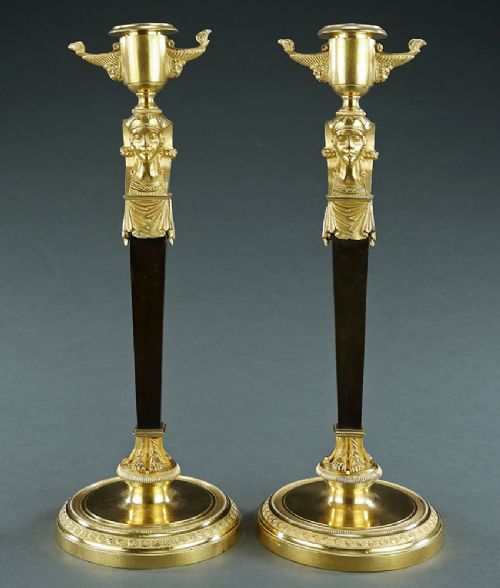
Empire style pieces, developed during the early nineteenth century, rely on strict symmetry, classical military motifs and references to ancient Rome, Greece and Egypt. They feature clean architectural lines and formal dignity.
Rococo revival works embrace asymmetrical scrollwork, naturalistic floral forms, curving C-scrolls and playful figural elements like putto or animals. This later style prioritises movement and organic fluidity over rigid classical geometry.