





Rococo Revival Candelabra
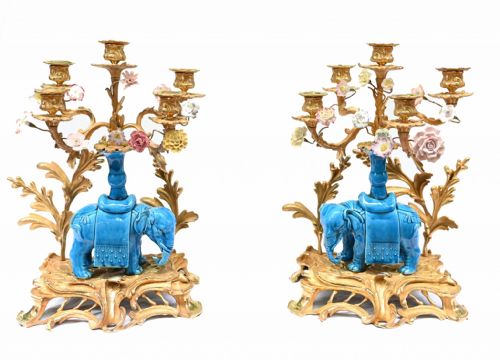
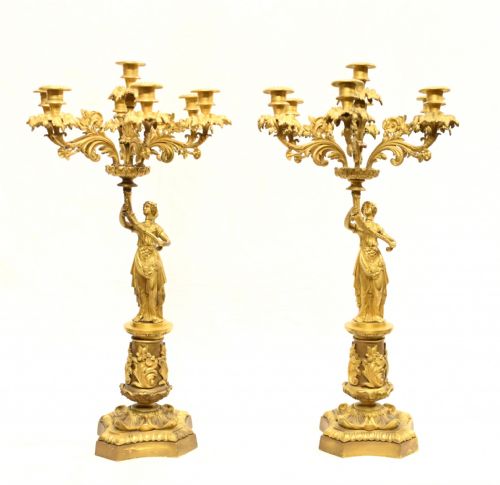
Rococo revival candelabra bring elaborate nineteenth-century French and German sculptural forms into a room through swirling asymmetrical gilt bronze, porcelain and cherub motifs.

Rococo Revival Candelabra
When you search for rococo revival candelabra, you encounter ornate nineteenth-century lighting pieces that draw heavily on eighteenth-century French design principles. These objects appear primarily as matched pairs or single multi-branch examples designed to sit on mantelpieces or console tables.
The selections recorded here span from the 1860s through to the early twentieth century, incorporating related forms such as clock garnitures, candlesticks and table lamps. Porcelain figures and classical motifs frequently integrate into the cast metal branches.
French and German factories dominate the surviving examples, often combining figural elements like cherubs with scrolling acanthus leaves. Silver-plated variations also emerge from the early twentieth century alongside the earlier gilt bronze and ormolu pieces.
Materials and manufacture
The construction relies heavily on cast bronze and ormolu, often finished with fire gilding or gold leaf to achieve a brilliant metallic lustre. These heavy metal mounts require skilled foundry work to capture the deep scrolls and asymmetrical curves characteristic of the style.
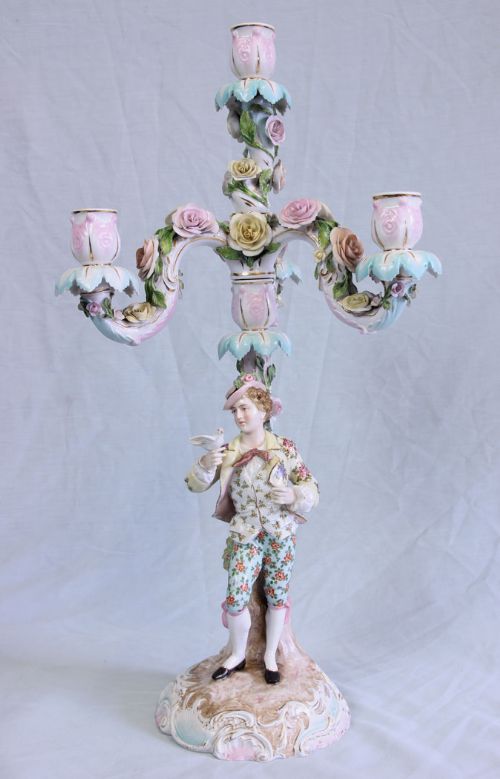
Porcelain components, originating from factories such as Meissen, Sitzendorf and Dresden, introduce painted figures and delicate floral details to the metal armatures. Marble bases frequently anchor these heavier compositions, providing stability and a contrasting natural texture.
Silver plating on base metals appears in later twentieth-century iterations, offering a bright reflective finish that mimics solid silver. Enamel and hand-painted porcelain enrich the surface detail across both German and French items.
Rococo Revival Candelabra Retail Price Guide 2026
Typical asking prices for rococo revival candelabra among the pieces listed under this phrase on Sellingantiques today, from the lower quarter to the upper quarter. They describe what is for sale here now, not the wider market.
The listings here incorporate pieces cast in gilt bronze, ormolu and silver plate alongside delicate porcelain figures from German and French factories.
Judging quality and execution
The integration between porcelain figures and metal branches distinguishes finer examples from simpler assemblies. Hand-painted ceramic elements with intricate floral encrustations demonstrate higher artisanal skill than plain glazed surfaces.
Substantial weight from solid bronze or heavy marble bases indicates superior construction compared to hollow or lightly cast alternatives. The retention of original mercury gilding or gold leaf rather than later repainting elevates the piece's integrity.
Meissen·Sitzendorf·Dresden·Helena Wolfsohn
The Rococo Revival Candelabra Glossary
- Ormolu
- A gilded bronze technique utilising finely ground gold mercury amalgam applied to cast brass or bronze. This process produces a rich, durable golden surface seen on nineteenth-century French lighting.
- Garniture
- A set of matching decorative objects, typically a central clock flanked by a pair of candelabra or vases. These suites create a balanced display on a mantelpiece.
- Torchère
- A tall standing candlestick or lamp base designed to hold a light source aloft. In this context, the term often describes figural bronze lighting supports.
- Candelabra
- A branched candlestick holder designed to support multiple candles simultaneously. They range from simple two-arm configurations to monumental multi-branch architectural examples.
Rococo Revival Candelabra: Frequently Asked Questions
Are these candelabra wired for electricity?
Many surviving examples have been converted into table lamps over the decades to suit modern domestic lighting needs. The original branch configurations often remain intact above the bulb fittings.
Unconverted items retain their original socket pans designed strictly for wax candles. Check individual listings to determine whether a piece preserves its candle-holding function or houses modern wiring.
How do I distinguish German porcelain from French metalwork?
German pieces from factories like Meissen and Dresden feature hand-painted porcelain figures, floral encrustations and allegorical subjects as the primary sculptural focus. These items frequently rely on ceramic bases alongside their metal branches.
French works lean more heavily on cast ormolu, gilt bronze and sculptural cherubs mounted on marble. The aesthetic prioritises metal scrollwork over ceramic statuary.
What defines the rococo revival style?
This nineteenth-century movement revives the asymmetry, C-scrolls, S-scrolls and naturalistic plant motifs of the eighteenth-century French court. Designs avoid rigid symmetry in favour of flowing, organic lines.
Figural elements such as putti, cherubs and pastoral figures frequently populate the compositions. The overall effect is ornate, decorative and deliberately theatrical.