




Antique French Girandoles
Antique French girandoles combine reflective glass with branching candle holders to throw dancing light across a panelled room.
Antique French Girandoles
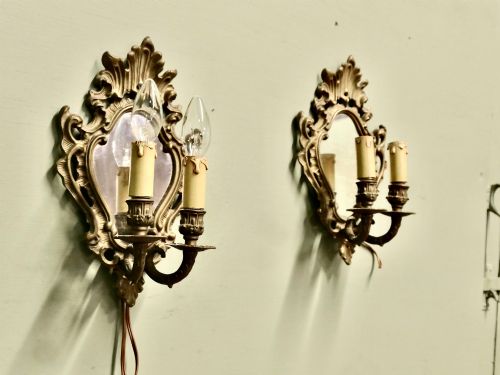
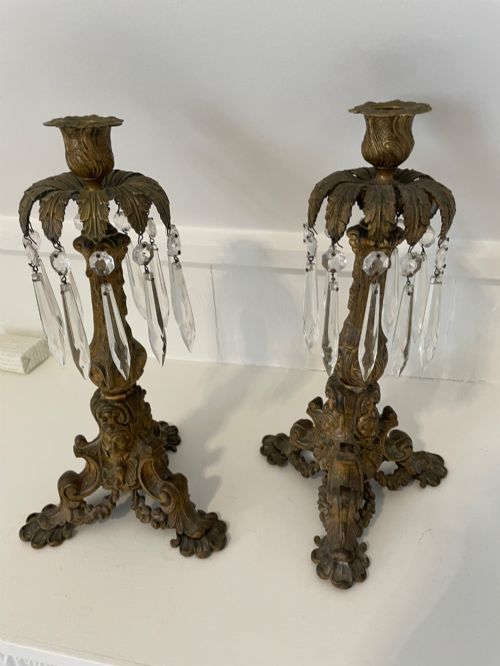
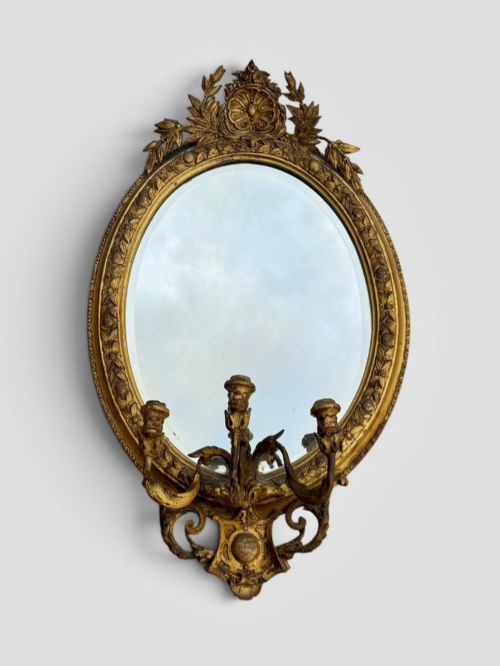
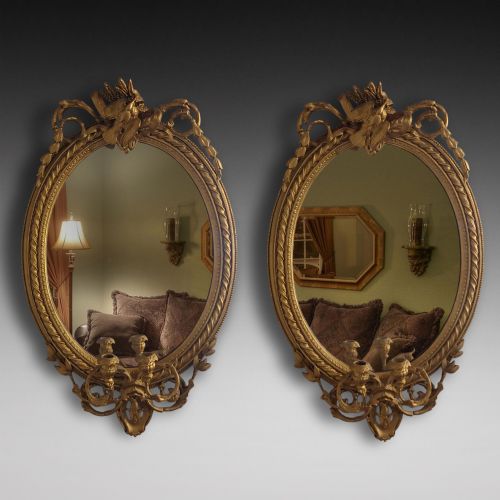
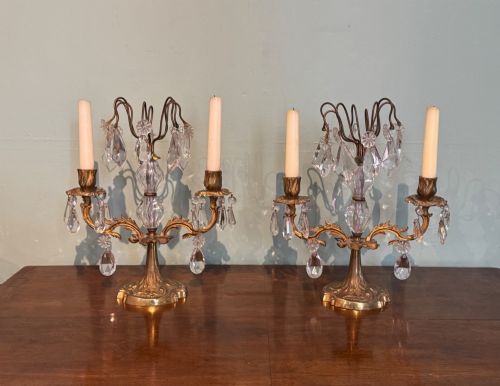
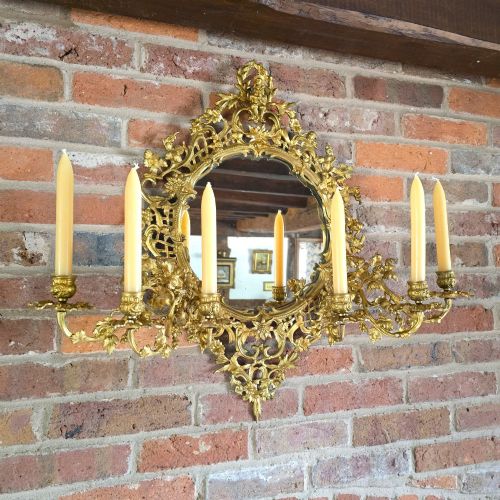
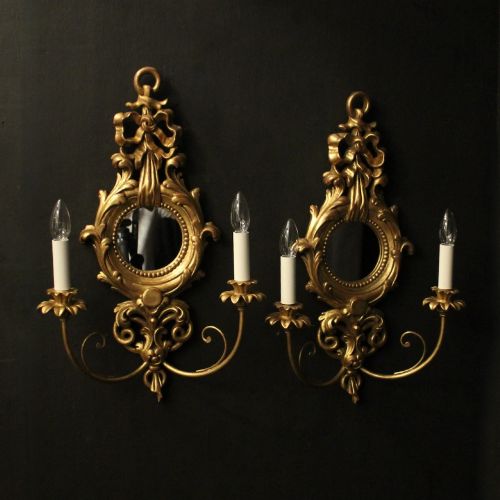
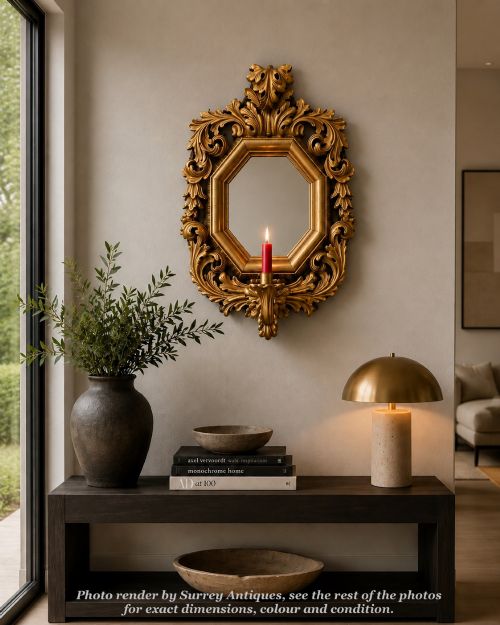
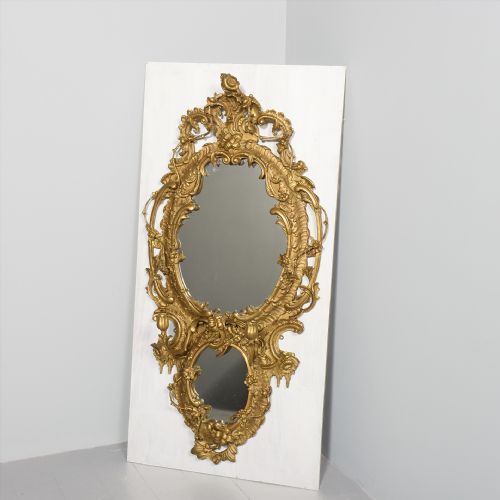
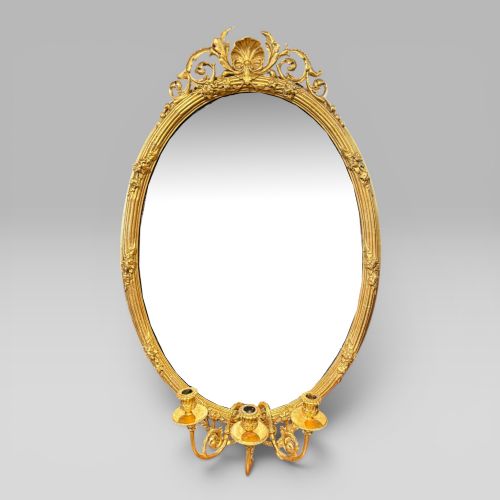
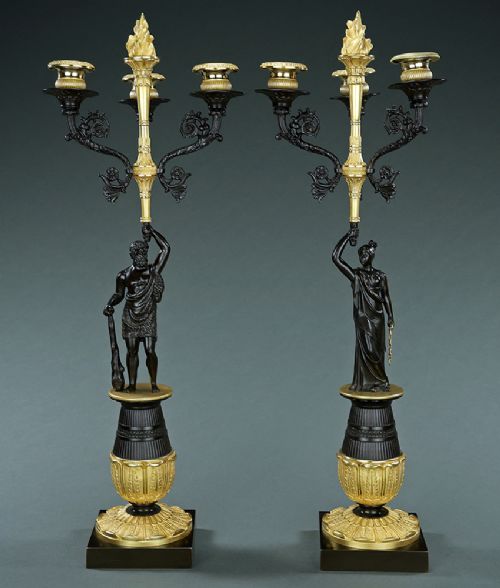
These pieces combine a reflective looking glass with attached candle branches designed to hang on a wall or stand on a table. When seeking antique French girandoles, a buyer encounters wall mirrors fitted with sconces as well as freestanding candelabra forms.
The objects span periods from the mid-nineteenth century through the early twentieth century, carrying the ornate flourishes of the Rococo Revival, French Chateau, and Second Empire styles. Wall mirrors and paired twin-arm sconces dominate the selection available on this page.
Originating predominantly from French workshops and makers, these lighting pieces served both to illuminate dark salons and to amplify the available candlelight through strategically placed glass surfaces.
Materials and construction methods
Craftsmen shaped these items using carved wood, gesso, and cast metals including bronze, ormolu, brass, and gilt-brass. Giltwood frames provided a foundation for the reflective plates, while metal branches were cast and chased to form candle holders.
Many examples incorporate cut glass drops, crystal pendants, and porcelain mounts that catch the flicker of candles. Gilding was applied to wood surfaces using gold leaf over gesso, while bronze components often received a rich ormolu finish.
Antique French Girandoles Retail Price Guide 2026
Typical asking prices for french girandoles among the pieces listed under this phrase on Sellingantiques today, from the lower quarter to the upper quarter. They describe what is for sale here now, not the wider market.
Listings feature items spanning the nineteenth and early twentieth centuries, constructed from giltwood, bronze, ormolu, and brass.
Judging quality and craftsmanship
The distinction between ordinary and exceptional pieces lies in the crispness of the metal chasing and the depth of the carved wood details. Superior items exhibit finely articulated bronze casting, where foliage, figures, and scrollwork retain sharp contours.
Quality also shows in the integration of the candle arms with the main body, ensuring rigid stability and balanced weight distribution. Original mercury glass plates with even ageing display greater integrity than later replacement mirrors.
Thiebaut Freres·E.G Paris
The Antique French Girandoles Glossary
- Girandole
- A branched candleholder, often taking the form of a mirrored wall sconce designed to reflect light into a room.
- Ormolu
- Finely ground high-carat gold applied to a bronze base through a mercury amalgamation process, creating a durable metallic finish.
- Gesso
- A plaster-like mixture applied to wood frames to create a smooth surface for subsequent gilding and carving.
- Toleware
- Painted or enamelled sheet metal fashioned into decorative household objects and light fittings.
- Candelabra
- A multi-branched candlestick holder designed to support several candles simultaneously.
Antique French Girandoles: Frequently Asked Questions
How were girandoles originally used?
These pieces were mounted on walls between windows or placed upon tables to multiply the illumination of candles in evening salons.
The reflective glass plates doubled the available light by bouncing the flame across the room while the metal branches supported the heavy wax tapers.
Where should I hang a wall girandole?
Wall-mounted versions look best hung at eye level where the mirror can capture ambient light and reflect interior details.
Placing them opposite a window or above a fireplace mantel allows the glass and crystal drops to animate the space with shifting shadows.
How do I identify a Second Empire piece?
Second Empire items often feature heavier bronze casting, grand proportions, and symmetrical architectural motifs derived from classical French design.
They rely less on the asymmetrical curves of earlier Rococo revivals and more on formal dignity and rich ormolu surfaces.
Are crystal drops original?
Original glass and crystal drops show minor surface wear, tiny bubbles within the glass, and hand-cut facets rather than machine precision.
Matching fixings and uniform ageing across the prisms help confirm that the hanging elements belong to the original frame.